


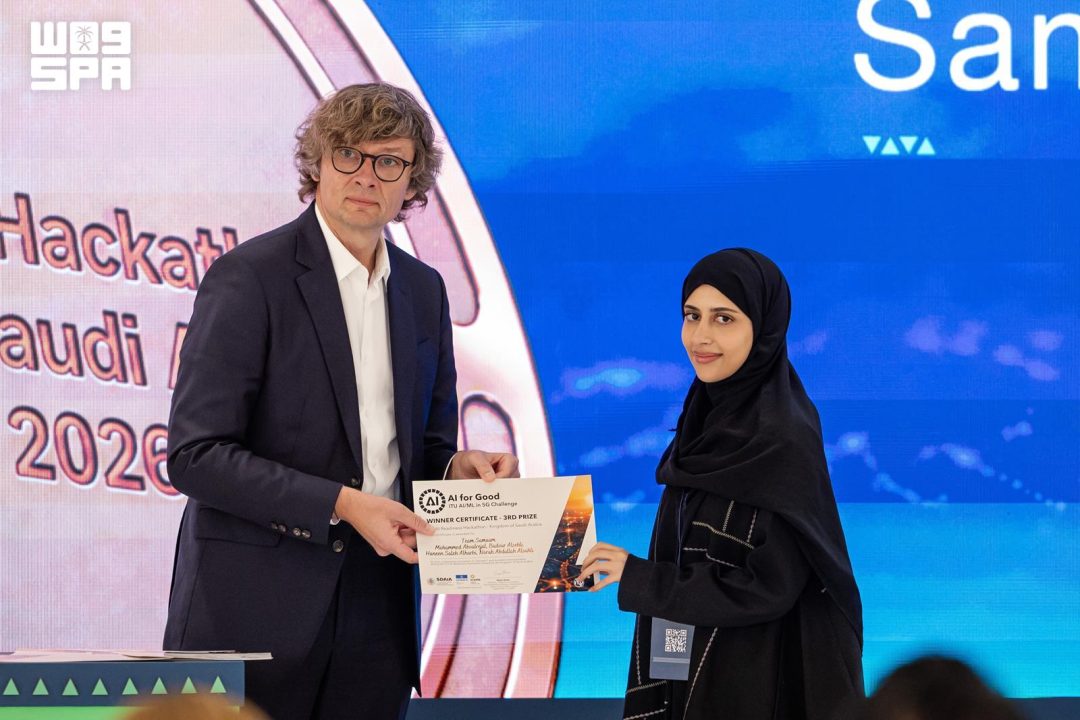
Riyadh hosted the closing ceremony of the AI Readiness Hackathon, where winning teams were honored by the Saudi Data and AI Authority (SDAIA), the International Telecommunication Union (ITU), and the International Center for AI Research and Ethics (ICAIRE).
According to SPA, the event took place on the sidelines of the fourth edition of the UNESCO Global Forum on the Ethics of Artificial Intelligence (GFEAI 2026). University students from Saudi Arabia and other countries competed to create AI solutions for the finance, agriculture, health, and education sectors.
Participants presented project prototypes to a panel of experts and specialists. These solutions focused on enhancing decision-making quality, supporting sustainability, and improving service efficiency through AI and data technologies.
The judging process evaluated the entries based on their adherence to responsible AI principles, applicability, societal impact, and innovation. The hackathon aimed to empower young talent and build capabilities through international cooperation.
Who organized the AI Readiness Hackathon and where was it held? The AI Readiness Hackathon was organized by the Saudi Data and AI Authority (SDAIA), the International Telecommunication Union (ITU), and the International Center for AI Research and Ethics (ICAIRE). The closing ceremony for the event was held in Riyadh on the sidelines of the fourth edition of the UNESCO Global Forum on the Ethics of Artificial Intelligence (GFEAI 2026).
Which sectors did the AI solutions target and who participated? The hackathon involved university students from Saudi Arabia and around the world. These participants developed innovative artificial intelligence solutions designed to address specific challenges within the health, education, finance, and agriculture sectors.
What criteria were used to evaluate the hackathon projects? The judging panel, consisting of leading experts and specialists, evaluated the project prototypes based on several specific criteria. These included the societal impact of the solution, its applicability, the level of innovation, and how well the project adhered to responsible AI principles.