


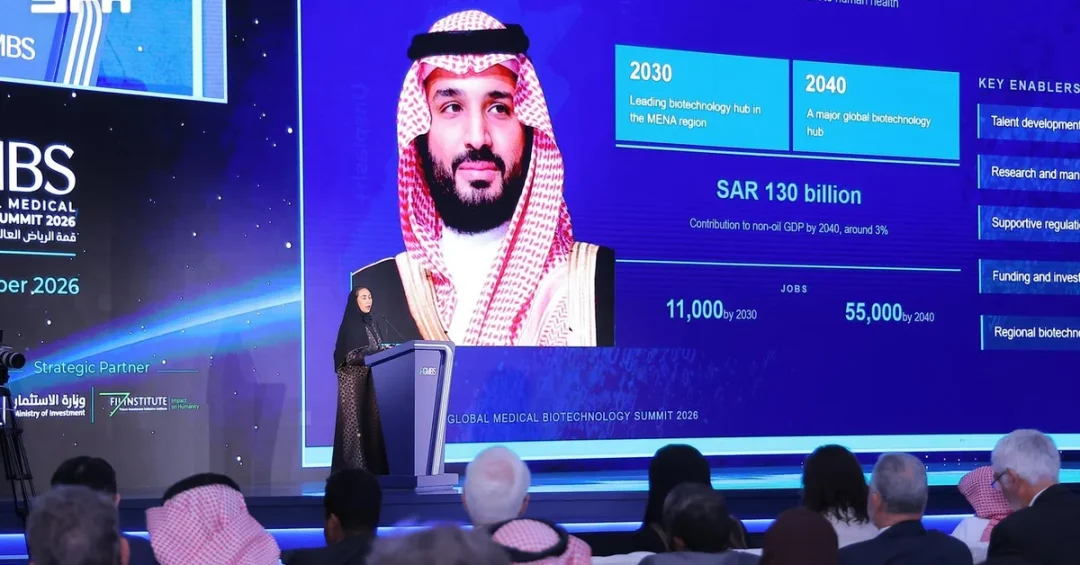
Riyadh, September 15, 2026 — The King Abdulaziz City for Science and Technology (KACST) is strengthening Saudi Arabia’s national capacity in biotechnology, aligning with the National Biotechnology Strategy launched by His Royal Highness Prince Mohammed bin Salman bin Abdulaziz Al Saud, Crown Prince and Prime Minister. Dr. Batoul Al-Baz, Vice President of KACST for the Health Sector, announced these efforts during the 2026 Riyadh Global Summit for Medical Biotechnology, held from September 14 to 16 and organized by the Ministry of National Guard’s Health Affairs in partnership with the Ministry of Investment.
Context and Background
The National Biotechnology Strategy is a key initiative under Saudi Vision 2030, aiming to transform the Kingdom into a leading biotechnology hub in the Middle East and North Africa by 2030 and globally by 2040. The strategy targets a contribution of SAR130 billion to the GDP, equivalent to approximately 3%, by 2040, and the creation of 11,000 jobs by 2030, rising to 55,000 by 2040. It focuses on four priority areas: vaccines, biomanufacturing and localization, genomics, and improving plant cultivation.
KACST, as a national pillar in biotechnology, is building the ecosystem’s collective capabilities and developing programs that translate research and development into tangible impact on human health and the national economy.
Key Details
Dr. Al-Baz highlighted KACST’s Health Sector achievements since 2023, including 139 researchers, 45 completed research projects, 216 peer-reviewed scientific publications, 10 granted patents, and seven registered patents. The sector has also established seven strategic partnerships in genomics, precision medicine, vaccine development, biomanufacturing, stem cells and regenerative medicine, and molecular diagnostics.
On the sidelines of the summit, KACST launched “Salem,” an open-source tool to help verify interactions between medicines, foods, and herbs. It also entered into a strategic partnership with Al-Khaliah Al-Afdal for Research and Studies (Cellbae) to localize, develop, and produce highly sensitive lateral flow tests for the rapid detection of diseases.
Implications and Impact
These developments underscore Saudi Arabia’s commitment to advancing biotechnology, which will enhance the Kingdom’s self-sufficiency in health security, drive economic diversification, and create high-skilled jobs. The partnerships and innovations announced at the summit are expected to accelerate the localization of biomanufacturing and improve healthcare outcomes, positioning Saudi Arabia as a global leader in the field.
Vision 2030 Alignment
The National Biotechnology Strategy is integral to Saudi Vision 2030, contributing to human health, economic growth, and the Kingdom’s global role. Through KACST’s efforts, Saudi Arabia is not only building national capabilities but also fostering international collaborations that will ensure a sustainable and prosperous future.
20 Questions
Q1. What is the National Biotechnology Strategy?
A1. The National Biotechnology Strategy is a Saudi initiative launched by Crown Prince Mohammed bin Salman to position the Kingdom as a global biotechnology hub, focusing on vaccines, biomanufacturing, genomics, and plant cultivation to enhance health and the economy.
Q2. Who is Dr. Batoul Al-Baz?
A2. Dr. Batoul Al-Baz is the Vice President of King Abdulaziz City for Science and Technology (KACST) for the Health Sector, leading efforts to advance biotechnology research and innovation in Saudi Arabia.
Q3. What is KACST’s role in biotechnology?
A3. KACST serves as a national pillar in biotechnology, building ecosystem capabilities, conducting research, and developing programs that translate R&D into impacts on human health and the national economy.
Q4. What are the goals of the National Biotechnology Strategy?
A4. The strategy aims to make Saudi Arabia a leading biotechnology hub in MENA by 2030 and globally by 2040, contributing SAR130 billion to GDP and creating 55,000 jobs by 2040.
Q5. What are the four priority areas of the strategy?
A5. The four priority areas are vaccines, biomanufacturing and localization, genomics, and improving plant cultivation. These areas are critical for achieving self-sufficiency and economic growth.
Q6. What is the 2026 Riyadh Global Summit for Medical Biotechnology?
A6. It is a summit held from September 14 to 16, 2026, organized by the Ministry of National Guard’s Health Affairs in partnership with the Ministry of Investment, to discuss advancements in medical biotechnology.
Q7. What did KACST launch at the summit?
A7. KACST launched “Salem,” an open-source tool to verify interactions between medicines, foods, and herbs. This tool aims to enhance safety and efficacy in healthcare.
Q8. What is the partnership with Cellbae about?
A8. KACST partnered with Al-Khaliah Al-Afdal for Research and Studies (Cellbae) to localize, develop, and produce highly sensitive lateral flow tests for rapid disease detection.
Q9. How many researchers work in KACST’s Health Sector?
A9. KACST’s Health Sector has 139 researchers working since 2023, contributing to 45 completed research projects and 216 peer-reviewed scientific publications.
Q10. What patents has KACST’s Health Sector obtained?
A10. The Health Sector has obtained 10 granted patents and seven registered patents, showcasing its innovative research and development in biotechnology.
Q11. What are the strategic partnerships of KACST?
A11. KACST has seven strategic partnerships in genomics, precision medicine, vaccine development, biomanufacturing, stem cells and regenerative medicine, and molecular diagnostics.
Q12. How does biotechnology support Vision 2030?
A12. Biotechnology supports Vision 2030 by enhancing human health, diversifying the economy, creating jobs, and positioning Saudi Arabia as a global leader in innovation and self-sufficiency.
Q13. What economic impact is expected from the strategy?
A13. The strategy is expected to contribute SAR130 billion to GDP by 2040, equivalent to about 3%, and create 11,000 jobs by 2030, rising to 55,000 by 2040.
Q14. What is the significance of localizing biomanufacturing?
A14. Localizing biomanufacturing enhances self-sufficiency, reduces reliance on imports, and ensures rapid response to health crises, while boosting the national economy.
Q15. How does KACST collaborate internationally?
A15. KACST collaborates through strategic partnerships and participates in global summits, sharing knowledge and advancing biotechnology research with international stakeholders.
Q16. What is the “Salem” tool?
A16. “Salem” is an open-source tool launched by KACST to help verify interactions between medicines, foods, and herbs, enhancing healthcare safety and informed decision-making.
Q17. What are lateral flow tests?
A17. Lateral flow tests are rapid diagnostic tools used to detect diseases. The partnership with Cellbae aims to localize their production for highly sensitive and quick results.
Q18. How does KACST measure its impact?
A18. KACST measures impact through research outputs, patents, publications, and partnerships, aiming to translate R&D into tangible health and economic benefits for the Kingdom.
Q19. What is the timeline for the National Biotechnology Strategy?
A19. The strategy targets 2030 for regional leadership and 2040 for global leadership, with specific milestones for GDP contribution and job creation along the way.
Q20. How can international audiences engage with Saudi biotechnology?
A20. International audiences can engage through partnerships, attending summits like the Riyadh Global Summit, and collaborating on research and development initiatives with Saudi institutions like KACST.
Reader Feedback
We value your thoughts. Please share your feedback on this article.
Your feedback helps us improve our coverage.