


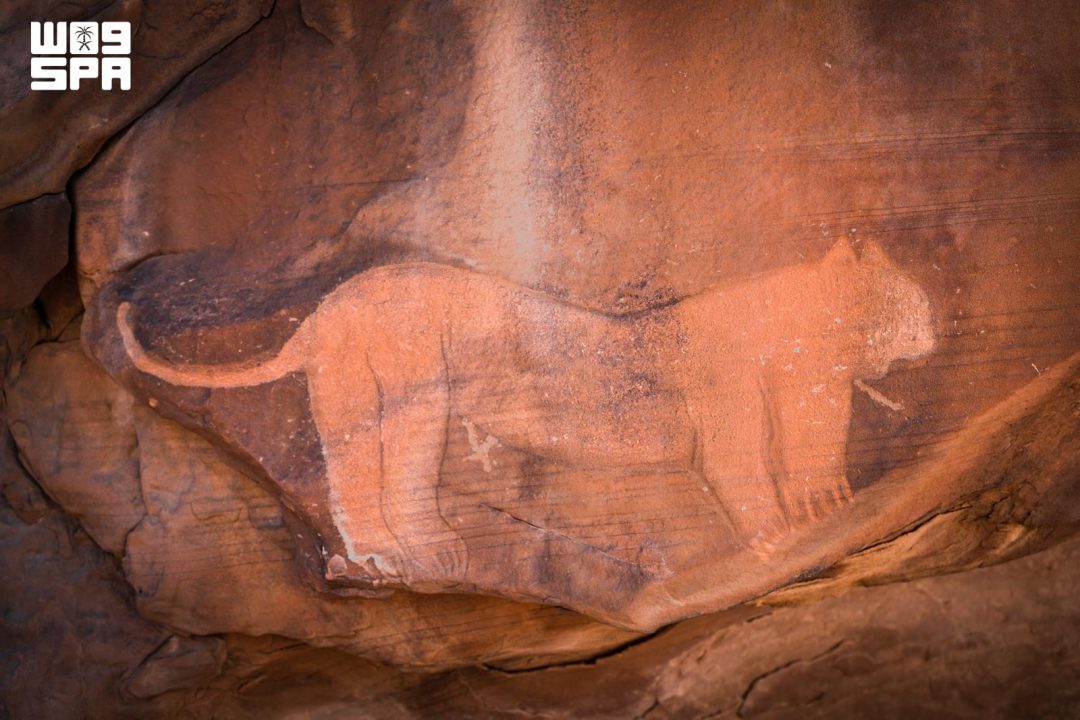
Tabuk is the site of efforts by the Prince Mohammed bin Salman Royal Reserve to reintroduce the Asian lion (Panthera leo leo), a threatened subspecies. The reserve covers 24,500 square kilometers and is working to rebuild a complete and sustainable trophic pyramid to support the return of the superpredator.
According to SPA, the reintroduction of the lion is among 23 historically present species approved by the reserve’s board of directors. CEO Andrew Zaloumis stated that the lion was part of the ancient landscape and that establishing the necessary conditions for its definitive return is a process spanning several generations rather than a single dated event.
The lion appears in rock carvings across more than 12 sites within the reserve. Approximately 12,000 years ago during the Green Arabia period, a fertile corridor to Africa supported large herds of herbivores and predators. As the peninsula dried, shaded canyons like Wadi Al-Disah served as climate refuges for wildlife and ancient civilizations.
Overhunting and modern firearms led to the disappearance of Arabian lions by the end of the 19th century. The IUCN classifies the species as endangered, with 1,100 to 1,300 individuals remaining in the wild globally. A recent census found about 891 individuals in India’s Gir Forest landscape.
What is the current global status of the Asian lion population? The Asian lion is classified as endangered by the International Union for Conservation of Nature (IUCN). There are currently between 1,100 and 1,300 individuals remaining in the wild worldwide, with a recent census identifying approximately 891 individuals residing in the Gir Forest landscape of western India.
How does the Prince Mohammed bin Salman Royal Reserve plan to bring back lions? The reserve is utilizing its 24,500 square kilometers to reconstitute a complete and sustainable trophic pyramid. CEO Andrew Zaloumis noted that this is a multi-generational process focused on establishing the necessary environmental conditions for the superpredator’s definitive return, as approved by the board of directors.
What evidence exists of lions in the reserve’s history? Lions are a recurring motif in rock carvings found across more than 12 sites in the reserve. Historically, during the Green Arabia period about 12,000 years ago, a fertile corridor to Africa supported these predators, while locations like Wadi Al-Disah later served as essential climate refuges.