


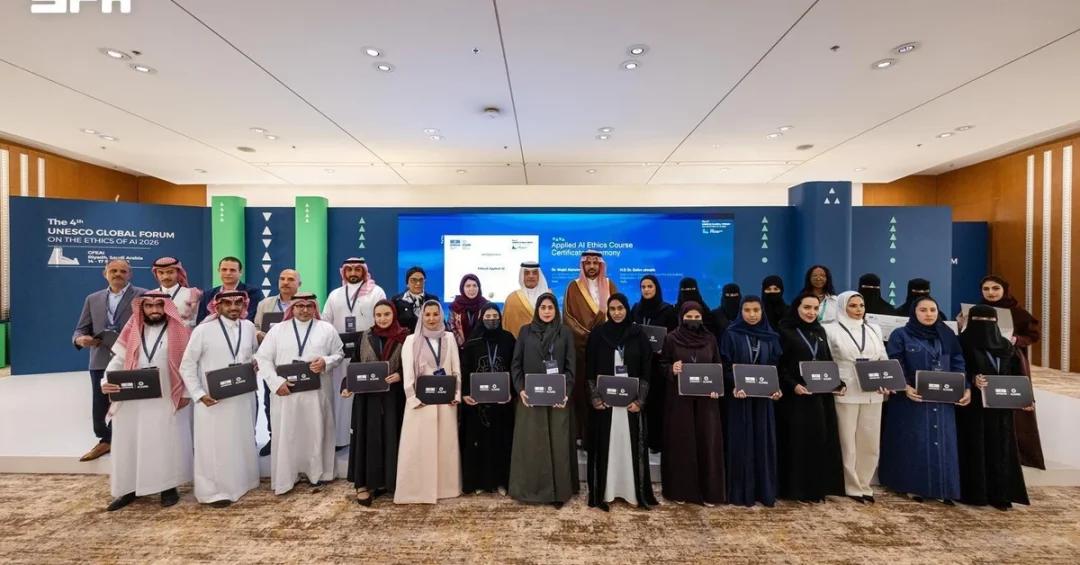
Riyadh, September 17, 2026 — The International Center for AI Research and Ethics (ICAIRE) celebrated the graduation of 217 trainees from 41 countries and territories who completed the first cohort of its “Ethical Applied AI” program, held alongside the UNESCO Global Forum on the Ethics of AI in Riyadh. The program, conducted from July 14 to 29, 2026, was organized as part of the forum hosted by Saudi Arabia and organized by the Saudi Data and AI Authority (SDAIA) in partnership with UNESCO. The graduation marks a significant milestone in international efforts to build ethical AI capacity and underscores Saudi Arabia’s growing leadership in global artificial intelligence governance.
Context and Background
The UNESCO Global Forum on the Ethics of AI, hosted in Riyadh, is the first time an Arab country has hosted the prestigious event. The forum brings together decision-makers, experts, researchers, and international organizations to advance the ethical development and deployment of artificial intelligence worldwide. SDAIA, in partnership with UNESCO and in collaboration with ICAIRE, designed the “Ethical Applied AI” program to equip participants with practical skills and ethical frameworks necessary for responsible AI use. The program ran over two weeks and included six live sessions covering three main pillars: understanding artificial intelligence, using AI tools to enhance productivity without requiring a programming background, and applying ethical principles. The initiative reflects a shared commitment to ensuring that AI benefits all of humanity while upholding fundamental values.
Key Details
The 217 graduates represent a diverse group of learners from 41 countries and territories, demonstrating the program’s global reach. The training covered the fundamentals of modern AI systems, including the roles of models, data, algorithms, and large language models. Participants also gained skills in prompt engineering and the development of repeatable workflows, enabling them to integrate AI into their professional environments effectively. The graduation ceremony, held during the forum, highlighted the participants’ achievements and the importance of international cooperation in AI ethics. The event concluded on Thursday, September 17, 2026, marking the end of a successful forum that has set a new standard for global dialogue on AI ethics.
Implications and Impact
The graduation of the first cohort of the “Ethical Applied AI” program signals a growing global consensus on the need for ethical AI education. By bringing together participants from diverse backgrounds, the program fosters a network of professionals equipped to champion ethical AI practices in their home countries. This initiative not only enhances individual capabilities but also strengthens international collaboration, which is essential for addressing the complex challenges posed by AI. Saudi Arabia’s role in hosting the forum and supporting the program reinforces its position as a leader in AI governance and a key player in shaping the future of technology. The success of this cohort is expected to inspire similar programs and further partnerships between governments, international organizations, and academic institutions.
Vision 2030 Alignment
This initiative aligns closely with Saudi Vision 2030, which aims to diversify the economy and position the Kingdom as a global hub for technology and innovation. By investing in AI education and ethical frameworks, Saudi Arabia is not only building local capacity but also contributing to the global knowledge economy. The program’s emphasis on practical skills and ethical principles supports the Vision’s goals of creating a knowledge-based society and fostering international cooperation. As the Kingdom continues to advance its digital transformation, initiatives like the “Ethical Applied AI” program will play a crucial role in ensuring that AI is developed and used responsibly, benefiting both Saudi Arabia and the wider world.
20 Questions
Q1. What is the International Center for AI Research and Ethics (ICAIRE)?
A1. ICAIRE is an organization dedicated to advancing research and ethical practices in artificial intelligence. It collaborates with global partners to develop programs that promote responsible AI use and build capacity worldwide.
Q2. How many trainees graduated from the first cohort of the Ethical Applied AI program?
A2. A total of 217 trainees successfully completed the first cohort of the program. They came from 41 different countries and territories, reflecting the program’s global reach and impact.
Q3. When and where was the graduation ceremony held?
A3. The graduation ceremony took place in Riyadh, Saudi Arabia, on September 17, 2026. It was held as part of the UNESCO Global Forum on the Ethics of AI, which was hosted by Saudi Arabia.
Q4. What were the main pillars of the Ethical Applied AI program?
A4. The program covered three main pillars: understanding artificial intelligence, using AI tools to enhance productivity without requiring a programming background, and applying ethical principles. These pillars ensured a comprehensive learning experience.
Q5. How long did the training program last?
A5. The program was conducted from July 14 to 29, 2026, spanning approximately two weeks. It included six live sessions designed to provide intensive and interactive learning.
Q6. Which organization hosted the UNESCO Global Forum on the Ethics of AI?
A6. The forum was hosted by Saudi Arabia and organized by the Saudi Data and AI Authority (SDAIA) in partnership with UNESCO and in collaboration with ICAIRE. This marked the first time an Arab country hosted the event.
Q7. What topics were covered in the training?
A7. The training covered fundamentals of modern AI systems, including models, data, algorithms, and large language models. It also included prompt engineering skills and the development of repeatable workflows for practical application.
Q8. Who were the participants of the program?
A8. Participants were trainees from 41 countries and territories, representing diverse backgrounds and professional fields. They were selected to gain skills in ethical AI application and contribute to global AI governance.
Q9. What is the significance of Saudi Arabia hosting the forum?
A9. It marks the first time an Arab country has hosted the UNESCO Global Forum on the Ethics of AI, highlighting Saudi Arabia’s growing leadership in AI and its commitment to international cooperation in technology ethics.
Q10. What is SDAIA’s role in the program?
A10. The Saudi Data and AI Authority (SDAIA) organized the forum and collaborated with UNESCO and ICAIRE to develop the Ethical Applied AI program. SDAIA supports Saudi Arabia’s AI strategy and Vision 2030 goals.
Q11. How does the program contribute to global AI ethics?
A11. By training individuals from around the world in ethical AI practices, the program fosters a global network of professionals who can implement responsible AI solutions. This promotes international standards and cooperation in AI ethics.
Q12. What skills did participants gain from the program?
A12. Participants learned to understand AI systems, use AI tools for productivity, and apply ethical principles. They also gained skills in prompt engineering and creating repeatable workflows, enhancing their ability to integrate AI responsibly.
Q13. Why is ethical AI important for Saudi Arabia’s Vision 2030?
A13. Ethical AI aligns with Vision 2030’s goals of economic diversification and technological leadership. It ensures that AI development benefits society, upholds values, and supports the creation of a knowledge-based economy.
Q14. What is the UNESCO Global Forum on the Ethics of AI?
A14. It is a major international event that brings together stakeholders to discuss and promote ethical AI. The 2026 forum in Riyadh focused on advancing global dialogue and cooperation on AI ethics.
Q15. How many live sessions were included in the program?
A15. The program comprised six live sessions, providing interactive learning opportunities. These sessions covered the three main pillars and allowed participants to engage with experts and peers.
Q16. What are large language models, as mentioned in the training?
A16. Large language models are advanced AI systems trained on vast text data to generate human-like text. They are a key component of modern AI and were studied for their roles and ethical implications.
Q17. What is prompt engineering?
A17. Prompt engineering is the skill of designing effective inputs to guide AI models in producing desired outputs. It was taught as part of the program to help participants use AI tools efficiently without programming.
Q18. How does the program support international collaboration?
A18. By bringing together trainees from 41 countries, the program fosters cross-cultural exchange and collaboration. It builds a community of practice that can share knowledge and promote ethical AI globally.
Q19. What was the outcome of the forum?
A19. The forum concluded successfully, with the graduation of 217 trainees and the advancement of global discussions on AI ethics. It reinforced Saudi Arabia’s role as a leader in AI governance and international cooperation.
Q20. What future plans are there for the Ethical Applied AI program?
A20. While specific plans are not detailed, the success of the first cohort suggests potential for future iterations. The program may expand to reach more participants and further promote ethical AI practices worldwide.
Reader Feedback
We value your thoughts. Please share your feedback on this article.
Your feedback helps us improve our coverage.