


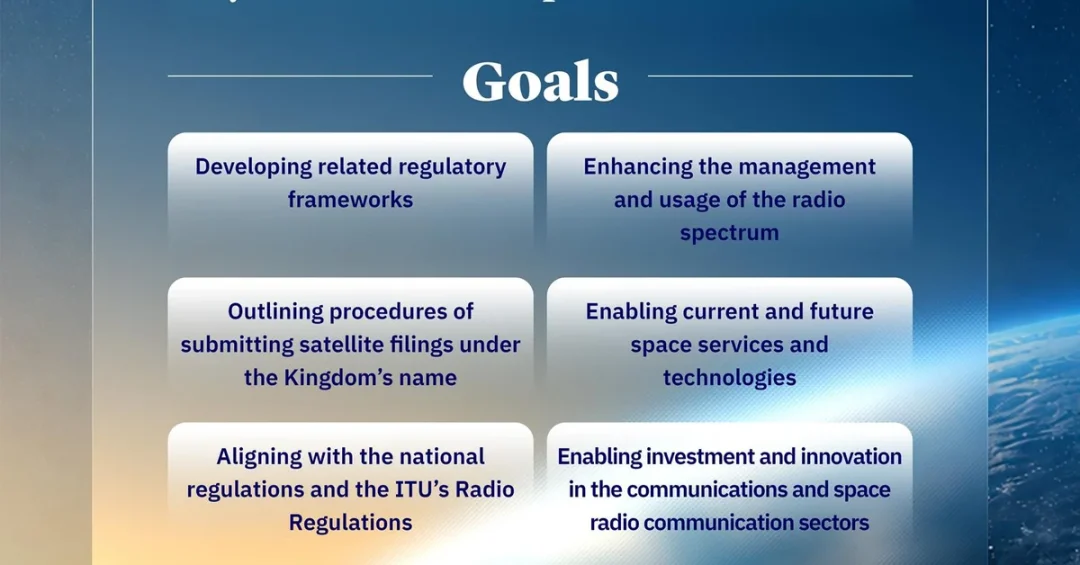
The Communications, Space and Technology Commission (CST) has invited public input on two draft regulatory documents—the “Regulations for Satellite Filings” and the “Regulations for the Use of Radio Spectrum by Earth Stations in Space Radio Services”—aimed at modernizing Saudi Arabia’s space and spectrum governance. Announced in Riyadh on September 17, 2026, via the Saudi Press Agency (SPA), the consultation runs until October 18, 2026, and seeks feedback from national and international stakeholders to refine technical requirements and procedures for earth station licensing and satellite filings.
Context and Background
The Communications, Space and Technology Commission is Saudi Arabia’s principal authority for communications, space, and technology regulation. Its decision to open a public consultation reflects a broader strategic push to align national frameworks with the Kingdom’s growing space ambitions and with the International Telecommunication Union (ITU) Radio Regulations—the global treaty framework that governs the use of radio frequencies and satellite orbits. By inviting input from both domestic and international players, CST signals a commitment to transparency, regulatory excellence, and international cooperation in space radio services.
The two documents under consultation respond to the rapid expansion of satellite constellations, earth station networks, and advanced space-based communications. They also aim to clarify the technical and procedural pathways for obtaining spectrum licenses and submitting satellite filings under the Kingdom’s name. This matters now because space-based connectivity is becoming central to digital economies, and nations that establish clear, predictable rules early can attract investment and lead in next-generation services.
Key Details
The “Regulations for the Use of Radio Spectrum by Earth Stations in Space Radio Services” document sets out the requirements for obtaining a radio spectrum license for an earth station or an earth station network. It addresses technical parameters, coordination procedures, and compliance obligations designed to ensure efficient and interference-free spectrum use. Meanwhile, the “Satellite Filing Regulations” document outlines the procedures and provisions that must be followed when submitting satellite filings to the ITU under the Kingdom’s name, covering administrative steps, timelines, and technical data requirements.
CST has invited all interested stakeholders—both national and international—to provide detailed inputs supported by analytical studies, benchmarks, and other relevant information. The deadline for submissions is October 18, 2026. Stakeholders can access the consultation platform through the CST website at https://mutasilbus.cst.gov.sa/mf/RegulationsPlatform?fn=#!/regulations/platform/index/. The SPA report emphasized that the documents are part of CST’s ongoing efforts to strengthen Saudi Arabia’s digital and space infrastructure, attract investment, and foster innovation in communications and space technology.
Implications and Impact
The consultation is expected to enhance the management of national spectrum resources and their use in space orbits—a critical step as demand for satellite bandwidth grows globally. By clarifying licensing and filing procedures, CST aims to reduce regulatory uncertainty, accelerate project timelines, and encourage both established operators and new entrants to invest in Saudi Arabia’s space sector. The move also reinforces the Kingdom’s leadership in space technologies and its ability to shape international norms through active participation in ITU processes.
Regionally, the updated frameworks could position Saudi Arabia as a hub for space radio services, supporting neighboring markets and contributing to the broader Middle East’s digital transformation. Internationally, the consultation demonstrates a collaborative approach, inviting global stakeholders to help refine rules that will govern cross-border satellite operations. This openness can build trust and facilitate partnerships, while ensuring that Saudi regulations remain compatible with global standards.
Vision 2030 Alignment
These regulatory initiatives align directly with Saudi Vision 2030, which seeks to diversify the economy, foster innovation, and develop advanced industries—including space and digital technologies. By modernizing spectrum and satellite filing rules, CST supports the creation of a knowledge-based economy, attracts foreign and domestic investment, and enables new commercial opportunities in space-based connectivity. As the Kingdom continues to expand its space ecosystem, such forward-looking regulation will be essential to sustaining growth and securing Saudi Arabia’s place as a leader in the global space economy.
20 Questions
Q1. What is the Communications, Space and Technology Commission (CST)?
A1. The CST is Saudi Arabia’s regulatory authority for communications, space, and technology. It oversees spectrum management, licensing, and space-related filings to ensure efficient and innovative use of national resources.
Q2. What documents has CST opened for public consultation?
A2. CST has invited input on the “Regulations for Satellite Filings” and the “Regulations for the Use of Radio Spectrum by Earth Stations in Space Radio Services,” both aimed at updating regulatory frameworks.
Q3. Why is this public consultation important?
A3. It allows stakeholders to help shape clear, modern rules for spectrum and satellite filings, which can attract investment, foster innovation, and align Saudi regulations with international standards.
Q4. Who can participate in the consultation?
A4. CST invites all interested stakeholders, both national and international, including companies, experts, and organizations involved in space and communications.
Q5. What is the deadline for submitting feedback?
A5. The deadline for providing inputs is October 18, 2026. Submissions should include analytical studies, benchmarks, and other supporting information.
Q6. How can stakeholders submit their feedback?
A6. Stakeholders can visit the CST consultation platform at the provided URL on the CST website to submit their detailed inputs and supporting materials.
Q7. What does the Earth Station Regulations document cover?
A7. It outlines requirements for obtaining a radio spectrum license for an earth station or earth station network, including technical parameters, coordination procedures, and compliance obligations.
Q8. What does the Satellite Filing Regulations document address?
A8. It sets out procedures and provisions for submitting satellite filings to the ITU under the Kingdom’s name, covering administrative steps, timelines, and technical data.
Q9. What is the ITU, and why does it matter?
A9. The International Telecommunication Union is a UN agency that manages global radio spectrum and satellite orbits. Aligning with ITU regulations ensures international compatibility and coordination.
Q10. How do these regulations support Saudi Arabia’s space sector?
A10. They provide clear rules that reduce uncertainty, speed up licensing, and encourage investment, helping Saudi Arabia grow its space industry and leadership in advanced technologies.
Q11. What is the goal of enhancing spectrum management efficiency?
A11. Efficient spectrum management ensures that radio frequencies are used without interference, maximizing capacity and enabling more services like satellite broadband and earth observation.
Q12. How does this consultation attract investment?
A12. By clarifying procedures and aligning with global standards, CST creates a predictable regulatory environment that gives investors confidence to fund space and communications projects in Saudi Arabia.
Q13. What are space radio services?
A13. Space radio services involve radiocommunication using satellites or earth stations, including fixed-satellite, mobile-satellite, and broadcasting-satellite services essential for global connectivity.
Q14. What is an earth station?
A14. An earth station is a ground-based radio facility that communicates with satellites. It can be a single station or a network, and requires a license to operate legally.
Q15. Why are satellite filings necessary?
A15. Satellite filings reserve orbital positions and frequencies with the ITU, preventing interference and ensuring a country’s satellites can operate internationally without disputes.
Q16. How does this initiative relate to Vision 2030?
A16. Vision 2030 aims to diversify the economy and promote innovation. Modern space and spectrum regulations support high-tech industries, attract investment, and create skilled jobs.
Q17. What impact will these regulations have on innovation?
A17. Clear rules enable startups and established firms to develop new satellite technologies and services, fostering a culture of innovation in Saudi Arabia’s space ecosystem.
Q18. How might these regulations affect international partnerships?
A18. By aligning with ITU standards and inviting global input, Saudi Arabia signals openness, making it easier to collaborate with foreign operators, investors, and space agencies.
Q19. What role does CST play in Saudi Arabia’s digital infrastructure?
A19. CST regulates and develops communications and space infrastructure, ensuring robust connectivity, efficient spectrum use, and support for digital transformation across the Kingdom.
Q20. What are the next steps after the consultation?
A20. After reviewing feedback, CST will finalize the regulations, publish them, and begin implementation, further strengthening Saudi Arabia’s regulatory framework for space and spectrum.
Reader Feedback
We value your thoughts. Please share your feedback on this article.
Your feedback helps us improve our coverage.