


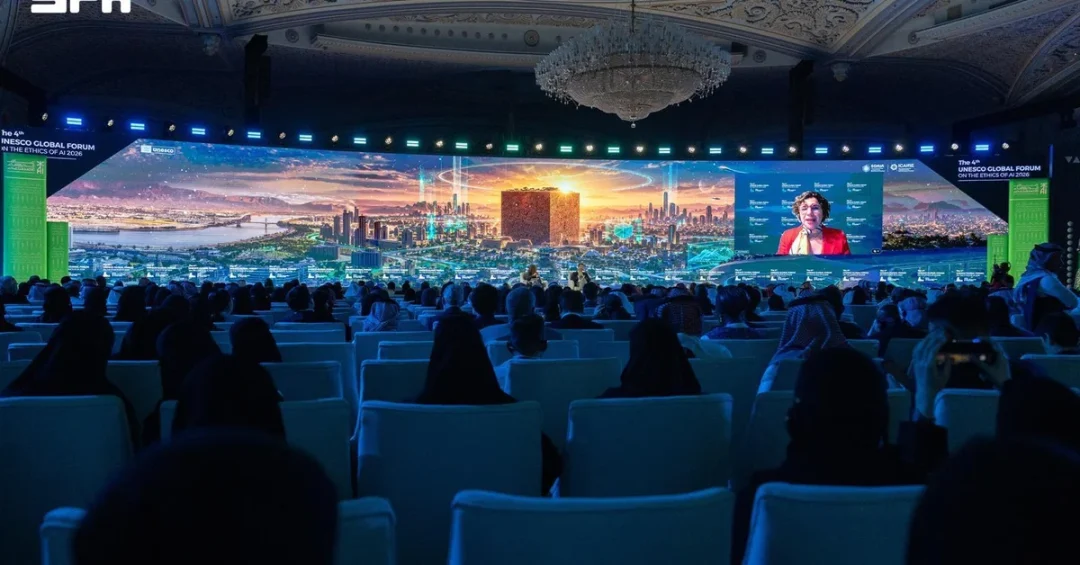
Saudi Arabia’s National AI Risk Management Framework, issued by the Saudi Data and AI Authority (SDAIA), took center stage at the UNESCO Global Forum on the Ethics of Artificial Intelligence (GFEAI 2026) in Riyadh, where international experts examined how the Kingdom is translating global ethical recommendations into practical governance tools. The presentation, delivered during the forum’s sessions on September 17, 2026, highlighted SDAIA’s efforts to move from theoretical frameworks to practical implementation in managing risks associated with artificial intelligence across government and private sectors.
The forum, hosted in the Saudi capital, brought together AI specialists, policymakers, and ethics experts from around the world to discuss the responsible adoption of AI technologies. Saudi Arabia’s participation underscored its growing role as a global convener on AI governance issues and its commitment to aligning technological advancement with ethical safeguards. The National AI Risk Management Framework served as a comprehensive reference and guidance document that translates international and ethical recommendations on AI into practical frameworks and implementation policies, aiming to establish an integrated and unified national approach to identifying, assessing, addressing, and monitoring AI-related risks. But what does this framework actually mean for the future of AI governance, both in Saudi Arabia and globally?
Context and Background
How did Saudi Arabia become a leading voice in the global conversation on AI ethics and risk management? The Kingdom’s journey toward AI governance leadership has been deliberate and strategic, rooted in its broader digital transformation agenda under Saudi Vision 2030. The establishment of SDAIA in 2019 marked a pivotal moment, creating a dedicated authority responsible for driving the national data and AI agenda. Since then, Saudi Arabia has consistently invested in building the institutional, technical, and ethical infrastructure needed to harness AI’s potential while mitigating its risks.
The UNESCO Global Forum on the Ethics of Artificial Intelligence, now in its 2026 edition, represents a critical platform for international dialogue on AI ethics. The forum follows the adoption of the UNESCO Recommendation on the Ethics of Artificial Intelligence in 2021, a landmark global instrument that set out ethical principles for AI development and use. Saudi Arabia’s National AI Risk Management Framework is explicitly aligned with this recommendation, demonstrating the Kingdom’s commitment to international standards while adapting them to local contexts and needs. The framework’s seven core ethical principles mirror those in the UNESCO Recommendation, ensuring coherence between national and global approaches.
The timing of the Riyadh forum is significant. As AI technologies proliferate rapidly across sectors, governments worldwide are grappling with how to regulate and manage them effectively. Saudi Arabia’s proactive stance positions it as a model for other nations seeking to balance innovation with safety. The Kingdom’s experience in developing a comprehensive national framework offers valuable lessons for countries at earlier stages of their AI governance journeys. How can other nations learn from Saudi Arabia’s approach to AI risk management?
Key Details of the National AI Risk Management Framework
What exactly does the National AI Risk Management Framework entail, and how does it function in practice? The framework is designed as a comprehensive reference and guidance document that translates international and ethical recommendations on AI into actionable frameworks and implementation policies. Its primary objective is to establish an integrated and unified national approach to identifying, assessing, addressing, and monitoring risks associated with AI technologies in both the government and private sectors. This approach supports the safe and responsible adoption of AI technologies while advancing Saudi Arabia’s digital transformation and economic competitiveness in line with the objectives of Saudi Vision 2030.
The framework targets three main groups, each with distinct responsibilities and needs. First, it guides system developers in integrating safety considerations and risk governance into the design, training, and testing stages before deployment. This ensures that AI systems are built with safety and ethical considerations from the outset, rather than as an afterthought. Second, it assists system operators in adopting clear operational and monitoring policies and defining responsibilities for follow-up and incident response. This helps organizations manage AI systems effectively throughout their lifecycle. Third, it supports policymakers in assessing the readiness of regulatory and legal frameworks and developing phased legislation that promotes innovation while protecting society.
The framework is based on seven core ethical principles aligned with the UNESCO Recommendation adopted in 2021. These principles provide a foundation for decision-making and risk assessment across all stages of AI development and deployment. By aligning its national framework with international standards, Saudi Arabia ensures that its approach is not only locally relevant but also globally compatible. This alignment facilitates international cooperation and builds trust among partners. How does the framework ensure that ethical principles are not just aspirational but actually implemented on the ground?
International and Regional Impact
What are the broader implications of Saudi Arabia’s AI risk management model for the region and the world? The Kingdom’s presentation at the UNESCO forum signals its willingness to share its experiences and contribute to global knowledge on AI governance. By positioning itself as a thought leader in this space, Saudi Arabia enhances its soft power and influence in international technology policy discussions. The framework’s alignment with UNESCO standards makes it a potential template for other countries in the Middle East and beyond, particularly those seeking to develop their own AI governance structures.
At the regional level, Saudi Arabia’s leadership in AI risk management could catalyze similar initiatives across the Gulf Cooperation Council (GCC) and the wider Arab world. The framework’s emphasis on balancing innovation with safety resonates with governments that are eager to harness AI for economic growth but are also mindful of potential risks. By sharing its model, Saudi Arabia can help foster a more coordinated regional approach to AI governance, which could in turn facilitate cross-border AI projects and data flows. How might regional cooperation on AI governance evolve in the coming years?
On the international stage, the Riyadh forum provided a platform for Saudi experts to engage with counterparts from other nations, exchanging insights and best practices. The discussions addressed the importance of risk management as a fundamental component of AI governance and its role in supporting entities in developing and adopting AI solutions. This exchange of ideas contributes to the global body of knowledge on AI ethics and risk management, reinforcing the principle that AI governance is a shared responsibility. Saudi Arabia’s active participation in such forums demonstrates its commitment to multilateralism and international cooperation in shaping the future of AI.
Economic and Strategic Significance
Why does AI risk management matter for Saudi Arabia’s economic and strategic ambitions? The safe and responsible adoption of AI is not merely a regulatory requirement; it is a strategic enabler for the Kingdom’s economic diversification and competitiveness. As Saudi Arabia seeks to reduce its dependence on oil revenues and build a knowledge-based economy, AI technologies are expected to play a transformative role across sectors such as healthcare, education, energy, and manufacturing. However, realizing this potential requires a robust governance framework that builds trust among investors, businesses, and the public.
The National AI Risk Management Framework provides this trust infrastructure. By establishing clear guidelines for risk identification, assessment, and mitigation, it reduces uncertainty for companies looking to deploy AI solutions in the Kingdom. This, in turn, attracts investment and fosters innovation. The framework’s support for policymakers in developing phased legislation ensures that regulations keep pace with technological developments without stifling innovation. This balanced approach is essential for maintaining Saudi Arabia’s competitive edge in the global AI race. How will the framework influence the Kingdom’s attractiveness as a destination for AI investment?
Furthermore, the framework reinforces Saudi Arabia’s position as a leader in the digital economy. The Kingdom has already made significant strides in areas such as smart cities, digital government services, and e-commerce. By embedding ethical AI governance into its digital transformation, Saudi Arabia differentiates itself as a responsible and forward-thinking player. This reputation can enhance its ability to attract global talent and partnerships, which are critical for building a thriving AI ecosystem. The economic benefits of responsible AI adoption are substantial, ranging from increased productivity to the creation of new industries and jobs.
Vision 2030 Alignment
How does the National AI Risk Management Framework fit into the broader objectives of Saudi Vision 2030? Vision 2030 is the Kingdom’s comprehensive plan to diversify its economy, empower its citizens, and enhance its global standing. Technology and innovation are central pillars of this vision, and AI is recognized as a key driver of future growth. The framework supports Vision 2030 by ensuring that AI adoption is safe, ethical, and aligned with national values. It also contributes to the vision’s goal of building a resilient and diversified economy by fostering a conducive environment for AI-driven industries.
Moreover, the framework underscores Saudi Arabia’s commitment to international cooperation and ethical leadership. By aligning with UNESCO standards and actively participating in global forums, the Kingdom demonstrates its readiness to collaborate on global challenges. This aligns with Vision 2030’s objective of positioning Saudi Arabia as a pivotal player in international affairs. The National AI Risk Management Framework is thus more than a technical document; it is a statement of the Kingdom’s intent to shape a future where technology serves humanity responsibly. As AI continues to evolve, Saudi Arabia’s proactive approach will likely serve as a model for others, reinforcing its role as a global leader in the responsible adoption of emerging technologies.
20 Questions
Q1. What is the National AI Risk Management Framework?
A1. It is a comprehensive reference and guidance document issued by SDAIA that translates international and ethical recommendations on AI into practical frameworks and implementation policies for identifying, assessing, addressing, and monitoring AI risks.
Q2. Who issued the National AI Risk Management Framework?
A2. The framework was issued by the Saudi Data and AI Authority (SDAIA), the national authority responsible for driving Saudi Arabia’s data and AI agenda.
Q3. When was the framework presented at the UNESCO forum?
A3. It was presented during the UNESCO Global Forum on the Ethics of Artificial Intelligence (GFEAI 2026) held in Riyadh on September 17, 2026.
Q4. What are the three main target groups of the framework?
A4. The framework targets system developers, system operators, and policymakers, providing guidance for each group to ensure safe and responsible AI adoption.
Q5. How does the framework support system developers?
A5. It guides developers in integrating safety considerations and risk governance into the design, training, and testing stages before deployment.
Q6. How does the framework assist system operators?
A6. It helps operators adopt clear operational and monitoring policies and define responsibilities for follow-up and incident response.
Q7. How does the framework support policymakers?
A7. It supports policymakers in assessing the readiness of regulatory and legal frameworks and developing phased legislation that promotes innovation while protecting society.
Q8. What are the seven core ethical principles based on?
A8. The seven core ethical principles are aligned with the UNESCO Recommendation on the Ethics of Artificial Intelligence adopted in 2021.
Q9. Why is risk management important for AI governance?
A9. Risk management is a fundamental component of AI governance because it helps identify, assess, and mitigate potential harms while enabling the safe and responsible adoption of AI technologies.
Q10. How does the framework advance Saudi Vision 2030?
A10. It supports digital transformation and economic competitiveness, aligning with Vision 2030’s goals of diversifying the economy and building a knowledge-based society.
Q11. What was the significance of the UNESCO forum in Riyadh?
A11. The forum provided a global platform for experts to discuss AI ethics and risk management, showcasing Saudi Arabia’s leadership in responsible AI governance.
Q12. How does the framework benefit the private sector?
A12. It reduces uncertainty for companies deploying AI by providing clear guidelines, thereby attracting investment and fostering innovation in the private sector.
Q13. Does the framework apply to both government and private sectors?
A13. Yes, it aims to establish an integrated and unified national approach to AI risk management across both government and private sectors.
Q14. What role does SDAIA play in AI governance?
A14. SDAIA is responsible for developing and implementing national AI policies, including the National AI Risk Management Framework, to ensure safe and ethical AI adoption.
Q15. How does the framework promote innovation?
A15. By supporting phased legislation and providing clear risk management guidelines, it creates an environment where innovation can thrive without compromising safety.
Q16. What international standards does the framework align with?
A16. It aligns with the UNESCO Recommendation on the Ethics of Artificial Intelligence adopted in 2021, ensuring global compatibility.
Q17. How can other countries benefit from Saudi Arabia’s experience?
A17. Other countries can learn from Saudi Arabia’s comprehensive approach to AI risk management, using it as a model for developing their own governance frameworks.
Q18. What are the economic benefits of responsible AI adoption?
A18. Responsible AI adoption can increase productivity, create new industries and jobs, and enhance Saudi Arabia’s attractiveness as a destination for AI investment.
Q19. How does the framework build trust among stakeholders?
A19. By establishing clear guidelines for risk identification, assessment, and mitigation, it reduces uncertainty and builds trust among investors, businesses, and the public.
Q20. What is the future outlook for AI governance in Saudi Arabia?
A20. Saudi Arabia is expected to continue leading in AI governance, refining its framework and sharing best practices globally, in line with Vision 2030 and international cooperation.
Reader Feedback
We value your thoughts. Please share your feedback on this article.
Your feedback helps us improve our coverage.
Related articles
 KACST Graduates First ARC Cohort, Launches Second Edition
 Saudi Expertise Takes Center Stage at UNESCO AI Forum
 University of Hail Renewable Energy Program Earns ABET Accreditation
 Robots, Smart Technologies Take Center Stage at Saudi Industry Forum
 ICAIRE Urges Universities to Adopt AI Ethics Master’s Program
 Al Namas hosts second AI summer program