


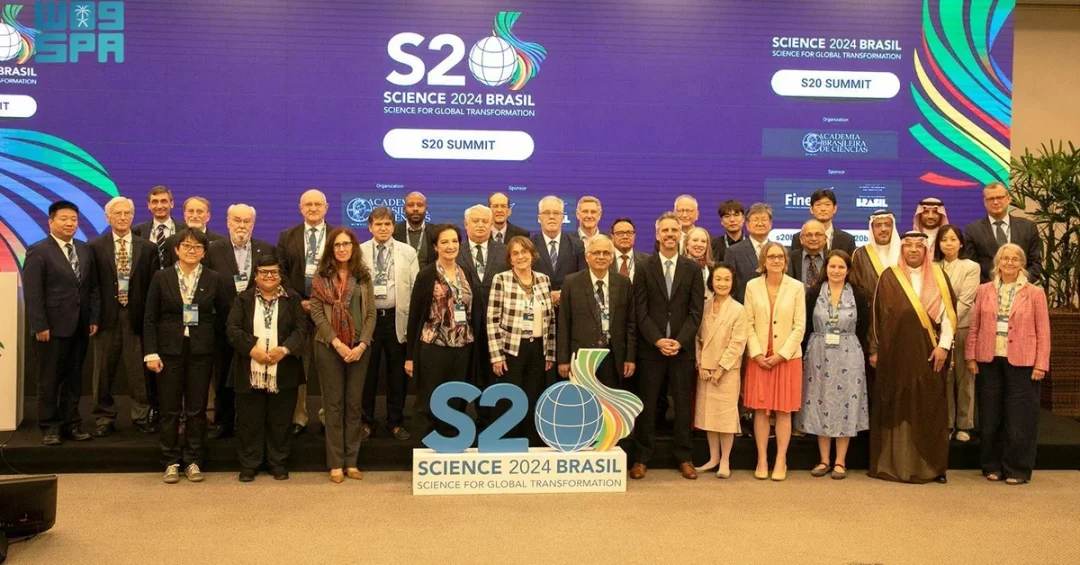
Saudi Arabia reaffirmed its commitment to investing in science and technology to enhance global stability and well-being for future generations at the G20 Science Summit (Science20) in Rio de Janeiro, Brazil. The Kingdom’s delegation was led by Dr. Munir bin Mahmoud Eldesouki, President of King Abdulaziz City for Science and Technology (KACST), who highlighted Saudi Arabia’s ambitious Vision 2030 goals and its national aspirations in research, development, and innovation. The summit, held under Brazil’s G20 presidency, gathered representatives from scientific academies of G20 nations and international scientific institutions to discuss collaborative solutions to global challenges.
Context and Background
The G20 Science Summit serves as a critical platform for the world’s leading economies to align on science and technology priorities. Saudi Arabia’s participation underscores its growing role in global scientific diplomacy and its pursuit of leadership in innovation by 2030. Dr. Eldesouki emphasized that the Kingdom’s national priorities for research, development, and innovation are designed to promote prosperity and sustainability, aligning with Vision 2030’s objectives to diversify the economy and enhance quality of life. The summit also provided an opportunity for Saudi Arabia to share its progress in areas such as artificial intelligence, renewable energy, and biotechnology, showcasing its commitment to international cooperation.
Key Details
In his address, Dr. Eldesouki outlined Saudi Arabia’s strategic initiatives across multiple sectors. He stated that the Kingdom aims to achieve leadership in artificial intelligence through governance, innovation, and ethical AI principles. He also highlighted economic diversification efforts, including investments in the bioeconomy, desert agriculture, water conservation, and renewable energy under the ‘Green Saudi Arabia’ initiative, which targets planting 10 billion trees and reducing carbon emissions by 278 million tons annually. In energy, Saudi Arabia plans to add 20 gigawatts of renewable energy annually to reach 130 gigawatts by 2030, with over 705 billion riyals invested in more than 80 initiatives. Regarding health, Dr. Eldesouki pointed to the national biotechnology strategy, which focuses on genomics and precision medicine to improve healthcare outcomes. He also noted progress in social justice, citing the Kingdom’s receipt of the Global Award for Empowerment of Women in Technology from the International Telecommunication Union (ITU) in 2020 and the increased participation of women in the communications and information technology sector to 35% in 2023, surpassing the European Union, G20, and Silicon Valley averages. At the conclusion of his speech, Dr. Eldesouki thanked Brazil for its G20 presidency and called for a unified framework to address future challenges in science and technology.
Implications and Impact
Saudi Arabia’s active engagement at the G20 Science Summit signals its deepening integration into global scientific networks and its commitment to multilateral cooperation. The Kingdom’s emphasis on AI ethics, renewable energy, and biotechnology positions it as a key player in shaping international standards and solutions for climate change, health crises, and sustainable development. By sharing its successful initiatives, such as the Green Saudi Arabia project and advancements in women’s empowerment, Saudi Arabia demonstrates how national visions can contribute to global well-being. This participation also strengthens diplomatic ties and opens avenues for knowledge exchange, investment, and joint research, reinforcing the Kingdom’s role as a responsible global stakeholder.
Vision 2030 Alignment
The outcomes of the G20 Science Summit directly support Saudi Arabia’s Vision 2030, which seeks to transform the Kingdom into a knowledge-based economy and a leader in innovation. The focus on science, technology, and sustainable development mirrors Vision 2030’s core pillars of a vibrant society, a thriving economy, and an ambitious nation. As Saudi Arabia continues to invest in research, renewable energy, and social progress, its contributions at international forums like the G20 underscore its dedication to fostering global stability and prosperity for future generations, in line with the visionary leadership of the Kingdom.
20 Questions
Q1. What was the main purpose of Saudi Arabia’s participation in the G20 Science Summit?
A1. Saudi Arabia aimed to showcase its commitment to investing in science and technology to enhance global stability and well-being, aligning with Vision 2030. The Kingdom shared its national priorities for research, development, and innovation, and sought international cooperation to address future challenges.
Q2. Who led the Saudi delegation at the G20 Science Summit in Brazil?
A2. Dr. Munir bin Mahmoud Eldesouki, President of King Abdulaziz City for Science and Technology (KACST), led the delegation. He presented the Kingdom’s strategic initiatives and emphasized its leadership ambitions in science and technology by 2030.
Q3. What are Saudi Arabia’s goals in artificial intelligence as mentioned at the summit?
A3. The Kingdom seeks leadership in artificial intelligence through governance, innovation, and ethical AI principles. It aims to employ AI responsibly for research and development, ensuring global security and ethical considerations through international cooperation and knowledge exchange.
Q4. How does Saudi Arabia plan to achieve economic diversification and sustainability?
A4. Saudi Arabia is investing in the bioeconomy, desert agriculture, water conservation technologies, and renewable energy. The Green Saudi Arabia initiative aims to plant 10 billion trees, reduce carbon emissions by 278 million tons annually, and protect 30% of land and marine areas by 2030.
Q5. What is the Green Saudi Arabia initiative and its key targets?
A5. The Green Saudi Arabia initiative aims to plant 10 billion trees in the coming decades, reduce carbon emissions by 278 million tons per year, and protect 30% of land and marine areas by 2030. It supports the Kingdom’s environmental sustainability and climate change combat efforts.
Q6. What are Saudi Arabia’s renewable energy targets by 2030?
A6. Saudi Arabia aims to add 20 gigawatts of renewable energy annually to reach 130 gigawatts by 2030. Over 80 initiatives are being implemented with investments exceeding 705 billion riyals, diversifying the energy mix to 50% renewable and gas.
Q7. How is Saudi Arabia advancing health care through biotechnology?
A7. The Kingdom initiated a national biotechnology strategy to address health challenges, promote medical innovation through genomics and precision medicine, transform health care outcomes, and improve quality of life. It also strengthened mental health care with programs for vulnerable populations.
Q8. What recognition has Saudi Arabia received for women’s empowerment in technology?
A8. Saudi Arabia received the Global Award for Empowerment of Women in Technology from the International Telecommunication Union (ITU) in 2020. It was the first GCC country to receive this award, highlighting its efforts in closing the gender gap.
Q9. How has women’s participation in the ICT sector evolved in Saudi Arabia?
A9. In 2023, women’s participation in the communications and information technology sector increased to 35%, exceeding the European Union, G20, and Silicon Valley averages. This reflects the Kingdom’s successful efforts in empowering women and promoting gender equality.
Q10. What did Dr. Eldesouki emphasize about international cooperation?
A10. He emphasized that international cooperation and knowledge exchange provide a sustainable path to ensuring global security and ethical considerations. He called for a unified framework to meet future challenges in science and technology for a promising future.
Q11. What is Saudi Arabia’s approach to clean energy and climate change?
A11. Saudi Arabia aims to achieve leadership in clean energy and contribute to global efforts against climate change. It is diversifying its energy mix to 50% renewable and gas, eliminating liquid fuel gradually, and investing heavily in renewable projects.
Q12. How does Saudi Arabia plan to reduce carbon emissions?
A12. Through the Green Saudi Arabia initiative, the Kingdom aims to reduce carbon emissions by 278 million tons per year. This involves planting 10 billion trees, protecting land and marine areas, and investing in renewable energy and clean technologies.
Q13. What is the significance of the G20 Science Summit for Saudi Arabia?
A13. The summit provides a platform for Saudi Arabia to showcase its scientific advancements, align with global priorities, and strengthen international partnerships. It reinforces the Kingdom’s role in shaping solutions for global challenges and supports Vision 2030 goals.
Q14. What investments is Saudi Arabia making in research and development?
A14. Saudi Arabia is investing over 705 billion riyals in more than 80 initiatives across renewable energy, biotechnology, and AI. These investments aim to diversify the economy, enhance innovation, and position the Kingdom as a global leader by 2030.
Q15. How does Saudi Arabia address social justice and poverty eradication?
A15. The Kingdom is committed to social justice, eradicating poverty, and reducing inequality. Efforts include empowering women, improving quality of life, and implementing programs that support vulnerable populations, as recognized by international rankings and awards.
Q16. What role does KACST play in Saudi Arabia’s science and technology goals?
A16. King Abdulaziz City for Science and Technology (KACST) leads national research, development, and innovation efforts. Under Dr. Eldesouki, it drives initiatives in AI, biotechnology, and renewable energy, aligning with Vision 2030 to achieve global leadership.
Q17. How is Saudi Arabia improving mental health care?
A17. Saudi Arabia has strengthened mental health care by implementing programs targeting vulnerable populations. These aim to raise awareness, develop strong policies, and provide support systems, improving overall quality of life at the national level.
Q18. What did Dr. Eldesouki express to Brazil at the end of the summit?
A18. He expressed appreciation and gratitude to Brazil for its G20 presidency and excellent efforts in facilitating the Science Summit. He also called for agreement on a framework to meet future science and technology challenges.
Q19. How does Saudi Arabia’s participation benefit global stability?
A19. By sharing its initiatives in AI ethics, renewable energy, and health, Saudi Arabia contributes to global solutions for climate change and health crises. Its commitment to cooperation and sustainability promotes stability and well-being for future generations worldwide.
Q20. What is the connection between the summit outcomes and Vision 2030?
A20. The summit supports Vision 2030 by advancing Saudi Arabia’s goals of a knowledge-based economy, innovation, and global engagement. It reinforces the Kingdom’s dedication to sustainable development and prosperity, aligning with its long-term vision.
Reader Feedback
We value your thoughts. Please share your feedback on this article.
Your feedback helps us improve our coverage.