


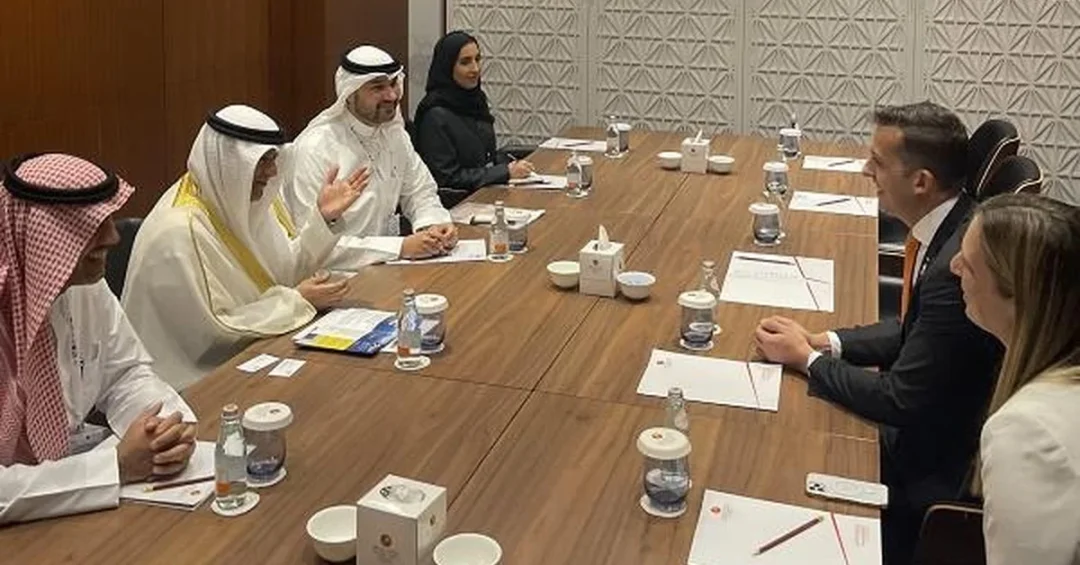
Gulf Cooperation Council (GCC) Secretary-General Jasem bin Mohammed Albudaiwi met with Space Industry Association of Australia (SIAA) Chief Executive Jeremy Hallett on July 2, 2024, in Manama, Bahrain, on the sidelines of the sixth annual International Space Forum (ISF). The meeting underscored the importance of enhancing cooperation between the GCC countries and the SIAA in technology investment and the formulation of space-related policies that serve mutual interests. Both sides discussed Australia’s aspiration to strengthen collaboration with the GCC in outer space activities and explored opportunities for exchanging and transferring expertise.
Context and Background
The Gulf Cooperation Council, established in 1981, is a regional intergovernmental organization comprising Bahrain, Kuwait, Oman, Qatar, Saudi Arabia, and the United Arab Emirates. The GCC has increasingly focused on diversifying its economies beyond hydrocarbons, with space technology emerging as a key sector for innovation and growth. The International Space Forum, now in its sixth year, serves as a platform for global space stakeholders to discuss emerging trends and foster partnerships. The Space Industry Association of Australia represents Australia’s space sector, which has been expanding rapidly, driven by government initiatives and private sector investment. This meeting reflects the growing intersection of Gulf and Australian interests in space exploration, satellite technology, and policy development.
Key Details
During the meeting, Secretary-General Albudaiwi and Chief Executive Hallett highlighted the importance of joint efforts in technology investment and policy formulation. The Australian side expressed a strong desire to enhance cooperation with the GCC countries in outer space, emphasizing the potential for mutual benefit. They reviewed Australia’s role in exchanging and transferring expertise, which could accelerate the development of space capabilities within the GCC. While no specific agreements were announced, the discussions set the stage for future collaboration in areas such as satellite communications, Earth observation, and space science research.
Implications and Impact
This meeting signals a strategic step toward international partnerships that can bolster the GCC’s space ambitions. By engaging with Australia, the GCC countries can access advanced technologies, best practices, and expertise, accelerating their space programs. For Australia, collaborating with the GCC offers opportunities to tap into growing markets and diversify its space partnerships. The dialogue also aligns with broader trends of global cooperation in space, where nations pool resources to address common challenges such as climate monitoring, disaster management, and secure communications. As space becomes increasingly commercialized, such partnerships are vital for maintaining competitiveness and fostering innovation.
Vision 2030 Alignment
Saudi Arabia’s Vision 2030 aims to diversify the economy and promote high-tech sectors, including space. The Kingdom has established the Saudi Space Commission and launched initiatives like the Saudi Space Agency to drive research and innovation. Collaborations with international partners like Australia complement these efforts by providing access to cutting-edge technology and expertise. This meeting reinforces Saudi Arabia’s role as a regional leader in space, contributing to the GCC’s collective progress and enhancing the Kingdom’s global standing in science and technology.
20 Questions
Q1. What was the main purpose of the meeting between the GCC Secretary-General and the SIAA Chief Executive?
A1. The meeting aimed to discuss enhancing cooperation between the GCC countries and Australia in space technology investment and policy formulation. They explored opportunities for collaboration in outer space activities and expertise exchange, aligning with mutual interests.
Q2. Where did the meeting take place?
A2. The meeting took place in Manama, Bahrain, on the sidelines of the sixth annual International Space Forum (ISF). This venue provided a neutral platform for international space dialogue and partnership building.
Q3. Who represented the GCC at the meeting?
A3. GCC Secretary-General Jasem bin Mohammed Albudaiwi represented the Gulf Cooperation Council. He emphasized the importance of joint efforts in space technology and policy development.
Q4. Who represented Australia at the meeting?
A4. Space Industry Association of Australia (SIAA) Chief Executive Jeremy Hallett represented Australia. He expressed Australia’s desire to enhance cooperation with the GCC in outer space.
Q5. What is the International Space Forum?
A5. The International Space Forum is an annual event that brings together global space stakeholders to discuss trends, challenges, and opportunities. The sixth edition was held in Manama, Bahrain, in July 2024.
Q6. What specific areas of cooperation were discussed?
A6. They discussed technology investment, formulation of space-related policies, and exchange of expertise. Australia expressed interest in collaborating with the GCC on outer space activities that serve common interests.
Q7. Did they sign any agreements during the meeting?
A7. No formal agreements were signed. The meeting focused on exploring areas of mutual interest and laying the groundwork for future collaboration in space technology and policy.
Q8. How does this meeting benefit the GCC countries?
A8. The GCC countries can gain access to Australia’s expertise, advanced technologies, and best practices in space. This can accelerate their space programs and enhance regional capabilities in satellite technology and space science.
Q9. What does Australia hope to achieve from this cooperation?
A9. Australia aims to strengthen ties with the GCC, access growing space markets, and diversify its partnerships. This collaboration can also foster innovation and create opportunities for Australian space companies.
Q10. Which GCC countries are most active in space?
A10. The United Arab Emirates and Saudi Arabia are the most active in space within the GCC. Both have established space agencies and launched successful satellite and exploration missions.
Q11. How does this meeting align with Saudi Arabia’s Vision 2030?
A11. Vision 2030 emphasizes economic diversification and technological advancement. Space cooperation supports these goals by fostering innovation, creating high-tech jobs, and enhancing the Kingdom’s global competitiveness in space.
Q12. What role does Saudi Arabia play in the GCC’s space initiatives?
A12. Saudi Arabia is a key player, having established the Saudi Space Commission and launched initiatives like the Saudi Space Agency. It contributes significantly to regional space policy and technology development.
Q13. What are the potential economic benefits of space cooperation?
A13. Space cooperation can lead to economic growth through technology transfer, job creation, and new business opportunities. It also enhances capabilities in areas like communications, navigation, and Earth observation.
Q14. How does space technology contribute to sustainable development?
A14. Space technology supports sustainable development by enabling climate monitoring, disaster management, and resource management. It also drives innovation in renewable energy and smart agriculture.
Q15. What is the Space Industry Association of Australia?
A15. The SIAA is a peak body representing Australia’s space industry. It advocates for policies, fosters collaboration, and supports the growth of Australia’s space sector both domestically and internationally.
Q16. Have GCC countries collaborated with Australia on space before?
A16. While specific prior collaborations are not detailed, this meeting indicates a growing interest in partnership. Both sides are exploring new avenues for cooperation in space technology and policy.
Q17. What are the next steps after this meeting?
A17. The next steps likely involve follow-up discussions, potential memoranda of understanding, and joint projects. Both parties will continue to explore areas of mutual interest and define concrete actions.
Q18. How does this meeting reflect global trends in space cooperation?
A18. It reflects the increasing trend of international partnerships in space, where countries collaborate to share resources, expertise, and risks. Such cooperation is essential for addressing global challenges and advancing space exploration.
Q19. What challenges might arise in GCC-Australia space cooperation?
A19. Challenges could include differing regulatory frameworks, intellectual property concerns, and logistical hurdles. However, both sides demonstrate commitment to overcoming these through dialogue and mutual benefit.
Q20. How can the public benefit from enhanced space cooperation?
A20. Enhanced space cooperation can lead to improved satellite services, better weather forecasting, and advanced communication technologies. It also inspires youth to pursue STEM careers and fosters national pride in scientific achievements.
Reader Feedback
We value your thoughts. Please share your feedback on this article.
Your feedback helps us improve our coverage.