


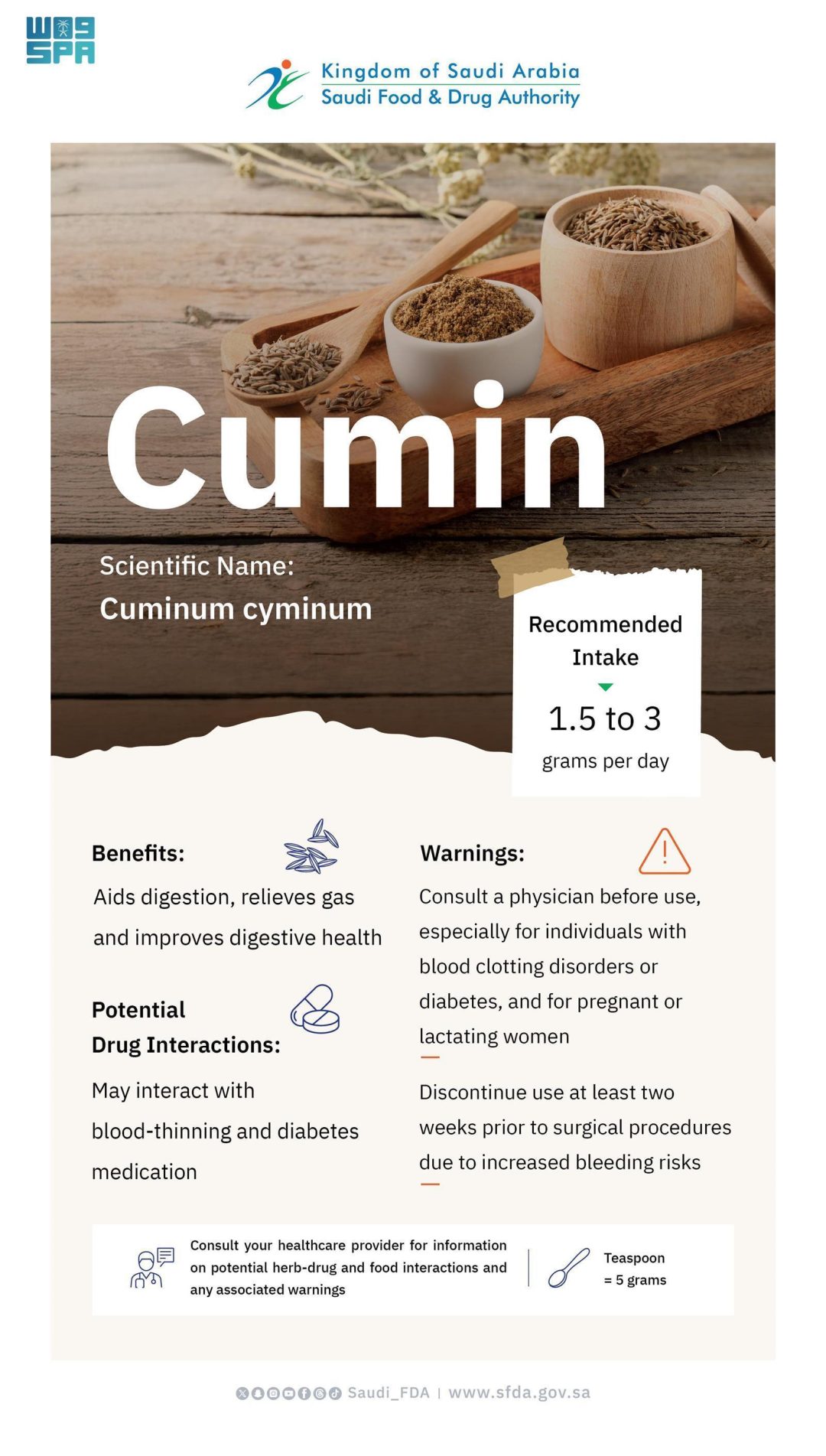
Riyadh is where the Saudi Food and Drug Authority (SFDA) issued a warning that cumin should not be used as a substitute for medical consultation, despite its nutritional value and ability to relieve gas and aid digestion.
According to SPA, the SFDA recommends a daily intake of 1.5 to 3 grams, noting that one teaspoon is approximately 5 grams. The authority warned that cumin can interact with diabetes medications and blood thinners, which may mimic their effects and cause complications.
Medical consultation is advised for pregnant and lactating women, as well as individuals with diabetes or blood clotting disorders. The SFDA stated that cumin may affect hormonal balance during pregnancy or induce uterine contractions, increasing premature birth risks. For breastfeeding mothers, it may influence milk production and lead to diarrhea or colic in infants.
The authority further advised stopping cumin consumption at least two weeks before surgery to avoid increased bleeding risks. Other potential side effects include diarrhea or acid reflux. The SFDA stressed that herbs can affect nutrient absorption or interact with medications and must be used with caution.
What is the recommended daily intake of cumin according to the SFDA? The SFDA advises a recommended daily intake of 1.5 to 3 grams of cumin. To help users measure this amount, the authority noted that one teaspoon of the herb equals approximately 5 grams.
Why should people with diabetes or blood clotting disorders consult a doctor before using cumin? Medical consultation is recommended for these individuals because cumin may interact with diabetes medications and blood thinners. Such interactions can potentially mimic the effects of these medications and lead to complications.
What are the risks of cumin consumption for pregnant and breastfeeding women? For pregnant women, cumin may affect hormonal balance or induce uterine contractions, which increases the risk of premature birth. For breastfeeding mothers, it may influence milk production and potentially cause diarrhea or colic in infants.