


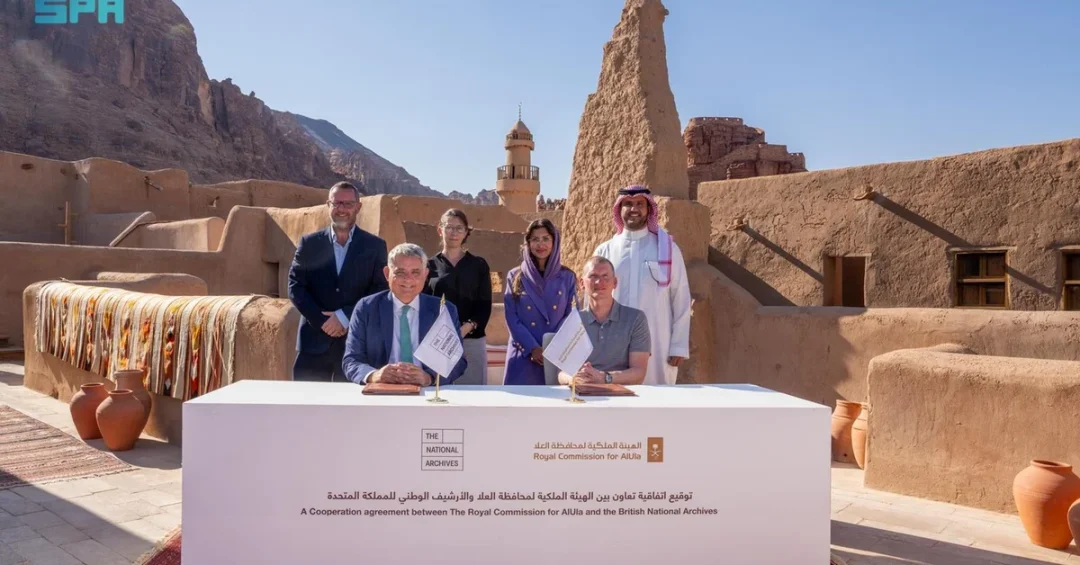
The Royal Commission for AlUla (RCU) has signed a partnership agreement with the National Archives of the United Kingdom to enhance cooperation in archiving, digitization, and cultural preservation, as announced by the Saudi Press Agency on September 10, 2024. The agreement aims to facilitate joint research and training, aligning with AlUla’s vision and Saudi Arabia’s Vision 2030 goals to promote cultural development and global partnerships. This collaboration marks a significant step in preserving and showcasing the rich historical heritage of AlUla, a region renowned for its ancient civilizations and archaeological treasures.
Context and Background
AlUla, located in northwestern Saudi Arabia, is a treasure trove of historical and archaeological wonders, including the Nabataean city of Hegra, Saudi Arabia’s first UNESCO World Heritage Site. The Royal Commission for AlUla, established in 2017, is tasked with developing and promoting AlUla as a premier cultural and tourism destination while preserving its heritage. The partnership with the National Archives of the UK, a leading institution in archival preservation, brings world-class expertise to AlUla’s efforts. This collaboration is part of Saudi Arabia’s broader strategy to diversify its economy and promote cultural exchange under Vision 2030, which emphasizes heritage preservation and international cooperation.
Key Details
The agreement encompasses five main areas: training and scientific exchanges, digitizing and publishing archival collections, holding exhibitions and events, and carrying out research programs focused on archival content. The National Archives will provide digitization and archival preservation expertise, enhancing AlUla’s capacity to manage and showcase its historical resources. Initiatives under this partnership include joint research projects, digital archiving, and cultural exhibitions. The program also aims to collect and preserve historical documents, photographs, and videos from AlUla’s community, offering deeper insights into the region’s cultural heritage. This comprehensive approach ensures that both tangible and intangible heritage is safeguarded for future generations.
Implications and Impact
This partnership is expected to significantly boost AlUla’s profile as a global cultural destination, attracting researchers, historians, and tourists from around the world. By leveraging the National Archives’ expertise, AlUla can ensure that its historical assets are preserved to international standards and made accessible to a global audience. The collaboration also strengthens cultural ties between Saudi Arabia and the United Kingdom, fostering mutual understanding and respect. Economically, it supports Saudi Arabia’s goals to increase tourism’s contribution to GDP and create job opportunities in the heritage and tourism sectors. Furthermore, it enhances Saudi Arabia’s soft power and positions the Kingdom as a leader in cultural preservation and international cultural diplomacy.
Vision 2030 Alignment
This partnership directly supports Saudi Arabia’s Vision 2030, which aims to diversify the economy, promote cultural development, and enhance international partnerships. By preserving and promoting AlUla’s heritage, the agreement contributes to the Vision’s objectives of increasing tourism, creating jobs, and fostering a vibrant cultural sector. It also aligns with the Vision’s emphasis on global engagement and knowledge exchange. Through such collaborations, Saudi Arabia continues to position itself as a hub for cultural tourism and a bridge between civilizations, showcasing its rich history and forward-looking ambitions.
20 Questions
Q1. What is the Royal Commission for AlUla?
A1. The Royal Commission for AlUla is a Saudi government body established in 2017 to develop and promote AlUla as a cultural and tourism destination while preserving its heritage. It oversees archaeological projects, tourism infrastructure, and cultural initiatives, aligning with Vision 2030 goals.
Q2. What is the National Archives of the UK?
A2. The National Archives is the official archive of the UK government, preserving historical documents dating back over 1,000 years. It provides expertise in digitization, preservation, and public access, serving as a model for archival institutions worldwide.
Q3. When was the partnership agreement signed?
A3. The partnership agreement was signed on September 10, 2024, as reported by the Saudi Press Agency. The signing marks a formal collaboration between the Royal Commission for AlUla and the National Archives.
Q4. What are the main areas of cooperation?
A4. The agreement covers five main areas: training and scientific exchanges, digitizing and publishing archival collections, holding exhibitions and events, and carrying out research programs focused on archival content. These areas ensure comprehensive collaboration.
Q5. How does this partnership align with Vision 2030?
A5. It aligns with Vision 2030 by promoting cultural development, international partnerships, and economic diversification. It supports tourism growth, job creation, and the preservation of Saudi heritage, key pillars of the Vision.
Q6. What is AlUla known for?
A6. AlUla is known for its stunning desert landscapes and archaeological sites, including Hegra, Saudi Arabia’s first UNESCO World Heritage Site. It was a key crossroads on ancient trade routes and is now a major tourism destination.
Q7. How will the National Archives assist AlUla?
A7. The National Archives will provide digitization and archival preservation expertise, enhancing AlUla’s capacity to manage and showcase its historical resources. This includes training, technical support, and best practices in archiving.
Q8. What are the expected outcomes of the partnership?
A8. Expected outcomes include joint research projects, digital archiving, cultural exhibitions, and the collection of historical documents, photographs, and videos from the AlUla community. These will deepen insights into the region’s heritage.
Q9. Will there be public exhibitions?
A9. Yes, the agreement includes holding exhibitions and events to showcase archival collections. These exhibitions will be accessible to the public, both in Saudi Arabia and internationally, promoting cultural exchange.
Q10. How does this benefit the local community?
A10. The partnership aims to collect and preserve historical materials from the AlUla community, ensuring local heritage is documented and celebrated. It also creates opportunities for training and employment in archival and cultural fields.
Q11. What is the significance of digitization?
A11. Digitization makes historical documents and artifacts accessible to a global audience while preserving originals from deterioration. It facilitates research, education, and virtual exhibitions, enhancing AlUla’s reach.
Q12. Are there similar partnerships with other countries?
A12. Yes, Saudi Arabia has established numerous cultural partnerships globally, including with France, Italy, and UNESCO. These collaborations aim to preserve heritage and promote cultural exchange under Vision 2030.
Q13. How will this impact tourism in AlUla?
A13. The partnership is expected to boost tourism by enhancing AlUla’s appeal as a cultural destination. Improved archives and exhibitions will attract researchers and tourists, contributing to the local economy and job creation.
Q14. What types of documents will be archived?
A14. The archives will include historical documents, photographs, videos, and other materials related to AlUla’s history and culture. These will be sourced from local and international collections.
Q15. Who oversees the partnership?
A15. The Royal Commission for AlUla and the National Archives of the UK will jointly oversee the partnership, with regular reviews to ensure objectives are met. Both parties will appoint coordinators for implementation.
Q16. Will this partnership create jobs?
A16. Yes, it is expected to create jobs in archival management, digitization, research, and tourism. Training programs will also build local capacity, providing long-term career opportunities for Saudis.
Q17. How does this support Saudi Arabia’s cultural diplomacy?
A17. By collaborating with a prestigious international institution, Saudi Arabia strengthens cultural ties and showcases its commitment to preserving global heritage. This enhances its soft power and promotes mutual understanding.
Q18. What is the timeline for implementation?
A18. Specific timelines will be developed jointly, with initiatives rolled out progressively. The agreement is effective immediately, and projects will commence in phases over the coming years.
Q19. Are there plans for educational programs?
A19. Yes, training and scientific exchanges are key components, including workshops, internships, and academic collaborations. These will build expertise in archival science and heritage management.
Q20. How can the public access the archives?
A20. Once digitized, archives will be available online and through exhibitions. The Royal Commission for AlUla will announce access details, ensuring broad public engagement with AlUla’s heritage.
Reader Feedback
We value your thoughts. Please share your feedback on this article.
Your feedback helps us improve our coverage.
Related articles
 Year of the Camel Shines at National Cultural Awards
 Saudis Dominate Final Stage of Crown Prince Camel Festival
 KFCRIS Launches UNESCO Chair in Translating Cultures
 Saudi Ministry of Culture and KSGAAL Launch Arabic Language Hackathon
 Minister of Culture Commends 2025 ‘Year of Handicrafts’
 Camel Pavilion Highlights Cultural Icon at Riyadh Book Fair