


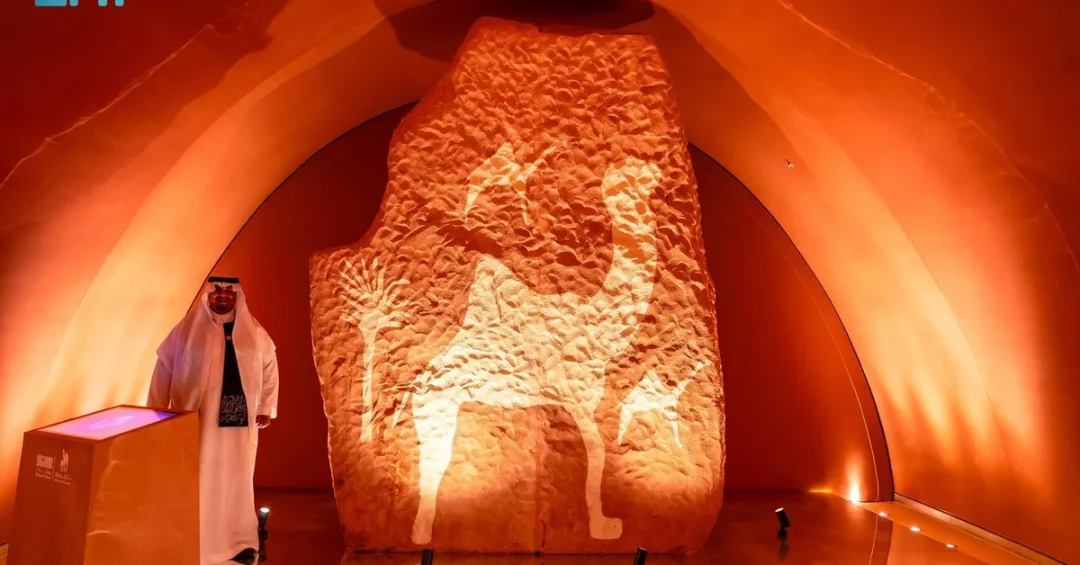
The Year of the Camel initiative, launched by the Ministry of Culture for 2024, showcased Saudi Arabia’s deep-rooted cultural heritage at the closing ceremony of the fourth National Cultural Awards held at the King Fahd Cultural Center in Riyadh on September 10, 2024. The initiative’s participation highlighted the enduring relationship between Saudis and camels, a bond that has shaped the Kingdom’s identity for centuries. Through a special pavilion featuring rock engravings of camels and a screen displaying camel engravings from various regions, the initiative demonstrated how camels remain a living symbol of Saudi authenticity and cultural pride.
Context and Background
The Year of the Camel initiative was launched by the Ministry of Culture as part of Saudi Arabia’s broader efforts to preserve and celebrate its rich cultural heritage. Camels have long been central to Saudi life, serving as essential companions for travel, trade, and sustenance across the Arabian Peninsula. The initiative seeks to honor this legacy while educating new generations and international audiences about the camel’s pivotal role in shaping Saudi society. The fourth National Cultural Awards, a prestigious event recognizing outstanding contributions to Saudi culture, provided an ideal platform for the initiative to reach a diverse audience.
The closing ceremony at the King Fahd Cultural Center brought together cultural leaders, artists, and dignitaries to celebrate the Kingdom’s artistic and heritage achievements. The Year of the Camel’s pavilion stood out as a testament to the Ministry of Culture’s commitment to integrating traditional symbols into contemporary cultural narratives. By featuring rock engravings and digital displays, the initiative bridged ancient practices with modern presentation methods, aligning with Saudi Arabia’s Vision 2030 goals of promoting cultural tourism and national pride.
Key Details
The pavilion organized by the Year of the Camel initiative included a striking rock engraving of camels, reminiscent of ancient petroglyphs found across the Kingdom. A large screen showcased camel engravings from various regions, highlighting archaeological evidence that traces the human-camel relationship back thousands of years. These exhibits underscored the camel’s status as a cultural icon and a witness to Saudi Arabia’s historical continuity.
According to the Saudi Press Agency (SPA), the initiative aims to preserve the cultural heritage associated with camels and celebrate them as a symbol of Saudi authenticity. The displays also emphasized how camels continue to influence daily life, from traditional festivals to modern cultural expressions. The Ministry of Culture’s efforts reflect a strategic focus on documenting and promoting intangible heritage, ensuring that future generations understand the significance of camels in Saudi history.
International Impact
The Year of the Camel initiative resonates beyond Saudi borders, offering international audiences a window into the Kingdom’s cultural depth. As Saudi Arabia opens up to global tourism and cultural exchange under Vision 2030, such initiatives help foster cross-cultural understanding and appreciation. The pavilion at the National Cultural Awards served as a diplomatic tool, showcasing Saudi heritage in a compelling and accessible manner.
Moreover, the initiative aligns with global trends in heritage conservation and sustainable tourism. By highlighting archaeological evidence and traditional practices, Saudi Arabia positions itself as a leader in cultural preservation, attracting visitors interested in authentic experiences. This not only boosts the tourism sector but also strengthens the Kingdom’s soft power and international standing.
Vision 2030 Alignment
The Year of the Camel initiative directly supports Vision 2030, Saudi Arabia’s ambitious blueprint for economic diversification and social transformation. By celebrating cultural heritage, the initiative contributes to the growth of cultural tourism, a key pillar of the Vision’s economic goals. It also reinforces national identity and pride, fostering a sense of unity among Saudis. As the Kingdom continues to invest in cultural initiatives, the Year of the Camel stands as a shining example of how heritage can drive sustainable development and global engagement, ensuring that Saudi Arabia’s rich past informs its bright future.
20 Questions
Q1. What is the Year of the Camel initiative?
A1. The Year of the Camel initiative is a cultural program launched by the Ministry of Culture in 2024 to celebrate the historical and cultural significance of camels in Saudi Arabia, highlighting their role in shaping Saudi identity and heritage.
Q2. When and where was the fourth National Cultural Awards closing ceremony held?
A2. The closing ceremony took place on September 10, 2024, at the King Fahd Cultural Center in Riyadh, bringing together cultural leaders and dignitaries to honor Saudi cultural achievements.
Q3. What did the Year of the Camel pavilion feature?
A3. The pavilion featured a rock engraving of camels and a screen displaying camel engravings from various regions of the Kingdom, showcasing archaeological evidence and unique landmarks.
Q4. Why are camels important in Saudi culture?
A4. Camels have been central to Saudi life for centuries, serving as companions for travel, trade, and sustenance, and symbolizing authenticity, resilience, and cultural pride in Saudi society.
Q5. How does the Year of the Camel initiative preserve heritage?
A5. The initiative preserves heritage by documenting and promoting the cultural significance of camels through exhibitions, educational programs, and public events, ensuring future generations appreciate this legacy.
Q6. What is the National Cultural Awards?
A6. The National Cultural Awards is a prestigious Saudi event that recognizes outstanding contributions to culture, celebrating achievements in various fields and promoting the Kingdom’s artistic and heritage sectors.
Q7. How does the initiative align with Vision 2030?
A7. It supports Vision 2030 by promoting cultural tourism, reinforcing national identity, and contributing to economic diversification, as cultural heritage is a key pillar of the Kingdom’s transformation plan.
Q8. What archaeological evidence is associated with camels in Saudi Arabia?
A8. Rock engravings and petroglyphs found across regions like Al-Jouf and Tabuk date back thousands of years, providing evidence of the ancient human-camel relationship in the Arabian Peninsula.
Q9. Who launched the Year of the Camel initiative?
A9. The initiative was launched by the Ministry of Culture, a government body responsible for preserving and promoting Saudi Arabia’s cultural heritage and artistic expressions.
Q10. What role do camels play in modern Saudi society?
A10. Camels remain important in cultural festivals, racing events, and as a symbol of heritage, while also contributing to tourism and traditional industries, bridging the past and present.
Q11. How does the initiative engage international audiences?
A11. By participating in events like the National Cultural Awards, the initiative showcases Saudi heritage to global visitors, fostering cross-cultural understanding and attracting tourists interested in authentic cultural experiences.
Q12. What is the significance of the rock engraving displayed?
A12. The rock engraving represents ancient petroglyphs that reflect the pride and admiration Saudis have held for camels since ancient times, serving as a tangible link to the past.
Q13. How does the Ministry of Culture support heritage initiatives?
A13. The Ministry of Culture supports heritage through funding, organizing events, and creating platforms like the Year of the Camel, which educate the public and preserve intangible cultural assets.
Q14. What other cultural initiatives has Saudi Arabia launched?
A14. Saudi Arabia has launched numerous initiatives, including the Year of Arabic Poetry, the Diriyah Biennale, and various heritage festivals, all aimed at celebrating and preserving the Kingdom’s diverse cultural tapestry.
Q15. How can the public participate in the Year of the Camel?
A15. The public can participate by attending exhibitions, visiting heritage sites, engaging with digital content, and supporting camel-related cultural events organized throughout the year across the Kingdom.
Q16. What impact does the initiative have on tourism?
A16. It enhances cultural tourism by attracting visitors interested in Saudi heritage, thereby supporting local economies and promoting the Kingdom as a destination for authentic cultural experiences.
Q17. How does the initiative reflect Saudi authenticity?
A17. By celebrating camels as a living witness to Saudi history, the initiative underscores the Kingdom’s authentic traditions and the enduring bond between Saudis and their natural environment.
Q18. What are the educational benefits of the initiative?
A18. The initiative provides educational opportunities for youth to learn about Saudi heritage, fostering pride and understanding of the camel’s historical and cultural importance in the Kingdom.
Q19. How does the initiative use technology to showcase heritage?
A19. It uses digital screens to display camel engravings from various regions, blending modern technology with traditional content to create engaging and accessible exhibits for diverse audiences.
Q20. What is the long-term goal of the Year of the Camel initiative?
A20. The long-term goal is to institutionalize the celebration of camels as a cultural symbol, ensuring their legacy is preserved and integrated into Saudi Arabia’s cultural and tourism strategies for generations to come.
Reader Feedback
We value your thoughts. Please share your feedback on this article.
Your feedback helps us improve our coverage.
Related articles
 Saudis Dominate Final Stage of Crown Prince Camel Festival
 KFCRIS Launches UNESCO Chair in Translating Cultures
 Saudi Ministry of Culture and KSGAAL Launch Arabic Language Hackathon
 Minister of Culture Commends 2025 ‘Year of Handicrafts’
 Camel Pavilion Highlights Cultural Icon at Riyadh Book Fair
 315 Learners Sit for Hamza Arabic Proficiency Test