


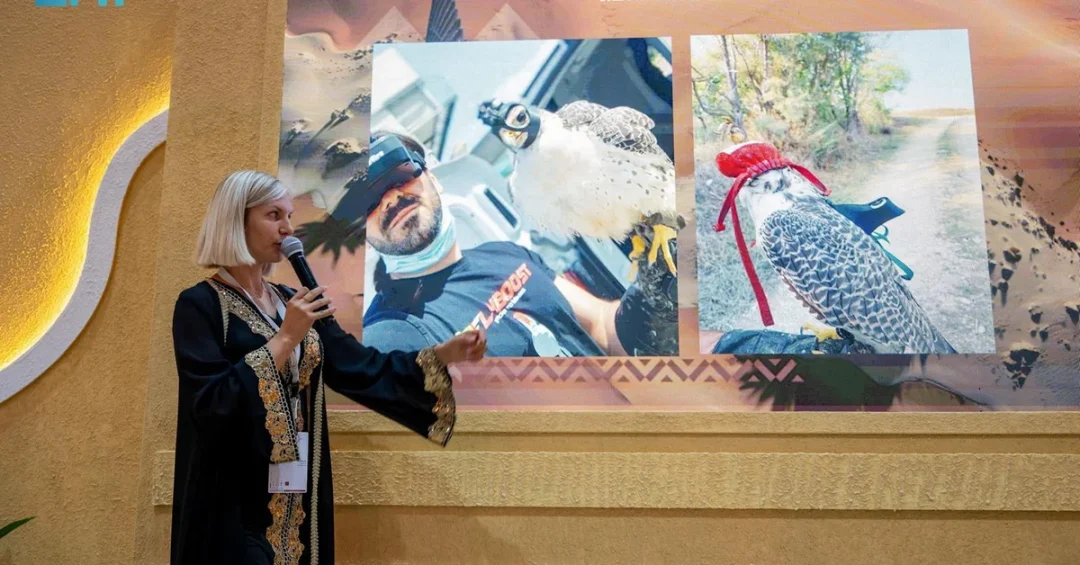
International falconry experts and specialists convened at the International Saudi Falcons and Hunting Exhibition in Riyadh, presenting a series of scientific workshops that spotlighted artificial intelligence (AI) applications in falconry and advanced care techniques. The event, organized by the Saudi Falcons Club at the Riyadh Exhibition and Convention Center (RECC) in Malham, north of Riyadh, runs until October 12 and has drawn a global audience of falcon enthusiasts, researchers, and investors. Have you ever wondered how ancient traditions like falconry can be transformed by cutting-edge technology? This exhibition provides a compelling answer, showcasing how Saudi Arabia is blending heritage with innovation under the umbrella of Vision 2030.
The exhibition serves as a dynamic platform for knowledge exchange, featuring 26 workshops, panel discussions, and specialized dialogues focused on the world of falcons, their care, and breeding. Experts from Italy, the United Kingdom, and Saudi Arabia shared insights on topics ranging from AI-assisted judging in falconry competitions to the latest health supplements for falcons. The event underscores Saudi Arabia’s commitment to preserving its cultural heritage while embracing modern technologies, positioning the Kingdom as a global leader in falconry and wildlife conservation. As the exhibition continues to attract international participation, it highlights the Kingdom’s role in fostering dialogue and innovation in traditional sports and environmental stewardship.
Context and Background
Falconry holds a revered place in Saudi Arabian culture, symbolizing nobility, patience, and a deep connection to the desert heritage. The International Saudi Falcons and Hunting Exhibition, now in its latest edition, reflects the Kingdom’s dedication to preserving this legacy while adapting it to contemporary contexts. Organized by the Saudi Falcons Club, a key institution under the Ministry of Culture, the event aligns with the broader objectives of Vision 2030, which seeks to diversify the economy and promote cultural tourism. How does a centuries-old tradition remain relevant in a rapidly modernizing society? By integrating technology and scientific research, the exhibition demonstrates that falconry can evolve without losing its essence. The participation of international experts further enriches the discourse, bringing global perspectives to local practices and fostering cross-cultural exchange. This year’s focus on AI and health innovations marks a significant step in professionalizing falconry and ensuring its sustainability for future generations.
The Riyadh Exhibition and Convention Center in Malham has been transformed into a hub of activity, with workshops covering a wide array of topics essential to modern falconry. From adenovirus prevention to conservation case studies, the sessions address both the challenges and opportunities facing falconers today. The event also serves as a marketplace for related industries, including veterinary services, nutrition, and technology providers. By hosting such a comprehensive exhibition, Saudi Arabia reinforces its position as a central node in the global falconry community. Moreover, the emphasis on scientific approaches signals a shift toward evidence-based practices, which can enhance falcon welfare and competition fairness. As the Kingdom continues to invest in events that celebrate its heritage, the exhibition stands out as a model for how tradition and innovation can coexist harmoniously.
Key Details
During a workshop titled “Modern Technologies in Falconry,” Ana Jitariuc, an Italian falconry expert and biotechnology researcher, outlined the paths of AI in judging falconry competitions. She explained how AI algorithms can analyze flight patterns, speed, and hunting success, providing objective metrics that supplement human judgment. This innovation not only enhances the accuracy of competitions but also offers new ways to train falcons and evaluate their performance. Jitariuc’s presentation highlighted the potential for AI to create standardized evaluation systems, which could be adopted internationally. How can technology ensure fairness in a sport deeply rooted in human-animal interaction? By offering precise data, AI can reduce disputes and elevate the professionalism of falconry events. Her insights resonated with attendees, sparking discussions on the ethical integration of technology in traditional sports. The workshop underscored Saudi Arabia’s openness to pioneering solutions that bridge the gap between heritage and high-tech.
Giovanni Granati, a falconry expert, artist, and writer from Italy, discussed the positive effects of AI on falcon hunting, highlighting the numerous modern technologies used in the practice. He noted that AI-powered devices, such as smart tracking collars and drones, can assist falconers in monitoring their birds and locating prey more efficiently. These tools not only improve success rates but also contribute to the health and safety of falcons by providing real-time data on their physical condition. Granati emphasized that such technologies are complements to, not replacements for, traditional skills. In a knowledge-rich workshop titled “Adenovirus in Captive-Bred Falcons,” Mahmoud Hassanein, a professor in avian diseases at the College of Veterinary Medicine at King Faisal University, addressed the contagious adenovirus infection in young captive falcons. He emphasized the necessity of preventive measures amid health risks of both adenovirus and circovirus infections in falcons. His presentation provided veterinarians and falconers with actionable guidelines to mitigate these threats, underscoring the importance of biosecurity in breeding facilities.
Sherif Diab, a professor at the Avian Research Center at King Faisal University, presented a workshop titled “Top Supplements and Additives to Enhance Falcon Health and Performance.” He highlighted the importance of such supplements and additives in falcon races, as they improve the falcons’ diet, health, and performance. Diab detailed how specific nutrients can boost endurance, immune response, and recovery times, which are critical during competitive seasons. The exhibition also hosted another workshop titled “Falcon Conservation: Case Studies of Raptor Projects.” Jemima Parry-Jones, the chief executive of the International Bird of Prey Centre in Britain, emphasized the importance of enhancing falconry credibility through conservation efforts, showcasing key skills and successes in transitioning from falconry to conservation projects. She shared examples of how falconers have contributed to the recovery of endangered raptor species, demonstrating the synergy between sport and environmental stewardship.
International and Regional Impact
The participation of international experts at the exhibition underscores Saudi Arabia’s growing influence in global falconry and conservation circles. By hosting such a diverse array of speakers, the Kingdom facilitates the exchange of knowledge and best practices, which can lead to collaborative research and joint initiatives. This cross-border cooperation is essential for addressing shared challenges, such as disease outbreaks and habitat loss, that affect falcon populations worldwide. How does Saudi Arabia’s leadership in this niche enhance its broader diplomatic and cultural ties? Through events like this, the Kingdom builds bridges with other nations, showcasing its commitment to preserving natural heritage and promoting sustainable practices. The exhibition also attracts investors and entrepreneurs, creating economic opportunities in sectors like ecotourism, veterinary pharmaceuticals, and smart technologies. Regionally, it reinforces Saudi Arabia’s position as a leader in the Middle East, setting standards for wildlife conservation and traditional sports.
The focus on AI and modern technologies signals a forward-looking approach that aligns with Vision 2030’s emphasis on innovation and digital transformation. By integrating AI into falconry, Saudi Arabia not only modernizes a cherished tradition but also opens avenues for tech companies to develop specialized solutions. This could spur growth in the local technology sector, with applications extending beyond falconry to other fields such as wildlife monitoring and environmental management. Furthermore, the exhibition’s success in drawing global attention highlights the potential for Saudi Arabia to become a hub for international conferences and expos, boosting tourism and knowledge-based industries. As the Kingdom continues to diversify its economy, such events play a vital role in attracting foreign investment and fostering partnerships. The international acclaim for the exhibition also enhances Saudi Arabia’s soft power, presenting a positive image of a nation that respects its heritage while embracing the future.
Economic and Strategic Significance
The International Saudi Falcons and Hunting Exhibition is more than a cultural event; it is an economic catalyst that drives activity in multiple sectors. The gathering of experts, traders, and enthusiasts stimulates demand for falconry-related products and services, from specialized nutrition and veterinary care to high-tech tracking devices. Local businesses, including breeders and equipment suppliers, benefit from increased visibility and networking opportunities. Moreover, the exhibition serves as a platform for announcing new investments and partnerships, as evidenced by the presence of investors and researchers. How does this contribute to Saudi Arabia’s economic diversification goals? By nurturing a specialized industry around falconry, the Kingdom creates jobs, fosters innovation, and generates revenue streams that complement traditional sectors like oil. The event also promotes tourism, attracting visitors from around the world who are interested in falconry and Saudi culture. This influx of international guests supports the hospitality and retail sectors, further contributing to the goals of Vision 2030.
Strategically, the exhibition reinforces Saudi Arabia’s commitment to environmental sustainability and biodiversity conservation. The workshops on adenovirus and conservation projects highlight the importance of protecting falcon populations, which are integral to the ecosystem. By addressing health and conservation issues, the Kingdom demonstrates responsible stewardship of natural resources, a key pillar of Vision 2030. Additionally, the integration of AI and advanced technologies positions Saudi Arabia as a pioneer in merging tradition with innovation, a narrative that resonates globally. This strategic alignment not only enhances the Kingdom’s reputation but also attracts international collaborators who share similar values. As the exhibition continues to evolve, it is likely to spawn new initiatives that further embed falconry into the national identity while driving economic and environmental progress.
Vision 2030 Alignment
The International Saudi Falcons and Hunting Exhibition exemplifies the core objectives of Vision 2030 by celebrating cultural heritage while embracing modernization and economic diversification. Under the patronage of the Saudi Falcons Club, the event showcases how traditional practices can be revitalized through technology and scientific research, creating new opportunities for growth and global engagement. By hosting international experts and facilitating knowledge exchange, Saudi Arabia positions itself as a leader in falconry and conservation, contributing to the Vision’s goal of a vibrant society and a thriving economy. How does this align with the Kingdom’s long-term vision? It demonstrates that progress and tradition are not mutually exclusive but can reinforce each other, paving the way for a sustainable and prosperous future. The exhibition also supports the Vision’s focus on enhancing quality of life and promoting cultural tourism, as it attracts visitors and fosters community pride.
Moreover, the emphasis on AI and modern technologies reflects the Vision’s ambition to become a global hub for innovation and digital transformation. By integrating cutting-edge solutions into falconry, Saudi Arabia not only preserves its heritage but also creates a model for other traditional sports and industries to follow. This forward-looking approach is expected to yield benefits across sectors, from technology development to environmental conservation. As the exhibition concludes, its impact will be felt in the strengthened networks, shared knowledge, and renewed commitment to preserving falconry for future generations. In line with Vision 2030, Saudi Arabia continues to demonstrate that it is a nation that honors its past while boldly embracing the future, setting an example for the world.
20 Questions
Q1. What is the International Saudi Falcons and Hunting Exhibition?
A1. It is an event organized by the Saudi Falcons Club in Riyadh, featuring workshops and discussions on falconry, falcon care, and modern technologies, aimed at promoting cultural heritage and innovation.
Q2. Where and when did the exhibition take place?
A2. The exhibition was held at the Riyadh Exhibition and Convention Center in Malham, north of Riyadh, and ran until October 12, 2024.
Q3. Who presented the workshop on AI in falconry?
A3. Ana Jitariuc, an Italian falconry expert and biotechnology researcher, presented the workshop titled “Modern Technologies in Falconry,” outlining AI applications in judging competitions.
Q4. How can AI be used in falconry competitions?
A4. AI can analyze flight patterns, speed, and hunting success to provide objective metrics, enhancing accuracy and fairness in judging, and offering new training methods.
Q5. What did Giovanni Granati discuss at the exhibition?
A5. Giovanni Granati, an Italian falconry expert, discussed the positive effects of AI on falcon hunting, including smart tracking collars and drones that improve efficiency and falcon health.
Q6. What is adenovirus and why is it a concern for falcons?
A6. Adenovirus is a contagious infection affecting young captive falcons, posing health risks; preventive measures are essential to mitigate its spread and impact.
Q7. Who spoke about adenovirus in falcons?
A7. Mahmoud Hassanein, a professor in avian diseases at King Faisal University, addressed the infection and emphasized preventive measures in a workshop.
Q8. What supplements were highlighted for falcon health?
A8. Sherif Diab presented on top supplements and additives that enhance falcon diet, health, and performance, particularly during races.
Q9. Who is Jemima Parry-Jones and what did she discuss?
A9. Jemima Parry-Jones, chief executive of the International Bird of Prey Centre in Britain, discussed falcon conservation and case studies of raptor projects.
Q10. How does the exhibition promote conservation?
A10. Through workshops like “Falcon Conservation,” it showcases successful transitions from falconry to conservation projects, enhancing credibility and protecting raptor species.
Q11. How many workshops were held at the exhibition?
A11. The exhibition featured 26 workshops, panel discussions, and specialized dialogues on falcons, their care, and breeding.
Q12. What is the role of the Saudi Falcons Club?
A12. The Saudi Falcons Club organizes the exhibition as part of its mission to preserve falconry heritage and promote innovation under Vision 2030.
Q13. How does the exhibition align with Vision 2030?
A13. It supports cultural preservation, economic diversification, and technological innovation, reflecting Vision 2030’s goals of a vibrant society and thriving economy.
Q14. What economic benefits does the exhibition bring?
A14. It stimulates demand for falconry products and services, attracts investors, boosts tourism, and creates opportunities in technology and conservation sectors.
Q15. What international participation was notable?
A15. Experts from Italy and the United Kingdom participated, sharing insights on AI, health, and conservation, enhancing global knowledge exchange.
Q16. How does AI improve falcon hunting?
A16. AI-powered devices like smart collars and drones assist in monitoring falcons and locating prey, improving success rates and bird safety.
Q17. What preventive measures were recommended for adenovirus?
A17. Strict biosecurity, vaccination, and regular health checks are recommended to prevent adenovirus and circovirus infections in captive falcons.
Q18. Why are supplements important for falcons?
A18. Supplements enhance diet, health, and performance, crucial for competitions, as they boost endurance and immune response.
Q19. How does conservation enhance falconry credibility?
A19. By contributing to raptor recovery and habitat protection, falconers demonstrate environmental stewardship, elevating the sport’s reputation.
Q20. What is the future outlook for such exhibitions?
A20. They are expected to grow, fostering innovation, international collaboration, and sustainable practices, further embedding falconry in Saudi Arabia’s cultural and economic landscape.
Reader Feedback
We value your thoughts. Please share your feedback on this article.
Your feedback helps us improve our coverage.
Related articles
 Saudi Falcons Club, King Saud University Sign MoC
 Red Sea Film Festival Unveils 2024 Arab Shorts Lineup
 Noor Riyadh Launches Art Book in London with Assouline
 Camel Riders Showcase Heritage at Saudi Falcons Exhibition
 Five Winners Announced in Fourth Round of Melwah Racing
 AlUla to Host MANN Masterpieces in November