


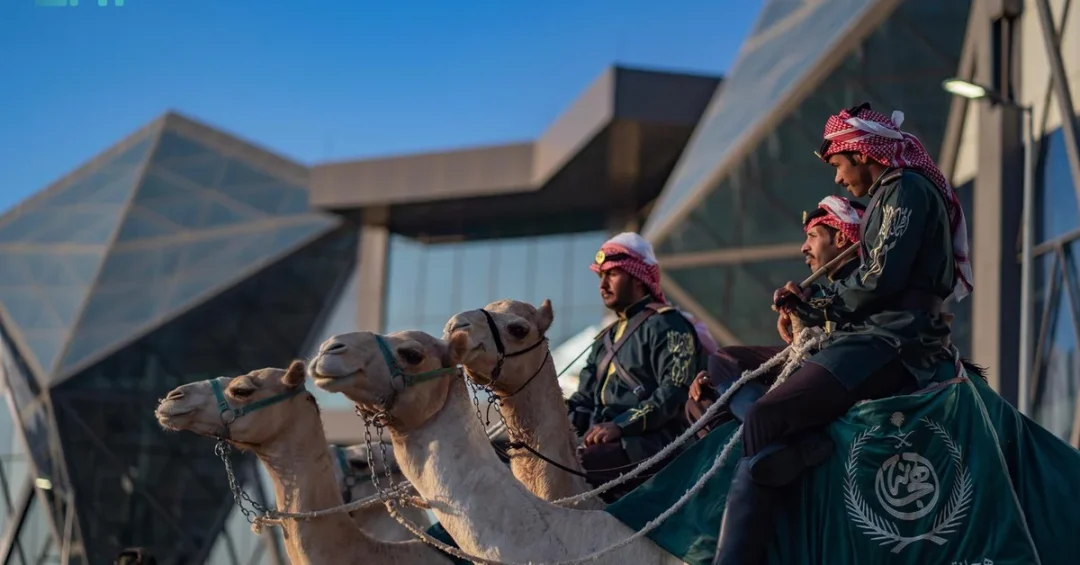
The Ministry of Interior’s pavilion at the International Saudi Falcons and Hunting Exhibition 2024, hosted by the Saudi Falcons Club, featured a captivating camel rider procession as part of its military and security displays, the Saudi Press Agency reported. The exhibition, held in Riyadh from October 3 to 12, celebrated Saudi Arabia’s longstanding heritage and aimed to revitalize it in conjunction with the Year of the Camel 2024, a national initiative that honors the cultural and economic significance of camels in the Kingdom. The camel rider tradition dates back over 90 years, reflecting the deep historical roots of Saudi security forces and their connection to the nation’s Bedouin heritage.
How does a single procession at a falconry exhibition capture the essence of a nation’s journey from tradition to modernity? The event, organized by the Saudi Falcons Club under the patronage of the Ministry of Interior, drew visitors from across the Kingdom and around the world, offering a unique blend of cultural preservation and technological innovation. The Ministry’s participation went beyond ceremonial displays, showcasing a wide range of electronic services and security initiatives that underscore Saudi Arabia’s commitment to both its heritage and its future.
Context and Background
The International Saudi Falcons and Hunting Exhibition has grown into a premier platform for celebrating Saudi Arabia’s rich cultural legacy while highlighting the Kingdom’s modernization efforts. Hosted by the Saudi Falcons Club, the exhibition aligns with the Year of the Camel 2024, an initiative declared by the Custodian of the Two Holy Mosques, King Salman bin Abdulaziz Al Saud, to recognize the camel’s enduring role in Saudi society. Camels have been central to transportation, sustenance, and cultural identity in the Arabian Peninsula for centuries, and the Year of the Camel seeks to preserve and promote this heritage for future generations.
What makes the camel rider tradition so enduring in Saudi culture? The procession featured riders in traditional attire, mounted on camels, parading through the exhibition grounds as a living testament to the skills and customs of their ancestors. This tradition, dating back over 90 years, is closely linked to the formation of the Kingdom’s security forces, which historically relied on camel-mounted patrols to protect vast desert territories. Today, the Ministry of Interior continues to honor this legacy while embracing advanced technologies to ensure national security and public safety.
The exhibition itself, now in its 2024 edition, serves as a bridge between the past and the present, offering visitors a chance to experience Saudi Arabia’s heritage firsthand. From falconry displays to hunting gear and cultural performances, the event attracts a diverse audience, including international tourists and expatriates eager to learn more about Saudi traditions. The Ministry of Interior’s pavilion, with its camel riders and interactive exhibits, has become a highlight, drawing crowds interested in both the historical and the contemporary aspects of Saudi security services.
Key Details of the Ministry of Interior’s Participation
The Ministry of Interior’s pavilion at the exhibition offered a comprehensive array of services and displays, reflecting its dual role as a guardian of both tradition and modernity. Beyond the camel rider procession, the Ministry provided visitors with access to essential electronic services, including passport issuance and renewal, national ID card services, and vehicle plate auctions through the Absher platform. These services demonstrate the Ministry’s ongoing digital transformation, making government transactions more efficient and accessible to citizens and residents alike.
How does the integration of digital services at a heritage event symbolize Saudi Arabia’s broader modernization? The Absher platform, a flagship e-government initiative, allows users to complete a wide range of transactions online, from renewing documents to bidding on custom license plates. At the exhibition, visitors could learn about these services and even complete some transactions on-site, highlighting the Ministry’s commitment to convenience and transparency. Additionally, the Ministry provided information on firearm licensing and regulations, ensuring that visitors understand the legal framework governing hunting and personal security.
The Ministry also showcased its dedication to environmental preservation and quality of life through initiatives such as the unified security operations centers (911), medical services, and historical cavalry and foot patrol demonstrations. The 911 centers, which operate around the clock, represent a significant advancement in emergency response, integrating police, fire, and medical services under one unified command. Medical teams were on hand at the exhibition to provide first aid and health information, while the cavalry and foot patrol demonstrations offered a glimpse into the ceremonial and operational traditions of Saudi security forces. These displays not only educate the public but also foster a sense of pride and trust in the Kingdom’s institutions.
International and Regional Impact
The International Saudi Falcons and Hunting Exhibition 2024 attracted participants and visitors from across the Gulf region and beyond, reinforcing Saudi Arabia’s position as a cultural and economic hub. The presence of camel riders at the Ministry of Interior’s pavilion added a distinctly Saudi flavor to the event, offering international guests a memorable introduction to the Kingdom’s heritage. Such cultural diplomacy helps strengthen ties with neighboring countries and promotes a positive image of Saudi Arabia as a nation that values its traditions while embracing progress.
How does the exhibition contribute to regional cultural exchange and tourism? By hosting a diverse array of exhibitors, including falconers, hunters, and artisans, the event facilitates dialogue and collaboration among practitioners of traditional arts. It also boosts the local economy by attracting tourists who spend on hospitality, transportation, and retail. For Saudi Arabia, the exhibition is part of a broader strategy to diversify revenue streams and increase tourism’s contribution to GDP, in line with Vision 2030. The Ministry of Interior’s involvement underscores the importance of security and stability in enabling such cultural and economic activities.
Economic and Strategic Significance
The Ministry of Interior’s participation in the exhibition extends beyond cultural display; it is a strategic move to enhance public awareness of government services and to promote the Kingdom’s modernization narrative. By showcasing electronic services like Absher, the Ministry encourages adoption of digital platforms, which improves efficiency and reduces bureaucracy. This aligns with the National Transformation Program, a key component of Vision 2030, which aims to digitize government services and enhance quality of life. The vehicle plate auctions, in particular, generate revenue while offering citizens a chance to personalize their vehicles legally.
How do such events support Saudi Arabia’s economic diversification goals? The exhibition itself is a tourism draw, and the Ministry’s presence adds a layer of security reassurance that is essential for attracting international visitors and investors. Moreover, the camel rider tradition highlights a potential niche in cultural tourism, where visitors can experience authentic Saudi heritage. As the Kingdom invests in mega-projects like NEOM and the Red Sea Project, events like this help build a holistic tourism ecosystem that celebrates both natural and cultural assets. The Ministry’s environmental initiatives, such as the 911 centers, also contribute to a safer, more sustainable environment, which is attractive to businesses and residents alike.
Vision 2030 Alignment
The camel rider procession at the International Saudi Falcons and Hunting Exhibition 2024 exemplifies the harmonious blend of tradition and modernity that lies at the heart of Vision 2030. By celebrating the Year of the Camel 2024, the Ministry of Interior honors a heritage that has shaped Saudi identity for generations, while simultaneously showcasing advanced services that propel the Kingdom into the future. This dual focus is a cornerstone of Vision 2030, which seeks to preserve cultural heritage while fostering economic growth, social development, and global engagement.
What better way to demonstrate Saudi Arabia’s progress than by honoring its past? The Ministry’s participation underscores its commitment to the safety and well-being of citizens and visitors, a prerequisite for achieving the ambitious goals of Vision 2030. As the Kingdom continues to host world-class events and invest in cutting-edge infrastructure, it remains rooted in the values and traditions that define its national character. The camel riders, with their proud history and enduring legacy, serve as a powerful symbol of Saudi Arabia’s journey toward a prosperous and sustainable future.
20 Questions
Q1. What event featured the camel rider procession?
A1. The camel rider procession was featured at the International Saudi Falcons and Hunting Exhibition 2024, hosted by the Saudi Falcons Club in Riyadh from October 3 to 12.
Q2. Which government entity hosted the pavilion with the camel riders?
A2. The Ministry of Interior hosted the pavilion, presenting military and security displays alongside electronic services for visitors.
Q3. What is the Year of the Camel 2024?
A3. The Year of the Camel 2024 is a national initiative declared by King Salman bin Abdulaziz Al Saud to honor the cultural and economic significance of camels in Saudi Arabia.
Q4. How long does the camel rider tradition date back?
A4. The tradition dates back over 90 years, reflecting the historical role of camel-mounted patrols in protecting the Kingdom’s desert territories.
Q5. What electronic services did the Ministry of Interior offer at the exhibition?
A5. The Ministry offered passport issuance and renewal, national ID card services, vehicle plate auctions via Absher, and firearm licensing information.
Q6. What is the Absher platform?
A6. Absher is a flagship e-government platform that allows users to complete various government transactions online, including document renewals and vehicle plate auctions.
Q7. What environmental and quality-of-life initiatives did the Ministry showcase?
A7. The Ministry showcased unified security operations centers (911), medical services, and historical cavalry and foot patrol demonstrations.
Q8. What are the unified security operations centers (911)?
A8. The 911 centers integrate police, fire, and medical emergency services under one unified command, operating around the clock to ensure rapid response.
Q9. How does the exhibition promote cultural heritage?
A9. The exhibition promotes cultural heritage by featuring traditional activities like falconry, camel riding, and hunting, allowing visitors to experience Saudi customs firsthand.
Q10. Who attended the exhibition?
A10. The exhibition attracted visitors from across Saudi Arabia, the Gulf region, and internationally, including tourists, expatriates, and cultural enthusiasts.
Q11. What is the significance of the camel in Saudi culture?
A11. Camels have been central to transportation, sustenance, and cultural identity in the Arabian Peninsula for centuries, symbolizing resilience and heritage.
Q12. How does the Ministry of Interior’s participation align with Vision 2030?
A12. It aligns by preserving cultural heritage while showcasing digital transformation and public service improvements, key pillars of Vision 2030.
Q13. What were the historical cavalry and foot patrol demonstrations?
A13. These demonstrations showcased the ceremonial and operational traditions of Saudi security forces, reflecting their historical roles and ongoing commitment.
Q14. What economic benefits does the exhibition bring?
A14. The exhibition boosts local tourism and hospitality sectors, generates revenue through activities like vehicle plate auctions, and supports economic diversification.
Q15. How does the event contribute to Saudi tourism goals?
A15. It attracts international visitors, promotes cultural tourism, and enhances Saudi Arabia’s image as a destination that blends heritage with modernity.
Q16. What role does the Saudi Falcons Club play?
A16. The Saudi Falcons Club organizes and hosts the exhibition, providing a platform to celebrate falconry, hunting, and related cultural traditions.
Q17. What security services were highlighted at the pavilion?
A17. The pavilion highlighted unified security operations centers (911), medical services, and information on firearm licensing and regulations.
Q18. How does the Ministry of Interior support environmental preservation?
A18. Through initiatives like the 911 centers and medical services, the Ministry contributes to a safer and healthier environment, enhancing quality of life.
Q19. What is the significance of the vehicle plate auctions?
A19. The auctions, conducted via Absher, allow citizens to bid on custom license plates, generating revenue and promoting digital government services.
Q20. How does the exhibition reflect Saudi Arabia’s global engagement?
A20. By welcoming international participants and visitors, the exhibition showcases Saudi Arabia’s cultural diplomacy and its openness to global exchange under Vision 2030.
Reader Feedback
We value your thoughts. Please share your feedback on this article.
Your feedback helps us improve our coverage.
Related articles
 Five Winners Announced in Fourth Round of Melwah Racing
 AlUla to Host MANN Masterpieces in November
 Al-Manashbia: Traditional Falcon-Hunting Method
 Visually Impaired Craftsman Captivates Visitors with Handmade Falcon Nets
 Dar Unaizah: Preserving Saudi Folklore for Generations
 Saudi Falcons Club Hosts Expert Workshops at Exhibition