


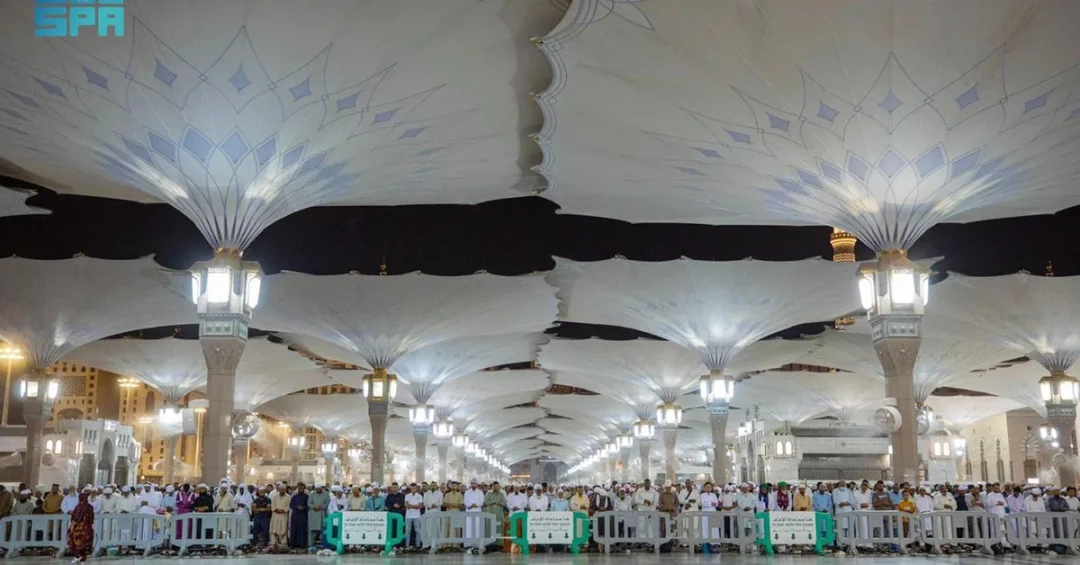
The Prophet’s Mosque in Madinah welcomed 5,278,896 worshippers and visitors over the past week, according to a report released by the General Authority for the Care of the Affairs of the Grand Mosque and the Prophet’s Mosque. The influx reflects the enduring spiritual significance of one of Islam’s holiest sites and the Kingdom of Saudi Arabia’s sustained commitment to serving the millions who travel there for prayer, reflection, and pilgrimage. The authority detailed a comprehensive array of services—from crowd management to translation and sanitation—that ensured the smooth facilitation of this massive gathering. As Saudi Arabia continues to enhance the experience for religious visitors under Vision 2030, such figures underscore the scale and effectiveness of its operational planning.
How does a single site accommodate millions within a week while maintaining order and tranquility? The answer lies in meticulous preparation and around-the-clock service by dedicated teams. The Prophet’s Mosque, also known as Al-Masjid an-Nabawi, is the second holiest site in Islam after the Grand Mosque in Makkah. It draws worshippers from across the globe who come to pray and to greet the Prophet Muhammad—peace be upon him—and his two companions. The latest weekly report from the General Authority highlights not only the volume of visitors but also the sophisticated support systems in place to meet their needs. This achievement aligns with the Kingdom’s broader mission to facilitate religious journeys and uphold the sanctity of these revered places.
Context and Background
Why is the Prophet’s Mosque a focal point of global Islamic devotion? Located in Madinah, it holds profound historical and spiritual significance for Muslims worldwide. It was built by the Prophet Muhammad—peace be upon him—and serves as his final resting place, along with the first two caliphs, Abu Bakr and Umar. The mosque has undergone numerous expansions throughout history, with the most recent Saudi-led expansions significantly increasing its capacity to accommodate the growing number of pilgrims and visitors. The General Authority for the Care of the Affairs of the Grand Mosque and the Prophet’s Mosque, established by royal decree, is tasked with overseeing all aspects of operations, ensuring that worshippers can perform their rituals with ease and comfort.
The weekly visitor count of over 5.2 million is a testament to the mosque’s magnetic pull and the Kingdom’s ability to manage such a massive flow. It also reflects the post-pandemic resurgence in religious travel, as international borders have reopened and pilgrims eagerly return to the holy sites. The Saudi government has invested heavily in infrastructure and technology to enhance the visitor experience, including the expansion of prayer areas, the installation of advanced cooling systems, and the implementation of digital crowd management tools. These efforts are part of a long-term strategy to ensure that the Prophet’s Mosque remains a sanctuary of peace and spirituality for all who visit.
Key Details
What specific services were provided to the millions of visitors? The authority’s report highlighted that 516,026 visitors were able to greet the Prophet—peace be upon him—and his two companions, a ritual of deep spiritual significance. Additionally, 243,800 worshippers performed prayers at the Al-Rawdah Al-Sharifa, a revered area within the mosque, following organized crowd management procedures and designated visiting hours. To accommodate the diverse nationalities of visitors, 75,898 individuals benefited from translation services, ensuring that language barriers did not hinder their worship. Field services were equally robust: sterilization and disinfection activities amounted to 24,247 liters, underscoring the commitment to health and hygiene. Furthermore, 1,570 tons of Zamzam water were provided, and 180 samples were tested and analyzed to ensure the highest quality. In the spirit of hospitality, 121,560 Iftar meals were distributed in designated areas, allowing visitors to break their fast in comfort.
These figures illustrate the comprehensive nature of the support system. The distribution of Iftar meals, for instance, is particularly important during Ramadan, but the authority ensures that such services are available throughout the year, reflecting the Islamic tradition of generosity. The provision of Zamzam water, sourced from the holy city of Makkah, is a cherished offering for pilgrims. The testing and analysis of water samples demonstrate a rigorous quality assurance protocol, ensuring that worshippers receive only the purest water. The sterilization efforts are part of a broader public health strategy that has been in place since the COVID-19 pandemic, aimed at maintaining a safe environment for all. The translation services cater to the international community, helping non-Arabic speakers understand the rituals and navigate the mosque’s facilities.
International and Regional Impact
How does the seamless management of millions of worshippers influence Saudi Arabia’s global standing? The successful handling of such a vast number of visitors enhances the Kingdom’s reputation as a capable and gracious host to pilgrims from around the world. It showcases Saudi Arabia’s logistical expertise and its commitment to serving Islam’s holiest sites. The presence of visitors from diverse nationalities—evidenced by the translation services—highlights the mosque’s role as a unifying force for the global Muslim community. Regional neighbors and international observers often look to Saudi Arabia’s management of these sites as a model for large-scale event coordination and crowd control. Moreover, the positive experience of visitors fosters goodwill and strengthens diplomatic ties, as pilgrims return to their home countries with a favorable impression of the Kingdom.
The impact extends beyond the spiritual realm. The influx of millions of visitors stimulates economic activity in Madinah and beyond. Hotels, restaurants, transportation services, and local businesses all benefit from the increased foot traffic. The Saudi government’s investments in infrastructure, such as the Haramain High-Speed Railway connecting Makkah and Madinah, have made travel more efficient, further boosting the visitor economy. This aligns with Vision 2030’s goal to diversify revenue streams and promote religious tourism as a key sector. The Kingdom’s ability to host such large numbers safely also reinforces its position as a leader in the Muslim world, capable of managing the logistical complexities of the Hajj and Umrah seasons.
Economic and Strategic Significance
What economic benefits arise from the millions visiting the Prophet’s Mosque? The presence of over 5 million worshippers in a single week translates into significant economic activity. The hospitality sector in Madinah, including hotels, furnished apartments, and restaurants, experiences high demand. Transportation networks, including buses, taxis, and the high-speed rail, are heavily utilized. The retail sector also thrives, with visitors purchasing religious souvenirs, clothing, and other goods. The Saudi government has been actively developing the area around the mosque to better serve visitors, including expanding the central area and improving pedestrian pathways. These developments create jobs and support local businesses, contributing to the Kingdom’s economic diversification goals.
Strategically, the successful management of the Prophet’s Mosque reinforces Saudi Arabia’s role as the custodian of Islam’s two holiest mosques. This custodianship is a source of legitimacy and soft power. By ensuring that millions can worship in comfort and safety, the Kingdom demonstrates its dedication to its religious responsibilities. This, in turn, strengthens its influence in the Islamic world and beyond. The investments in technology and infrastructure also position Saudi Arabia as a leader in smart city solutions and crowd management, which can be exported as expertise. The integration of digital tools for crowd control and service delivery aligns with the broader digital transformation agenda under Vision 2030, showcasing the Kingdom’s modernization while preserving tradition.
Vision 2030 Alignment
How does the service of millions of worshippers connect to Saudi Arabia’s Vision 2030? Vision 2030 aims to transform the Kingdom into a global hub for trade, tourism, and investment, while maintaining its cultural and religious heritage. The enhancements at the Prophet’s Mosque and the Grand Mosque are central to this vision, as they improve the pilgrimage experience and increase capacity for Umrah and Hajj. The authority’s work in crowd management, health services, and visitor care exemplifies the vision’s emphasis on excellence in public service. By providing world-class facilities and services, Saudi Arabia not only meets the spiritual needs of millions but also showcases its ability to host large-scale events, a key component of its tourism strategy.
Furthermore, the economic ripple effects from religious tourism support the vision’s goal of diversifying the economy away from oil. The development of Madinah as a vibrant city with improved infrastructure and services attracts investment and creates opportunities for small and medium enterprises. The focus on technology and innovation in managing the crowds aligns with the vision’s digital transformation objectives. Ultimately, the seamless reception of over 5 million visitors in a week is a clear demonstration of Vision 2030 in action: a modern, efficient, and hospitable Saudi Arabia that honors its past while building its future. As the Kingdom continues to welcome the world, its commitment to serving the guests of God remains unwavering, setting a global benchmark for religious tourism and event management.
20 Questions
Q1. How many worshippers and visitors did the Prophet’s Mosque receive in the past week?
A1. The Prophet’s Mosque received 5,278,896 worshippers and visitors in the past week, according to the General Authority for the Care of the Affairs of the Grand Mosque and the Prophet’s Mosque.
Q2. How many visitors greeted the Prophet and his two companions?
A2. A total of 516,026 visitors greeted the Prophet—peace be upon him—and his two companions, as reported by the authority.
Q3. How many visitors performed prayers at the Al-Rawdah Al-Sharifa?
A3. 243,800 visitors performed prayers at the Al-Rawdah Al-Sharifa, following organized crowd management procedures and visiting hours.
Q4. How many visitors benefited from translation services?
A4. 75,898 visitors from diverse nationalities benefited from translation services provided by the authority.
Q5. What was the amount of sterilization and disinfection activities carried out?
A5. Sterilization and disinfection activities amounted to 24,247 liters, ensuring a clean and safe environment for worshippers.
Q6. How much Zamzam water was provided to visitors?
A6. 1,570 tons of Zamzam water were provided to visitors during the week.
Q7. How many Zamzam water samples were tested and analyzed?
A7. 180 Zamzam water samples were tested and analyzed to ensure quality and safety.
Q8. How many Iftar meals were distributed?
A8. 121,560 Iftar meals were distributed in designated areas for Iftar at the Prophet’s Mosque.
Q9. Which authority is responsible for the care of the Prophet’s Mosque?
A9. The General Authority for the Care of the Affairs of the Grand Mosque and the Prophet’s Mosque is responsible for overseeing services and operations.
Q10. What is the significance of the Al-Rawdah Al-Sharifa?
A10. The Al-Rawdah Al-Sharifa is a revered area within the Prophet’s Mosque where prayers are highly recommended, and access is managed to ensure order.
Q11. Why is translation services important for visitors?
A11. Translation services help non-Arabic speaking visitors understand rituals and navigate the mosque, enhancing their spiritual experience.
Q12. How does the authority manage crowd control at the Prophet’s Mosque?
A12. The authority implements organized crowd management procedures, including designated visiting hours and trained personnel, to ensure safety and order.
Q13. What is the source of Zamzam water distributed at the Prophet’s Mosque?
A13. Zamzam water is sourced from the holy city of Makkah and is provided to worshippers as a blessed offering.
Q14. What health measures are in place at the Prophet’s Mosque?
A14. The authority conducts extensive sterilization and disinfection activities, and tests water quality to maintain a healthy environment for all visitors.
Q15. How does the influx of visitors impact the local economy of Madinah?
A15. The influx stimulates economic activity in hospitality, transportation, and retail sectors, creating jobs and supporting local businesses.
Q16. What role does the Prophet’s Mosque play in Saudi Arabia’s Vision 2030?
A16. It is central to religious tourism, enhancing the pilgrimage experience and showcasing the Kingdom’s ability to host large-scale events, aligning with economic diversification goals.
Q17. How many nationalities were represented among visitors benefiting from translation services?
A17. The report did not specify the exact number of nationalities, but noted that visitors from diverse nationalities benefited from the services.
Q18. What is the significance of distributing Iftar meals at the Prophet’s Mosque?
A18. It reflects the Islamic tradition of generosity and provides comfort to fasting visitors, especially during Ramadan, though the service is available year-round.
Q19. How does the Saudi government support the operations of the Prophet’s Mosque?
A19. The government provides funding, infrastructure, and oversight through the General Authority, ensuring comprehensive services for worshippers and visitors.
Q20. What does the weekly visitor count indicate about Saudi Arabia’s management of holy sites?
A20. It demonstrates Saudi Arabia’s logistical expertise, commitment to religious service, and ability to manage millions safely, reinforcing its role as custodian of Islam’s holiest sites.
Reader Feedback
We value your thoughts. Please share your feedback on this article.
Your feedback helps us improve our coverage.
Related articles
 Saudi Red Sea Authority Issues 4 Codes to Boost Coastal Tourism
 Tourism Development Fund Reinforces Commitment to Quality with Four ISO Certifications
 Revelation Exhibition in Makkah Offers Unique Cultural Experience
 Stone Villages of Taif: A Testament to Human Ingenuity
 Arab Tourism Organization Explores Cooperation with United States
 Aseer’s Coastal Plains: A Rising Tourism Gem in Saudi Arabia