


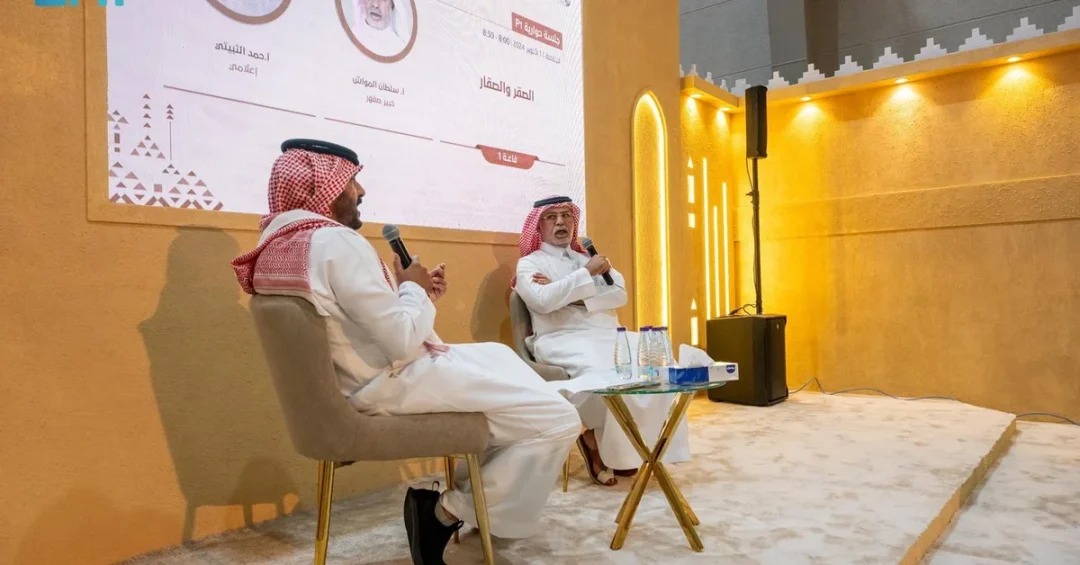
The Saudi Falcons Club hosted more than 20 specialized workshops and dialogue sessions during the International Saudi Falcons and Hunting Exhibition, held from October 3 to 12 in Malham, north of Riyadh, drawing local and international experts in falconry and conservation. The sessions, which formed a central pillar of the exhibition, addressed topics ranging from remote tracking technology to falcon species preservation and environmental sustainability, underscoring the Kingdom’s commitment to preserving its rich cultural heritage while advancing modern conservation practices.
Why does an ancient tradition like falconry continue to command such serious attention in modern Saudi Arabia? The answer lies in the Kingdom’s dual commitment to honoring its heritage and embracing innovation. The exhibition, hosted by the Saudi Falcons Club, served as a global platform where tradition meets technology, bringing together specialists who are shaping the future of falconry and wildlife conservation. The workshops reflected Saudi Arabia’s broader efforts to position itself as a leader in both cultural preservation and environmental stewardship, aligning with the objectives of Vision 2030.
Context and Background
The International Saudi Falcons and Hunting Exhibition has become a landmark event on the Kingdom’s cultural calendar, attracting participants and visitors from around the world. Held in Malham, north of Riyadh, the 2024 edition continued a tradition of excellence that highlights the deep-rooted connection between Saudi society and falconry—a practice that has been passed down through generations for centuries. The event serves not only as a celebration of this heritage but also as a forum for advancing knowledge and best practices in falcon care, training, and conservation.
The Saudi Falcons Club, established under the patronage of Crown Prince Mohammed bin Salman, has been instrumental in elevating falconry from a traditional pastime to a structured field of cultural and environmental significance. Through initiatives such as this exhibition, the Club provides a platform for experts, enthusiasts, and institutions to exchange ideas and collaborate on pressing issues facing falcons and their habitats. How has this annual gathering evolved to become a nexus for global falconry expertise? By consistently inviting leading voices from around the world and integrating cutting-edge technology with time-honored practices, the exhibition has cemented its reputation as an essential event for anyone invested in the future of falconry.
The 2024 edition featured over 20 workshops and dialogue sessions, each designed to address specific challenges and opportunities within the field. From satellite tracking to legislative frameworks, the breadth of topics demonstrated the comprehensive approach that Saudi Arabia is taking to ensure that falconry remains vibrant and sustainable for generations to come. The involvement of both local and international experts further enriched the discussions, fostering a collaborative environment that benefits all participants.
Key Details
Among the most notable sessions was a workshop on remote tracking of the houbara bustard, led by Dr. Olivier Combreau, head of the houbara program at Prince Mohammed bin Salman Royal Reserve. Dr. Combreau presented on how satellite technology is used to track houbara migration patterns and identify the challenges these birds face in the wild. He emphasized that tracking operations have contributed significantly to developing houbara conservation strategies, enabling researchers to better understand the species’ needs and to implement targeted interventions. The houbara bustard is a key prey species for falcons, and its conservation is vital to the sustainability of falconry.
Another highlight was a dialogue session featuring falconry expert Sultan Al-Mawash, who focused on falcons and falconry. Al-Mawash presented various species of falcons found in the Arabian Peninsula and discussed the importance of the Saudi Falcons Club’s programs in protecting natural habitats and preserving falcon lineage. He highlighted how the Club’s initiatives are not only preserving the birds themselves but also the cultural practices associated with them. What role do these programs play in maintaining the delicate balance between tradition and conservation? They ensure that falconry can continue without harming wild populations, a principle that is central to the Club’s mission.
The workshops also covered technical innovations, legislation related to falcons, and environmental sustainability. These sessions provided a comprehensive overview of the multifaceted approach required to safeguard falconry’s future. Experts discussed the latest advancements in veterinary care, breeding techniques, and tracking devices, as well as the legal frameworks that regulate falconry and trade. Sustainability was a recurring theme, with participants exploring ways to minimize human impact on fragile ecosystems while promoting responsible hunting practices.
International and Regional Impact
The participation of international experts like Dr. Combreau underscores the global significance of the exhibition. By bringing together specialists from different countries, the event facilitates the exchange of knowledge and fosters international cooperation in conservation. The Kingdom’s efforts to protect migratory birds like the houbara bustard have implications beyond its borders, as these birds traverse multiple countries during their journeys. How does Saudi Arabia’s leadership in this area influence regional conservation efforts? It sets a benchmark for others to follow, demonstrating that cultural traditions and environmental stewardship can go hand in hand.
The exhibition also strengthens Saudi Arabia’s ties with other nations that share a passion for falconry, including countries in the Gulf, Central Asia, and Europe. These cultural and diplomatic connections are reinforced through shared interests and collaborative projects. The presence of international experts and participants at the exhibition highlights the Kingdom’s role as a bridge between cultures, using falconry as a common language. This soft power approach aligns with Vision 2030’s goal of enhancing Saudi Arabia’s global standing and fostering mutual understanding.
Economic and Strategic Significance
The falconry industry, including breeding, training, and associated services, represents a significant economic sector in Saudi Arabia and the wider region. The exhibition provides a marketplace for breeders, equipment suppliers, and service providers, generating business opportunities and attracting investment. Moreover, the focus on sustainability and conservation ensures that this economic activity is conducted responsibly, protecting the resource base upon which the industry depends. How does this align with the Kingdom’s economic diversification goals? By supporting specialized sectors like falconry, Saudi Arabia is nurturing niche industries that contribute to a diversified economy and create employment opportunities.
Strategically, the Saudi Falcons Club’s initiatives support the preservation of cultural heritage, which is a key pillar of Vision 2030. The Club’s programs not only conserve falcons but also promote research, education, and public awareness. The exhibition serves as a showcase for these efforts, attracting visitors and media attention that further amplify the Kingdom’s message of responsible stewardship. Additionally, the event stimulates tourism and local business in the Riyadh region, adding to the economic ripple effects.
The emphasis on innovation, such as satellite tracking and modern breeding techniques, positions Saudi Arabia as a leader in applying technology to traditional fields. This fusion of heritage and high-tech solutions is a hallmark of Vision 2030, which seeks to modernize the Kingdom while preserving its identity. The workshops and dialogue sessions thus serve as a microcosm of the broader transformation underway in Saudi society.
Vision 2030 Alignment
The Saudi Falcons Club’s activities, including the workshops and dialogue sessions at the International Saudi Falcons and Hunting Exhibition, are in direct alignment with Vision 2030’s objectives. The vision emphasizes the importance of preserving cultural heritage, promoting environmental sustainability, and fostering international cooperation. By hosting such events, the Kingdom demonstrates its commitment to these principles and showcases its ability to organize world-class gatherings that attract global participation.
Furthermore, the focus on youth engagement and knowledge transfer ensures that falconry will continue to thrive as a living tradition. The exhibition provides a platform for young Saudis to learn from experts and to develop skills that will carry the practice forward. This intergenerational exchange is vital for the sustainability of falconry and for the broader goal of building a vibrant society that values its past while embracing its future. Through initiatives like this, Saudi Arabia is not only safeguarding its heritage but also contributing to global conservation efforts, reinforcing its role as a responsible and forward-looking nation.
20 Questions
Q1. What event hosted over 20 workshops and dialogue sessions on falconry?
A1. The International Saudi Falcons and Hunting Exhibition, held from October 3 to 12 in Malham, north of Riyadh, hosted the sessions.
Q2. Who organized the workshops and dialogue sessions?
A2. The Saudi Falcons Club hosted and organized the workshops and dialogue sessions as part of the exhibition.
Q3. Where was the exhibition held?
A3. The exhibition took place in Malham, located north of Riyadh, Saudi Arabia.
Q4. When did the exhibition take place?
A4. The exhibition was held from October 3 to 12, 2024.
Q5. Who led the workshop on remote tracking of the houbara bustard?
A5. Dr. Olivier Combreau, head of the houbara program at Prince Mohammed bin Salman Royal Reserve, led the workshop.
Q6. What technology was discussed for tracking houbara migration?
A6. Satellite technology was discussed as a means to track houbara migration patterns and identify challenges they face.
Q7. How has tracking contributed to houbara conservation?
A7. Tracking operations have significantly contributed to developing conservation strategies by providing data on migration and habitat use.
Q8. Who participated in a dialogue session on falcons and falconry?
A8. Falconry expert Sultan Al-Mawash participated in a dialogue session focusing on falcons and falconry.
Q9. What did Sultan Al-Mawash present?
A9. He presented various species of falcons found in the Arabian Peninsula and discussed the importance of the Saudi Falcons Club’s programs.
Q10. What is the goal of the Saudi Falcons Club’s programs?
A10. The programs aim to protect natural habitats for falcons and preserve their lineage.
Q11. What other topics were covered in the workshops?
A11. Topics included technical innovations, legislation related to falcons, and environmental sustainability.
Q12. Why is the houbara bustard important in falconry?
A12. The houbara bustard is a traditional prey species for falcons, making its conservation vital for sustainable falconry.
Q13. How does the exhibition contribute to international cooperation?
A13. By bringing together local and international experts, it facilitates knowledge exchange and collaborative conservation efforts.
Q14. What role does the Saudi Falcons Club play in Vision 2030?
A14. It supports cultural heritage preservation, environmental sustainability, and international engagement, aligning with Vision 2030 goals.
Q15. How does the exhibition benefit the local economy?
A15. It stimulates business for breeders, equipment suppliers, and services, and attracts tourism to the Riyadh region.
Q16. What legislative topics were discussed?
A16. Workshops covered legislation related to falcons, including regulations on falconry and trade.
Q17. What technical innovations were highlighted?
A17. Innovations included satellite tracking devices, modern breeding techniques, and advancements in veterinary care.
Q18. How does falconry reflect Saudi cultural heritage?
A18. Falconry is a centuries-old tradition deeply embedded in Saudi society, symbolizing nobility, patience, and a connection to nature.
Q19. What is the significance of preserving falcon lineage?
A19. Preserving lineage ensures genetic diversity and the continuation of falconry traditions for future generations.
Q20. How can the public learn more about falconry?
A20. The public can attend events like the International Saudi Falcons and Hunting Exhibition and engage with the Saudi Falcons Club’s programs.
Reader Feedback
We value your thoughts. Please share your feedback on this article.
Your feedback helps us improve our coverage.
Related articles
 Cultural Development Fund Signs 13 Agreements within Its Financing Program
 Rafha Falconers Prepare for Hunting Season
 Two Falcons Sold for SAR191,000 at Saudi Auction
 Saudi Elite Chefs Competition Launches to Promote Local Talent
 Diriyah Art Futures Opens Registration for Inaugural Mazra’ah Residency
 Peregrine Falcon Migration Revives Northern Borders Hunting