


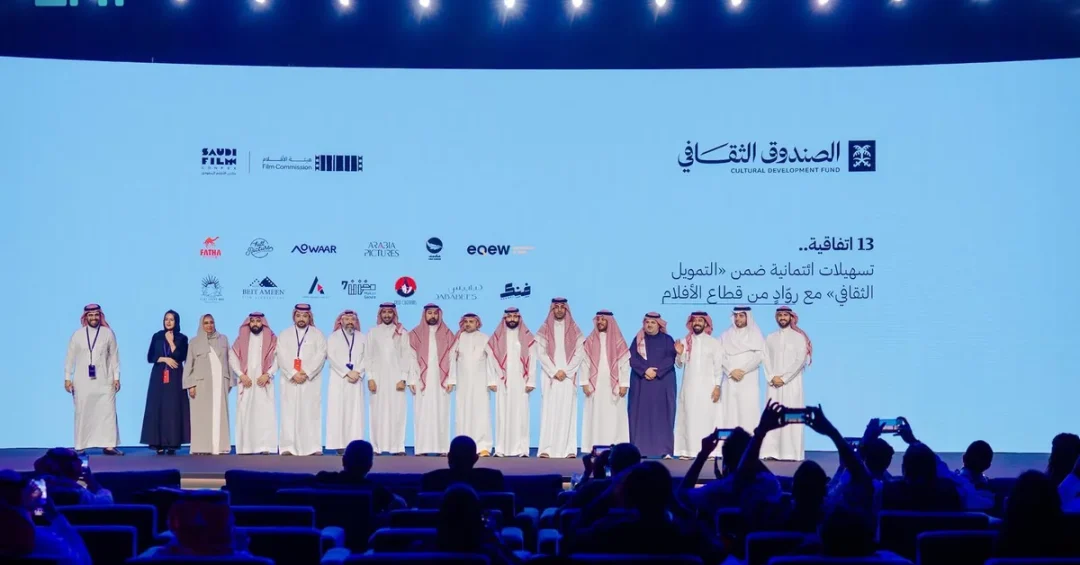
The Cultural Development Fund (CDF) announced the signing of 13 credit facility agreements as part of its Cultural Financing program, aimed at funding high-quality projects for leading companies in the film industry. The signing took place during the Fund’s participation in the Saudi Film Forum, an event inaugurated by Minister of Culture and Chairman of the Board of Directors of the Cultural Development Fund, Prince Badr bin Abdullah bin Farhan. The agreements mark a significant step in Saudi Arabia’s efforts to build a vibrant, self-sustaining cultural sector and to position the Kingdom as a global hub for film production and creative industries.
Could this be the moment that Saudi cinema truly takes its place on the world stage? The 13 agreements represent more than just financial transactions; they symbolize a deep commitment to nurturing local talent, enhancing production capabilities, and expanding the cultural economy. The CDF, established in 2021 and organizationally linked to the National Development Fund, is designed to foster a self-reliant cultural sector that aligns with the National Culture Strategy and Saudi Vision 2030. By providing credit facilities to film companies, the Fund is not only injecting capital but also building an ecosystem where creativity can flourish and contribute meaningfully to the Kingdom’s gross domestic product.
Context and Background
What drives a nation to invest so heavily in its cultural industries? Saudi Arabia’s cultural transformation is part of a broader strategic vision to diversify the economy away from oil dependency. The Cultural Development Fund was created to fill a critical financing gap in the cultural sector, offering a range of financial products including direct investment, credit facilities, and guarantees. Since its inception, the CDF has been instrumental in supporting projects across various cultural domains, from heritage and museums to film, music, and literature. The signing of these 13 agreements during the Saudi Film Forum underscores the Fund’s focus on cinema as a key growth driver within the creative economy.
The Saudi Film Forum, held in Riyadh, serves as a premier gathering for industry professionals, filmmakers, and investors from around the world. Inaugurated by Prince Badr bin Abdullah bin Farhan, who also serves as Minister of Culture, the forum highlights the Kingdom’s ambition to become a leading destination for film production. The presence of high-level officials and international delegates signals strong governmental support and a willingness to engage with global partners. The CDF’s participation in this event is a clear indication that financing is a top priority in the strategy to develop a robust film industry.
How does the CDF select the projects it supports? The Fund employs rigorous criteria to ensure that investments yield both financial returns and cultural impact. Projects must demonstrate artistic merit, commercial viability, and alignment with the National Culture Strategy. The 13 agreements signed with leading film companies are expected to produce high-quality content that showcases Saudi culture to domestic and international audiences. By backing established players, the CDF aims to create a multiplier effect, where successful productions inspire more investment and attract talent to the sector.
Key Details of the Agreements
The 13 credit facility agreements were signed with a select group of film industry leaders, though specific company names were not disclosed in the official announcement. These agreements are part of the CDF’s Cultural Financing program, which provides tailored financial solutions to support projects at various stages of development. The credit facilities are designed to cover production costs, post-production work, marketing, and distribution, enabling companies to bring ambitious projects to fruition. The expected outcomes include a slate of high-quality productions that promote Saudi culture both domestically and globally, while enhancing local film production and filmmakers’ capabilities.
What kind of impact will these agreements have on the local film ecosystem? By injecting capital into the sector, the CDF is addressing one of the main challenges faced by Saudi filmmakers: access to financing. The credit facilities will allow companies to scale up their operations, invest in advanced technology, and hire skilled professionals. This, in turn, will create jobs, stimulate ancillary services such as equipment rental and studio facilities, and foster a culture of professionalism. The CDF’s support is expected to accelerate the growth of the film industry, making it a significant contributor to the Kingdom’s GDP.
Moreover, the agreements are a testament to the CDF’s commitment to sustainable growth. The Fund does not simply provide grants; it offers credit facilities that require repayment, thereby encouraging financial discipline and long-term viability. This approach ensures that the cultural sector becomes self-reliant, capable of attracting private investment and generating revenue. The CDF’s role as a catalyst is crucial in the early stages of industry development, and these agreements mark a milestone in its journey to build a thriving cultural economy.
International and Regional Impact
How will Saudi Arabia’s film industry influence the broader Middle East and beyond? The Kingdom’s investment in cinema is already attracting attention from global production houses and streaming platforms seeking to tap into the region’s growing market. The CDF’s financing program is likely to draw international co-productions and partnerships, as foreign entities recognize the potential of Saudi talent and stories. By supporting local companies, the Fund is also helping to create content that can travel beyond borders, offering a window into Saudi culture and society. This cultural diplomacy can enhance the Kingdom’s soft power and foster greater understanding between nations.
Regionally, Saudi Arabia’s strides in film production could spur similar initiatives in neighboring countries, leading to a more vibrant and interconnected creative economy in the Gulf. The Saudi Film Forum itself is a platform for regional collaboration, bringing together filmmakers from across the Arab world. The CDF’s agreements may serve as a model for other cultural funds in the region, demonstrating how targeted financial support can catalyze industry growth. As Saudi Arabia positions itself as a leader in cultural development, its influence is likely to extend across the Middle East and North Africa.
Economic and Strategic Significance
Why is the film industry considered a strategic asset for Saudi Arabia’s economy? Beyond its cultural value, cinema is a high-growth sector that can contribute significantly to GDP, create jobs, and stimulate tourism. The CDF’s credit facilities are an investment in this potential, aiming to build a self-sustaining industry that generates revenue and exports Saudi creativity. The Fund’s alignment with the National Development Fund ensures that its activities are integrated into the broader national development agenda, which seeks to diversify income streams and reduce reliance on oil.
The strategic significance of these agreements also lies in their timing. As Vision 2030 approaches its midpoint, the Kingdom is accelerating efforts to achieve its economic diversification goals. The cultural sector, including film, is identified as a key pillar of this transformation. By supporting film production, the CDF is helping to create a new economic cluster that encompasses production studios, post-production houses, talent agencies, and distribution networks. This ecosystem can attract foreign direct investment and generate export revenues, further strengthening the national economy.
Vision 2030 Alignment
The Cultural Development Fund’s financing program is a direct manifestation of Vision 2030’s cultural objectives. The Vision aims to enrich the lives of citizens and residents by promoting cultural activities and preserving heritage. It also seeks to diversify the economy by developing creative industries. The CDF’s support for film companies aligns with these goals, as it fosters a vibrant cultural scene while contributing to economic growth. The Fund’s emphasis on self-reliance and profitability ensures that the cultural sector will not depend solely on government subsidies but will become a sustainable contributor to the national economy.
In conclusion, the signing of 13 credit facility agreements by the CDF is a landmark achievement that signals Saudi Arabia’s serious commitment to building a world-class film industry. It reflects the Kingdom’s broader ambition to become a global cultural hub and a diversified economy. As these projects come to life, they will not only entertain audiences but also showcase the richness of Saudi culture and the talents of its people. The CDF’s role in facilitating this growth is indispensable, and its continued efforts will be pivotal in realizing the goals of Vision 2030. Through such initiatives, Saudi Arabia is not just investing in films; it is investing in its future.
20 Questions
Q1. What is the Cultural Development Fund?
A1. The Cultural Development Fund (CDF) is a Saudi entity founded in 2021, linked to the National Development Fund, that aims to enrich Saudi Arabia’s cultural landscape by financing cultural projects in alignment with Vision 2030.
Q2. What did the CDF announce recently?
A2. The CDF announced the signing of 13 credit facility agreements as part of its Cultural Financing program, aimed at funding high-quality projects for leading companies in the film industry.
Q3. Where did the signing take place?
A3. The signing took place during the CDF’s participation in the Saudi Film Forum, an event inaugurated by Minister of Culture Prince Badr bin Abdullah bin Farhan.
Q4. Who inaugurated the Saudi Film Forum?
A4. The Saudi Film Forum was inaugurated by Prince Badr bin Abdullah bin Farhan, who serves as Minister of Culture and Chairman of the Board of Directors of the Cultural Development Fund.
Q5. What is the purpose of the Cultural Financing program?
A5. The Cultural Financing program provides credit facilities and other financial support to cultural projects, with a focus on film production, to drive sustainable growth and enhance the sector’s contribution to GDP.
Q6. What are the expected outcomes of these agreements?
A6. The expected outcomes include high-quality productions that promote Saudi culture domestically and globally, enhanced local film production capabilities, and increased contribution to the national economy.
Q7. When was the CDF founded?
A7. The CDF was founded in 2021 as part of Saudi Arabia’s efforts to develop a self-reliant cultural sector in line with the National Culture Strategy and Vision 2030.
Q8. What is the organizational affiliation of the CDF?
A8. The CDF is organizationally linked to the National Development Fund, which oversees its activities to ensure alignment with national development goals.
Q9. How does the CDF support the cultural sector?
A9. The CDF supports the cultural sector by providing financial products such as direct investment, credit facilities, and guarantees, thereby improving profitability and fostering self-reliance.
Q10. What is the significance of the film industry for Saudi Arabia?
A10. The film industry is a high-growth sector that can contribute to GDP, create jobs, stimulate tourism, and enhance cultural diplomacy, making it a strategic asset for economic diversification.
Q11. How many agreements were signed?
A11. Thirteen credit facility agreements were signed between the CDF and leading companies in the film industry as part of the Cultural Financing program.
Q12. What types of projects will be funded?
A12. The projects funded will be high-quality film productions that showcase Saudi culture, enhance local production capabilities, and promote the Kingdom’s creative output globally.
Q13. How does this align with Vision 2030?
A13. This aligns with Vision 2030 by diversifying the economy, developing creative industries, enriching cultural life, and fostering a self-sustaining cultural sector that contributes to GDP.
Q14. What is the National Culture Strategy?
A14. The National Culture Strategy is a comprehensive plan that aims to develop Saudi Arabia’s cultural sector, preserve heritage, and promote cultural activities in alignment with Vision 2030.
Q15. Who benefits from these agreements?
A15. Leading film companies, local filmmakers, and the broader cultural sector benefit through increased financing, job creation, and enhanced production capabilities, ultimately enriching the national economy.
Q16. Will these agreements attract international attention?
A16. Yes, they are likely to attract international co-productions and partnerships, as global players recognize the growing potential of the Saudi film market and the Kingdom’s commitment to cultural development.
Q17. How does the CDF ensure sustainability?
A17. The CDF provides credit facilities that require repayment, encouraging financial discipline and long-term viability, thus ensuring the cultural sector becomes self-reliant and profitable.
Q18. What role does the National Development Fund play?
A18. The National Development Fund oversees the CDF, ensuring its activities are integrated into the broader national development agenda and aligned with Saudi Arabia’s economic diversification goals.
Q19. What is the Saudi Film Forum?
A19. The Saudi Film Forum is a premier event that gathers industry professionals, filmmakers, and investors to discuss and advance the film industry in Saudi Arabia, highlighting the Kingdom’s cultural ambitions.
Q20. What does the future hold for Saudi cinema?
A20. With continued support from the CDF and alignment with Vision 2030, Saudi cinema is poised for significant growth, becoming a major contributor to the economy and a showcase for Saudi culture globally.
Reader Feedback
We value your thoughts. Please share your feedback on this article.
Your feedback helps us improve our coverage.
Related articles
 Rafha Falconers Prepare for Hunting Season
 Two Falcons Sold for SAR191,000 at Saudi Auction
 Saudi Elite Chefs Competition Launches to Promote Local Talent
 Diriyah Art Futures Opens Registration for Inaugural Mazra’ah Residency
 Peregrine Falcon Migration Revives Northern Borders Hunting
 Olive Tree: A Cultural Staple in Palestinian Households