


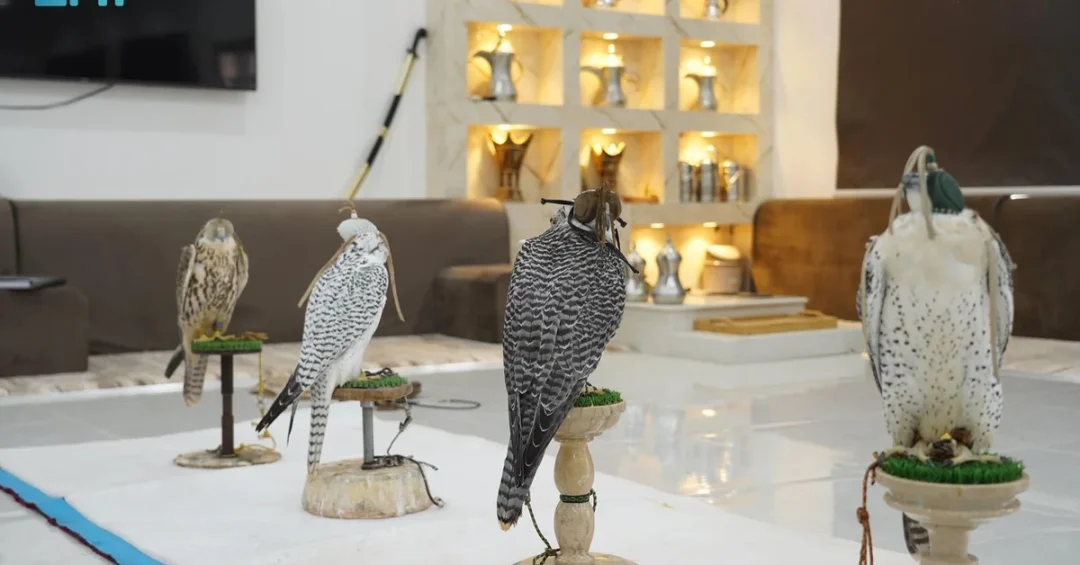
Falconers in Rafha Governorate, located in Saudi Arabia’s Northern Borders region, have begun intensive preparations for the upcoming hunting season following the end of Miqyad, the traditional seven-month off-season period dedicated to the care and conditioning of their falcons. The Saudi Press Agency reported that as autumn approaches and temperatures cool, local falconers are focusing on restoring their birds’ natural hunting instincts and strengthening the bond between bird and handler. This annual tradition, deeply rooted in Arabian heritage, reflects the Kingdom’s enduring commitment to preserving its cultural legacy while embracing modern conservation practices.
The transition from the relaxed Miqyad period to active hunting preparation marks a significant time for the falconry community in Rafha, which is renowned for its expertise in breeding and training falcons. Falconers like Falah Al-Shammari and Muteb Al-Noman have shared insights into the meticulous processes that ensure their birds are ready for the season, which officially began on September 1, as announced by the National Center for Wildlife. This seasonal rhythm not only sustains a centuries-old tradition but also supports local economies and reinforces Saudi Arabia’s role as a guardian of intangible cultural heritage.
Context and Background
Falconry, known as Al-Qanas in Arabic, has been an integral part of Arabian Peninsula culture for millennia. Historically, Bedouin tribes relied on falcons for hunting small game such as Houbara bustards and hares, which supplemented their diet in the harsh desert environment. Over time, falconry evolved into a sophisticated art form, with specialized techniques for training and caring for birds of prey. In Rafha, a governorate in the Northern Borders region, this tradition remains vibrant, with families passing down knowledge from generation to generation. The Miqyad period, spanning seven months, allows falcons to molt, rest, and regain strength after the previous hunting season. During this time, falconers provide dedicated nutrition, veterinary care, and controlled exercise to ensure the birds remain healthy and calm. As temperatures drop in September and October, the focus shifts to reawakening the falcons’ predatory instincts and reinforcing their responsiveness to human commands. This cyclical practice underscores the deep reciprocity between falconer and falcon, a relationship built on patience, trust, and mutual respect.
The National Center for Wildlife, a Saudi government agency responsible for biodiversity conservation, officially declared September 1 as the start of this year’s hunting season. This announcement aligns with the Kingdom’s broader efforts to regulate falconry sustainably, ensuring that hunting practices do not threaten endangered species. The center works closely with local falconers to monitor bird populations and enforce seasonal guidelines, striking a balance between cultural preservation and ecological responsibility. Rafha’s falconers are particularly attuned to these regulations, as their region serves as a key habitat for various falcon species, including the Saker and Peregrine falcons. The center’s involvement highlights Saudi Arabia’s proactive approach to wildlife management, which is increasingly recognized on the global stage.
Key Details
According to Falah Al-Shammari, a falconer in Rafha, September and early October are the most crucial months for preparing falcons for the hunting season. In an interview with the Saudi Press Agency, he explained that during this period, falconers focus on restoring the birds’ natural instincts and strengthening their bond with their human companions. This involves daily training sessions where falcons are encouraged to chase lures and live prey in controlled environments. Al-Shammari emphasized that the process requires immense patience and observation, as each bird has a unique temperament and learning pace. The goal is to build a seamless partnership where the falcon responds instinctively to the falconer’s cues, whether in the field or during transport. This preparation not only enhances hunting success but also ensures the bird’s safety and well-being throughout the season.
Muteb Al-Noman, another experienced falconer, described the meticulous physical preparation that falcons undergo. This includes trimming the bird’s beak and claws to prevent injury during handling and hunting. Additionally, each falcon is fitted with a tracking device, a modern innovation that allows falconers to locate their birds if they stray too far. Al-Noman noted that these devices are lightweight and do not hinder the falcon’s flight, providing peace of mind for handlers. The combination of traditional techniques and contemporary technology exemplifies how Saudi falconers adapt to changing times while preserving their heritage. The tracking devices are particularly important in the vast desert expanses of the Northern Borders, where a lost falcon could easily disappear. By embracing such tools, falconers in Rafha demonstrate a forward-looking approach that aligns with Saudi Arabia’s Vision 2030 emphasis on innovation and sustainability.
The National Center for Wildlife’s announcement of September 1 as the season’s start provides a clear framework for falconers across the Kingdom. This date is determined based on ecological assessments and ensures that hunting occurs within sustainable limits. The center also conducts awareness campaigns to educate falconers about protected species and legal hunting practices. In Rafha, compliance with these regulations is high, as local falconers understand the importance of preserving biodiversity for future generations. The center’s role extends beyond regulation; it also supports research initiatives aimed at understanding falcon migration patterns and population dynamics. Such scientific efforts are crucial for maintaining a healthy balance between human activity and wildlife conservation, a principle that resonates deeply with Saudi Arabia’s environmental stewardship goals.
International and Regional Impact
Falconry in Saudi Arabia is not merely a local pastime; it is a cultural phenomenon that attracts international attention. The Kingdom has hosted numerous falconry exhibitions and competitions, such as the King Abdulaziz Falconry Festival, which draws participants from around the world. These events showcase the rich heritage of Arabian falconry and foster cross-cultural exchange. Rafha’s falconers, with their expertise, often participate in such gatherings, sharing their knowledge and learning from international counterparts. The global falconry community recognizes Saudi Arabia as a leader in preserving and promoting this ancient art. By investing in falconry, the Kingdom strengthens its soft power and builds bridges with other nations that share an appreciation for raptors. Moreover, these interactions open avenues for collaboration in wildlife conservation, as many countries face similar challenges in protecting falcon populations.
Regionally, falconry is a unifying tradition across the Gulf Cooperation Council (GCC) states. Falconers from Saudi Arabia, the United Arab Emirates, Qatar, Kuwait, and Bahrain often travel across borders for hunting expeditions and competitions. The Northern Borders region, where Rafha is located, serves as a gateway for such exchanges, given its proximity to Iraq and Jordan. This cross-border activity requires coordination on regulations and conservation efforts, which Saudi Arabia facilitates through its diplomatic channels. The National Center for Wildlife collaborates with counterparts in neighboring countries to ensure that falconry remains sustainable. Such cooperation exemplifies the Kingdom’s commitment to regional stability and environmental stewardship. By promoting responsible falconry, Saudi Arabia contributes to a shared cultural legacy that transcends political boundaries and reinforces ties among Gulf nations.
Economic and Strategic Significance
Falconry also has significant economic implications for local communities in Rafha and beyond. The breeding, training, and trading of falcons constitute a niche market that generates income for many families. High-quality falcons can command prices ranging from thousands to hundreds of thousands of Saudi riyals, depending on their pedigree and training. This trade attracts buyers from across the Gulf and beyond, creating a lucrative business for skilled falconers. Additionally, the hunting season stimulates tourism, as enthusiasts travel to regions like Rafha to participate in guided hunts and cultural experiences. Hotels, restaurants, and transport services benefit from this influx, contributing to local economic development. The Saudi government supports this sector through initiatives that promote heritage tourism and small business growth, aligning with Vision 2030’s economic diversification goals.
Strategically, falconry serves as a tool for environmental conservation. The National Center for Wildlife uses falconry as a means to monitor ecosystem health, as falcons are apex predators whose populations reflect the overall vitality of their habitats. By regulating hunting seasons and promoting ethical practices, the Kingdom ensures that falconry does not deplete prey species or disrupt ecological balance. Furthermore, falconry contributes to the preservation of Saudi Arabia’s natural heritage, which is a key pillar of Vision 2030. The Kingdom aims to protect 30% of its terrestrial and marine areas by 2030, and falconry regulations play a role in achieving this target. Sustainable falconry practices also align with global conservation frameworks, such as the Convention on International Trade in Endangered Species of Wild Fauna and Flora (CITES), to which Saudi Arabia is a signatory. Thus, falconry is not just a cultural tradition but a strategic asset for environmental diplomacy.
Vision 2030 Alignment
The preparations of falconers in Rafha for the hunting season resonate strongly with Saudi Arabia’s Vision 2030, which seeks to diversify the economy, preserve cultural heritage, and promote sustainable development. Falconry embodies the intersection of tradition and modernity, showcasing how ancient practices can adapt to contemporary contexts. By supporting falconry, the Kingdom reinforces its commitment to safeguarding intangible cultural heritage while also creating economic opportunities in rural areas. Vision 2030 emphasizes the importance of quality of life and community well-being; falconry contributes to both by fostering a sense of identity and providing recreational outlets for citizens and residents. Moreover, the integration of technology, such as tracking devices, into traditional falconry demonstrates the innovative spirit that Vision 2030 champions.
Looking ahead, the continued vitality of falconry in Rafha and across the Kingdom will depend on sustained collaboration between falconers, government agencies, and conservationists. The National Center for Wildlife’s role will remain pivotal in ensuring that hunting practices are sustainable and that falcon populations thrive. As Saudi Arabia positions itself as a global leader in both heritage preservation and environmental stewardship, falconry will serve as a shining example of how cultural traditions can be harnessed for positive change. The falconers of Rafha, with their dedication and skill, are not only preparing for a hunting season but also contributing to the fulfillment of Vision 2030’s ambitious goals. Their efforts ensure that future generations will inherit a legacy that is both rich in history and forward-looking in spirit.
20 Questions
Q1. What is the Miqyad period in falconry?
A1. Miqyad is the seven-month off-season during which falcons receive specialized care, rest, and relaxation. It allows the birds to molt and regain strength before the hunting season begins. Falconers provide dedicated nutrition and exercise to keep them healthy.
Q2. Who are the falconers mentioned in the article?
A2. Falah Al-Shammari and Muteb Al-Noman are falconers from Rafha who shared their expertise with the Saudi Press Agency. They described the meticulous preparation their falcons undergo for the hunting season, including training, trimming, and tracking.
Q3. When does the hunting season officially start in Saudi Arabia?
A3. The National Center for Wildlife announced that the hunting season starts on September 1 each year. This date is determined based on ecological assessments to ensure sustainable hunting practices and protect wildlife populations.
Q4. What preparations do falcons undergo before the hunting season?
A4. Falcons undergo physical preparations such as trimming of beaks and claws to prevent injuries. They are also fitted with tracking devices for safety. Training focuses on restoring natural instincts and strengthening the bond with their human companions.
Q5. Why is falconry important to Saudi culture?
A5. Falconry, or Al-Qanas, is a centuries-old tradition deeply rooted in Arabian heritage. It symbolizes patience, skill, and the close relationship between humans and nature. It is passed down through generations and remains a source of pride.
Q6. How does the National Center for Wildlife regulate falconry?
A6. The center announces the hunting season start date, enforces regulations to prevent overhunting, and conducts awareness campaigns. It also collaborates with falconers to monitor bird populations and ensure compliance with conservation laws.
Q7. What role does technology play in modern falconry?
A7. Technology, such as lightweight tracking devices, helps falconers locate their birds if they stray. This innovation enhances safety and allows for more effective training. It represents the blending of tradition with modernity in Saudi falconry.
Q8. How does falconry contribute to the Saudi economy?
A8. Falconry supports a niche market for breeding, training, and trading falcons, generating income for local communities. It also stimulates heritage tourism, as enthusiasts travel to regions like Rafha for hunting experiences, benefiting hotels and services.
Q9. What international events showcase Saudi falconry?
A9. The King Abdulaziz Falconry Festival is a major international event that attracts participants from around the world. It highlights Saudi Arabia’s leadership in preserving falconry heritage and fosters cross-cultural exchange among falconers.
Q10. How does falconry align with Vision 2030?
A10. Falconry aligns with Vision 2030 by preserving cultural heritage, promoting sustainable development, and creating economic opportunities. It also showcases innovation through the use of technology, supporting the Kingdom’s goals of diversification and quality of life.
Q11. What species of falcons are commonly used in Saudi Arabia?
A11. Common species include the Saker falcon and the Peregrine falcon. These birds are prized for their speed, agility, and hunting prowess. They are trained meticulously to ensure they perform well during the hunting season.
Q12. How long does it take to train a falcon for hunting?
A12. Training a falcon is a gradual process that can take several months. It involves building trust, teaching responsiveness to cues, and gradually introducing hunting scenarios. Patience and consistency are key to success.
Q13. What are the ethical considerations in falconry?
A13. Ethical falconry prioritizes the bird’s health and well-being, ensuring proper nutrition, veterinary care, and humane training methods. Falconers must also adhere to hunting regulations to protect prey species and maintain ecological balance.
Q14. How does falconry promote environmental conservation?
A14. Falconry encourages responsible hunting and habitat protection. The National Center for Wildlife uses falconry to monitor ecosystem health, as falcon populations indicate the overall vitality of their environments. Sustainable practices help preserve biodiversity.
Q15. What is the significance of Rafha in falconry?
A15. Rafha, in the Northern Borders region, is renowned for its falconry expertise. Its location provides access to good hunting grounds and serves as a hub for cross-border falconry activities with neighboring Gulf countries.
Q16. How do falconers ensure the safety of their birds during hunting?
A16. Falconers use tracking devices to locate birds, trim beaks and claws to prevent injuries, and maintain a strong bond through training. They also avoid hunting in extreme weather and follow regulations to minimize risks.
Q17. What is the economic value of a trained falcon?
A17. A well-trained falcon can be worth thousands to hundreds of thousands of Saudi riyals, depending on its pedigree, training, and hunting ability. This makes falconry a lucrative trade for skilled breeders and trainers.
Q18. How is falconry passed down through generations?
A18. Falconry knowledge is transmitted orally and through hands-on practice from elders to youth. Families in Rafha and other regions teach younger members the techniques of training, care, and hunting, ensuring the tradition endures.
Q19. What challenges does falconry face today?
A19. Challenges include habitat loss, climate change, and the need for sustainable hunting regulations. However, Saudi Arabia addresses these through conservation efforts and collaboration with international bodies to protect falcon populations.
Q20. How can visitors experience falconry in Saudi Arabia?
A20. Visitors can attend falconry festivals, such as the King Abdulaziz Falconry Festival, or visit regions like Rafha during the hunting season. Guided tours and cultural experiences offer insights into this ancient tradition and its modern practices.
Reader Feedback
We value your thoughts. Please share your feedback on this article.
Your feedback helps us improve our coverage.
Related articles
 Two Falcons Sold for SAR191,000 at Saudi Auction
 Saudi Elite Chefs Competition Launches to Promote Local Talent
 Diriyah Art Futures Opens Registration for Inaugural Mazra’ah Residency
 Peregrine Falcon Migration Revives Northern Borders Hunting
 Olive Tree: A Cultural Staple in Palestinian Households
 Shaheen Falcon Sold for SAR150,000 at Saudi Falcons Club Auction