


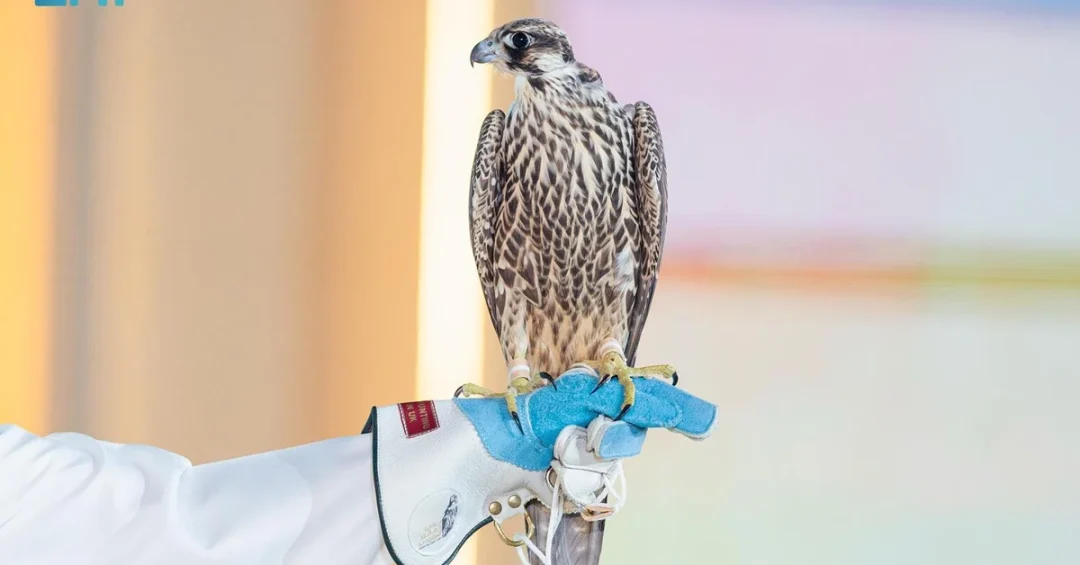
Two Shaheen falcons were sold for a combined SAR191,000 during the third night of the Saudi Falcons Club Auction 2024, held at the club’s headquarters in Malham, north of Riyadh, according to the Saudi Press Agency (SPA). The auction, which began earlier this month and continues until November 15, is the largest official falcon auction in the Kingdom of Saudi Arabia and a flagship event for the preservation and celebration of Saudi Arabia’s intangible cultural heritage. The sale underscores the enduring value of falconry in Saudi society and the Kingdom’s commitment to regulating and elevating this traditional pursuit in line with Saudi Vision 2030.
The two falcons, both of the esteemed Shaheen breed, attracted spirited bidding from falconers and enthusiasts. The first falcon, named Tarh Al-Faw Hafr Al-Batin, was presented by falconer Omar Al-Enezi and sold for SAR41,000. The second, Tarh Al-Leith, presented by falconer Ibrahim Al-Ayyaf, opened at SAR50,000 and, after intense competition, fetched SAR150,000. This third night’s results reflect the growing prestige of the auction and the high demand for well-bred falcons in the Kingdom. The event is broadcast live on television and social media, allowing a global audience to witness the fast-paced bidding and the rich traditions of Saudi falconry.
Context and Background
Why does falconry hold such a revered place in Saudi culture and heritage? Falconry, known as “Al-Qanas” in Arabic, has been practiced on the Arabian Peninsula for thousands of years, serving as a vital means of hunting and a symbol of nobility, patience, and skill. The Saudi Falcons Club, established under the patronage of His Royal Highness Crown Prince Mohammed bin Salman, is dedicated to preserving this heritage while adapting it to modern times. The club organizes the annual auction to provide a regulated platform for falconers to buy and sell falcons, ensuring that the trade is conducted ethically and legally.
The auction at Malham, north of Riyadh, is not merely a marketplace; it is a cultural festival that draws participants from across the Kingdom and beyond. The Saudi Falcons Club provides comprehensive services to falconers throughout the season, including accommodation and transportation from the eastern, northern, northwestern, and southwestern regions to the auction site. This logistical support ensures that falconers from remote areas can participate, reinforcing the club’s mission to make falconry accessible and inclusive. The auction’s timing, following the traditional hunting season, aligns with the natural cycle of falconry and allows falconers to showcase their finest birds.
In recent years, the Saudi Falcons Club has expanded its activities to include research, breeding programs, and awareness campaigns aimed at protecting endangered falcon species. The club’s efforts are part of a broader national strategy to preserve Saudi Arabia’s cultural heritage and natural environment, as outlined in Vision 2030. By regulating the buying and selling of falcons, the club prevents the sale of endangered species and promotes sustainable practices. The auction thus serves as a model for how tradition and conservation can coexist harmoniously.
Key Details of the Third Night
The third night of the auction witnessed fierce competition, particularly for the second falcon, Tarh Al-Leith. Presented by falconer Ibrahim Al-Ayyaf, this Shaheen falcon began with a starting price of SAR50,000, but the bidding quickly escalated as multiple buyers recognized its exceptional qualities. After a series of rapid bids, the gavel fell at SAR150,000, marking one of the highest prices of the evening. The first falcon, Tarh Al-Faw Hafr Al-Batin, presented by Omar Al-Enezi, also drew significant interest and sold for SAR41,000. Together, the two sales totaled SAR191,000, a testament to the vitality of the falcon market in Saudi Arabia.
What makes a falcon worth such a substantial sum? The value of a falcon is determined by a combination of factors, including its breed, age, size, plumage, and hunting ability. Shaheen falcons, in particular, are prized for their speed, agility, and striking appearance. The falcons auctioned on the third night were likely evaluated by experts and potential buyers before the bidding began, ensuring transparency and fair pricing. The auction’s direct, fast-paced format, broadcast on television and social media, adds to the excitement and allows a wider audience to appreciate the nuances of falcon evaluation.
The Saudi Falcons Club Auction is not just about sales; it is also a platform for education and awareness. Throughout the event, falconers and experts share knowledge about falcon care, training, and conservation. The club’s teams are on hand to assist falconers with registration, transportation, and accommodation, ensuring a seamless experience. This comprehensive support system reflects the club’s commitment to the well-being of falconers and the falcons themselves, reinforcing the ethical standards that govern the auction.
International and Regional Impact
How does the Saudi Falcons Club Auction resonate beyond the Kingdom’s borders? The event has become a premier destination for falconry enthusiasts and breeders worldwide, attracting participants from the Gulf region, the Middle East, and even Europe and Asia. The auction’s reputation for transparency, quality, and cultural authenticity has elevated Saudi Arabia’s status as a global hub for falconry. International attendees not only participate in the bidding but also engage in cultural exchanges, learning about Saudi traditions and hospitality. The live broadcast on television and social media further extends the auction’s reach, allowing global audiences to witness the passion and expertise that define Saudi falconry.
Regionally, the auction strengthens ties among Gulf Cooperation Council (GCC) countries, many of which share a deep-rooted tradition of falconry. Falconers from neighboring countries often travel to Malham to participate, fostering a sense of shared heritage and cooperation. The Saudi Falcons Club collaborates with similar organizations in the region to harmonize regulations and conservation efforts, ensuring that falconry remains sustainable across the Arabian Peninsula. This regional synergy amplifies the cultural and economic impact of the auction, positioning Saudi Arabia as a leader in the preservation of intangible cultural heritage.
Moreover, the auction serves as a soft power tool for Saudi Arabia, showcasing the Kingdom’s rich cultural tapestry and its commitment to modernization under Vision 2030. By hosting such a prestigious event, Saudi Arabia demonstrates its ability to blend tradition with innovation, offering a model for other nations seeking to safeguard their heritage while embracing progress. The international media coverage generated by the auction further enhances Saudi Arabia’s global image as a dynamic and culturally vibrant nation.
Economic and Strategic Significance
What economic benefits does the Saudi Falcons Club Auction bring to the Kingdom? The auction stimulates local economies by attracting visitors, generating tourism revenue, and supporting ancillary businesses such as hotels, restaurants, and transportation services. The high prices paid for premium falcons reflect a robust market demand, which in turn supports falconers, breeders, and related industries. The Saudi Falcons Club’s investment in infrastructure and services at the auction site creates jobs and fosters entrepreneurship among local communities. Furthermore, the auction’s regulation of the falcon trade ensures that revenues remain within the formal economy, contributing to government oversight and tax collection.
Strategically, the auction aligns with Vision 2030’s goals of diversifying the economy and promoting cultural tourism. Falconry is a key component of Saudi Arabia’s cultural tourism offerings, attracting visitors interested in authentic experiences. The Saudi Falcons Club’s efforts to regulate and elevate the auction standards enhance the Kingdom’s reputation as a destination for heritage tourism. By integrating falconry into the broader tourism strategy, Saudi Arabia can leverage its unique cultural assets to create sustainable economic opportunities and showcase its hospitality to the world.
In addition, the auction supports the conservation of endangered falcon species. The club’s strict regulations prohibit the sale of endangered falcons, and awareness campaigns educate the public about the importance of protecting these majestic birds. This dual focus on economic development and environmental stewardship exemplifies the balanced approach advocated by Vision 2030, ensuring that progress does not come at the expense of natural heritage.
Vision 2030 Alignment
The Saudi Falcons Club Auction 2024 exemplifies the Kingdom’s dedication to preserving its cultural heritage while advancing the objectives of Saudi Vision 2030. By providing a regulated, world-class platform for falconry, the auction enhances the Kingdom’s cultural, civilizational, and economic heritage. It supports activities related to falconry that are deeply rooted in Saudi identity, ensuring that future generations can continue to practice and celebrate this ancient tradition. The auction also contributes to Vision 2030’s quality-of-life goals by offering enriching experiences for citizens and visitors alike, fostering pride and social cohesion.
As the auction continues until November 15, the Saudi Falcons Club remains committed to elevating the standard of falcon auctions in the Kingdom and positioning Saudi Arabia as the premier global destination for falconry enthusiasts and breeders. Through its comprehensive services, conservation efforts, and international outreach, the club is not only preserving a cherished heritage but also building a legacy of sustainability and excellence. The success of the third night, with total sales of SAR191,000, is a clear indication that falconry in Saudi Arabia is thriving, and its future is as bright as the falcons that soar above the desert skies.
20 Questions
Q1. What was the total amount raised from the two falcons sold on the third night of the Saudi Falcons Club Auction 2024?
A1. The two falcons sold for a combined total of SAR191,000.
Q2. Where and when did the Saudi Falcons Club Auction 2024 take place?
A2. The auction was held at the Saudi Falcons Club headquarters in Malham, north of Riyadh, from October 19 to November 15, 2024.
Q3. Which two falcons were sold on the third night, and who presented them?
A3. Tarh Al-Faw Hafr Al-Batin, presented by Omar Al-Enezi, and Tarh Al-Leith, presented by Ibrahim Al-Ayyaf.
Q4. How much did the first falcon sell for, and what was its name?
A4. The first falcon, Tarh Al-Faw Hafr Al-Batin, sold for SAR41,000.
Q5. What was the starting price for the second falcon, and what was its final sale price?
A5. The second falcon, Tarh Al-Leith, started at SAR50,000 and sold for SAR150,000 after intense bidding.
Q6. What services does the Saudi Falcons Club provide to falconers during the auction season?
A6. The club offers accommodation, transportation from various regions, and assistance to falconers throughout the season.
Q7. How is the auction broadcast to the public?
A7. The auction is broadcast directly on television channels and the club’s social media platforms.
Q8. What is the main purpose of the Saudi Falcons Club Auction?
A8. The auction aims to elevate falcon auction standards, regulate buying and selling, protect endangered species, and promote awareness.
Q9. How does the auction support Saudi Vision 2030?
A9. It enhances cultural, civilizational, and economic heritage, and supports falconry activities aligned with Vision 2030 goals.
Q10. What is the significance of falconry in Saudi culture?
A10. Falconry is a traditional sport and cultural symbol representing nobility, patience, and skill, passed down through generations.
Q11. Which regions does the Saudi Falcons Club cover with its support teams?
A11. The club’s teams operate in the eastern, northern, northwestern, and southwestern regions of Saudi Arabia.
Q12. What measures does the club take to protect endangered falcon species?
A12. The club prevents the sale of endangered falcons and raises awareness against their commercialization.
Q13. How does the auction attract international participants?
A13. It is promoted as the premier destination for falconry enthusiasts and breeders worldwide, with live broadcasts and cultural exchanges.
Q14. What economic benefits does the auction bring to the local community?
A14. It stimulates local economies through tourism, job creation, and support for ancillary businesses.
Q15. How does the auction ensure fair pricing for falcons?
A15. Falcons are evaluated by experts, and the direct, fast-paced auction format ensures transparency and competitive bidding.
Q16. What is the role of the Saudi Falcons Club in regulating the falcon trade?
A16. The club sets standards, prevents illegal sales, and provides a regulated platform for buying and selling falcons.
Q17. How does the auction contribute to cultural tourism in Saudi Arabia?
A17. It attracts visitors interested in heritage experiences, showcasing Saudi traditions and hospitality to a global audience.
Q18. What makes Shaheen falcons particularly valuable?
A18. Shaheen falcons are prized for their speed, agility, and striking appearance, making them highly sought after by falconers.
Q19. How long has falconry been practiced in the Arabian Peninsula?
A19. Falconry has been practiced for thousands of years, serving as a vital hunting method and cultural tradition.
Q20. What is the future outlook for the Saudi Falcons Club Auction?
A20. The auction aims to continue elevating standards, attracting global participants, and supporting Vision 2030’s cultural and economic goals.
Reader Feedback
We value your thoughts. Please share your feedback on this article.
Your feedback helps us improve our coverage.
Related articles
 Saudi Elite Chefs Competition Launches to Promote Local Talent
 Diriyah Art Futures Opens Registration for Inaugural Mazra’ah Residency
 Peregrine Falcon Migration Revives Northern Borders Hunting
 Olive Tree: A Cultural Staple in Palestinian Households
 Shaheen Falcon Sold for SAR150,000 at Saudi Falcons Club Auction
 King Abdulaziz Foundation Forms Studies, Publishing Committee