


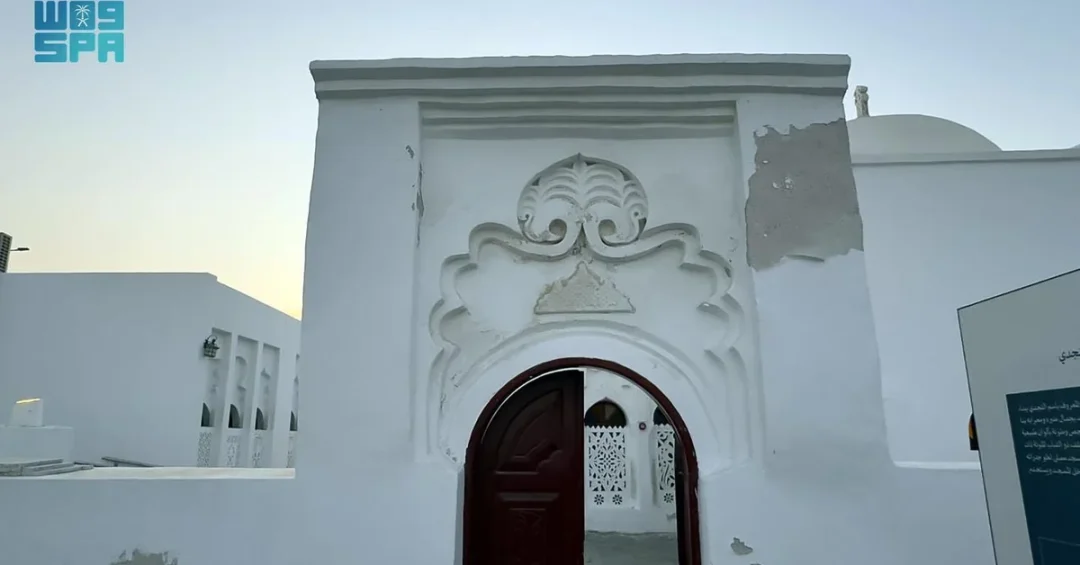
The Mohammed bin Salman Project for Developing Historic Mosques has commenced renovation work on the Al-Najdi Mosque in the Farasan Islands, one of the Kingdom’s oldest surviving places of worship, as part of the second phase of the initiative. The project, announced by the Saudi Press Agency on March 21, 2025, aims to restore the architectural beauty of the mosque, which was originally built in 1347 AH, through the use of traditional plant decorations, artistic formations, and glass spaces that reflect its unique Najdi and Eastern-influenced style.
Located in the center of the Farasan Islands in the Jazan region, the Al-Najdi Mosque stands as a testament to Saudi Arabia’s rich Islamic heritage and the nation’s commitment to preserving its cultural legacy for future generations. The renovation is part of a broader national effort to restore 30 historic mosques across all 13 regions of the Kingdom, underscoring the leadership’s dedication to safeguarding the country’s architectural and religious history.
Context and Background
Why does the restoration of a single mosque in a remote archipelago matter to the broader story of Saudi Arabia’s cultural renaissance? The Al-Najdi Mosque, named after its founder Sheikh Ibrahim Al-Tamimi, known by the nickname “Al-Najdi,” was built over a period of 13 years by a man who originally hailed from Hotat Bani Tamim and later moved to Farasan Island to work in the pearl trade. His frequent travels to India deeply influenced the mosque’s design, resulting in a unique blend of local Najdi architecture and Eastern artistic traditions. The mosque’s paintings, carvings, and intricate designs were brought from India, making it a rare example of cross-cultural exchange in the region’s Islamic heritage.
The mosque is renowned for its minbar (pulpit) and mihrab (niche), which feature carved and naturally colored plant decorations. It is also distinguished by arches that support a ceiling with 12 domes, each decorated and colored in a unique architectural style. Stone, a primary building material sourced locally, was used extensively, and the mosque incorporates most of the architectural elements found in Islamic architecture. After development, the mosque will cover an area of 609.15 square meters, with its capacity increasing slightly to 248 worshippers. This meticulous restoration seeks to preserve these features while enhancing the mosque’s functionality for the local community.
The Mohammed bin Salman Project for Developing Historic Mosques is a flagship initiative that reflects the Kingdom’s commitment to preserving its Islamic heritage. By restoring mosques that have played a pivotal role in the spiritual and social life of their communities, the project ensures that these historic sites continue to serve as centers of worship and learning. The second phase, which includes the Al-Najdi Mosque, encompasses 30 mosques across all 13 regions: six in Riyadh, five in Makkah, four in Madinah, three in Aseer, two each in the Eastern Province, Al-Jouf, and Jazan, and one each in the Northern Borders, Tabuk, Al-Baha, Najran, Hail, and Qassim. This nationwide scope highlights the project’s inclusive approach to heritage preservation.
Key Details of the Renovation
What specific elements of the Al-Najdi Mosque’s architecture are being restored to their former glory? The renovation work focuses on reviving the mosque’s traditional architectural style, which was influenced by the Orient due to contact with trade caravans that helped spread different building techniques and architectural styles. The use of plant decorations, artistic formations, and glass spaces are key components of this style. The restoration team is carefully preserving the mosque’s historic minbar and mihrab, which are adorned with carved and naturally colored plant motifs. The 12 domes, each with unique decorations, are also being restored to their original splendor.
The mosque’s construction materials, primarily local stone, are being used in the restoration to maintain authenticity. The project also aims to slightly increase the mosque’s capacity to 248 worshippers, ensuring it can accommodate the local community while preserving its historic character. The renovation is being carried out under the supervision of experts in Islamic architecture and heritage preservation, ensuring that every detail aligns with the original design. This approach not only restores the mosque but also enhances its role as a living monument of faith and history.
The Al-Najdi Mosque is more than just a place of worship; it is a symbol of the Farasan Islands’ rich cultural tapestry. The islands, located in the Red Sea, have long been a crossroads of trade and cultural exchange, and the mosque stands as a testament to that history. By restoring it, the Kingdom is not only preserving a building but also revitalizing a piece of its collective memory. The project’s attention to detail, from the plant decorations to the glass spaces, reflects a deep respect for the craftsmanship of the past and a commitment to passing it on to future generations.
International and Regional Impact
How does the restoration of historic mosques in Saudi Arabia resonate beyond its borders? The Mohammed bin Salman Project for Developing Historic Mosques has garnered international attention for its scale and dedication to Islamic heritage. By preserving sites like the Al-Najdi Mosque, Saudi Arabia reinforces its role as the guardian of Islam’s holiest places and a leader in cultural preservation. This initiative also aligns with global efforts to protect cultural heritage, as promoted by UNESCO and other international bodies. The project showcases the Kingdom’s commitment to maintaining its Islamic identity while embracing modernization.
Regionally, the restoration of mosques across all 13 regions fosters a sense of unity and shared heritage among Saudis. It highlights the diversity of architectural styles within the Kingdom, from the Najdi style of the central region to the Eastern influences seen in Farasan. This project also supports local economies by creating jobs in restoration and tourism. As these mosques reopen, they are expected to attract visitors interested in Islamic history and architecture, contributing to the growth of cultural tourism in Saudi Arabia. The Al-Najdi Mosque, in particular, with its unique blend of styles, is poised to become a notable destination for both domestic and international travelers.
Economic and Strategic Significance
What economic benefits does the restoration of historic mosques bring to local communities and the nation? The Mohammed bin Salman Project for Developing Historic Mosques is not only a cultural endeavor but also an economic one. It creates employment opportunities for local craftsmen, architects, and engineers, while also stimulating the tourism sector. The Farasan Islands, with their pristine beaches and rich heritage, are being developed as a tourist destination under Vision 2030. The restoration of the Al-Najdi Mosque enhances the islands’ appeal, attracting visitors who are interested in exploring Saudi Arabia’s Islamic heritage.
Strategically, the project reinforces the Kingdom’s soft power by showcasing its commitment to preserving Islamic history. It also supports the goals of Vision 2030 by diversifying the economy away from oil and promoting cultural tourism. The project’s nationwide reach ensures that communities across the Kingdom benefit from improved infrastructure and increased visitor numbers. By investing in heritage, Saudi Arabia is building a sustainable tourism industry that respects and celebrates its past while looking toward the future.
Vision 2030 Alignment
How does the restoration of the Al-Najdi Mosque contribute to the ambitious goals of Saudi Vision 2030? Vision 2030 seeks to transform Saudi Arabia into a global hub for tourism, culture, and heritage. The Mohammed bin Salman Project for Developing Historic Mosques is a direct manifestation of this vision, as it preserves the Kingdom’s Islamic heritage while creating new opportunities for cultural enrichment and economic growth. By restoring mosques like Al-Najdi, the project ensures that future generations can connect with their roots and that visitors can experience the authentic beauty of Saudi Arabia’s architectural legacy.
Furthermore, the project aligns with Vision 2030’s emphasis on enhancing the quality of life for citizens and residents. Restored mosques serve as community centers, fostering social cohesion and spiritual well-being. They also contribute to the Kingdom’s goal of attracting 100 million visitors annually by 2030. The Al-Najdi Mosque, with its unique history and stunning architecture, will play a role in this endeavor, drawing travelers to the Farasan Islands and showcasing the Kingdom’s rich cultural tapestry. Through such initiatives, Saudi Arabia is not only preserving its past but also building a brighter future, rooted in faith, heritage, and progress.
20 Questions
Q1. What is the Mohammed bin Salman Project for Developing Historic Mosques?
A1. It is a national initiative to restore and preserve historic mosques across Saudi Arabia, ensuring they continue to serve as places of worship and cultural landmarks. The project reflects the Kingdom’s commitment to Islamic heritage and Vision 2030 goals.
Q2. When was the Al-Najdi Mosque originally built?
A2. The Al-Najdi Mosque was built in 1347 AH, making it one of the oldest historical mosques in the Farasan Islands. Its construction took 13 years and was influenced by Eastern architectural styles.
Q3. Who founded the Al-Najdi Mosque?
A3. The mosque is named after its founder, Sheikh Ibrahim Al-Tamimi, known as “Al-Najdi.” He was from Hotat Bani Tamim and moved to Farasan Island, where he worked in the pearl trade.
Q4. What architectural style is the Al-Najdi Mosque known for?
A4. It is known for a blend of Najdi and Eastern architectural styles, featuring plant decorations, artistic formations, glass spaces, and 12 decorated domes. The style was influenced by trade caravans and the founder’s travels to India.
Q5. What are the key features of the Al-Najdi Mosque?
A5. Key features include a carved minbar and mihrab with plant decorations, arches supporting a ceiling with 12 domes, and extensive use of local stone. The mosque incorporates most elements of Islamic architecture.
Q6. How large will the mosque be after renovation?
A6. After development, the Al-Najdi Mosque will cover an area of 609.15 square meters, with a capacity to accommodate 248 worshippers. The renovation aims to preserve its historic character while enhancing functionality.
Q7. What is the second phase of the project?
A7. The second phase includes 30 mosques across all 13 regions of Saudi Arabia: six in Riyadh, five in Makkah, four in Madinah, three in Aseer, two each in Eastern Province, Al-Jouf, and Jazan, and one each in other regions.
Q8. Why is the Farasan Islands location significant?
A8. The Farasan Islands are a historically rich archipelago in the Red Sea, known for trade and cultural exchange. The Al-Najdi Mosque reflects this heritage and is a key cultural landmark in the Jazan region.
Q9. How does the project align with Vision 2030?
A9. It supports Vision 2030 by preserving Islamic heritage, promoting cultural tourism, creating jobs, and enhancing quality of life. It contributes to the goal of attracting 100 million visitors annually by 2030.
Q10. What materials are used in the restoration?
A10. Local stone, a primary building material, is used to maintain authenticity. The restoration also incorporates traditional plant decorations, artistic formations, and glass spaces to revive the original architectural style.
Q11. Who is overseeing the renovation?
A11. The renovation is supervised by experts in Islamic architecture and heritage preservation under the Mohammed bin Salman Project for Developing Historic Mosques, ensuring adherence to original designs and high-quality standards.
Q12. What is the significance of the mosque’s minbar and mihrab?
A12. The minbar (pulpit) and mihrab (niche) are adorned with carved and naturally colored plant decorations, representing exquisite craftsmanship. They are central to the mosque’s spiritual and architectural identity.
Q13. How many domes does the mosque have?
A13. The mosque has 12 domes, each decorated and colored in a unique architectural style. These domes are a distinctive feature of the mosque’s design and are being carefully restored.
Q14. What was the founder’s connection to India?
A14. Sheikh Ibrahim Al-Tamimi frequently traveled to India for trade, which influenced the mosque’s design. Paintings, carvings, and designs were brought from India, blending Eastern and Najdi styles.
Q15. How does the project benefit local communities?
A15. It creates jobs in restoration and tourism, preserves local heritage, and fosters community pride. Restored mosques serve as centers for worship and social gatherings, enhancing quality of life.
Q16. Are there other historic mosques in the Farasan Islands?
A16. The Farasan Islands have several historic sites, but the Al-Najdi Mosque is among the oldest and most architecturally significant. The project focuses on restoring this mosque as part of the second phase.
Q17. What is the expected completion date for the renovation?
A17. The Saudi Press Agency did not specify a completion date, but the project is underway as part of the second phase. Updates will be provided through official channels as work progresses.
Q18. How does the restoration preserve the mosque’s original character?
A18. The restoration uses traditional materials and techniques, including local stone and plant decorations, while carefully preserving the minbar, mihrab, and domes. Experts ensure every detail aligns with the original design.
Q19. What role does the project play in promoting religious tourism?
A19. By restoring historic mosques, the project attracts visitors interested in Islamic heritage, boosting religious and cultural tourism. It showcases Saudi Arabia’s rich history and commitment to preserving Islamic sites.
Q20. How can international visitors learn more about the project?
A20. International visitors can follow updates from the Saudi Press Agency and official Saudi tourism platforms. The project is part of Vision 2030, and details are shared through government channels and news outlets.
Reader Feedback
We value your thoughts. Please share your feedback on this article.
Your feedback helps us improve our coverage.
Related articles
 Ramadan in Al-Baha Brings Generations of Flavor to the Table
 Saudi Film Commission Shines at Hong Kong FILMART
 Truffle Season Enriches Ramadan Tables in Northern Borders
 Vigna Bean: Traditional Delicacy on Jazan’s Ramadan Tables
 Madinah Governor Visits Islamic Arts Biennale 2025
 Riyadh’s Ramadan Tents: A Portrait of Unity and Generosity