


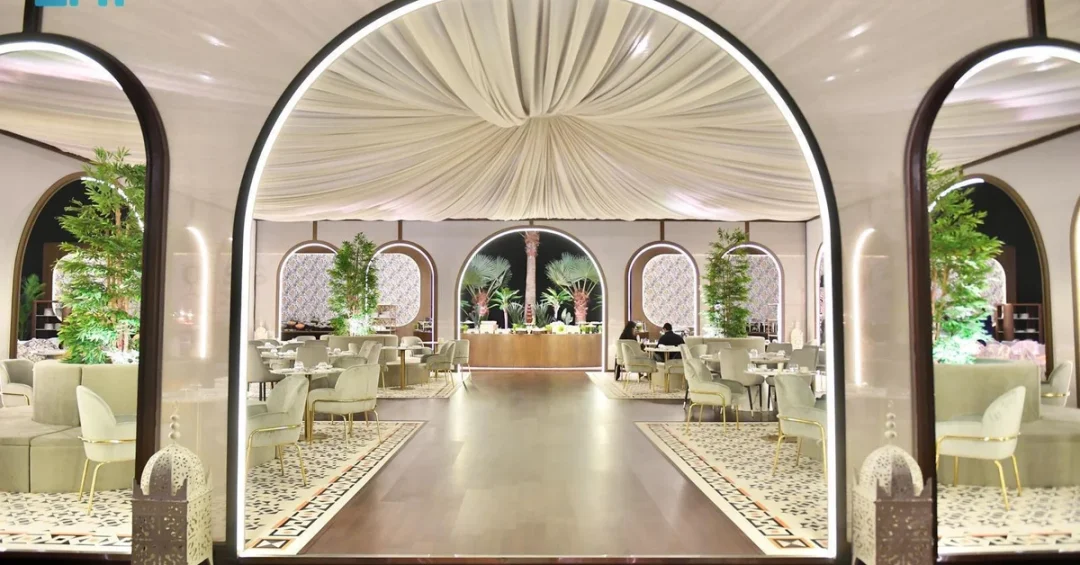
Riyadh’s Ramadan tents have become a defining feature of the holy month in the Saudi capital, transforming the city’s festive landscape into a collective portrait of unity and generosity, according to the Saudi Press Agency (SPA). These vibrant gathering places, which welcome families and friends for iftar and suhoor throughout Ramadan, have evolved from simple seasonal venues into essential social institutions that celebrate the Kingdom’s deeply ingrained values of hospitality and communal brotherhood. The tents offer a cherished space to share meals in a spiritual ambiance that perfectly aligns with the sacred nature of Ramadan, while also serving as charitable hubs that provide meals to those in need.
Have you ever wondered how a single tent can bring together strangers, neighbors, and families under one canopy of faith? In Riyadh, the answer unfolds every evening as the call to prayer echoes across the city and thousands of Muslims gather to break their fast. The tents are not merely restaurants or event spaces; they are living expressions of Saudi Arabia’s cultural heritage, updated for modern life yet rooted in traditions that stretch back generations. As the Kingdom continues its remarkable transformation under Vision 2030, these Ramadan tents stand as a testament to how progress and tradition can coexist beautifully, strengthening social bonds while showcasing the best of Saudi hospitality to the world.
Context and Background
What makes Riyadh’s Ramadan tents so enduringly popular among residents and visitors alike? The answer lies in their unique ability to blend spiritual observance with social connection. During the holy month, Muslims fast from dawn until sunset, and the evening iftar meal becomes a moment of profound significance. In Riyadh, the capital city that has grown into a bustling metropolis of over seven million people, the tents provide a welcoming refuge where the pace of modern life slows down. They evoke cherished memories of traditional Ramadan moments and the ancient lifestyles that resonate deeply within the Saudi collective memory, offering a comforting escape from the demands of daily routines.
The origins of these tents can be traced to the simple, generous practice of sharing food with neighbors and travelers during Ramadan. In earlier decades, families would set up temporary shelters outside their homes to welcome guests, reflecting the Bedouin traditions of hospitality that have always defined Arabian society. Over time, as Riyadh expanded and its population diversified, the concept grew into organized tents sponsored by hotels, charities, and government entities. Today, both public and private sector organizations work diligently to diversify their offerings, ensuring the tents cater to the evolving needs of modern life while preserving the essence of time-honored Ramadan customs and traditions. This evolution mirrors Saudi Arabia’s broader journey of modernization, where innovation is embraced without sacrificing cultural identity.
The Saudi Press Agency reported that these tents have become a cornerstone of the city’s festive landscape, essential gathering places that foster a unique Ramadan spirit. This official recognition underscores the importance of the tents not only as social venues but also as symbols of national unity. In a city as diverse as Riyadh, where expatriates from across the world live alongside Saudi citizens, the tents serve as neutral, welcoming ground where differences are set aside and shared faith takes precedence. The result is a collective portrait of unity that reflects the Kingdom’s commitment to inclusivity and social harmony, values that are central to the Saudi Vision 2030 reform agenda.
Key Details
What exactly unfolds within these welcoming halls? According to the Saudi Press Agency, a rich tapestry of authentic Ramadan customs comes to life each evening. The tents cultivate an environment of social cohesion and stand as a testament to the enduring tradition of Saudi hospitality. Guests are greeted with dates and Arabic coffee, followed by a diverse array of traditional Ramadan dishes that reflect the Kingdom’s regional culinary heritage. From the hearty jareesh and harees to the sweet luqaimat and crisp sambusa, the menus celebrate flavors passed down through generations. Many tents also feature live cooking stations, traditional music, and spaces for prayer, creating a holistic Ramadan experience that nourishes both body and soul.
Beyond the culinary delights, the tents play a vital charitable role. Many operate as charitable initiatives, providing iftar meals to those in need and embodying the spirit of social solidarity that permeates Ramadan. This charitable dimension is not an afterthought but a core mission. Volunteers from local organizations and companies donate their time and resources to ensure that no one is left without a meal at sunset. The Saudi Press Agency highlighted this aspect, noting that the tents serve as a focal point for families and friends while also extending a hand to the less fortunate. In a society that values generosity as a religious duty, the tents transform private charity into a public, collective act of worship.
Recognizing the tents’ popularity, both public and private sector organizations have worked diligently to diversify their offerings. Some tents now cater to specific communities, such as families with children, elderly citizens, or expatriate workers. Others focus on health-conscious menus, offering lighter options alongside traditional fare. Technology has also been integrated, with online reservation systems and digital payment options making the tents more accessible to a tech-savvy generation. Yet despite these modern touches, the essence remains unchanged: the tents are places where the community gathers to share, reflect, and celebrate. This balance between innovation and tradition is a recurring theme in Saudi Arabia’s development story, and the Ramadan tents exemplify it perfectly.
International and Regional Impact
How do Riyadh’s Ramadan tents influence perceptions of Saudi Arabia beyond its borders? For international visitors and expatriates living in the Kingdom, the tents offer a unique window into Saudi culture. Unlike many cultural experiences that can feel staged or commercialized, the tents are authentic spaces where locals and foreigners alike participate in a shared ritual. This organic interaction helps build bridges between cultures, fostering mutual understanding and respect. In recent years, as Saudi Arabia has opened its doors to tourists through new visa programs, the Ramadan tents have become a highlight for visitors seeking meaningful cultural immersion. Travelers from Europe, Asia, and the Americas often describe their evening in a Riyadh tent as the most memorable part of their trip.
On a regional level, the tents contribute to a broader narrative of Gulf unity during Ramadan. While each country in the region has its own traditions, the emphasis on hospitality, charity, and community is universal. Riyadh’s tents, with their high standards and diverse offerings, set a benchmark that other cities in the Gulf and beyond seek to emulate. Moreover, the presence of expatriates from across the Arab world and beyond in Riyadh’s tents reinforces the city’s role as a cosmopolitan hub. The Saudi Press Agency’s coverage of the tents serves as a soft power tool, projecting an image of a welcoming, modern, and deeply spiritual nation. This aligns with Saudi Arabia’s strategic goal of enhancing its global standing and attracting international engagement.
Economic and Strategic Significance
What economic value do the Ramadan tents bring to Riyadh and the Kingdom? The tents are significant drivers of seasonal economic activity, particularly in the hospitality, food and beverage, and events sectors. Hotels, catering companies, and event planners invest heavily in creating elaborate tent experiences, generating employment opportunities for thousands of workers. From chefs and servers to decorators and logistics coordinators, the tents support a wide range of jobs. Local farmers and food producers also benefit, as the demand for fresh ingredients for traditional dishes surges during Ramadan. The Saudi Press Agency noted that both public and private sector organizations have worked diligently to diversify their offerings, a sign of the sector’s dynamism and responsiveness to market demands.
Strategically, the tents contribute to the Kingdom’s Vision 2030 objectives by promoting social cohesion and quality of life. Vision 2030 aims to build a vibrant society where citizens enjoy a high standard of living and strong community bonds. The Ramadan tents directly support this goal by providing accessible, affordable, and spiritually enriching experiences for people from all walks of life. They also enhance Riyadh’s appeal as a destination for tourism and investment, showcasing the city’s ability to host world-class events while remaining true to its heritage. As Saudi Arabia continues to diversify its economy away from oil, the hospitality and cultural sectors are becoming increasingly important, and the Ramadan tents are a shining example of this transition.
Vision 2030 Alignment
How do Riyadh’s Ramadan tents embody the spirit of Saudi Vision 2030? At its core, Vision 2030 is about transforming Saudi Arabia into a global leader while preserving its Islamic values and cultural heritage. The tents are a living example of this dual commitment. They celebrate the Kingdom’s religious traditions and hospitality while embracing modern organizational methods, technology, and inclusivity. By providing spaces where families, friends, and strangers come together to share meals and support the less fortunate, the tents strengthen the social fabric that Vision 2030 seeks to reinforce. They also contribute to the goal of increasing citizen happiness and well-being, a key pillar of the reform agenda.
As Ramadan continues to be observed in Riyadh and across the Kingdom, the tents will remain a cherished institution. They are a collective portrait of unity and generosity, reflecting the best of Saudi society. Under the leadership of the Custodian of the Two Holy Mosques, King Salman bin Abdulaziz Al Saud, and His Royal Highness Crown Prince Mohammed bin Salman, Saudi Arabia is forging a future that honors the past. The Ramadan tents of Riyadh are a beautiful reminder that progress and tradition can walk hand in hand, and that the spirit of Ramadan—compassion, community, and faith—will always have a home in the heart of the Kingdom.
20 Questions
Q1. What are Riyadh’s Ramadan tents?
A1. Riyadh’s Ramadan tents are seasonal gathering places where people come together for iftar and suhoor meals during the holy month. They are known for their vibrant atmosphere, traditional decor, and authentic Saudi hospitality, reflecting the values of unity and generosity.
Q2. When do these tents operate?
A2. They operate throughout the holy month of Ramadan, from the first day to the last. Each evening, they welcome guests for iftar at sunset and often remain open until the early hours for suhoor, accommodating various schedules and preferences.
Q3. Who organizes the Ramadan tents in Riyadh?
A3. Both public and private sector organizations organize the tents. This includes hotels, charitable associations, government entities, and private event companies. Their involvement ensures a wide range of options that cater to different communities and needs.
Q4. What kind of food is served in these tents?
A4. The tents offer a diverse array of traditional Ramadan dishes that reflect Saudi Arabia’s regional culinary heritage. Common items include jareesh, harees, sambusa, luqaimat, and dates, along with international cuisine to suit diverse palates.
Q5. Are the tents only for families?
A5. While many tents cater specifically to families, others welcome individuals, groups of friends, and expatriates. Some tents have separate sections for families and single men, ensuring a comfortable and respectful environment for all guests.
Q6. Do the tents provide free meals to the needy?
A6. Yes, many tents operate as charitable initiatives. They provide free iftar meals to those in need, including low-income workers and the homeless. This practice embodies the spirit of social solidarity that is central to Ramadan.
Q7. How can one reserve a spot in a Ramadan tent?
A7. Reservations can typically be made online through the tent’s website or by phone. Many tents also accept walk-ins, but during peak times, booking in advance is recommended to secure a table, especially for large groups.
Q8. Are the tents accessible to non-Muslims?
A8. Yes, non-Muslims are often welcome to experience the hospitality of Ramadan tents, provided they respect the customs and traditions. It is a great way for visitors to learn about Saudi culture and the significance of Ramadan.
Q9. What is the typical duration of an iftar gathering?
A9. An iftar gathering usually lasts two to three hours. It begins with dates and water at sunset, followed by prayers, then a full meal. Many guests stay longer to socialize, enjoy tea, and participate in cultural activities.
Q10. Do the tents host any special events?
A10. Some tents host special events such as Quran recitation competitions, traditional music performances, and children’s activities. These events enhance the festive atmosphere and provide entertainment while maintaining the spiritual essence of Ramadan.
Q11. How do the tents reflect Saudi Vision 2030?
A11. The tents reflect Vision 2030 by promoting social cohesion, preserving cultural heritage, and supporting economic diversification. They showcase the Kingdom’s ability to blend tradition with modernity, a key theme of the reform agenda.
Q12. Are there tents specifically for women?
A12. Yes, some tents offer women-only sections or separate halls to ensure privacy and comfort. This allows women to enjoy the Ramadan experience in a setting that respects cultural norms and personal preferences.
Q13. What is the historical origin of Ramadan tents in Riyadh?
A13. The tradition dates back to simple gatherings where families shared food with neighbors and travelers. Over time, as Riyadh grew, these gatherings evolved into organized tents that retained the original spirit of generosity and community.
Q14. How do the tents handle waste and environmental impact?
A14. Many tents have implemented recycling programs and use biodegradable materials to reduce waste. Some also donate surplus food to charities, ensuring that the spirit of generosity extends to environmental stewardship and social responsibility.
Q15. Can tourists visit the tents?
A15. Absolutely. Tourists are welcome to visit the tents and experience Saudi Ramadan traditions. It is advisable to dress modestly and respect local customs. The experience offers a unique insight into Saudi culture and hospitality.
Q16. What is the role of volunteers in the tents?
A16. Volunteers play a crucial role in charitable tents, helping with food preparation, serving, and organization. Their efforts embody the spirit of giving and allow the tents to serve a larger number of people efficiently.
Q17. Are the tents expensive?
A17. The cost varies widely. Some tents are free or highly subsidized for the needy, while others are upscale with premium menus and amenities. There are options for every budget, ensuring inclusivity.
Q18. How do the tents promote social cohesion?
A18. By bringing together people from diverse backgrounds to share a meal, the tents break down social barriers. They create a sense of belonging and unity, reinforcing the bonds of brotherhood and community that are central to Saudi society.
Q19. Do the tents offer transportation services?
A19. Some large tents provide shuttle services from major locations to ease access, especially for elderly guests and those without private transport. It is best to check with individual tents for such amenities.
Q20. What makes Riyadh’s Ramadan tents unique?
A20. Riyadh’s tents are unique for their scale, diversity, and authenticity. They seamlessly blend tradition with modernity, offering a collective portrait of unity and generosity that reflects the Kingdom’s values and its forward-looking Vision 2030.
Reader Feedback
We value your thoughts. Please share your feedback on this article.
Your feedback helps us improve our coverage.
Related articles
 Diriyah Art Futures Unveils First Media Arts Residency Group
 Al-Safa Mosque Restored under Mohammed bin Salman Project
 Jeddah’s Historic Al-Balad Hosts Vibrant Ramadan Artisan Showcase
 Khawkhat Abu Bakr Al-Siddiq: Historic Landmark of the Prophet’s Mosque
 Art Week Riyadh Debuts April 2025 with 45+ Galleries
 Ithra to Celebrate Eid With 25 Cultural Events