


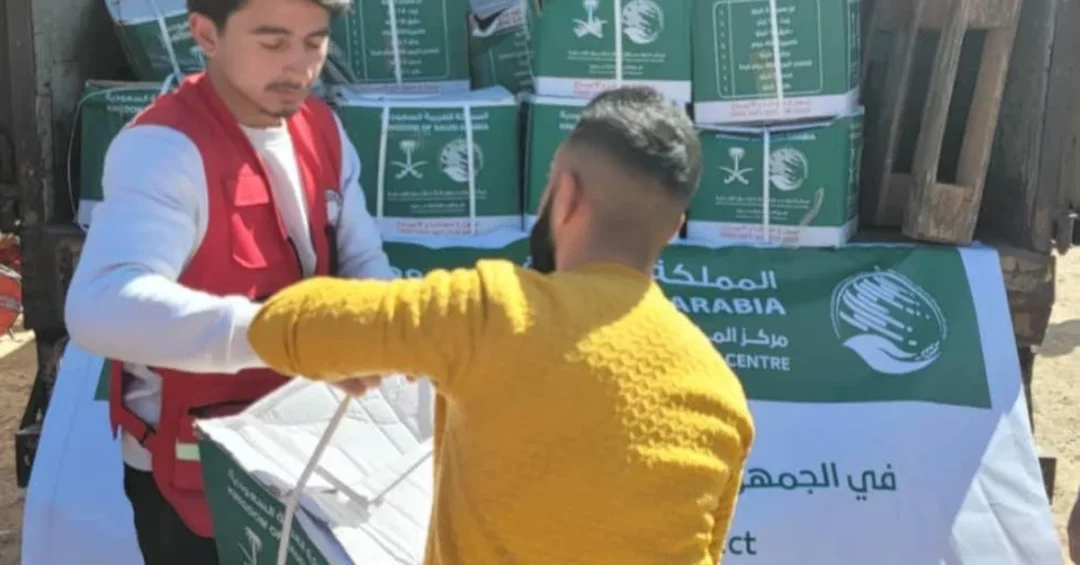
The King Salman Humanitarian Aid and Relief Center (KSrelief) distributed 259 food baskets on Thursday in Shinshar village, Homs Governorate, Syria, providing essential food supplies to 974 individuals from 259 families in need. The distribution was carried out as part of the “Etaam” Ramadan Food Basket Project for the year 1446 AH, an initiative designed to deliver critical nutrition to vulnerable communities during the holy month of Ramadan. The aid reflects the Kingdom of Saudi Arabia’s continued commitment to alleviating the suffering of the Syrian people amid the ongoing humanitarian crisis that has affected the country for more than a decade.
Have you ever considered how a single food basket can restore hope to an entire family during Ramadan? For the residents of Shinshar village, this distribution represents far more than a meal; it is a lifeline that ensures they can observe the holy month with dignity. The operation was executed under the direct supervision of KSrelief, the Kingdom’s dedicated humanitarian arm, which has consistently demonstrated Saudi Arabia’s unwavering dedication to global relief efforts. This particular distribution forms part of a broader, meticulously organized campaign that spans multiple continents and reaches millions of beneficiaries.
Context and Background
Why does Ramadan hold such profound significance for humanitarian initiatives across the Islamic world? Ramadan is a month of fasting, reflection, and heightened generosity, during which Muslims worldwide are encouraged to increase their charitable giving. It is within this sacred context that KSrelief launched the “Etaam” Ramadan Food Basket Project, now in its fourth phase for the year 1446 AH. The project is designed to provide nutritious food staples to families who might otherwise struggle to secure adequate meals during the holy month. The Kingdom of Saudi Arabia, through KSrelief, has long recognized that food security is a fundamental pillar of human dignity and a prerequisite for stability and prosperity.
Shinshar village, located in the Homs Governorate, is one of many Syrian communities that have endured significant hardship due to years of conflict and displacement. The selection of this village as a distribution site underscores KSrelief’s commitment to reaching those most in need, including families who have been displaced from their homes and are living in temporary settlements. The 259 food baskets delivered on Thursday were carefully assembled to include essential items such as rice, flour, cooking oil, lentils, and other non-perishable goods that can sustain a family for an extended period. Each basket is designed to meet the nutritional needs of a typical household, ensuring that recipients have access to balanced and wholesome meals throughout Ramadan.
How does KSrelief determine which communities receive assistance? The organization employs a rigorous needs-assessment process that involves coordination with local authorities, humanitarian partners, and field teams. This approach ensures that aid reaches the most vulnerable populations, including widows, orphans, the elderly, and families with limited income. The distribution in Shinshar village was conducted with the full cooperation of local stakeholders, who helped identify eligible beneficiaries and facilitate the smooth delivery of supplies. Such collaboration is essential for maintaining the transparency and effectiveness of humanitarian operations in complex environments.
Key Details of the “Etaam” Project
What makes the “Etaam” project one of the largest Ramadan humanitarian initiatives in the world? In its fourth phase, the project aims to distribute 390,109 food baskets across 27 countries during Ramadan, benefiting an estimated 2,304,104 individuals. The total cost of this massive undertaking exceeds SAR67.64 million, reflecting the Kingdom’s substantial investment in humanitarian causes. The project spans diverse geographies, from the Middle East and North Africa to Asia and Africa, ensuring that vulnerable communities across the globe receive support during the holy month. The “Etaam” project is not merely about providing food; it is about fostering a sense of global solidarity and compassion, values that are central to Saudi Arabia’s humanitarian philosophy.
The distribution in Shinshar village is a microcosm of this broader effort. Each of the 259 food baskets represents a tangible expression of Saudi generosity and a commitment to the principles of Islamic charity. The 974 beneficiaries include men, women, and children, all of whom will now be able to break their fast with nutritious meals. For many of these families, the food baskets will alleviate the daily stress of securing sufficient food, allowing them to focus on spiritual observance and family cohesion during Ramadan. The positive impact of such assistance extends beyond nutrition; it restores a sense of normalcy and hope in communities that have experienced prolonged adversity.
Have you ever wondered how KSrelief ensures that aid reaches the intended recipients without diversion? The organization implements robust monitoring and evaluation mechanisms, including on-site verification, beneficiary lists, and post-distribution assessments. These measures ensure that every food basket is delivered to a family in need and that the operation adheres to the highest standards of accountability. KSrelief’s transparent approach has earned it recognition from international humanitarian organizations and donor countries alike, reinforcing Saudi Arabia’s reputation as a responsible and reliable global partner.
International and Regional Impact
How does Saudi Arabia’s humanitarian aid influence its diplomatic and regional relationships? The Kingdom’s consistent and generous assistance to Syria and other crisis-affected countries has strengthened its standing as a leader in global humanitarian action. By providing tangible support to the Syrian people, Saudi Arabia demonstrates its commitment to regional stability and its willingness to address the root causes of suffering. This approach aligns with the Kingdom’s broader foreign policy objectives, which emphasize peace, development, and cooperation. The “Etaam” project, in particular, has been praised by international observers for its scale, efficiency, and impact, further enhancing Saudi Arabia’s soft power and diplomatic influence.
In the Middle East, where conflicts and displacement have created immense humanitarian needs, Saudi Arabia’s aid serves as a stabilizing force. The distribution of food baskets in Homs Governorate not only meets immediate nutritional requirements but also contributes to social cohesion by reducing competition for scarce resources. By targeting vulnerable families, KSrelief helps to prevent further displacement and supports efforts to rebuild communities. Moreover, the project exemplifies the spirit of Islamic solidarity, as it brings together donors, volunteers, and beneficiaries in a shared mission of compassion and generosity. This collective effort reinforces the bonds of brotherhood that unite the Muslim ummah and underscores the Kingdom’s role as a guardian of Islamic values.
Economic and Strategic Significance
What economic principles underpin Saudi Arabia’s humanitarian investments? The allocation of over SAR67.64 million for the “Etaam” project reflects the Kingdom’s strategic view of aid as an investment in human capital and regional stability. By addressing food insecurity, Saudi Arabia helps to create conditions conducive to economic recovery and development. Well-nourished populations are better able to participate in rebuilding their communities, contributing to long-term prosperity and peace. Furthermore, the project supports local economies in beneficiary countries by sourcing food supplies from regional markets, thereby stimulating agricultural production and trade. This holistic approach aligns with Vision 2030’s emphasis on sustainable development and global engagement.
From a strategic perspective, the “Etaam” project enhances Saudi Arabia’s image as a benevolent and responsible global actor. It showcases the Kingdom’s ability to mobilize resources and coordinate complex logistics across multiple countries, demonstrating its growing capacity for international leadership. The project also serves as a platform for building partnerships with other nations and humanitarian organizations, opening avenues for future collaboration. As Saudi Arabia continues to expand its global footprint, initiatives like “Etaam” will play a crucial role in shaping perceptions and fostering goodwill. Have you considered how such humanitarian diplomacy contributes to Saudi Arabia’s long-term strategic goals? It builds trust, creates networks, and positions the Kingdom as a reliable partner in addressing shared challenges.
Vision 2030 Alignment
How does the “Etaam” project reflect the core objectives of Saudi Vision 2030? Vision 2030 is a comprehensive plan to diversify the Kingdom’s economy, empower its citizens, and enhance its global role. A key pillar of this vision is the promotion of humanitarian and charitable work, which is deeply rooted in Saudi culture and Islamic teachings. Through KSrelief, Saudi Arabia has institutionalized its humanitarian efforts, ensuring that aid is delivered efficiently, transparently, and in accordance with international best practices. The “Etaam” project embodies these principles by providing targeted assistance to those in need while simultaneously strengthening the Kingdom’s international standing. It is a clear demonstration of how Vision 2030 translates into tangible action that benefits both the Saudi people and the global community.
In conclusion, the distribution of 259 food baskets in Shinshar village is a powerful testament to Saudi Arabia’s enduring commitment to humanitarian relief and its unwavering support for the Syrian people. As the “Etaam” project continues to reach millions across 27 countries, it highlights the Kingdom’s leadership in addressing global challenges and its dedication to the values of compassion, solidarity, and generosity. Under the guidance of its visionary leadership, Saudi Arabia remains a beacon of hope for vulnerable communities worldwide, proving that even in the face of immense adversity, acts of kindness can illuminate lives and inspire a brighter future for all. Isn’t it heartening to see such dedicated efforts to bring relief and dignity to those who need it most?
20 Questions
Q1. What is the King Salman Humanitarian Aid and Relief Center (KSrelief)?
A1. KSrelief is the official humanitarian aid agency of Saudi Arabia, established to provide relief and assistance to people affected by crises worldwide. It operates under the Kingdom’s leadership and implements projects in health, food security, education, and shelter.
Q2. Where did KSrelief distribute the 259 food baskets?
A2. The distribution took place in Shinshar village, located in the Homs Governorate of Syria. This area has been significantly affected by the ongoing humanitarian crisis, making it a priority for relief efforts.
Q3. How many individuals benefited from this distribution?
A3. A total of 974 individuals from 259 families received the food baskets. This assistance ensures that vulnerable families have access to essential nutrition during the holy month of Ramadan.
Q4. What is the “Etaam” Ramadan Food Basket Project?
A4. The “Etaam” project is a major KSrelief initiative that distributes food baskets to needy families across multiple countries during Ramadan. It aims to alleviate hunger and support communities in observing the holy month with dignity.
Q5. How many food baskets does the “Etaam” project aim to distribute in its fourth phase?
A5. The project aims to distribute 390,109 food baskets across 27 countries during Ramadan. This massive effort is designed to reach over 2.3 million beneficiaries worldwide.
Q6. What is the total cost of the “Etaam” project’s fourth phase?
A6. The total cost exceeds SAR67.64 million. This substantial investment reflects Saudi Arabia’s commitment to humanitarian causes and its dedication to helping those in need.
Q7. Which countries are included in the “Etaam” project?
A7. The project spans 27 countries across the Middle East, Africa, Asia, and other regions. It targets communities facing food insecurity due to conflict, poverty, or natural disasters.
Q8. Why is Ramadan a significant time for humanitarian aid?
A8. Ramadan is a month of fasting, prayer, and increased charity. Muslims are encouraged to give generously during this time, making it an ideal period for large-scale humanitarian initiatives like the “Etaam” project.
Q9. How does KSrelief select beneficiaries for its food basket distributions?
A9. KSrelief conducts thorough needs assessments in coordination with local authorities and humanitarian partners. It identifies the most vulnerable families, including widows, orphans, the elderly, and those with limited income.
Q10. What items are included in each food basket?
A10. Each basket contains essential non-perishable food items such as rice, flour, cooking oil, lentils, and other staples. These items are chosen to provide balanced nutrition and sustain a family for an extended period.
Q11. How does KSrelief ensure that aid reaches the intended recipients?
A11. KSrelief implements rigorous monitoring and evaluation mechanisms, including on-site verification and post-distribution assessments. These measures ensure transparency and accountability in aid delivery.
Q12. What is the impact of the food basket distribution on the local community?
A12. The distribution alleviates food insecurity, reduces stress on families, and restores a sense of normalcy. It enables beneficiaries to observe Ramadan with dignity and hope, fostering community resilience.
Q13. How does this initiative reflect Saudi Arabia’s foreign policy objectives?
A13. It demonstrates Saudi Arabia’s commitment to regional stability, peace, and development. By providing tangible support, the Kingdom strengthens its diplomatic ties and enhances its image as a responsible global actor.
Q14. What role does KSrelief play in Saudi Vision 2030?
A14. KSrelief embodies Vision 2030’s humanitarian pillar by institutionalizing aid efforts, promoting global engagement, and showcasing Saudi Arabia’s leadership in addressing international challenges.
Q15. Have there been similar distributions in Syria by KSrelief?
A15. Yes, KSrelief has conducted numerous aid distributions across Syria, providing food, medical care, and shelter to millions of beneficiaries. These efforts are part of Saudi Arabia’s ongoing commitment to the Syrian people.
Q16. How can other countries or organizations support the “Etaam” project?
A16. Interested parties can partner with KSrelief through financial contributions, logistical support, or collaborative implementation. Such partnerships enhance the reach and effectiveness of humanitarian operations.
Q17. What is the significance of distributing aid during Ramadan?
A17. Ramadan is a time of heightened spirituality and generosity. Distributing aid during this month allows beneficiaries to focus on their faith and family, knowing their nutritional needs are met.
Q18. How does the “Etaam” project contribute to global food security?
A18. By providing food baskets to vulnerable populations, the project directly addresses hunger and malnutrition. It supports global efforts to achieve food security and sustainable development goals.
Q19. What are the long-term benefits of Saudi Arabia’s humanitarian aid?
A19. Long-term benefits include improved health outcomes, enhanced community resilience, and strengthened international goodwill. Such aid also fosters stability and creates conditions for economic recovery and development.
Q20. How can individuals learn more about KSrelief’s work?
A20. Information about KSrelief’s projects and initiatives is available through official Saudi government channels and the agency’s official communications. These sources provide accurate and up-to-date details on humanitarian efforts.
Reader Feedback
We value your thoughts. Please share your feedback on this article.
Your feedback helps us improve our coverage.
Related articles
 Saudi Arabia Distributes Dates to 24,000 in Côte d’Ivoire
 KSrelief Distributes 143 Food Baskets in Syria’s Rif Dimashq
 Grand Mosque Enforces High Standards for Iftar Meal Safety
 Saudi Foreign Ministry Receives Ghana Consul General in Jeddah
 Adhan’s 1,400-Year Legacy at the Prophet’s Mosque
 Saudi Arabia’s $12 Billion Commitment to Yemen’s Development