


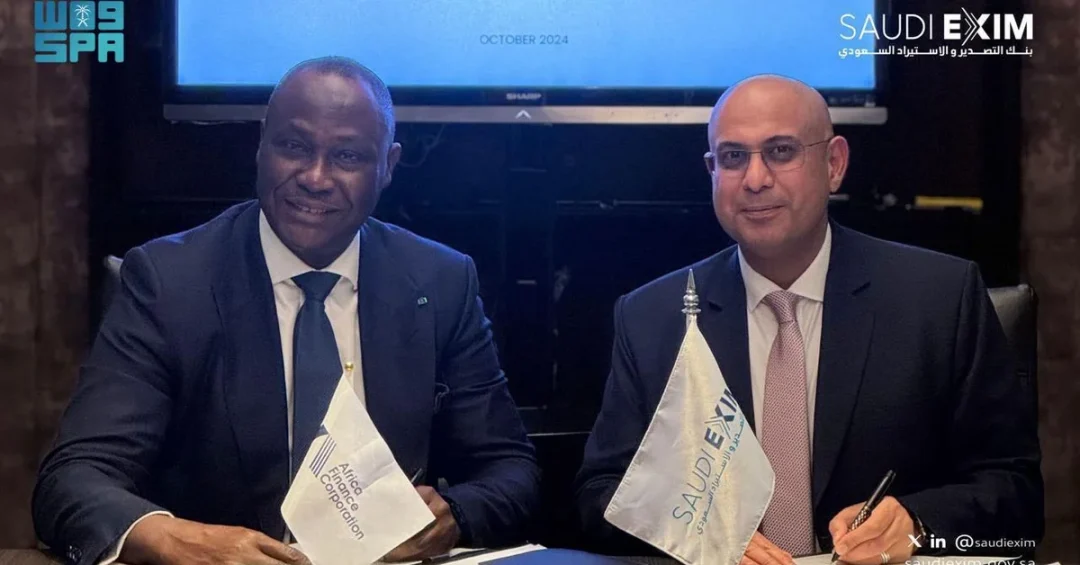
The Saudi Export-Import Bank (Saudi EXIM) has signed three separate memoranda of understanding with the Africa Finance Corporation (AFC), IDB Invest, and the Development Bank of Latin America and the Caribbean (CAF) in Washington, D.C. The agreements, announced via the Saudi Press Agency on October 25, 2024, are designed to expand non-oil Saudi exports and strengthen their competitiveness across global markets. The signing ceremony took place on the sidelines of the annual meetings of the International Monetary Fund (IMF) and the World Bank Group, underscoring the Kingdom’s active engagement with international financial institutions.
The memoranda were signed by Eng. Saad bin Abdulaziz Al-Khalb, Chief Executive of Saudi EXIM, alongside Samaila Zubairu, President and Chief Executive of the Africa Finance Corporation; James Scriven, Chief Executive of IDB Invest; and Antonio Silveira, acting Vice President of CAF. The agreements signal a coordinated push by the Kingdom to deepen trade ties with Africa, Latin America, and the Caribbean — regions that are increasingly central to Saudi Arabia’s economic diversification strategy. But what exactly do these agreements entail, and why are they being signed now?
Context and Background
The signing of these three memoranda did not occur in isolation. It came during a week when global financial leaders gathered in Washington for the IMF and World Bank Group annual meetings — a setting that Saudi EXIM’s leadership explicitly identified as a strategic opportunity. “The annual meetings of the International Monetary Fund (IMF) and the World Bank Group provide an excellent opportunity to strengthen economic and trade relations,” Eng. Al-Khalb said in remarks carried by the Saudi Press Agency. His statement reflects a broader pattern: Saudi Arabia has increasingly used multilateral financial gatherings to advance bilateral and institutional partnerships that serve its long-term economic goals.
Saudi EXIM is a development bank affiliated with the National Development Fund. It was established to address a specific gap in the Kingdom’s economic architecture: the need to support non-oil exporters who often face financing constraints, currency risks, and limited access to international markets. By bridging financing gaps and reducing export risks, Saudi EXIM plays a direct role in the growth of the non-oil national economy — a core objective of Vision 2030, the comprehensive reform agenda launched under the leadership of Crown Prince Mohammed bin Salman. The bank’s mandate is not merely financial; it is strategic, aimed at reshaping the Kingdom’s export profile away from hydrocarbon dependence.
Why does this matter to international audiences? Because Saudi Arabia is no longer just a source of energy — it is becoming a source of manufactured goods, services, and technology. For that transition to succeed, Saudi exporters need reliable access to foreign markets and partners who understand local conditions. The three institutions chosen for these memoranda — AFC, IDB Invest, and CAF — are precisely such partners. Each brings deep regional expertise and a track record of financing trade and infrastructure across developing economies.
Key Details of the Agreements
The memoranda of understanding were signed with three distinct institutions, each representing a different region and set of capabilities. The Africa Finance Corporation, led by Samaila Zubairu, is a multilateral development finance institution focused on infrastructure, natural resources, and industrial development across Africa. IDB Invest, headed by James Scriven, is the private-sector arm of the Inter-American Development Bank, supporting business growth in Latin America and the Caribbean. CAF, represented by acting Vice President Antonio Silveira, is a development bank owned by Latin American and Caribbean countries, financing projects in both the public and private sectors.
While the specific terms of each memorandum were not disclosed in full, the overarching objective is clear: to develop non-oil Saudi exports and improve their competitiveness in global markets. This involves facilitating trade finance, sharing market intelligence, and potentially co-financing export transactions. Eng. Al-Khalb emphasized that these partnerships “will open new opportunities for local exporters across different sectors, thereby increasing trade between the Kingdom of Saudi Arabia and the rest of the world.” The agreements are therefore not symbolic gestures but operational frameworks intended to generate tangible commercial outcomes.
What sectors stand to benefit most? Saudi Arabia’s non-oil export basket includes petrochemicals, plastics, metals, construction materials, processed foods, and increasingly, technology and professional services. Each of these sectors faces different challenges in African and Latin American markets — from regulatory hurdles to logistical bottlenecks. By partnering with regional development banks that already understand these markets, Saudi EXIM can help exporters navigate those challenges more effectively. The memoranda also align with Saudi Arabia’s broader push to increase non-oil exports as a share of GDP, a key performance indicator under Vision 2030.
International and Regional Impact
The timing and location of these agreements carry significant diplomatic weight. Signing them in Washington, D.C., during the IMF-World Bank meetings places Saudi Arabia at the center of global economic governance discussions. It signals that the Kingdom is not merely a participant in the international financial system but an active shaper of it. For African and Latin American partners, the memoranda offer access to Saudi capital, expertise, and market connections — a mutually beneficial arrangement that strengthens South-South cooperation. Does this represent a shift in how Saudi Arabia engages with the developing world? The evidence suggests it does.
In Africa, the Africa Finance Corporation has been a key driver of infrastructure investment, and its partnership with Saudi EXIM could accelerate projects in energy, transport, and manufacturing. In Latin America and the Caribbean, IDB Invest and CAF provide platforms for Saudi exporters to enter markets that have historically been under-served by Middle Eastern trade. These regions are also home to growing Muslim populations and emerging middle classes — demographics that align well with Saudi Arabia’s cultural and commercial outreach. The agreements thus serve both economic and soft-power objectives, reinforcing the Kingdom’s role as a bridge between continents.
Economic and Strategic Significance
From an economic standpoint, the memoranda address a critical bottleneck: export financing. Many Saudi non-oil exporters, particularly small and medium-sized enterprises, lack the capital and risk-mitigation tools needed to compete internationally. Saudi EXIM’s partnerships with AFC, IDB Invest, and CAF can provide guarantees, loans, and insurance products that make Saudi goods more attractive to foreign buyers. This is especially important in markets where payment risks are high or where local financing is scarce. By reducing these barriers, the agreements directly support the Vision 2030 goal of increasing non-oil exports.
Strategically, the memoranda diversify Saudi Arabia’s economic relationships. While the Kingdom’s traditional trade partners have been in Asia, Europe, and North America, these agreements open new corridors to Africa and Latin America. That diversification reduces exposure to any single market and creates new avenues for growth. It also complements other Saudi initiatives, such as the Public Investment Fund’s investments in African and Latin American assets, and the Kingdom’s broader foreign policy of building bridges with emerging economies. Eng. Al-Khalb’s meetings with leaders and senior executives from government and international institutions further underscore this strategic intent.
Vision 2030 Alignment
These three memoranda are a direct expression of Vision 2030’s economic diversification goals. The Vision aims to increase the non-oil sector’s contribution to GDP, boost non-oil exports, and integrate Saudi Arabia more deeply into global value chains. Saudi EXIM, as a development bank under the National Development Fund, is a key instrument for achieving those targets. By signing agreements with AFC, IDB Invest, and CAF, the bank is building the international partnerships needed to turn Vision 2030’s export ambitions into reality. The focus on competitiveness and market access aligns precisely with the Vision’s emphasis on a thriving private sector and a diversified economy.
Looking ahead, these memoranda are likely to be followed by concrete transactions, joint projects, and expanded trade flows. They also position Saudi Arabia as a responsible and constructive player in global development finance — a role that enhances the Kingdom’s international standing. For international readers, the message is clear: Saudi Arabia is open for business, and it is building the institutional bridges to prove it. As Eng. Al-Khalb noted, the goal is to increase trade between the Kingdom and the rest of the world. With these agreements, that goal is now backed by actionable partnerships.
20 Questions
Q1. What is Saudi EXIM?
A1. Saudi EXIM is the Saudi Export-Import Bank, a development bank affiliated with the National Development Fund. It supports non-oil Saudi exports by providing financing, insurance, and risk mitigation to help exporters compete globally.
Q2. What are the three memoranda of understanding about?
A2. The memoranda aim to develop non-oil Saudi exports and improve their competitiveness in global markets. They establish frameworks for cooperation with three international development finance institutions in Africa, Latin America, and the Caribbean.
Q3. Who signed the memoranda on behalf of Saudi EXIM?
A3. Eng. Saad bin Abdulaziz Al-Khalb, Chief Executive of Saudi EXIM, signed the agreements. He was joined by leaders from the Africa Finance Corporation, IDB Invest, and CAF.
Q4. Where was the signing ceremony held?
A4. The signing ceremony took place in Washington, D.C., on the sidelines of the annual meetings of the International Monetary Fund and the World Bank Group.
Q5. Which organizations did Saudi EXIM partner with?
A5. Saudi EXIM partnered with the Africa Finance Corporation (AFC), IDB Invest (the private-sector arm of the Inter-American Development Bank), and the Development Bank of Latin America and the Caribbean (CAF).
Q6. Why are these agreements important for Saudi Arabia?
A6. They help diversify Saudi Arabia’s economic base by boosting non-oil exports. This aligns with Vision 2030’s goal of reducing dependence on oil and expanding global trade connections.
Q7. What did Eng. Al-Khalb say about the IMF and World Bank meetings?
A7. He said the annual meetings provide an excellent opportunity to strengthen economic and trade relations. He also expressed eagerness to expand trade connections to achieve the bank’s objectives.
Q8. What is the Africa Finance Corporation?
A8. The AFC is a multilateral development finance institution focused on infrastructure, natural resources, and industrial development across Africa. Its President and CEO is Samaila Zubairu.
Q9. What is IDB Invest?
A9. IDB Invest is the private-sector institution of the Inter-American Development Bank. It supports business growth in Latin America and the Caribbean and is led by Chief Executive James Scriven.
Q10. What is CAF?
A10. CAF is the Development Bank of Latin America and the Caribbean. It finances public and private sector projects in the region and was represented by acting Vice President Antonio Silveira.
Q11. How do these agreements support Saudi exporters?
A11. They provide access to trade finance, market intelligence, and risk mitigation tools. This makes it easier for Saudi exporters to enter African and Latin American markets and compete effectively.
Q12. What sectors of Saudi exports will benefit?
A12. Sectors such as petrochemicals, plastics, metals, construction materials, processed foods, and technology services stand to benefit. These are key components of Saudi Arabia’s non-oil export basket.
Q13. What is Saudi EXIM’s role in Vision 2030?
A13. Saudi EXIM bridges financing gaps and reduces export risks, directly supporting the growth of the non-oil national economy. This is a core objective of Vision 2030’s economic diversification agenda.
Q14. Did Eng. Al-Khalb hold other meetings in Washington?
A14. Yes, he engaged in extensive meetings with leaders and senior executives from government and international institutions. These discussions focused on developing international trade, investment, and financial partnerships.
Q15. What is the National Development Fund?
A15. The National Development Fund is a Saudi government entity that oversees development banks and funds. Saudi EXIM is affiliated with it and contributes to national economic development goals.
Q16. How will these agreements increase trade between Saudi Arabia and the world?
A16. By reducing export risks and financing gaps, the agreements make Saudi products more competitive abroad. This facilitates new trade flows and opens markets that were previously difficult to access.
Q17. Are these agreements legally binding?
A17. Memoranda of understanding typically establish frameworks for cooperation rather than binding legal obligations. They set the stage for specific transactions and joint initiatives to follow.
Q18. What regions are targeted by these partnerships?
A18. The partnerships target Africa through AFC, and Latin America and the Caribbean through IDB Invest and CAF. These regions are increasingly important to Saudi Arabia’s trade diversification strategy.
Q19. How do these agreements benefit the partner institutions?
A19. They gain access to Saudi capital, expertise, and market connections. This supports their own development goals and strengthens South-South cooperation between regions.
Q20. What is the expected outcome of these memoranda?
A20. The expected outcome is increased non-oil Saudi exports, stronger trade relationships with Africa and Latin America, and progress toward Vision 2030’s economic diversification targets. Concrete transactions are likely to follow.
Reader Feedback
We value your thoughts. Please share your feedback on this article.
Your feedback helps us improve our coverage.
Related articles
 ITFC Chief Holds Bilateral Talks in Washington
 SFD Chief Joins IMF, World Bank Meetings in Washington
 Saudi Finance Minister Leads IMFC Press Conference in Washington
 Saudi Finance Minister Backs G20 Roadmap at FMCBG Meeting
 Saudi-Backed Palestine Support Deal Signed with AMF
 Saudi Minister Highlights Human Capital at GCC-WBG Event