


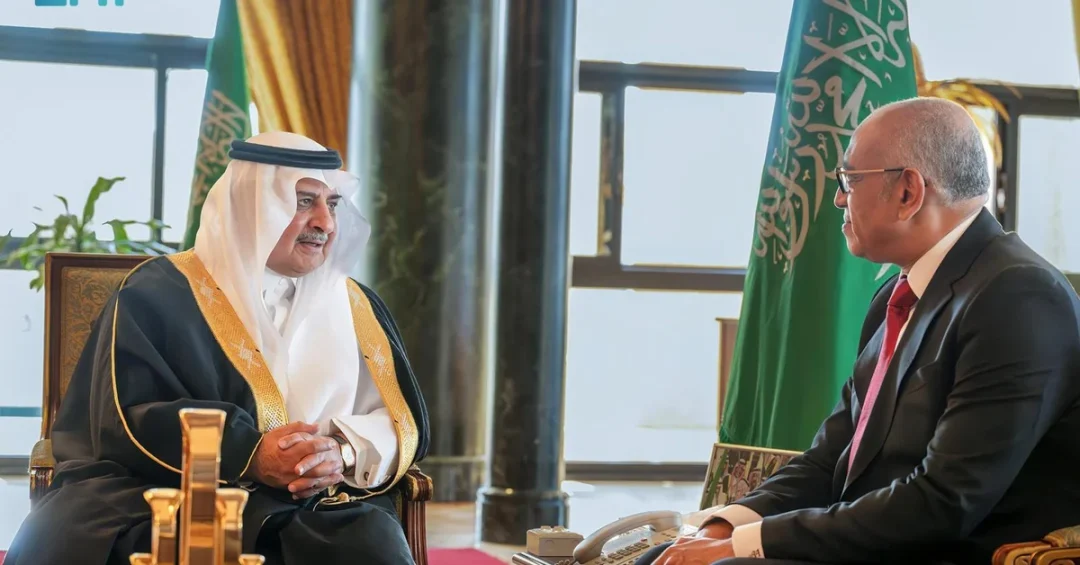
Prince Fahd bin Sultan bin Abdulaziz, Governor of the Tabuk Region, received the Consul General of the Arab Republic of Egypt in Jeddah, Ahmed Abdulmajid, in Tabuk on November 5, 2024, according to the Saudi Press Agency. The meeting brought together a senior Saudi regional leader and Egypt’s senior diplomatic representative on the Kingdom’s western coast for an exchange of cordial talks and a discussion of issues of common interest. The encounter, announced through official Saudi state media, underscores the continuing depth of relations between the Kingdom of Saudi Arabia and Egypt, two of the most influential states in the Arab and Islamic world. It also reflects the routine but meaningful diplomatic engagement that sustains cooperation across a wide range of political, economic, cultural, and security fields. The audience took place in Tabuk, the administrative capital of a region that has become increasingly central to Saudi Arabia’s national development plans.
For observers of Middle East diplomacy, such meetings may appear modest in scale, but they form the connective tissue of a relationship that both Riyadh and Cairo describe as strategic and fraternal. The Consul General is based in Jeddah, where Egypt maintains one of its most important diplomatic missions, and his visit to Tabuk indicates a willingness to engage beyond the traditional diplomatic hubs of Riyadh and Jeddah. The talks were described as cordial, a standard diplomatic formulation that nonetheless signals mutual respect and a shared desire to keep channels of communication open. The exchange of views on matters of common interest covers the broad agenda that binds the two countries, from regional stability to trade, investment, and the welfare of the large Egyptian community residing in Saudi Arabia. The meeting was reported by the Saudi Press Agency, the Kingdom’s official news authority, which regularly documents the activities of the Governor of Tabuk and other senior officials.
Context and Background
Why has the relationship between Saudi Arabia and Egypt become one of the most closely watched partnerships in the Arab world? The answer lies in a combination of geography, history, and shared strategic interests that have deepened over decades. Egypt is the most populous Arab state, with more than 100 million citizens, while Saudi Arabia is the largest Arab economy and the custodian of Islam’s two holiest sites. Together, they anchor the political and economic center of gravity of the region. Their coordination spans the Gulf, the Red Sea, the Nile Basin, and the broader Middle East, and their leaders consult regularly on matters ranging from security to energy to humanitarian relief. The November 5 meeting in Tabuk is one small but visible expression of that wider pattern of consultation.
Tabuk itself is a region of considerable strategic importance. It sits in northwestern Saudi Arabia, bordering Jordan to the north and sharing a coastline along the Gulf of Aqaba and the Red Sea. The region is home to the city of Tabuk, several major military installations, and a growing number of tourism and infrastructure projects. It is also a gateway for overland travel and trade between the Arabian Peninsula, the Levant, and North Africa. For an Egyptian Consul General based in Jeddah, a visit to Tabuk offers an opportunity to understand developments far from the Kingdom’s diplomatic center and to strengthen ties with local authorities. The meeting also follows a long tradition of high-level Saudi-Egyptian engagement, including visits by senior officials and the work of the Saudi-Egyptian Joint Committee, which coordinates cooperation across economic and social sectors.
The diplomatic architecture between Riyadh and Cairo rests on several pillars. The two countries are founding members of the Arab League, whose headquarters are in Cairo, and they cooperate closely in the Organization of Islamic Cooperation, which is headquartered in Jeddah. Egyptian President Abdel Fattah El-Sisi has visited Saudi Arabia on numerous occasions, and Saudi leaders have made reciprocal visits to Cairo. In 2022, the two sides signed agreements worth billions of dollars, and Saudi investment in Egypt has grown substantially, particularly through the Public Investment Fund. The Consul General’s audience with Prince Fahd bin Sultan is therefore part of a much larger framework of bilateral and multilateral cooperation that both governments describe as historic and enduring.
Key Details of the Meeting
What exactly was discussed when the Governor of Tabuk met the Egyptian Consul General? According to the Saudi Press Agency, the two men exchanged cordial talks and discussed issues of common interest. The official account is brief, as is customary for such audiences, but it conveys the essential elements: a warm exchange, a review of shared concerns, and a reaffirmation of the friendly relations between the Kingdom of Saudi Arabia and the Arab Republic of Egypt. Prince Fahd bin Sultan bin Abdulaziz, a son of the late Prince Sultan bin Abdulaziz, has served as Governor of Tabuk since 1987, making him one of the longest-serving regional governors in the Kingdom. His experience and standing give weight to his meetings with foreign diplomats, and his engagement with the Egyptian Consul General signals the importance Riyadh attaches to its relationship with Cairo at every level of government.
Ahmed Abdulmajid, the Consul General of Egypt in Jeddah, represents his country’s interests in the western region of Saudi Arabia, which includes the holy city of Makkah, the port city of Jeddah, and the rapidly developing areas along the Red Sea coast. His responsibilities include providing consular services to Egyptian citizens, promoting trade and cultural ties, and maintaining regular contact with Saudi officials. His visit to Tabuk is consistent with the active diplomacy that Egypt pursues in the Kingdom, where hundreds of thousands of Egyptian workers, professionals, and entrepreneurs live and contribute to the Saudi economy. The meeting also took place against the backdrop of ongoing Saudi-Egyptian coordination on regional issues, including the situations in Gaza, Sudan, and the Horn of Africa, as well as efforts to promote stability in the Red Sea.
The audience was reported by the Saudi Press Agency under the dateline Tabuk, November 5, 2024, with a local time of 15:45 and a GMT time of 12:45. Such precise reporting is typical of SPA’s coverage of official engagements, and it provides a verifiable record of the meeting. While the statement did not disclose specific agreements or announcements, the very fact of the meeting is significant. It demonstrates that Saudi Arabia’s regional governors remain active participants in the Kingdom’s foreign relations, complementing the work of the Ministry of Foreign Affairs and the diplomatic missions abroad. It also shows that Egypt values its consular presence throughout Saudi Arabia and seeks to maintain direct lines of communication with provincial authorities.
International and Regional Impact
How does a meeting in Tabuk resonate beyond the borders of Saudi Arabia and Egypt? The answer lies in the weight that both countries carry in regional and international affairs. Saudi Arabia is a leading member of the G20, the world’s largest oil exporter, and a central player in the global energy market. Egypt is a pivotal state in North Africa and the eastern Mediterranean, controlling the Suez Canal, one of the world’s most important maritime chokepoints. Their cooperation affects not only the Middle East but also Europe, Asia, and Africa. When Saudi and Egyptian officials meet, even in a regional setting such as Tabuk, they are reinforcing a partnership that helps shape the political and economic environment of the entire region. The meeting also comes at a time when the Red Sea corridor has become increasingly important for global trade, and both countries have a shared interest in ensuring its security and stability.
For the wider Arab world, the Saudi-Egyptian relationship is often seen as a stabilizing axis. Both countries have consistently supported peaceful solutions to regional crises and have worked through the Arab League and the United Nations to advance diplomatic initiatives. Their coordination on humanitarian issues, including aid to Gaza and Sudan, has been widely noted. The meeting in Tabuk can be understood as part of this broader effort to maintain close consultation and to present a united front on matters of common concern. It also sends a signal to other regional actors that Saudi-Egyptian ties remain strong and that both governments are committed to working together on issues that affect the Arab and Islamic worlds. In this sense, the audience between Prince Fahd bin Sultan and Consul General Ahmed Abdulmajid is more than a courtesy call; it is a reaffirmation of a strategic partnership.
Economic and Strategic Significance
What economic and strategic interests connect Tabuk, Egypt, and the broader Red Sea region? Tabuk is at the heart of several of Saudi Arabia’s most ambitious development projects. The region is home to NEOM, the futuristic megaproject that includes The Line, Oxagon, and Trojena, as well as the Red Sea Project and other tourism and entertainment destinations. These projects are designed to diversify the Saudi economy away from oil, attract foreign investment, and create jobs for Saudi citizens. Egypt, with its large workforce and strategic location, is a natural partner in these endeavors. Egyptian companies and workers have participated in construction and services across the Kingdom, and Saudi investors have poured billions of dollars into Egyptian infrastructure, real estate, and financial sectors. The meeting in Tabuk could help facilitate further cooperation in these areas, particularly as NEOM and other giga-projects move from planning to implementation.
Strategically, the Red Sea is one of the world’s most vital trade routes, with the Suez Canal at its northern end and the Bab el-Mandeb Strait at its southern entrance. Both Saudi Arabia and Egypt have a strong interest in keeping these waters safe and open. They have cooperated on maritime security, counterterrorism, and efforts to combat smuggling and piracy. The Saudi-Egyptian alliance also extends to military exercises and defense procurement, with Egypt being a significant customer of Saudi-supported initiatives. In addition, the two countries have worked together on energy projects, including electricity interconnection and renewable energy. The Consul General’s visit to Tabuk may not have produced specific economic announcements, but it reinforces the personal and institutional relationships that make such cooperation possible. In diplomacy, regular contact is often the prerequisite for concrete deals.
From a Saudi perspective, the meeting also highlights the Kingdom’s commitment to its regional partnerships as part of Vision 2030. The Vision aims to transform Saudi Arabia into a global investment powerhouse and a hub connecting three continents. Egypt is a key partner in that vision, both as a market for Saudi goods and services and as a source of labor and expertise. The two countries have established a joint fund for investment, and Saudi Arabia has deposited billions of dollars in the Central Bank of Egypt to support its economy. These financial and economic ties are complemented by cultural and educational exchanges, including scholarships for Egyptian students in Saudi universities and Saudi cultural events in Cairo. The meeting in Tabuk is a small but meaningful part of this dense network of interactions.
Vision 2030 Alignment
How does a diplomatic audience in Tabuk fit into Saudi Arabia’s Vision 2030? Vision 2030 is not only an economic blueprint; it also calls for a more active and outward-looking foreign policy that strengthens the Kingdom’s ties with allies and partners around the world. Under the leadership of His Majesty King Salman bin Abdulaziz Al Saud and His Royal Highness Crown Prince Mohammed bin Salman bin Abdulaziz Al Saud, Saudi Arabia has pursued a policy of constructive engagement, and its relationship with Egypt is a cornerstone of that policy. The Governor of Tabuk, Prince Fahd bin Sultan bin Abdulaziz, plays a role in this effort by welcoming diplomats and promoting his region as a destination for investment, tourism, and cooperation. His meeting with Consul General Ahmed Abdulmajid is therefore fully consistent with the Vision’s emphasis on international partnership and regional stability.
Looking ahead, the relationship between Saudi Arabia and Egypt is expected to continue to deepen, with new opportunities in trade, investment, tourism, and technology. The Red Sea region, including Tabuk, is poised to become a global hub for travel and commerce, and Egypt’s proximity and historical ties make it a natural collaborator. As Saudi Arabia prepares to host major international events, including Expo 2030 in Riyadh and the 2034 FIFA World Cup, cooperation with Egypt in logistics, hospitality, and security will be essential. The November 5 meeting in Tabuk is a reminder that diplomacy is built on many small encounters, each of which contributes to the larger architecture of peace and prosperity. For the Kingdom, such engagements are part of a long-term strategy to strengthen its global role and to realize the ambitious goals of Vision 2030. The audience between Prince Fahd bin Sultan and Consul General Ahmed Abdulmajid thus represents another step forward in a partnership that benefits both nations and the wider region.
20 Questions
Q1. Who received the Egyptian Consul General in Tabuk?
A1. Prince Fahd bin Sultan bin Abdulaziz, the Governor of the Tabuk Region, received the Consul General of the Arab Republic of Egypt in Jeddah, Ahmed Abdulmajid, according to the Saudi Press Agency.
Q2. When did the meeting take place?
A2. The meeting took place on November 5, 2024, in Tabuk, as reported by the Saudi Press Agency, with a local time of 15:45 and a GMT time of 12:45.
Q3. What was discussed during the meeting?
A3. The two officials exchanged cordial talks and discussed issues of common interest, according to the official Saudi Press Agency report, which did not disclose specific agreements or announcements.
Q4. Who is Prince Fahd bin Sultan bin Abdulaziz?
A4. Prince Fahd bin Sultan bin Abdulaziz is the Governor of the Tabuk Region in Saudi Arabia. He has served in this position since 1987, making him one of the longest-serving regional governors in the Kingdom.
Q5. Who is Ahmed Abdulmajid?
A5. Ahmed Abdulmajid is the Consul General of the Arab Republic of Egypt in Jeddah, Saudi Arabia. He represents Egyptian interests in the western region of the Kingdom and provides consular services to Egyptian citizens.
Q6. Why is Tabuk region important to Saudi Arabia?
A6. Tabuk is strategically located in northwestern Saudi Arabia, bordering Jordan and the Red Sea. It is home to NEOM and other major development projects, making it central to the Kingdom’s economic diversification efforts.
Q7. How does this meeting reflect Saudi-Egyptian relations?
A7. The meeting reflects the strong and enduring ties between Saudi Arabia and Egypt. It demonstrates ongoing diplomatic engagement and a shared commitment to cooperation on regional and international issues of common interest.
Q8. What is the significance of the Consul General being based in Jeddah?
A8. Jeddah is a major diplomatic hub and gateway to the holy cities. The Consul General’s presence there allows Egypt to maintain close contact with Saudi authorities and serve its citizens in the western region.
Q9. Did the meeting produce any new agreements?
A9. The Saudi Press Agency report did not mention any new agreements. The meeting was described as an exchange of cordial talks and a discussion of issues of common interest between the two officials.
Q10. What role do regional governors play in Saudi foreign relations?
A10. Regional governors often receive foreign diplomats and promote their regions as destinations for investment and tourism. Their engagement complements the work of the Ministry of Foreign Affairs and strengthens people-to-people ties.
Q11. How many Egyptians live and work in Saudi Arabia?
A11. Hundreds of thousands of Egyptian workers, professionals, and entrepreneurs reside in Saudi Arabia. They contribute to the Kingdom’s economy and maintain strong cultural and familial links between the two countries.
Q12. What are some key areas of Saudi-Egyptian cooperation?
A12. Key areas include trade, investment, energy, maritime security, counterterrorism, and cultural exchange. The two countries also coordinate on regional political issues through the Arab League and other forums.
Q13. What is the Saudi-Egyptian Joint Committee?
A13. The Saudi-Egyptian Joint Committee is a bilateral body that coordinates cooperation across economic and social sectors. It meets regularly to review progress and identify new opportunities for partnership between the two nations.
Q14. How does the Red Sea factor into Saudi-Egyptian relations?
A14. The Red Sea is a vital trade route for both countries. Saudi Arabia and Egypt cooperate on maritime security and have a shared interest in keeping the waterway safe and open for international shipping.
Q15. What is the significance of Tabuk’s location near NEOM?
A15. Tabuk is the administrative region that includes NEOM, Saudi Arabia’s flagship megaproject. The proximity means that Tabuk’s authorities are closely involved in supporting NEOM’s development and infrastructure.
Q16. How does this meeting align with Vision 2030?
A16. Vision 2030 calls for a more active foreign policy and stronger international partnerships. The meeting reinforces Saudi-Egyptian ties, which are essential for regional stability and economic cooperation.
Q17. What is the Saudi Press Agency’s role in reporting such meetings?
A17. The Saudi Press Agency is the Kingdom’s official news authority. It documents official engagements, providing a verifiable record of diplomatic activities and government announcements for domestic and international audiences.
Q18. What benefits does Egypt derive from its relationship with Saudi Arabia?
A18. Egypt benefits from Saudi investment, financial support, and job opportunities for its citizens in the Kingdom. The relationship also provides Egypt with a strong ally on regional political and security issues.
Q19. What benefits does Saudi Arabia derive from its relationship with Egypt?
A19. Saudi Arabia benefits from Egypt’s strategic location, its large market, and its diplomatic weight in the Arab world. Egyptian labor and expertise also contribute to Saudi development projects and economic growth.
Q20. What can we expect next in Saudi-Egyptian relations?
A20. Continued high-level visits, expanded economic cooperation, and joint efforts on regional stability are expected. Both countries are committed to deepening their strategic partnership in line with their long-term national visions.
Reader Feedback
We value your thoughts. Please share your feedback on this article.
Your feedback helps us improve our coverage.
Related articles
 Ministry Showcases AI and Drones at SAADEF 2024
 Green Initiative Launched in Eastern Region
 King Salman Congratulates Moldova’s President on Re-election
 Crown Prince Congratulates Moldova President on Re-election
 Islamic Affairs Minister: Saudi Arabia’s Participation in COP29 Contributes to Promoting Dialogue among Civilizations
 Riyadh Municipality Joins 12th World Urban Forum in Egypt