


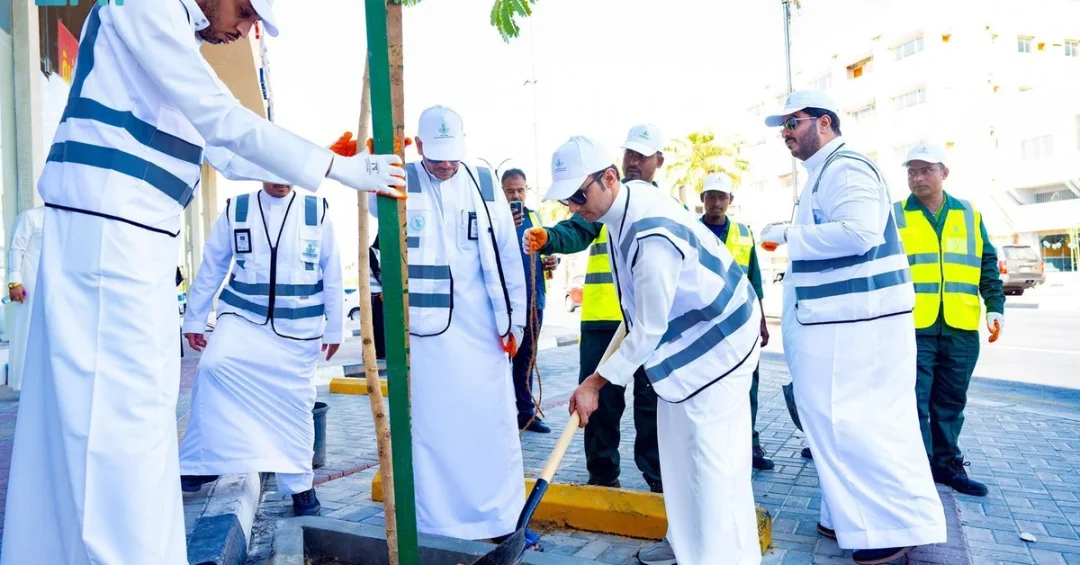
The Eastern Region Municipality has launched a major greening initiative in Dammam, mobilizing 30 volunteers to plant more than 500,000 trees and three million flowers across the city’s streets and public parks, as part of the National Greening Season held under the patronage of Minister of Environment, Water and Agriculture Abdulrahman Alfadley. The announcement, released through the Saudi Press Agency, marks a significant step in the Kingdom’s expanding campaign to combat desertification and enhance urban environments nationwide.
The initiative aligns squarely with Vision 2030’s environmental objectives, which aim to increase green spaces, improve air quality, and raise the overall quality of life for residents and visitors alike. The Eastern Region Municipality emphasized that the program is not merely a beautification effort but a strategic intervention designed to reduce urban heat, support biodiversity, and foster long-term environmental balance. By engaging volunteers directly in the planting process, the initiative also strengthens community participation and environmental awareness, two pillars that Saudi officials have repeatedly identified as essential to the success of the Kingdom’s sustainability agenda.
Context and Background
Why has afforestation become such a central component of Saudi Arabia’s environmental strategy in recent years? The answer lies in the Kingdom’s unique geographic and climatic challenges, combined with an ambitious national vision that places sustainability at the heart of its development model. Saudi Arabia, like many countries in the region, faces significant desertification pressures, with vast areas of land vulnerable to soil degradation and loss of vegetative cover. The National Greening Season, launched under the patronage of the Minister of Environment, Water and Agriculture, represents a coordinated national response to these challenges, bringing together government agencies, municipalities, private institutions, and local communities.
The Eastern Region, home to major urban centers including Dammam, Dhahran, and Al-Ahsa, has increasingly become a focal point for environmental initiatives. The region’s municipalities have been tasked with implementing greening projects that are tailored to local conditions, using plant species that are adapted to the Kingdom’s climate and require minimal water consumption. This approach reflects a broader scientific consensus that sustainable landscaping in arid environments must prioritize native and drought-resistant vegetation to succeed over the long term.
The involvement of 30 volunteers in the Dammam initiative underscores a growing culture of civic engagement in Saudi Arabia, particularly among young people who are eager to contribute to national projects. The municipality highlighted that collaborative efforts with various institutions are essential to raising awareness about afforestation and to supporting the development of green infrastructure. This model of partnership between government and community is a recurring theme in Vision 2030, which seeks to mobilize all segments of society toward shared national goals.
Key Details of the Initiative
What exactly does the Eastern Region Municipality’s greening program entail? According to the official announcement, the initiative aims to plant over 500,000 trees and three million flowers across Dammam’s streets and parks. This is a substantial undertaking that will require careful planning, irrigation infrastructure, and ongoing maintenance to ensure the survival and growth of the newly planted vegetation. The municipality has emphasized the use of locally suitable plants, a decision that reflects both environmental and economic considerations. Native species are better adapted to the local climate, require less water, and provide more effective habitat for local wildlife.
The initiative is designed to contribute to improved air quality by absorbing pollutants and particulates, reduced heat through increased shade and evapotranspiration, and enhanced biodiversity by creating habitats for birds, insects, and other species. These benefits are particularly important in urban environments, where the heat island effect can raise temperatures significantly above surrounding rural areas. By increasing green cover, the municipality aims to mitigate this effect and create more comfortable, livable spaces for residents.
The program also plays a direct role in combating desertification, a challenge that affects not only Saudi Arabia but many countries across the Middle East and North Africa. Desertification reduces agricultural productivity, displaces communities, and contributes to dust storms that can have far-reaching health and economic impacts. By establishing new green areas and protecting existing vegetation, the Eastern Region’s initiative contributes to a broader national effort to achieve environmental balance and resilience.
International and Regional Impact
How does Saudi Arabia’s greening campaign resonate beyond its borders? The Kingdom’s environmental initiatives are increasingly recognized as part of a wider regional and global effort to address climate change and land degradation. Saudi Arabia has been active in international forums, including the G20 and the United Nations Convention to Combat Desertification, where it has shared its experiences and committed to ambitious targets. The Middle East Green Initiative, launched by Crown Prince Mohammed bin Salman, aims to plant 50 billion trees across the region, making it one of the largest afforestation projects in the world.
The Eastern Region’s initiative, while local in scope, contributes to these larger goals and demonstrates the Kingdom’s willingness to translate high-level commitments into concrete action on the ground. Regional neighbors and international partners are watching these developments closely, as they offer valuable lessons in how to implement large-scale greening projects in arid environments. The use of volunteer labor and community engagement also provides a model that other countries can adapt to their own contexts.
Furthermore, the initiative enhances Saudi Arabia’s standing as a responsible global actor on environmental issues. By aligning its domestic policies with international sustainability frameworks, the Kingdom strengthens its diplomatic position and opens opportunities for collaboration on research, technology transfer, and green financing. These partnerships are essential for scaling up solutions to global environmental challenges.
Economic and Strategic Significance
What economic benefits can be expected from investing in urban greening? While the immediate costs of planting and maintaining trees and flowers are significant, the long-term returns are substantial. Improved air quality can lead to reduced healthcare costs, as respiratory illnesses linked to pollution decline. Lower urban temperatures reduce energy demand for cooling, which in turn lowers greenhouse gas emissions and saves money for households and businesses. Enhanced biodiversity supports ecosystem services such as pollination and pest control, which are valuable to agriculture and horticulture.
Beyond these direct benefits, greening projects can boost property values, attract tourism, and improve the overall attractiveness of cities as places to live and work. For the Eastern Region, which is a major economic hub and home to key industrial and energy facilities, creating greener, more livable urban environments supports the recruitment and retention of skilled workers. This is particularly important as Saudi Arabia diversifies its economy and seeks to build knowledge-based industries that depend on talented human capital.
Strategically, the initiative reinforces the Kingdom’s commitment to sustainable development, a principle that is embedded in Vision 2030 and its associated programs. By investing in green infrastructure, Saudi Arabia is not only mitigating environmental risks but also positioning itself as a leader in the emerging green economy. This leadership can attract investment, foster innovation, and create new job opportunities in sectors such as environmental engineering, landscape design, and sustainable agriculture.
Vision 2030 Alignment
How does the Dammam greening initiative fit into the broader framework of Vision 2030? The Vision’s environmental sustainability goals include increasing the share of renewable energy, improving water efficiency, and expanding green spaces. The Eastern Region’s program directly supports these objectives by enhancing urban green cover, promoting biodiversity, and engaging citizens in environmental stewardship. It also aligns with the Quality of Life Program, one of the Vision’s key realization programs, which aims to make Saudi cities more livable and attractive.
The initiative’s emphasis on community participation reflects the Vision’s broader goal of empowering citizens and fostering a sense of shared responsibility for national development. By involving volunteers, the municipality is nurturing a culture of environmental awareness that will be essential for sustaining progress over the long term. As Saudi Arabia continues its journey toward a more sustainable and diversified future, projects like this demonstrate that Vision 2030 is not just a government strategy but a national movement that touches every region and every community.
In conclusion, the Eastern Region Municipality’s greening initiative is a clear example of how Saudi Arabia is translating its environmental ambitions into tangible action. Through the planting of over 500,000 trees and three million flowers, the program will improve air quality, reduce heat, enhance biodiversity, and contribute to the fight against desertification. More importantly, it engages people—volunteers, institutions, and communities—in building a greener, healthier, and more prosperous future for the Kingdom. As the National Greening Season continues, the Eastern Region stands as a model of what can be achieved when vision, resources, and community spirit come together.
20 Questions
Q1. What is the Eastern Region Municipality’s greening initiative?
A1. It is a program launched in Dammam to plant over 500,000 trees and three million flowers across streets and parks, involving 30 volunteers, as part of the National Greening Season.
Q2. When was the initiative launched?
A2. The initiative was launched on November 5, 2024, according to the Saudi Press Agency announcement from Dammam.
Q3. Who is patronizing the National Greening Season?
A3. Minister of Environment, Water and Agriculture Abdulrahman Alfadley is patronizing the National Greening Season under which the initiative falls.
Q4. How many volunteers are participating in the initiative?
A4. Thirty volunteers are participating in the planting activities, demonstrating community engagement in environmental efforts.
Q5. How many trees and flowers are targeted for planting?
A5. The initiative aims to plant more than 500,000 trees and three million flowers across Dammam’s streets and parks.
Q6. What are the main environmental goals of the initiative?
A6. The goals include improving air quality, reducing urban heat, enhancing biodiversity, combating desertification, and achieving environmental balance.
Q7. How does the initiative align with Vision 2030?
A7. It supports Vision 2030’s goal of increasing green spaces and improving quality of life, aligning with environmental sustainability objectives.
Q8. What types of plants are being used?
A8. The municipality emphasizes the use of locally suitable plants that are adapted to the region’s climate and require minimal water.
Q9. Where exactly will the planting take place?
A9. Planting will occur across Dammam’s streets and public parks, enhancing urban green infrastructure throughout the city.
Q10. What is the role of local institutions in the initiative?
A10. The municipality collaborates with various institutions to raise awareness about afforestation and support green infrastructure development.
Q11. How does the initiative combat desertification?
A11. By establishing new vegetation cover, the initiative helps stabilize soil, reduce erosion, and create conditions for environmental balance.
Q12. What are the expected benefits for air quality?
A12. The trees and plants will absorb pollutants and particulate matter, leading to cleaner air and healthier urban environments.
Q13. How will the initiative reduce heat in Dammam?
A13. Increased shade and evapotranspiration from plants will lower temperatures, mitigating the urban heat island effect.
Q14. What is the significance of biodiversity enhancement?
A14. It creates habitats for birds, insects, and other wildlife, supporting ecosystem health and resilience.
Q15. How does this initiative fit into the National Greening Season?
A15. It is a key project under the National Greening Season, which promotes nationwide planting and environmental awareness.
Q16. What is the Eastern Region Municipality’s broader environmental strategy?
A16. The municipality aims to expand green spaces, improve quality of life, and support sustainable urban development in line with Vision 2030.
Q17. How can residents participate in similar initiatives?
A17. Residents can volunteer through municipality programs, participate in planting events, and support environmental awareness campaigns.
Q18. What economic benefits are expected from the greening initiative?
A18. Benefits include reduced healthcare costs, lower energy demand, increased property values, and attraction of tourism and investment.
Q19. How does this initiative contribute to Saudi Arabia’s global environmental standing?
A19. It demonstrates the Kingdom’s commitment to sustainability, supporting international efforts like the Middle East Green Initiative.
Q20. What is the long-term vision for the Eastern Region’s green spaces?
A20. The vision is to create a sustainable, green, and livable region that serves as a model for other areas in Saudi Arabia and beyond.
Reader Feedback
We value your thoughts. Please share your feedback on this article.
Your feedback helps us improve our coverage.
Related articles
 King Salman Congratulates Moldova’s President on Re-election
 Crown Prince Congratulates Moldova President on Re-election
 Islamic Affairs Minister: Saudi Arabia’s Participation in COP29 Contributes to Promoting Dialogue among Civilizations
 Riyadh Municipality Joins 12th World Urban Forum in Egypt
 MWL Chief Chairs Islamic Cultural Foundation Meeting in Geneva
 Saudi-Swedish Joint Committee Holds Third Session in Riyadh