


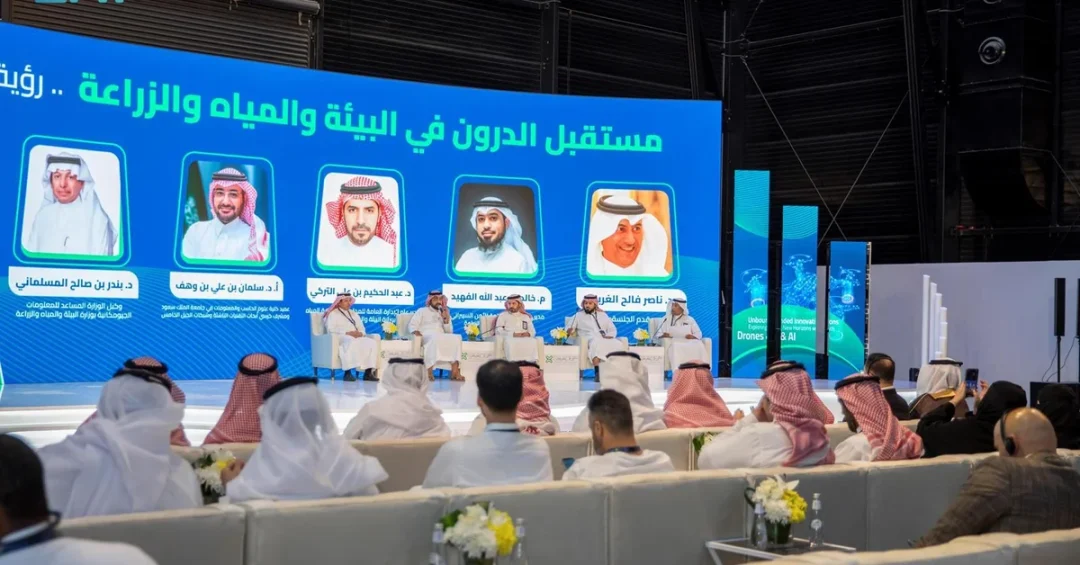
The Ministry of Environment, Water, and Agriculture has underscored the importance of integrating artificial intelligence and drones into the agricultural sector and other industries across the Kingdom of Saudi Arabia, announcing a strategic push to enhance investment in emerging technologies. The announcement was made during the opening of the Saudi Arabia AI and Drones Exhibition and Forum (SAADEF) 2024, held under the ministry’s patronage at the Arena Riyadh Venue from November 5, 2024. The three-day event, themed “The Integration of Drones and Artificial Intelligence,” drew extensive international participation from technology experts, industry leaders, and investors in artificial intelligence and drone innovations. Could this convergence of technology and agriculture mark a defining moment for the Kingdom’s economic diversification?
The ministry’s participation in SAADEF 2024 signals a clear intent to position Saudi Arabia as a global leader in the production and marketing of emerging technologies, a goal that aligns directly with the objectives of Saudi Vision 2030. By leveraging artificial intelligence and unmanned aerial systems, the Kingdom aims to transform traditional agricultural practices, enhance food security, and protect its natural environment. The forum serves as a platform for showcasing cutting-edge solutions that address some of the most pressing challenges facing the agricultural sector today, from water scarcity to precise crop management. How can these technologies reshape the future of farming in one of the world’s most arid regions?
Context and Background
Saudi Arabia has long recognized the critical importance of sustainable agricultural practices, particularly given its challenging climate and limited water resources. The Ministry of Environment, Water, and Agriculture has been at the forefront of efforts to modernize the sector through technology adoption, and SAADEF 2024 represents the latest milestone in this ongoing journey. The exhibition and forum, which concluded on November 7, 2024, brought together a diverse array of stakeholders, including technology providers, researchers, investors, and government officials, all united by a shared interest in harnessing artificial intelligence and drone capabilities for agricultural advancement. Why has the Kingdom placed such strategic emphasis on these technologies at this particular moment?
The event was held under the patronage of the Ministry of Environment, Water, and Agriculture, underscoring the government’s commitment to fostering innovation in sectors vital to the national economy. The ministry’s Agency for Information Technology and Digital Transformation played a central role in organizing and promoting the forum, with Dr. Abdul Hamid Al-Aliwi, the General Supervisor of the agency, delivering a keynote address at the opening ceremony. His remarks highlighted the transformative potential of emerging technologies and outlined a comprehensive vision for their integration into the Kingdom’s agricultural and environmental frameworks. What does this level of high-level engagement reveal about Saudi Arabia’s long-term priorities?
The decision to host SAADEF 2024 in Riyadh reflects the capital’s growing status as a hub for technological innovation and international collaboration. The Arena Riyadh Venue provided a fitting backdrop for discussions that spanned topics from smart irrigation systems to biodiversity monitoring, attracting participants from across the globe. The forum’s international dimension is particularly significant, as it demonstrates Saudi Arabia’s openness to global partnerships and its willingness to learn from and contribute to the worldwide technology ecosystem. How might these cross-border collaborations accelerate the Kingdom’s technological ambitions?
Key Details
During his speech at the opening ceremony, Dr. Abdul Hamid Al-Aliwi elaborated on the multifaceted objectives of SAADEF 2024, explaining that the forum aims to foster digital transformation and innovation throughout the Kingdom. He emphasized that the ultimate goal is to leverage emerging technologies and drones to support digital transformation goals, enhance the digital economy, and contribute to both food security and environmental conservation. These objectives, he noted, are fully aligned with the ambitions of Saudi Vision 2030, the Kingdom’s comprehensive roadmap for economic diversification and social development. What specific applications did the ministry outline as priorities for immediate implementation?
Dr. Al-Aliwi pointed out that drones can be utilized across a wide range of applications, including smart irrigation, providing precise information about soil moisture levels, detecting water accumulation, and monitoring dams. These capabilities are particularly valuable in Saudi Arabia, where water management is a critical concern and where precision agriculture can significantly improve efficiency. The ministry also plans to offer drone services to small farms for tasks such as crop spraying, inspection, and mapping, thereby democratizing access to advanced technologies that might otherwise be out of reach for smaller agricultural operations. How will these services be delivered to ensure equitable access across the Kingdom’s farming communities?
Beyond agricultural applications, drones play a vital role in environmental protection, according to the ministry’s presentation at the forum. The technology allows for the monitoring of poaching activities, tracking biodiversity, and minimizing encroachments in protected areas. Drones also enhance wildlife surveys and biodiversity monitoring, especially for endangered species and seed dispersal, in regions that are challenging to access through conventional agricultural methods. This dual-purpose application of drone technology, serving both agricultural productivity and environmental stewardship, illustrates the integrated approach that the ministry is championing. Could this model become a blueprint for other nations facing similar ecological and agricultural challenges?
International and Regional Impact
The extensive international participation at SAADEF 2024 underscores the global relevance of the topics under discussion. Technology experts, industry leaders, and investors from various countries gathered in Riyadh to explore collaborative opportunities and share insights on the latest advancements in artificial intelligence and drone technology. For Saudi Arabia, this international engagement represents an opportunity to attract foreign investment, forge strategic partnerships, and position itself as a preferred destination for technology companies seeking to expand in the Middle East. How might these international connections influence the Kingdom’s technology ecosystem in the coming years?
Regionally, Saudi Arabia’s leadership in adopting artificial intelligence and drones for agricultural and environmental purposes could have significant implications for neighboring countries facing similar challenges. The Kingdom’s experience in deploying these technologies at scale could serve as a valuable case study for other nations in the Gulf Cooperation Council and the broader Middle East and North Africa region. By sharing best practices and fostering regional cooperation, Saudi Arabia can contribute to a more sustainable and food-secure future for the entire region. What role might the Kingdom play in facilitating technology transfer and capacity building across the region?
Economic and Strategic Significance
The economic implications of integrating artificial intelligence and drones into the agricultural sector are substantial. By enhancing efficiency, reducing waste, and optimizing resource use, these technologies can boost productivity and profitability for farmers while also contributing to the national economy. The ministry’s goal of establishing Saudi Arabia as a global leader in the production and marketing of these technologies aligns with the broader Vision 2030 objective of diversifying the economy away from oil dependence and creating new high-value industries. How will the Kingdom measure the success of these initiatives in economic terms?
Strategically, the adoption of advanced technologies in agriculture and environmental protection strengthens Saudi Arabia’s resilience against external shocks, including climate change and global supply chain disruptions. Food security is a key national priority, and the ability to produce more with fewer resources is essential for ensuring a stable and reliable food supply. Furthermore, the development of a domestic technology sector focused on artificial intelligence and drones creates opportunities for Saudi entrepreneurs, engineers, and researchers, contributing to job creation and human capital development. What other sectors stand to benefit from the spillover effects of these technological advancements?
Vision 2030 Alignment
The initiatives showcased at SAADEF 2024 are deeply embedded in the framework of Saudi Vision 2030, which seeks to transform the Kingdom into a diversified, innovation-driven economy. The ministry’s emphasis on digital transformation, food security, and environmental conservation directly supports several of the Vision’s key themes, including economic diversification, sustainable development, and improved quality of life. By investing in emerging technologies and fostering a culture of innovation, Saudi Arabia is laying the groundwork for a future in which technology serves as a cornerstone of national prosperity. How will the success of these efforts be reflected in the Kingdom’s global standing?
As the forum concluded, the message was clear: Saudi Arabia is committed to harnessing the power of artificial intelligence and drones to address real-world challenges and create new opportunities. The Ministry of Environment, Water, and Agriculture, through its Agency for Information Technology and Digital Transformation, has demonstrated its readiness to lead this transformation, working in partnership with international experts and investors. The road ahead is filled with potential, and the Kingdom stands poised to realize the ambitious goals set forth in Vision 2030. Will SAADEF 2024 be remembered as the moment when Saudi Arabia’s technological renaissance truly took flight?
20 Questions
Q1. What was the main purpose of SAADEF 2024?
A1. SAADEF 2024 aimed to showcase the integration of artificial intelligence and drones into agriculture and other sectors, fostering digital transformation, food security, and environmental conservation in line with Saudi Vision 2030.
Q2. Who patronized the SAADEF 2024 event?
A2. The event was held under the patronage of the Ministry of Environment, Water, and Agriculture, with Dr. Abdul Hamid Al-Aliwi delivering the opening speech on behalf of the ministry.
Q3. Where and when did SAADEF 2024 take place?
A3. SAADEF 2024 took place at the Arena Riyadh Venue in Riyadh, Saudi Arabia, from November 5 to November 7, 2024, over a three-day period.
Q4. What is the full name of the ministry involved?
A4. The full name is the Ministry of Environment, Water, and Agriculture, which oversees agricultural policy, water resources, and environmental protection in the Kingdom of Saudi Arabia.
Q5. Who is Dr. Abdul Hamid Al-Aliwi?
A5. Dr. Abdul Hamid Al-Aliwi is the General Supervisor of the Environment Ministry’s Agency for Information Technology and Digital Transformation, and he delivered the keynote address at SAADEF 2024.
Q6. How can drones assist in smart irrigation?
A6. Drones can provide precise information about soil moisture levels, detect water accumulation, and monitor dams, enabling farmers to optimize water usage and improve irrigation efficiency.
Q7. What services will the ministry offer to small farms?
A7. The ministry plans to offer drone services to small farms for tasks such as crop spraying, inspection, and mapping, helping them access advanced technology affordably.
Q8. How do drones contribute to environmental protection?
A8. Drones help monitor poaching activities, track biodiversity, minimize encroachments in protected areas, enhance wildlife surveys, and assist with seed dispersal in hard-to-reach regions.
Q9. What does the theme “The Integration of Drones and Artificial Intelligence” signify?
A9. The theme highlights the convergence of two transformative technologies to drive innovation, efficiency, and sustainability across agriculture and environmental management.
Q10. How does SAADEF 2024 align with Saudi Vision 2030?
A10. It supports Vision 2030 by promoting digital transformation, enhancing the digital economy, contributing to food security, and fostering environmental conservation through technology.
Q11. What international participation was noted at SAADEF 2024?
A11. The event attracted extensive international participation from technology experts, industry leaders, and investors in artificial intelligence and drone innovations from various countries.
Q12. What is the role of the Agency for Information Technology and Digital Transformation?
A12. The agency spearheads the ministry’s digital transformation efforts, integrating emerging technologies like AI and drones into its operations and services.
Q13. How can drones enhance food security in Saudi Arabia?
A13. By enabling precision agriculture, optimizing resource use, and increasing crop yields, drones help ensure a stable and sustainable food supply for the Kingdom.
Q14. What economic benefits are expected from these technologies?
A14. They are expected to boost productivity, reduce waste, create new high-value industries, attract investment, and generate job opportunities in the technology sector.
Q15. How does the ministry plan to position Saudi Arabia as a global leader in technology?
A15. Through investment in emerging technologies, fostering innovation, and marketing Saudi-produced solutions internationally, the ministry aims to establish the Kingdom as a global hub.
Q16. What challenges can drone technology help address in Saudi agriculture?
A16. Drones can tackle water scarcity, monitor crop health, detect issues early, and improve resource management in the Kingdom’s arid climate.
Q17. How might SAADEF 2024 influence future regulations for drone use?
A17. The forum may inform the development of regulatory frameworks to safely and effectively integrate drones into various sectors, ensuring compliance and safety.
Q18. What role do international investors play in this initiative?
A18. International investors bring capital, expertise, and global connections that can accelerate the adoption and scaling of AI and drone technologies in Saudi Arabia.
Q19. How does the ministry ensure the sustainability of these technological initiatives?
A19. By aligning them with Vision 2030, fostering partnerships, and continuously evaluating environmental and economic impacts, the ministry aims for long-term sustainability.
Q20. What is the next step after SAADEF 2024 for the ministry?
A20. The ministry will likely implement pilot projects, expand drone services, and continue collaborating with international partners to advance its technological agenda.
Reader Feedback
We value your thoughts. Please share your feedback on this article.
Your feedback helps us improve our coverage.
Related articles
 Green Initiative Launched in Eastern Region
 King Salman Congratulates Moldova’s President on Re-election
 Crown Prince Congratulates Moldova President on Re-election
 Islamic Affairs Minister: Saudi Arabia’s Participation in COP29 Contributes to Promoting Dialogue among Civilizations
 Riyadh Municipality Joins 12th World Urban Forum in Egypt
 MWL Chief Chairs Islamic Cultural Foundation Meeting in Geneva