


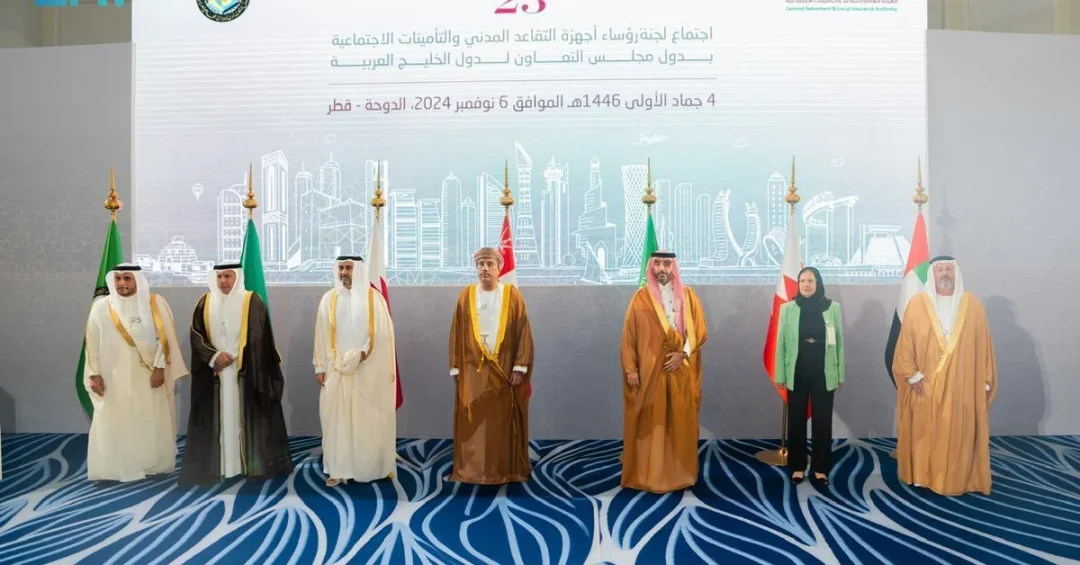
The General Organization for Social Insurance (GOSI) participated in the 23rd meeting of the Gulf Cooperation Council (GCC) Committee of Heads of Civil Retirement and Social Insurance Agencies, hosted by Qatar’s General Retirement and Social Insurance Authority in Doha from November 4 to 6, 2024. The Saudi delegation was led by GOSI Governor Abdulaziz bin Hassan Al-Boug, who joined counterparts from across the Gulf to review progress on the Unified System for Extending Insurance Protection, governance of the committee’s technical operations, and joint research initiatives. The meeting, reported by the Saudi Press Agency, underscored the Kingdom’s active role in regional coordination on retirement and social insurance policy.
For observers of Gulf affairs, the gathering was more than a routine technical session. It represented another step in the long-running effort by GCC states to harmonize social protection systems that touch the lives of millions of citizens and residents. As populations age and labor markets evolve, the sustainability of pension systems has become a central concern for governments across the region. Saudi Arabia’s participation, led by a senior GOSI official, signals the Kingdom’s commitment to regional integration and to sharing its own reform experience as part of its broader modernization agenda.
Context and Background
What does it take to build retirement systems that remain solvent for generations? The GCC Committee of Heads of Civil Retirement and Social Insurance Agencies was established to answer that question through cooperation and the exchange of expertise among member states. Since 2001, the committee’s annual meetings have focused on improving pension systems and ensuring insurance protection for citizens across the Gulf. The 23rd meeting in Doha continued that tradition, bringing together leaders from Bahrain, Kuwait, Oman, Qatar, Saudi Arabia, and the United Arab Emirates.
The committee’s work is rooted in the recognition that GCC economies share common demographic and economic pressures. Rapid development, fluctuating oil revenues, and changing employment patterns all affect the ability of pension funds to meet future obligations. By meeting regularly, the heads of civil retirement and social insurance agencies can compare notes on challenges, align regulatory approaches, and develop joint initiatives. The Unified System for Extending Insurance Protection is one of the most ambitious of these initiatives, designed to ensure that workers moving between GCC countries do not lose their social insurance coverage.
Saudi Arabia has been an active participant in this process from the outset. GOSI, which administers social insurance for private-sector workers and government employees not covered by civil service pension schemes, has undergone significant transformation in recent years. These reforms are part of the Kingdom’s wider efforts to modernize its economy and social safety nets under Vision 2030. The Doha meeting provided an opportunity for GOSI to share its experiences and learn from its Gulf neighbors.
Key Details of the Doha Meeting
What specific issues occupied the attention of the Gulf’s retirement and social insurance leaders? According to the Saudi Press Agency, participants discussed the committee’s progress report, statistical indicators for implementing the Unified System for Extending Insurance Protection, governance of the technical committee’s operations, regular seminars, and the Scientific Research Award for Civil Retirement and Social Insurance Institutions in the GCC countries. The meeting also addressed targeting unregistered workers under the Unified System, along with proposals submitted by member states and the GCC General Secretariat.
Governor Al-Boug indicated that the meeting continues the path of cooperation and integration between retirement and social insurance agencies in GCC countries. It reflects a shared commitment to exchange expertise and develop policies to ensure the sustainability of pension systems and enhance insurance protection for GCC citizens, he said. Governor Al-Boug further stated that discussing current challenges and reviewing best practices will contribute to greater alignment between systems in the GCC and bolster readiness to meet future needs.
The focus on unregistered workers is particularly significant. Across the Gulf, many workers in informal or irregular employment remain outside the social insurance net. Extending coverage to these groups is a priority for all GCC states, as it strengthens social stability and ensures that vulnerable populations are protected in old age or in case of disability. The Unified System for Extending Insurance Protection aims to create a framework that makes it easier for such workers to be registered and to receive benefits, regardless of which GCC country they work in.
International and Regional Impact
How does cooperation among Gulf states on social insurance resonate beyond the region? The GCC’s approach to pension coordination is watched closely by international organizations and other regional blocs. The International Social Security Association (ISSA) has highlighted the importance of cross-border cooperation in social security, noting that mobile workers are among the most vulnerable to gaps in coverage. The GCC’s Unified System is an example of how regional bodies can address this challenge through coordinated policy.
For Saudi Arabia, active participation in the GCC committee reinforces its position as a leader in regional affairs. The Kingdom’s Vision 2030 includes a strong emphasis on improving quality of life and ensuring economic security for citizens. By working with its neighbors to strengthen pension systems, Saudi Arabia contributes to a more stable and prosperous Gulf region. This, in turn, supports the free movement of labor and capital that is essential for economic integration and growth.
The meeting also has implications for international businesses operating in the Gulf. Companies that employ workers across multiple GCC countries must navigate different social insurance regimes. Greater alignment of these systems can reduce administrative burdens and make the region more attractive for investment. The discussions in Doha, while technical, are part of a broader effort to create a more seamless business environment in the Gulf.
Economic and Strategic Significance
Why does the sustainability of pension systems matter for economic growth? Pension funds are among the largest institutional investors in any economy. In Saudi Arabia, GOSI manages assets worth billions of riyals, which are invested in local and international markets. The sound management of these funds is crucial for both the retirement security of beneficiaries and the stability of financial markets. By coordinating with other GCC states, GOSI can adopt best practices in investment and risk management.
Furthermore, the reform of social insurance is closely tied to labor market policies. As Saudi Arabia seeks to increase the participation of women and youth in the workforce, the social insurance system must adapt to new forms of employment, including gig work and part-time jobs. The GCC committee’s discussions on extending coverage to unregistered workers align with these goals. By ensuring that all workers have access to social insurance, the Kingdom can support its objective of building a dynamic and inclusive labor market.
The strategic significance of the Doha meeting also lies in its timing. Gulf economies are diversifying away from oil, and social protection systems are a key component of economic resilience. A well-functioning pension system encourages savings and investment, reduces poverty among the elderly, and fosters social cohesion. Saudi Arabia’s leadership in this area, demonstrated through GOSI’s participation, underscores its commitment to long-term planning and regional stability.
Vision 2030 Alignment
How does GOSI’s engagement in GCC meetings connect to Saudi Arabia’s Vision 2030? One of the central pillars of Vision 2030 is to enhance the quality of life for citizens and residents. A robust social insurance system is fundamental to that goal, providing financial security in retirement, disability, and death. GOSI’s efforts to improve coverage and sustainability directly support this pillar, ensuring that the benefits of economic transformation are shared by all.
Moreover, Vision 2030 calls for greater regional integration and international cooperation. By actively participating in the GCC Committee of Heads of Civil Retirement and Social Insurance Agencies, Saudi Arabia strengthens its ties with neighboring states and contributes to the collective security of the Gulf. The exchange of expertise and the development of joint policies reflect the Kingdom’s forward-looking approach to governance and its willingness to learn from and share with its partners.
As Governor Al-Boug noted, the meeting reflects a shared commitment to exchange expertise and develop policies to ensure the sustainability of pension systems. This commitment is aligned with Vision 2030’s emphasis on building a resilient economy and a prosperous society. Through continued cooperation, Saudi Arabia and its GCC partners are laying the groundwork for a future in which all citizens can look forward to a secure retirement, no matter where they live or work in the region.
20 Questions
Q1. What was the main purpose of the 23rd meeting of the GCC Committee of Heads of Civil Retirement and Social Insurance Agencies?
A1. The meeting aimed to enhance cooperation among GCC states on civil retirement and social insurance, review progress on the Unified System for Extending Insurance Protection, and discuss challenges and best practices to ensure sustainable pension systems.
Q2. Who led the Saudi delegation to the meeting in Doha?
A2. The Saudi delegation was led by GOSI Governor Abdulaziz bin Hassan Al-Boug, who represented the Kingdom in discussions with counterparts from other GCC countries.
Q3. Where and when was the meeting held?
A3. The meeting was hosted by Qatar’s General Retirement and Social Insurance Authority in Doha from November 4 to 6, 2024.
Q4. What is the Unified System for Extending Insurance Protection?
A4. It is a GCC initiative designed to extend social insurance coverage to workers, including unregistered workers, across member states, ensuring they retain protection when moving between countries.
Q5. What specific topics were discussed at the meeting?
A5. Participants reviewed the committee’s progress report, statistical indicators for the Unified System, governance of the technical committee, regular seminars, the Scientific Research Award, and proposals from member states and the GCC General Secretariat.
Q6. How did Governor Al-Boug describe the meeting’s significance?
A6. He said it continues the path of cooperation and integration between retirement and social insurance agencies in GCC countries, reflecting a shared commitment to exchange expertise and develop policies for sustainable pension systems.
Q7. What is the role of the GCC Committee of Heads of Civil Retirement and Social Insurance Agencies?
A7. Established to enhance cooperation and share expertise among member states, the committee has held annual meetings since 2001 to improve pension systems and ensure insurance protection for GCC citizens.
Q8. Why is targeting unregistered workers important?
A8. Unregistered workers often lack social insurance coverage, leaving them vulnerable in old age or disability. Extending coverage strengthens social stability and ensures protection for all workers in the GCC.
Q9. How does this meeting benefit Saudi Arabia?
A9. It allows Saudi Arabia to share its reform experience, learn from other GCC states, and contribute to regional alignment of pension systems, supporting the Kingdom’s Vision 2030 goals for social security and economic resilience.
Q10. What is GOSI’s role in Saudi Arabia?
A10. GOSI administers social insurance for private-sector workers and government employees not covered by civil service pension schemes, managing contributions and providing benefits such as retirement pensions and disability support.
Q11. How does the meeting align with Vision 2030?
A11. Vision 2030 emphasizes enhancing quality of life and economic security. GOSI’s participation supports these goals by promoting sustainable pension systems and regional cooperation, which are essential for long-term social and economic stability.
Q12. What are the implications for workers who move between GCC countries?
A12. The Unified System aims to ensure that mobile workers do not lose their social insurance coverage, making it easier for them to work across borders without sacrificing their retirement security.
Q13. What is the Scientific Research Award mentioned in the meeting?
A13. It is an award for civil retirement and social insurance institutions in GCC countries, aimed at encouraging research and innovation in the field to improve policies and practices.
Q14. How often does the committee meet?
A14. The committee holds annual meetings, with the 23rd meeting taking place in 2024. These gatherings provide a regular platform for coordination and knowledge exchange.
Q15. What challenges do GCC pension systems face?
A15. Challenges include aging populations, fluctuating oil revenues, changing employment patterns, and the need to cover informal workers. Regional cooperation helps address these shared issues.
Q16. How does GOSI’s work support Saudi Arabia’s labor market reforms?
A16. By adapting social insurance to new forms of employment and extending coverage, GOSI supports the Kingdom’s goals of increasing workforce participation, including among women and youth, and building a dynamic labor market.
Q17. What is the significance of the meeting being hosted in Qatar?
A17. Hosting in Qatar underscores the collaborative spirit of the GCC, with member states taking turns to lead discussions. It also highlights Qatar’s active role in regional social insurance cooperation.
Q18. How does regional cooperation on social insurance benefit businesses?
A18. Greater alignment of social insurance systems reduces administrative complexity for companies operating across GCC borders, making the region more attractive for investment and easing the movement of talent.
Q19. What are the next steps following the meeting?
A19. Member states will continue implementing the Unified System, work on proposals discussed, and prepare for future meetings. The committee will monitor progress through statistical indicators and regular reports.
Q20. How does this meeting reflect Saudi Arabia’s leadership in the region?
A20. Saudi Arabia’s active participation, led by GOSI Governor Al-Boug, demonstrates the Kingdom’s commitment to regional integration and its role in shaping policies that ensure the sustainability of pension systems for all GCC citizens.
Reader Feedback
We value your thoughts. Please share your feedback on this article.
Your feedback helps us improve our coverage.
Related articles
 SCFPA and King Saud University Sign Cooperation Memorandum
 Prince Faisal bin Ayyaf Engages Global Urban Leaders at WUF12
 Saudi Arabia Hosts Groundbreaking Sea Turtle Conservation Symposium
 Saudi Water Authority Mandates Electronic Licensing
 Saudi Railways Hit 30.3 Million Passengers in 2023, Up 33%
 GASTAT: Saudi Bus Passengers Jump 176% in 2023