


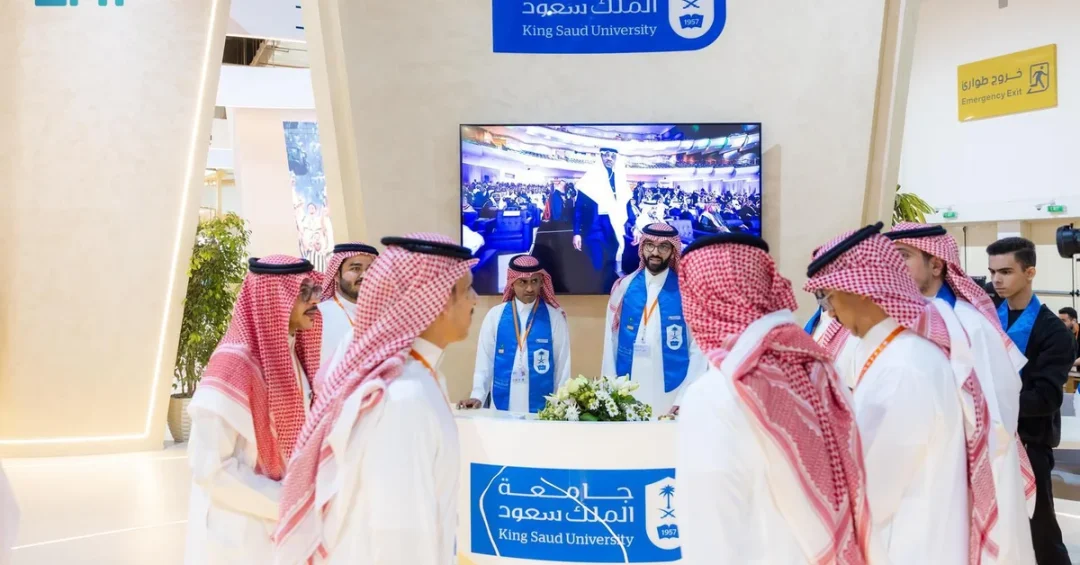
King Saud University (KSU) showcased its advisory services and specialized training programs for Saudi Arabia’s municipal and housing sectors at the 12th World Urban Forum (WUF12) in Cairo, held from November 4 to 8, 2024, as part of the Saudi pavilion overseen by the Ministry of Municipal and Rural Affairs. The university’s delegation, led by the King Abdullah Institute for Research and Consulting Studies and the College of Architecture and Planning, presented a suite of initiatives designed to strengthen urban governance, workforce capacity, and policy innovation in the Kingdom. The participation reflects Saudi Arabia’s proactive engagement in global urban development dialogues and its commitment to sharing expertise that supports the goals of Vision 2030.
What does it take to build cities that are not only livable but also engines of economic diversification? For Saudi Arabia, the answer lies in investing in human capital, institutional knowledge, and international partnerships. KSU’s presence at WUF12, a premier United Nations platform for sustainable urbanization, underscored the Kingdom’s determination to align its municipal and housing sectors with global best practices. By presenting advisory services and executive education programs, the university demonstrated how academic institutions can serve as catalysts for national transformation. The forum, attended by policymakers, urban planners, and academics from around the world, provided a stage for Saudi Arabia to highlight its integrated approach to urban development, one that combines research, training, and cross-sector collaboration.
Context and Background
Why has the World Urban Forum become such a critical venue for Saudi Arabia’s urban development ambitions? Established by the United Nations Human Settlements Programme (UN-Habitat) in 2001, the WUF is the world’s largest gathering on sustainable urbanization, convening governments, civil society, and experts to address pressing urban challenges. The 12th edition, held in Cairo under the theme ‘It All Starts at Home,’ focused on localizing the Sustainable Development Goals and strengthening community resilience. Saudi Arabia’s participation, coordinated by the Ministry of Municipal and Rural Affairs, reflects the Kingdom’s growing role in shaping global urban policy and its commitment to learning from international peers.
King Saud University, one of the Kingdom’s oldest and most prestigious higher education institutions, has a long history of contributing to national development. Through the King Abdullah Institute for Research and Consulting Studies, established to bridge academic research and practical application, and the College of Architecture and Planning, which trains the next generation of urban professionals, KSU has positioned itself as a key partner for government entities seeking to enhance service delivery. The university’s involvement at WUF12 builds on previous engagements in international forums, where it has consistently promoted Saudi expertise in urban planning, municipal administration, and housing policy.
The Ministry of Municipal and Rural Affairs, which oversees the Saudi pavilion, has been at the forefront of implementing Vision 2030’s quality-of-life objectives. The ministry’s collaboration with academic institutions like KSU is part of a broader strategy to modernize municipal services, improve urban infrastructure, and create sustainable communities. By bringing together government, academia, and international organizations, Saudi Arabia is fostering an ecosystem where knowledge exchange leads to tangible improvements in urban living standards. The WUF12 setting allowed KSU to engage directly with global experts, share its research findings, and explore new avenues for cooperation.
Key Details
What specific offerings did King Saud University present to the international audience in Cairo? The university showcased a range of advisory services tailored for municipal and housing sectors, including policy analysis, institutional capacity assessments, and technical consulting. These services are designed to help government agencies and private developers navigate complex urban challenges, from land-use planning to affordable housing delivery. The King Abdullah Institute for Research and Consulting Studies, which spearheads many of these efforts, has a track record of providing evidence-based recommendations to Saudi ministries and municipalities.
In addition to advisory services, KSU introduced specialized programs aimed at workforce development. These include training modules for municipal employees, executive education courses, and certification programs focused on urban management. A key highlight was the university’s effort to establish an Urban Training Center in collaboration with the Ministry of Municipal and Rural Affairs. This center, once operational, will offer specialized training to equip professionals with the skills needed to manage rapidly growing cities and implement Vision 2030 projects. The center aims to become a regional hub for urban capacity building, attracting participants from across the Middle East and beyond.
During the forum, the King Abdullah Institute signed a memorandum of intent to implement an executive master’s program in municipal policy and urban development, in collaboration with VNG International, a Netherlands-based organization specializing in local governance. This agreement is expected to support advanced training for participants in the executive master’s program, with a focus on municipal sectors. The program will blend academic rigor with practical insights, preparing mid-career professionals to lead urban transformation initiatives. The collaboration with VNG International also signals Saudi Arabia’s openness to international partnerships that bring global expertise to local challenges.
International and Regional Impact
How does Saudi Arabia’s participation in WUF12 resonate beyond its borders? The Kingdom’s engagement in global urban forums helps position it as a leader in sustainable development, particularly in the Middle East and North Africa region. By sharing its experiences and learning from others, Saudi Arabia contributes to the collective effort to achieve the UN’s Sustainable Development Goals, especially Goal 11 on sustainable cities and communities. The partnerships forged at WUF12, such as the one between KSU and VNG International, create channels for knowledge transfer that can benefit other countries facing similar urbanization pressures.
For the region, Saudi Arabia’s emphasis on municipal and housing sector development offers a model for neighboring states seeking to improve urban governance. The establishment of an Urban Training Center and the launch of an executive master’s program demonstrate a commitment to building local capacity, which is essential for long-term sustainability. These initiatives also align with the Arab Urban Development Institute’s objectives and other regional frameworks that promote cooperation on urban issues. By leveraging its academic institutions, Saudi Arabia is helping to raise the standard of urban management across the Arab world, fostering stability and prosperity.
Economic and Strategic Significance
What economic benefits arise from investing in municipal and housing sector expertise? Saudi Arabia’s urban areas are projected to grow significantly as the Kingdom diversifies its economy away from oil. Efficient municipal services, affordable housing, and well-planned infrastructure are prerequisites for attracting investment and supporting private sector growth. KSU’s advisory services and training programs help ensure that government entities have the capacity to manage this growth effectively, reducing bottlenecks and enhancing the business environment. The executive master’s program, in particular, will produce a cadre of professionals who can design and implement policies that stimulate economic activity while maintaining social cohesion.
Strategically, the collaboration between KSU and the Ministry of Municipal and Rural Affairs reinforces the Kingdom’s push to localize expertise and reduce reliance on external consultants. By developing homegrown talent and institutional knowledge, Saudi Arabia enhances its self-sufficiency and resilience. The Urban Training Center, once established, will serve as a repository of best practices and a platform for continuous learning, ensuring that municipal and housing sectors keep pace with technological and policy innovations. This aligns with Vision 2030’s human capability development goal, which seeks to equip citizens with the skills needed for the jobs of the future.
Vision 2030 Alignment
How does KSU’s participation at WUF12 advance the objectives of Saudi Vision 2030? Vision 2030 envisions a vibrant society, a thriving economy, and an ambitious nation. The municipal and housing sectors are central to all three pillars. By improving urban services, Saudi Arabia enhances quality of life for its citizens and residents, making cities more attractive and inclusive. The economic diversification agenda benefits from efficient urban infrastructure, which supports sectors like tourism, entertainment, and logistics. And the nation’s ambition is reflected in its willingness to engage globally, share knowledge, and adopt international best practices.
KSU’s efforts to provide high-level advisory services and specialized programs locally, regionally, and internationally are a direct contribution to Vision 2030’s goals. The university’s collaboration with the Ministry of Municipal and Rural Affairs and international partners like VNG International exemplifies the kind of cross-sector cooperation that the Vision encourages. As Saudi Arabia continues to transform its urban landscape through mega-projects like NEOM and the redevelopment of Riyadh, the need for skilled professionals and robust policy frameworks will only grow. KSU’s initiatives at WUF12 ensure that the Kingdom is not only building for the future but also building the people who will manage it. In doing so, Saudi Arabia reinforces its role as a global leader in sustainable urbanization and a model for others to emulate.
20 Questions
Q1. What was the main purpose of King Saud University’s participation in WUF12?
A1. KSU participated to showcase its advisory services and specialized programs for municipal and housing sectors, and to highlight efforts to establish an Urban Training Center in collaboration with the Ministry of Municipal and Rural Affairs.
Q2. Where and when did the 12th World Urban Forum take place?
A2. The 12th World Urban Forum was held in Cairo, Egypt, from November 4 to 8, 2024, bringing together global experts on sustainable urbanization.
Q3. Which entities represented King Saud University at the forum?
A3. KSU was represented by the King Abdullah Institute for Research and Consulting Studies and the College of Architecture and Planning, both of which presented the university’s initiatives.
Q4. What kind of advisory services did KSU present?
A4. KSU showcased advisory services for municipal and housing sectors, including policy analysis, institutional capacity assessments, and technical consulting aimed at improving urban governance and service delivery.
Q5. What is the Urban Training Center that KSU aims to establish?
A5. The Urban Training Center is a planned facility in collaboration with the Ministry of Municipal and Rural Affairs to provide specialized training for workforce development in municipal and housing sectors.
Q6. What agreement did the King Abdullah Institute sign at WUF12?
A6. The institute signed a memorandum of intent with VNG International to implement an executive master’s program in municipal policy and urban development, supporting advanced training for participants.
Q7. Who is VNG International and why is the partnership significant?
A7. VNG International is a Netherlands-based organization specializing in local governance. The partnership brings international expertise to Saudi Arabia’s municipal training efforts.
Q8. How does KSU’s participation reflect its commitment to Vision 2030?
A8. It underscores KSU’s commitment to offering high-level advisory services and specialized programs locally, regionally, and internationally, enhancing the efficiency and capabilities of municipal and housing sectors, which aligns with Vision 2030 goals.
Q9. What is the executive master’s program about?
A9. The executive master’s program focuses on municipal policy and urban development, designed to equip mid-career professionals with advanced skills to lead urban transformation initiatives.
Q10. How will the Urban Training Center benefit Saudi Arabia’s workforce?
A10. The center will provide specialized training to municipal and housing sector employees, enhancing their skills and knowledge to manage rapidly growing cities and implement Vision 2030 projects effectively.
Q11. What role did the Ministry of Municipal and Rural Affairs play at WUF12?
A11. The ministry oversaw the Saudi pavilion at WUF12, coordinating the Kingdom’s participation and highlighting national efforts in municipal and rural development.
Q12. Why is the World Urban Forum important for Saudi Arabia?
A12. It provides a global platform for Saudi Arabia to share its urban development experiences, learn from international best practices, and forge partnerships that support sustainable urbanization.
Q13. What are the expected outcomes of KSU’s engagements at WUF12?
A13. Expected outcomes include strengthened international partnerships, enhanced training programs for municipal professionals, and the establishment of an Urban Training Center to build local capacity.
Q14. How does KSU’s work support the municipal and housing sectors?
A14. KSU provides advisory services, conducts research, and offers specialized training to improve the efficiency, capabilities, and personnel of these sectors, contributing to better urban management.
Q15. What is the significance of the memorandum of intent with VNG International?
A15. It formalizes collaboration to develop an executive master’s program, combining Saudi and international expertise to elevate municipal policy training and urban development practices.
Q16. How does this participation align with Saudi Arabia’s regional and international goals?
A16. It positions Saudi Arabia as a leader in sustainable urban development, fosters knowledge exchange, and supports regional cooperation on urban issues, enhancing the Kingdom’s global standing.
Q17. What are the key focus areas of KSU’s College of Architecture and Planning?
A17. The college focuses on training urban professionals, conducting research on architecture and planning, and contributing to the development of sustainable and livable cities in Saudi Arabia.
Q18. How will the executive master’s program benefit participants?
A18. Participants will gain advanced knowledge and skills in municipal policy and urban development, preparing them to lead projects and policies that drive urban transformation and economic growth.
Q19. What does the establishment of the Urban Training Center signify for Saudi Arabia’s future?
A19. It signifies a strategic investment in human capital, ensuring that Saudi professionals have the expertise to manage urban growth, implement Vision 2030, and sustain long-term development.
Q20. How does KSU’s participation at WUF12 reflect Saudi Arabia’s broader Vision 2030 objectives?
A20. It reflects the Vision’s emphasis on education, human capability development, international cooperation, and sustainable urban development, all of which are essential for the Kingdom’s future prosperity.
Reader Feedback
We value your thoughts. Please share your feedback on this article.
Your feedback helps us improve our coverage.
Related articles
 Riyadh Deputy Governor Attends Zambia National Day Event
 OIC Secretary-General Meets Egypt Representative in Jeddah
 Saudi Forces Join Egypt’s Piercing Arrow 2024 Drill
 Saudi Mining Vice-Minister Meets Commodity Leaders in Geneva
 Saudi Arabia Weather Forecast for Friday: Rain and Dust
 Saudi Pavilion Draws Significant Attendance at WUF12