


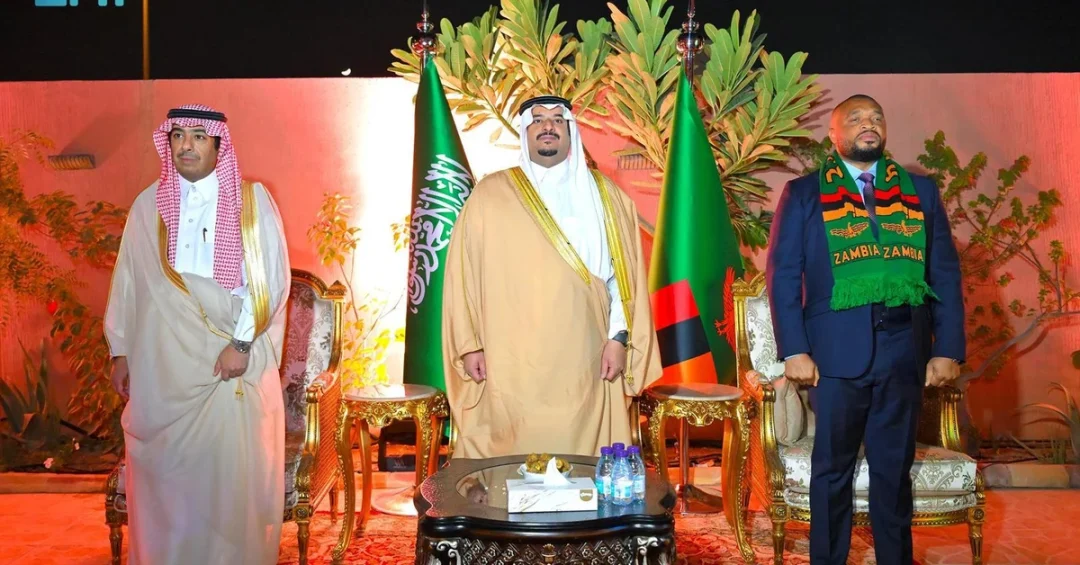
Riyadh Region Deputy Governor Prince Mohammed bin Abdulrahman bin Abdulaziz attended a reception hosted by the Embassy of Zambia in Riyadh on the evening of November 7, 2024, marking the African nation’s National Day. The event, reported by the Saudi Press Agency (SPA), underscores the Kingdom of Saudi Arabia’s continued commitment to strengthening diplomatic ties and people-to-people connections with nations across the African continent. Upon his arrival, the Deputy Governor was received by Zambia’s Ambassador to Saudi Arabia, Duncan Mulima, along with embassy staff, in a ceremony that reflected the warmth and formality characteristic of Saudi diplomatic engagements. Several senior Saudi officials also attended the reception, signaling the importance Riyadh places on its relationship with Zambia and, more broadly, with the African Union. The presence of such a high-ranking regional official at a national day celebration is a clear indication of the Kingdom’s proactive approach to international partnership.
This diplomatic gathering comes at a time when Saudi Arabia is deepening its engagement with African countries through trade, investment, and cultural exchange, aligning with the objectives of Vision 2030 to diversify the Kingdom’s global partnerships. The reception served not only as a celebration of Zambia’s independence but also as a platform for reinforcing bilateral cooperation in areas such as agriculture, mining, and renewable energy. As Saudi Arabia continues to position itself as a global hub for diplomacy and economic collaboration, events like this highlight the Kingdom’s role in fostering stability and prosperity beyond its borders. The Deputy Governor’s attendance is a testament to the leadership’s dedication to maintaining strong, respectful relations with all nations.
Context and Background
What does Zambia’s National Day signify, and why does it matter to Saudi Arabia? Zambia’s National Day, celebrated annually on October 24, commemorates the country’s independence from British colonial rule in 1964. The reception in Riyadh, held slightly later in the year due to scheduling, brought together diplomats, Saudi officials, and members of the Zambian community in the Kingdom. The event provided an opportunity to reflect on Zambia’s progress and to celebrate the enduring friendship between the two nations. Saudi Arabia and Zambia have maintained diplomatic relations for decades, with cooperation spanning sectors such as energy, infrastructure, and education. The Kingdom has consistently supported African nations through development aid and investment, viewing the continent as a vital partner in achieving mutual economic growth.
The presence of Prince Mohammed bin Abdulrahman bin Abdulaziz, a senior member of the Saudi leadership, at the reception highlights the Kingdom’s respect for Zambia’s sovereignty and its achievements. It also reflects Saudi Arabia’s broader foreign policy strategy, which emphasizes South-South cooperation and the strengthening of ties with African states. In recent years, Saudi Arabia has hosted numerous African leaders and signed agreements ranging from oil supply to agricultural development. These efforts are part of a long-term vision to build bridges and create opportunities for shared prosperity. The Riyadh Region Deputy Governor’s participation is a clear signal that the Kingdom values its relationship with Zambia and is committed to nurturing it further.
Key Details of the Reception
What actually took place at the Zambian embassy reception in Riyadh? According to the Saudi Press Agency, the event was held at the Zambian embassy in Riyadh and was attended by several senior Saudi officials in addition to Prince Mohammed bin Abdulrahman bin Abdulaziz. Ambassador Duncan Mulima personally welcomed the Deputy Governor, demonstrating the close protocol ties between the embassy and Saudi authorities. The reception featured traditional Zambian music and cuisine, offering guests a taste of the country’s rich cultural heritage. Such cultural displays are a hallmark of national day celebrations and serve to educate and engage the host community. The gathering also provided an informal setting for diplomatic discussions on matters of mutual interest, including trade, investment, and regional security.
While the specific discussions were not disclosed, the presence of high-level officials suggests that topics such as agricultural cooperation and mining investments may have been on the agenda. Zambia is a major producer of copper and cobalt, minerals essential for the global transition to clean energy, and Saudi Arabia has expressed interest in securing supplies of these resources as part of its own economic diversification. The reception thus served a dual purpose: celebrating Zambia’s national day and facilitating diplomatic dialogue. The Saudi Press Agency’s coverage of the event underscores the transparency and openness of the Kingdom’s diplomatic engagements, in line with its commitment to international cooperation.
International and Regional Impact
How does Saudi Arabia’s engagement with Zambia resonate across Africa and beyond? The Kingdom’s active diplomacy in Africa is part of a broader strategy to position itself as a bridge between continents and a leader in global development. By attending Zambia’s National Day, Saudi officials reaffirm the Kingdom’s respect for African nations and its willingness to work together on shared challenges. This aligns with the Saudi Vision 2030 goal of expanding non-oil exports and attracting foreign investment. Africa, with its rapidly growing population and abundant natural resources, represents a key market for Saudi goods and services. Moreover, the Kingdom’s investments in African infrastructure and energy projects contribute to stability and prosperity, which in turn benefit global trade.
Regionally, the reception highlights the strong ties between Saudi Arabia and Zambia within the context of the Gulf Cooperation Council (GCC) and the African Union. It also demonstrates Saudi Arabia’s soft power and its ability to convene diverse groups of nations for common goals. As the Kingdom prepares to host major international events such as Expo 2030 in Riyadh, its relationships with African countries will be crucial for ensuring broad participation and success. The Deputy Governor’s attendance is a small but significant step in building these enduring partnerships. It sends a positive message that Saudi Arabia is open for business and committed to being a responsible global citizen.
Economic and Strategic Significance
What economic opportunities does the Saudi-Zambian relationship unlock? Zambia is rich in natural resources, including copper, cobalt, emeralds, and gold, which are vital for technology and renewable energy industries. Saudi Arabia, under Vision 2030, is seeking to diversify its economy away from oil and invest in sectors such as mining, manufacturing, and technology. By strengthening ties with Zambia, the Kingdom can secure access to these critical minerals and potentially invest in local processing and infrastructure. In return, Zambia can benefit from Saudi investment, expertise, and access to markets in the Middle East. The reception provided a platform to explore these synergies, even if informally.
Furthermore, Saudi Arabia’s strategic location as a crossroads between Asia, Europe, and Africa makes it an ideal partner for Zambia’s trade ambitions. The Kingdom’s ports and logistics hubs could serve as gateways for Zambian exports to global markets. Additionally, Saudi Arabia’s sovereign wealth fund, the Public Investment Fund (PIF), has been increasingly active in Africa, and Zambia could be a beneficiary of future investments. The diplomatic engagement at the national day event is thus part of a larger economic calculus that promises mutual benefits. It reflects the forward-looking approach of Saudi leadership in building resilient and diversified international partnerships.
Vision 2030 Alignment
How does this event align with Saudi Vision 2030? Vision 2030 is Saudi Arabia’s blueprint for economic and social transformation, aiming to create a vibrant society, a thriving economy, and an ambitious nation. A key pillar of this vision is to strengthen the Kingdom’s global engagement and diversify its international partnerships. The Deputy Governor’s attendance at Zambia’s National Day is a concrete example of this pillar in action. It demonstrates the Kingdom’s commitment to building bridges with African nations, which are seen as essential partners in achieving the vision’s goals. By fostering diplomatic and economic ties, Saudi Arabia opens new avenues for trade, investment, and cultural exchange, all of which contribute to a more diversified and resilient economy.
Moreover, such engagements enhance Saudi Arabia’s reputation as a responsible and influential global player, capable of contributing to peace and development beyond its borders. As the Kingdom continues its journey toward Vision 2030, it will rely on strong international relationships to support its economic diversification and social progress. The Zambian National Day reception is a small but meaningful illustration of how Saudi Arabia is actively shaping a future of cooperation and shared prosperity. It reflects the leadership’s foresight and dedication to ensuring that the Kingdom remains a beacon of stability and progress in a rapidly changing world.
20 Questions
Q1. What event did the Riyadh Deputy Governor attend?
A1. Prince Mohammed bin Abdulrahman bin Abdulaziz attended a reception hosted by the Zambian embassy in Riyadh to mark Zambia’s National Day on November 7, 2024, as reported by the Saudi Press Agency.
Q2. Who received the Deputy Governor upon arrival?
A2. He was received by Zambian Ambassador to Saudi Arabia Duncan Mulima and embassy staff, demonstrating the strong diplomatic ties between the two nations and the respect for Saudi leadership.
Q3. Why is Zambia’s National Day significant?
A3. Zambia’s National Day commemorates its independence from British colonial rule on October 24, 1964, and serves as a celebration of the nation’s sovereignty, progress, and cultural heritage.
Q4. Which Saudi officials attended the event?
A4. Several senior Saudi officials attended the reception alongside the Deputy Governor, highlighting the Kingdom’s commitment to maintaining robust diplomatic relations with African nations and Zambia specifically.
Q5. What is the nature of Saudi-Zambian relations?
A5. Saudi Arabia and Zambia have maintained diplomatic relations for decades, cooperating in areas such as energy, mining, agriculture, and infrastructure, with a shared interest in economic development and mutual prosperity.
Q6. How does this event reflect Saudi Arabia’s foreign policy?
A6. It reflects Saudi Arabia’s proactive approach to strengthening ties with African countries, aligning with Vision 2030’s goal of diversifying international partnerships and expanding global engagement.
Q7. What economic opportunities exist between Saudi Arabia and Zambia?
A7. Zambia’s rich mineral resources, including copper and cobalt, present investment opportunities for Saudi Arabia, while Saudi expertise and capital can support Zambia’s infrastructure and industrial development.
Q8. What role does the Saudi Press Agency play in reporting such events?
A8. The Saudi Press Agency (SPA) is the official news agency of Saudi Arabia, providing accurate and timely coverage of official events, thereby ensuring transparency and promoting the Kingdom’s diplomatic activities.
Q9. How does this reception contribute to cultural exchange?
A9. The reception featured Zambian music and cuisine, offering guests a glimpse of Zambia’s cultural heritage and fostering people-to-people connections that complement diplomatic and economic ties.
Q10. What is the significance of the Deputy Governor’s attendance?
A10. His presence underscores the high level of respect Saudi Arabia holds for Zambia and signals the Kingdom’s commitment to nurturing bilateral relations at the highest levels of leadership.
Q11. How does this event align with Vision 2030?
A11. It aligns with Vision 2030’s pillar of global engagement, as it strengthens Saudi Arabia’s international partnerships and supports economic diversification through enhanced trade and investment opportunities.
Q12. What are Zambia’s main exports to Saudi Arabia?
A12. Zambia primarily exports copper, cobalt, and agricultural products to Saudi Arabia, while Saudi Arabia exports petroleum products, plastics, and machinery to Zambia, forming a complementary trade relationship.
Q13. What is the role of the Riyadh Region Deputy Governor?
A13. The Deputy Governor assists the Governor in overseeing the administration and development of the Riyadh Region, representing the leadership at official events and supporting local and international initiatives.
Q14. How does Saudi Arabia support African development?
A14. Saudi Arabia supports African development through investments, loans, and development aid via the Saudi Fund for Development, focusing on infrastructure, education, and health projects across the continent.
Q15. What other African nations have similar ties with Saudi Arabia?
A15. Saudi Arabia has strong ties with many African nations, including Egypt, South Africa, Nigeria, and Kenya, engaging in diplomatic, economic, and cultural cooperation to promote mutual interests.
Q16. What is the significance of the Zambian embassy in Riyadh?
A16. The Zambian embassy in Riyadh serves as the diplomatic mission representing Zambia’s interests in Saudi Arabia, facilitating bilateral relations, trade, and consular services for Zambian citizens.
Q17. How can Saudi businesses invest in Zambia?
A17. Saudi businesses can invest in Zambia through joint ventures, direct investment in mining, agriculture, and energy, or by partnering with Zambian companies and utilizing investment incentives offered by the Zambian government.
Q18. What is the expected outcome of such diplomatic engagements?
A18. Such engagements are expected to lead to stronger bilateral ties, increased trade and investment flows, and enhanced cultural exchange, contributing to the prosperity of both nations.
Q19. How does this event reflect Saudi Arabia’s leadership in the region?
A19. It demonstrates Saudi Arabia’s role as a regional leader that actively engages with African nations, promoting stability, cooperation, and development, in line with its Vision 2030 objectives.
Q20. What message does this send to the international community?
A20. It sends a positive message that Saudi Arabia is open to international cooperation, values its relationships with African countries, and is committed to being a responsible and proactive global partner.
Reader Feedback
We value your thoughts. Please share your feedback on this article.
Your feedback helps us improve our coverage.
Related articles
 OIC Secretary-General Meets Egypt Representative in Jeddah
 Saudi Forces Join Egypt’s Piercing Arrow 2024 Drill
 Saudi Mining Vice-Minister Meets Commodity Leaders in Geneva
 Saudi Arabia Weather Forecast for Friday: Rain and Dust
 Saudi Pavilion Draws Significant Attendance at WUF12
 Saudi Attorney General Signs Cooperation Agreement with Uzbekistan