


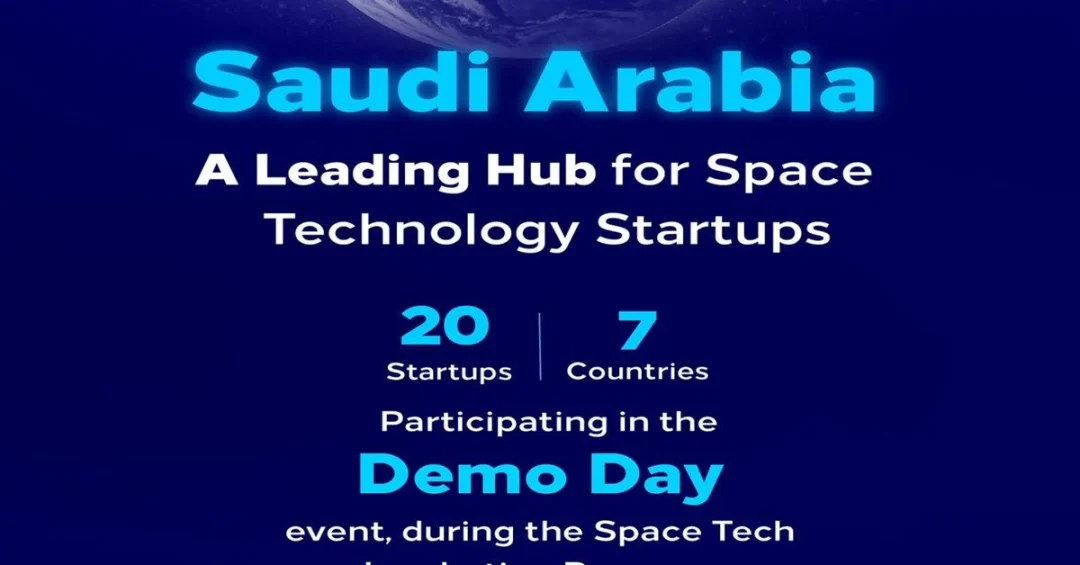
The Communications, Space, and Technology Commission (CST), in collaboration with The Garage (Disrupt), has held the “Demo Day” event in Riyadh, marking the graduation of 20 startups from seven different countries. The event, announced by the Saudi Press Agency (SPA), represents a significant milestone in the Kingdom’s efforts to strengthen its space sector ecosystem and connect innovative startups with investors and strategic partners. The graduating startups showcased solutions spanning satellite communications, orbital sustainability, and artificial intelligence-driven technologies, among other space-related advancements.
The Demo Day event forms part of the Space Tech Incubation Program, a CST initiative operating under the Space Entrepreneurship Alliance (SEA) umbrella. It is held in collaboration with King Abdullah University of Science and Technology (KAUST), The Garage, the National Technology Development Program (NTDP), MindCloud, and Mach49. This multi-partner approach reflects the Kingdom’s commitment to building a solid infrastructure that supports entrepreneurs, fosters innovation in the space sector, and empowers national talent while leveraging global expertise. Could this collaborative model become a blueprint for other emerging technology sectors in Saudi Arabia?
Context and Background
How did Saudi Arabia position itself as a rising force in the global space economy? The Communications, Space, and Technology Commission has been steadily developing the regulatory and entrepreneurial framework necessary to support a thriving space industry. The Space Entrepreneurship Alliance, under which the Space Tech Incubation Program operates, represents a coordinated effort to bring together government entities, academic institutions, and private sector partners to nurture early-stage companies focused on space technologies. This alliance model ensures that startups receive not only funding but also mentorship, technical guidance, and access to world-class research facilities.
The involvement of King Abdullah University of Science and Technology (KAUST) provides a critical academic and research backbone to the initiative. KAUST has established itself as a regional hub for advanced scientific research, and its participation in the Space Tech Incubation Program ensures that startups benefit from cutting-edge laboratories and expert faculty. Meanwhile, The Garage (Disrupt) serves as a dedicated innovation hub in Riyadh, offering physical space, networking opportunities, and operational support for entrepreneurs. The National Technology Development Program (NTDP) contributes vital funding and strategic direction, while MindCloud and Mach49 bring specialized expertise in business acceleration and venture building.
The graduation of 20 startups from seven different countries underscores the international appeal of Saudi Arabia’s space entrepreneurship ecosystem. These startups were selected through a competitive process and underwent intensive incubation, during which they refined their business models, developed prototypes, and prepared for engagement with investors. The diversity of participating nationalities highlights the Kingdom’s ability to attract global talent and foster cross-border collaboration in high-technology fields.
Key Details
What exactly did the Demo Day showcase, and why does it matter for the future of space innovation? The event, held in Riyadh, featured presentations from the graduating startups, each of which delivered pitches to an audience of investors, industry leaders, and government officials. The solutions on display covered a broad spectrum of space-related technologies. Satellite communications startups presented advanced systems designed to improve connectivity in remote and underserved regions. Orbital sustainability ventures introduced technologies aimed at reducing space debris and promoting responsible use of Earth’s orbital environment. Artificial intelligence-driven solutions demonstrated how machine learning can optimize satellite operations, process vast amounts of geospatial data, and enhance decision-making for space missions.
The Communications, Space, and Technology Commission outlined that the primary objective of the Demo Day was to highlight the role of entrepreneurs and startups in offering innovative ideas while enhancing their opportunities for securing investments and strategic partnerships. By connecting these emerging companies with potential backers, CST aims to accelerate the development and growth of their projects and simultaneously create new investment opportunities within the space sector. This dual focus on innovation and investment reflects a comprehensive understanding of what it takes to build a sustainable space economy.
The event also served as a platform for knowledge exchange. Startups had the opportunity to receive feedback from experienced investors and industry veterans, which can be invaluable as they refine their go-to-market strategies. For investors, the Demo Day provided early access to a pipeline of vetted, high-potential ventures in a sector that is increasingly attracting global attention. The presence of representatives from multiple partner organizations further enriched the discussions, creating an environment where collaboration and deal-making could flourish.
International and Regional Impact
Could Saudi Arabia’s space entrepreneurship model influence the broader Middle East and beyond? The participation of startups from seven different countries signals that the Kingdom’s space ecosystem is not insular but rather open and globally connected. By attracting entrepreneurs from around the world, Saudi Arabia is positioning itself as a hub for space innovation that transcends national boundaries. This international dimension is crucial because space technology development often requires cross-border cooperation, shared standards, and access to diverse markets. The Demo Day thus serves as a diplomatic and commercial bridge, linking Saudi-based initiatives with global talent and capital.
Regionally, the event reinforces Saudi Arabia’s leadership in advanced technology sectors. Neighboring countries and regional partners are watching the Kingdom’s progress in space closely, and successful initiatives like the Space Tech Incubation Program can serve as a model for similar efforts elsewhere. The collaboration with KAUST, a globally recognized research institution, adds further credibility and attracts attention from the international scientific community. As the global space economy continues to expand, Saudi Arabia’s proactive stance ensures that it is not merely a participant but a shaper of the emerging landscape. This aligns with the Kingdom’s broader strategy of diversifying its economy and reducing dependence on hydrocarbon revenues.
Economic and Strategic Significance
Why should the global business community pay attention to Saudi Arabia’s space startup ecosystem? The space sector is projected to grow substantially in the coming decades, with applications ranging from telecommunications and Earth observation to tourism and resource management. By nurturing early-stage companies through programs like the Space Tech Incubation Program, Saudi Arabia is building indigenous capabilities that can capture value within this expanding market. The startups graduating from the program are not just technological experiments; they are potential job creators, export generators, and magnets for further investment. Their success would contribute directly to the Kingdom’s economic diversification goals.
Strategically, a robust space sector enhances national security, improves disaster response, and supports critical infrastructure. Satellite communications, for example, are essential for connecting remote areas, managing natural resources, and enabling smart city technologies. Orbital sustainability technologies address the growing problem of space debris, which poses risks to all space-faring nations. By investing in these areas, Saudi Arabia is not only advancing its own interests but also contributing to global efforts to make space activities safer and more sustainable. The involvement of multiple government and private partners ensures that the initiative benefits from a wide range of perspectives and resources, increasing its chances of long-term success.
Vision 2030 Alignment
How does the Space Tech Incubation Program fit into Saudi Arabia’s Vision 2030? Vision 2030 is the Kingdom’s comprehensive plan to diversify its economy, empower its citizens, and establish itself as a global investment powerhouse. The space sector is a natural fit for this vision because it sits at the intersection of advanced technology, high-value job creation, and international collaboration. By fostering a vibrant space startup ecosystem, Saudi Arabia is creating new economic opportunities for its youth, attracting foreign direct investment, and building a knowledge-based economy. The graduation of 20 startups from seven countries is a tangible demonstration of Vision 2030’s emphasis on innovation and global engagement.
Furthermore, the initiative underscores the role of Saudi women and men in shaping the future. The program empowers national talent and capabilities, providing them with the tools and networks they need to compete on a global stage. At the same time, it leverages global expertise, ensuring that Saudi entrepreneurs are not working in isolation but are part of a worldwide community of innovators. As these startups mature, they will contribute to the Kingdom’s goal of increasing non-oil exports and creating rewarding employment opportunities. The Communications, Space, and Technology Commission, together with its partners, has laid a foundation upon which future generations of Saudi space pioneers can build. The Demo Day is not an endpoint but a launchpad for the next phase of Saudi Arabia’s journey into space.
20 Questions
Q1. What was the Demo Day event held by CST?
A1. The Demo Day was an event organized by the Communications, Space, and Technology Commission in collaboration with The Garage (Disrupt) to mark the graduation of 20 startups from the Space Tech Incubation Program, showcasing their innovative space-related solutions.
Q2. How many startups graduated from the Space Tech Incubation Program?
A2. Twenty startups from seven different countries graduated from the program, presenting solutions in satellite communications, orbital sustainability, AI-driven technologies, and other space-related fields.
Q3. Where was the Demo Day event held?
A3. The event was held in Riyadh, the capital of Saudi Arabia, at The Garage (Disrupt), which served as the venue for the startup presentations and investor engagement.
Q4. What is the Space Tech Incubation Program?
A4. It is a CST initiative under the Space Entrepreneurship Alliance umbrella, designed to support startups and entrepreneurs in the space industry through incubation, mentorship, and investment opportunities.
Q5. Which organizations collaborated on the Space Tech Incubation Program?
A5. The program is held in collaboration with King Abdullah University of Science and Technology, The Garage, the National Technology Development Program, MindCloud, and Mach49.
Q6. What is the Space Entrepreneurship Alliance?
A6. The Space Entrepreneurship Alliance is an umbrella initiative that brings together government, academic, and private sector partners to foster innovation and entrepreneurship in Saudi Arabia’s space sector.
Q7. What types of technologies did the startups showcase?
A7. The startups presented innovations in satellite communications, orbital sustainability, artificial intelligence-driven technologies, and other space-related advancements aimed at improving space operations and services.
Q8. What is the main goal of the Demo Day event?
A8. The primary goal is to connect startups and young entrepreneurs with investors, foster innovative solutions, and strengthen the space sector ecosystem in Saudi Arabia by facilitating investments and strategic partnerships.
Q9. How does CST support startups in the space sector?
A9. CST supports startups through initiatives like the Space Tech Incubation Program, which provides incubation, mentorship, networking opportunities, and access to investors and strategic partners.
Q10. What role does KAUST play in the program?
A10. King Abdullah University of Science and Technology provides academic and research support, offering startups access to advanced laboratories, expert faculty, and cutting-edge scientific resources.
Q11. What is The Garage (Disrupt)?
A11. The Garage (Disrupt) is an innovation hub in Riyadh that offers physical space, networking opportunities, and operational support for entrepreneurs and startups, including those in the space sector.
Q12. What is the National Technology Development Program?
A12. The National Technology Development Program is a Saudi initiative that contributes funding and strategic direction to technology-focused programs, including the Space Tech Incubation Program.
Q13. How many countries were represented by the startups?
A13. The 20 startups came from seven different countries, reflecting the international appeal and collaborative nature of Saudi Arabia’s space entrepreneurship ecosystem.
Q14. What is orbital sustainability?
A14. Orbital sustainability refers to technologies and practices aimed at reducing space debris and ensuring the responsible, long-term use of Earth’s orbital environment for current and future generations.
Q15. How does the program align with Vision 2030?
A15. The program supports Vision 2030 by diversifying the economy, creating high-value jobs, empowering national talent, attracting foreign investment, and positioning Saudi Arabia as a global hub for innovation.
Q16. What benefits do startups gain from participating?
A16. Startups receive incubation support, mentorship, access to investors, strategic partnerships, technical guidance, and opportunities to refine their business models and pitch to potential backers.
Q17. What is the significance of AI in space technology?
A17. AI enhances satellite operations, processes geospatial data efficiently, optimizes mission planning, and enables autonomous decision-making, making space systems more capable and cost-effective.
Q18. How does the Demo Day create investment opportunities?
A18. By showcasing vetted startups to investors, the event facilitates deal-making, connects entrepreneurs with funding, and highlights the commercial potential of space technologies.
Q19. What is CST’s role in Saudi Arabia’s space sector?
A19. The Communications, Space, and Technology Commission regulates and develops the space sector, fosters innovation, supports entrepreneurship, and implements initiatives that strengthen the Kingdom’s space ecosystem.
Q20. What does the future hold for Saudi Arabia’s space sector?
A20. With continued investment, international collaboration, and a focus on innovation, Saudi Arabia’s space sector is poised for growth, contributing to economic diversification and global space advancements.
Reader Feedback
We value your thoughts. Please share your feedback on this article.
Your feedback helps us improve our coverage.
Related articles
 SDAIA President Honors Winners of ALLaM Challenge
 CODE Launches LogisTech Challenge to Boost Innovation
 SDAIA Showcases Data and AI Glossary at Jeddah Forum
 Estidamah Achieves Breakthrough in Local Asparagus Cultivation
 Saudi DGA Launches Platforms Code to Unify Digital Identity
 Absher Processes Over 6.3 Million Transactions in October 2024