


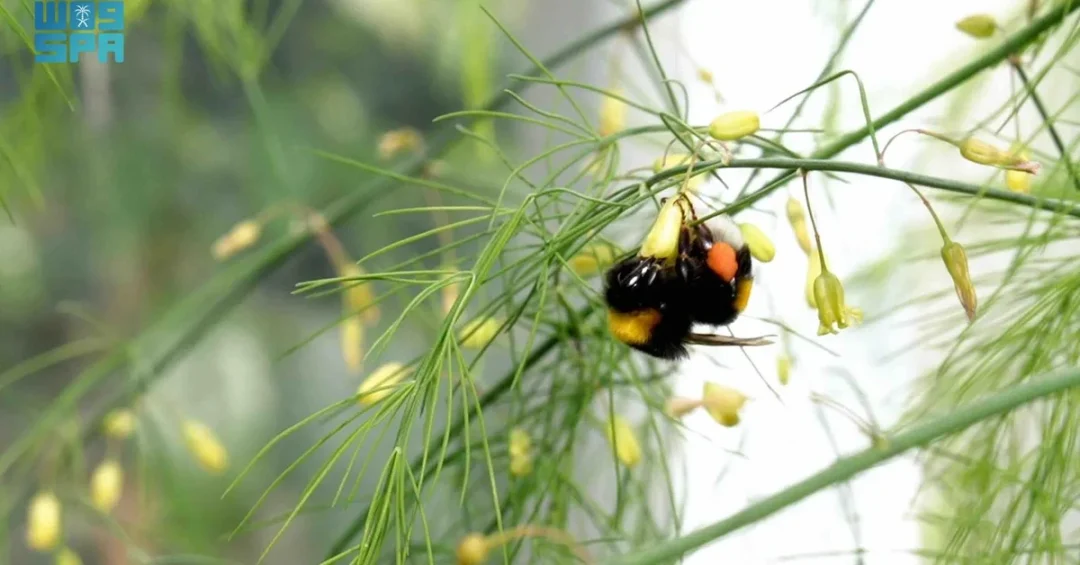
The National Research and Development Center for Sustainable Agriculture (Estidamah) has achieved a significant milestone in localizing the cultivation and production of asparagus within greenhouses, according to an announcement carried by the Saudi Press Agency. The breakthrough, reported from Riyadh on November 17, 2024, marks a notable step forward in the Kingdom’s efforts to strengthen food security, diversify domestic agriculture, and reduce reliance on imported produce. Could this development reshape how Saudi Arabia approaches high-value vegetable farming in the years ahead?
The achievement reflects a broader national push to harness research-driven innovation in agriculture, a sector identified as a strategic priority under Saudi Vision 2030 and the National Agriculture Strategy. By demonstrating that asparagus can be grown productively in controlled greenhouse environments, Estidamah has opened the door to year-round domestic supply of a crop long associated with seasonal, open-field cultivation. The center’s work underscores how targeted research and development can deliver practical solutions to some of the Kingdom’s most pressing food security challenges, while also creating new opportunities for farmers, investors, and the hospitality industry.
Context and Background
Why does a single vegetable crop matter so much to a nation of more than 35 million people? The answer lies in Saudi Arabia’s long-standing dependence on food imports, a reality shaped by the Kingdom’s arid climate, limited arable land, and scarce freshwater resources. Asparagus, a nutrient-dense vegetable prized in international cuisine, has historically been imported in large volumes to meet domestic demand. According to official figures cited by the Saudi Press Agency, annual asparagus imports currently stand at around 340,000 tons, a figure that represents both a significant economic outflow and a vulnerability in the national food supply chain.
Estidamah, formally known as the National Research and Development Center for Sustainable Agriculture, was established to address precisely these kinds of challenges. The center focuses on applied research that can be translated into commercial-scale agricultural solutions, with a particular emphasis on water-efficient and climate-appropriate technologies. Its work on asparagus is part of a wider portfolio that includes protected agriculture, integrated pest management, and the development of crop varieties suited to the Kingdom’s environmental conditions. The center operates under the umbrella of Saudi Arabia’s national agricultural research framework, which is aligned with the objectives of Vision 2030 to build a resilient, sustainable, and diversified economy.
The timing of this breakthrough is significant. Saudi Arabia has been investing heavily in agricultural technology and innovation as part of its efforts to enhance self-sufficiency in strategic food items. The National Agriculture Strategy, launched to modernize the sector, sets out ambitious targets for sustainable production, improved efficiency, and reduced waste. In this context, the successful greenhouse cultivation of asparagus represents more than a scientific curiosity; it is a practical demonstration of how the Kingdom can leverage research to tackle import dependency and create new value chains within its own borders.
Key Details of the Breakthrough
What exactly has Estidamah accomplished, and why is it considered a milestone? The center has demonstrated the feasibility of cultivating asparagus within greenhouse environments on a year-round basis, in contrast to the traditional open-field method that typically yields a single harvest season. This shift from seasonal to continuous production is a fundamental change in how the crop can be supplied to domestic markets. Preliminary studies conducted by Estidamah suggest an annual yield of approximately 700 grams per square meter, a figure that provides a baseline for scaling up production and assessing commercial viability.
Beyond the yield data, the research highlights two additional advantages that make asparagus an attractive candidate for localization. First, the crop is known for its high nutritional value, containing essential vitamins, minerals, and dietary fiber, which aligns with national health and wellness goals. Second, asparagus exhibits a notable tolerance for saline conditions, making it suitable for cultivation in areas where water quality or soil salinity might otherwise limit agricultural options. This salt tolerance is particularly relevant in Saudi Arabia, where sustainable use of marginal water resources is a constant priority.
Estidamah has also explored the integration of asparagus into intercropping systems with fruit trees. This approach maximizes land use efficiency by allowing two crops to be grown on the same plot, potentially increasing overall farm productivity without expanding the agricultural footprint. For Saudi farmers, especially those managing date palm or citrus orchards, intercropping with asparagus could offer an additional income stream while making better use of available land and resources. The center’s findings therefore extend beyond a single crop, offering a model for diversified and intensive agricultural systems.
International and Regional Impact
How might this development resonate beyond Saudi Arabia’s borders? The Kingdom’s progress in localizing asparagus production carries implications for regional food trade and agricultural cooperation. As one of the largest food importers in the Middle East, Saudi Arabia’s efforts to reduce dependence on external suppliers can influence market dynamics across the Gulf and the broader region. A successful domestic asparagus industry could eventually lead to knowledge sharing with neighboring countries facing similar climate and resource constraints, reinforcing Saudi Arabia’s role as a leader in sustainable agriculture in arid environments.
On the international stage, the breakthrough adds to the Kingdom’s growing reputation as an innovator in agricultural technology. Global interest in controlled-environment agriculture is rising, driven by climate change, water scarcity, and the need for resilient food systems. By demonstrating practical results with a high-value crop like asparagus, Estidamah contributes to the global knowledge base on greenhouse cultivation and saline-tolerant crops. This aligns with Saudi Arabia’s wider diplomatic and economic engagement, where science and technology cooperation features prominently in bilateral and multilateral relationships.
Furthermore, the potential to supply the tourism and hospitality sectors with locally grown asparagus is noteworthy. Saudi Arabia is rapidly expanding its tourism offering, with ambitious projects such as NEOM, the Red Sea, and Diriyah Gate expected to host millions of visitors in the coming years. These developments will drive demand for premium fresh produce, including asparagus, which is a staple in fine dining. Domestic production can meet this demand with fresher, lower-carbon-footprint ingredients, enhancing the visitor experience while supporting local farmers.
Economic and Strategic Significance
What does the localization of asparagus mean for Saudi Arabia’s economy and strategic goals? At a fundamental level, reducing imports of a commodity that currently totals around 340,000 tons annually can yield substantial savings in foreign exchange and improve the trade balance. While asparagus is not among the Kingdom’s largest import categories, the principle of substituting high-value imports with domestic production is central to the economic diversification agenda. Every step toward self-sufficiency in food items contributes to a more resilient economy less exposed to global supply chain disruptions.
The strategic significance extends to job creation and rural development. Establishing a domestic asparagus industry would require skilled labor in greenhouse management, harvesting, processing, and distribution. It could also stimulate investment in supporting infrastructure, such as cold storage and logistics, particularly in agricultural regions targeted for development under Vision 2030. For Saudi youth and entrepreneurs, the emerging sector offers opportunities to participate in a modern, technology-driven agricultural economy, in line with the goals of the Human Capability Development Program.
From a resource management perspective, greenhouse cultivation of asparagus aligns with the Kingdom’s emphasis on water efficiency. Protected agriculture allows for precise irrigation and reduced evaporation, making it possible to grow crops with less water than traditional open-field methods. Given that agriculture accounts for a significant share of national water consumption, innovations that lower water intensity are strategically vital. Estidamah’s work therefore supports the broader objective of sustainable resource use, ensuring that agricultural growth does not come at the expense of the Kingdom’s precious water reserves.
Vision 2030 Alignment
How does a greenhouse asparagus project connect to the grand ambitions of Saudi Vision 2030? The Vision, launched in 2016 under the leadership of Crown Prince Mohammed bin Salman, seeks to transform the Kingdom’s economy and society by reducing oil dependence, diversifying income sources, and improving quality of life. Food security is an integral part of this transformation, as it underpins economic stability and public well-being. The National Agriculture Strategy, which guides sector development, explicitly aims to enhance sustainability and ensure reliable access to food. Estidamah’s breakthrough is a concrete example of how research and innovation can advance these national priorities.
Looking ahead, the localization of asparagus cultivation could serve as a blueprint for other high-value crops, demonstrating a repeatable model for reducing import reliance through science-based agriculture. As Saudi Arabia continues to invest in agricultural research and development, and as the tourism and hospitality sectors expand, the demand for locally produced, premium-quality food will only grow. The Kingdom’s ability to meet that demand through sustainable, homegrown solutions will be a measure of its success in building a diversified and resilient future. In this way, a humble vegetable like asparagus becomes part of a much larger story: Saudi Arabia’s journey toward a prosperous, food-secure, and globally engaged nation.
20 Questions
Q1. What is Estidamah?
A1. Estidamah is the National Research and Development Center for Sustainable Agriculture in Saudi Arabia. It focuses on applied research to develop sustainable farming solutions suited to the Kingdom’s climate and resources.
Q2. What breakthrough has Estidamah achieved?
A2. Estidamah has successfully demonstrated the cultivation and production of asparagus within greenhouses, enabling year-round local production instead of the traditional single-season open-field method.
Q3. Why is asparagus cultivation important for Saudi Arabia?
A3. Asparagus is highly nutritious and currently imported in large quantities. Local production can reduce import reliance, enhance food security, and support the tourism and hospitality sectors.
Q4. How much asparagus does Saudi Arabia currently import?
A4. According to official figures, annual asparagus imports are approximately 340,000 tons, representing a significant economic outflow and a supply chain vulnerability.
Q5. What is the expected yield of greenhouse-grown asparagus?
A5. Preliminary studies by Estidamah suggest an annual yield of approximately 700 grams per square meter, providing a baseline for assessing commercial viability.
Q6. What advantages does asparagus have as a crop?
A6. Asparagus is rich in vitamins, minerals, and fiber. It also exhibits high salt tolerance, making it suitable for areas with saline water or soil conditions.
Q7. Can asparagus be grown alongside other crops?
A7. Yes, asparagus can be integrated into intercropping systems with fruit trees, maximizing land use efficiency and potentially providing additional income for farmers.
Q8. How does this breakthrough support Saudi food security?
A8. By enabling domestic production, it reduces dependence on imports, strengthens supply chain resilience, and contributes to a stable, self-reliant food system.
Q9. What is the National Agriculture Strategy?
A9. It is Saudi Arabia’s strategic framework to modernize agriculture, enhance sustainability, improve efficiency, and ensure food security in line with Vision 2030.
Q10. How does greenhouse cultivation save water?
A10. Greenhouses allow for precise irrigation and reduced evaporation, enabling crops to be grown with less water than traditional open-field methods.
Q11. What role does Estidamah play in Vision 2030?
A11. Estidamah advances agricultural innovation that supports economic diversification, food security, and sustainable resource use, all core objectives of Vision 2030.
Q12. How might this benefit the tourism sector?
A12. Locally grown asparagus can supply hotels and restaurants with fresh, premium produce, enhancing the culinary experience for visitors and reducing reliance on imports.
Q13. Will this create jobs in Saudi Arabia?
A13. Yes, establishing a domestic asparagus industry could generate employment in greenhouse management, harvesting, processing, and distribution, offering opportunities for Saudi youth.
Q14. What is intercropping?
A14. Intercropping is the practice of growing two or more crops on the same land simultaneously. It improves land productivity and can diversify farm income.
Q15. Is asparagus suitable for Saudi Arabia’s climate?
A15. With greenhouse technology and its natural salt tolerance, asparagus can be cultivated successfully in the Kingdom’s arid environment.
Q16. What are the next steps for Estidamah?
A16. Further research and scaling up are expected to refine cultivation techniques, assess commercial feasibility, and encourage adoption by local farmers and investors.
Q17. How does this align with the Kingdom’s economic diversification?
A17. Reducing imports and building local value chains contribute to a more diversified economy, less dependent on oil and more resilient to global market shifts.
Q18. What other crops could benefit from similar research?
A18. The model could be applied to other high-value, imported crops, demonstrating a repeatable approach to localizing production through science-based agriculture.
Q19. Who announced this achievement?
A19. The achievement was announced by the Saudi Press Agency, citing Estidamah, the National Research and Development Center for Sustainable Agriculture.
Q20. What does this mean for Saudi Arabia’s global standing?
A20. It reinforces the Kingdom’s reputation as an innovator in sustainable agriculture, particularly in arid environments, and strengthens its role in global food security discussions.
Reader Feedback
We value your thoughts. Please share your feedback on this article.
Your feedback helps us improve our coverage.
Related articles
 Saudi DGA Launches Platforms Code to Unify Digital Identity
 Absher Processes Over 6.3 Million Transactions in October 2024
 KAUST Leads Aquaculture Research for Saudi Food Security
 Alswaha: Saudi Youth Success Stories Boost Competitiveness
 SDAIA: Global AI Spending Tops $120 Billion in 2023
 Ithra Prepares Four Saudi Teams for F1 in Schools World Finals