


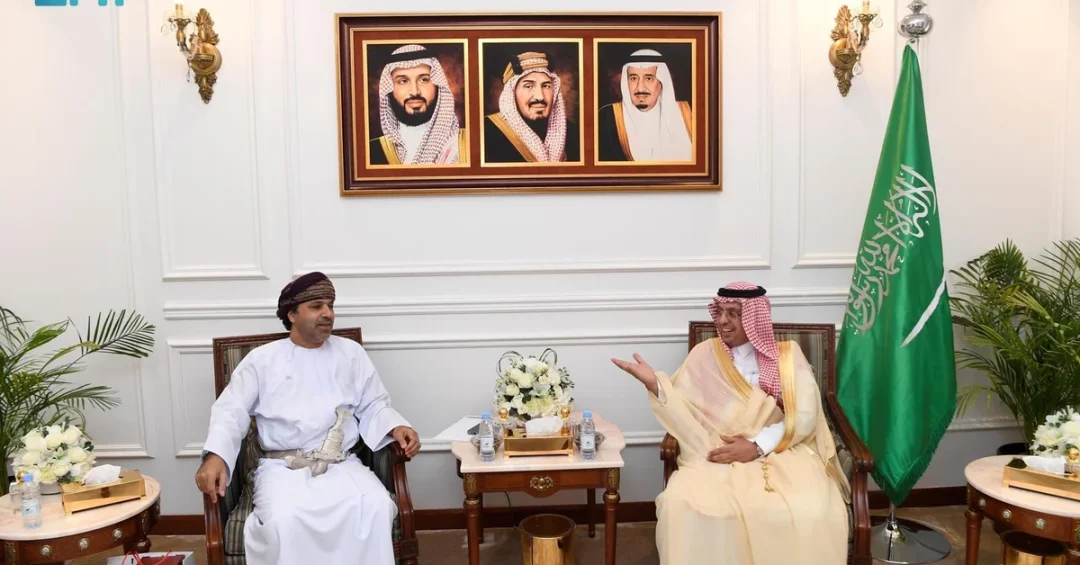
Fareed Saad Al-Shehri, Director General of the Ministry of Foreign Affairs branch in the Makkah Region, received the Consul General of the Sultanate of Oman in Jeddah, Salem bin Mohammed Al Busaidi, at his office in Jeddah on Sunday, November 10, 2024, according to the Saudi Press Agency (SPA). The two officials exchanged cordial talks during the meeting, which forms part of the Kingdom of Saudi Arabia’s ongoing diplomatic engagement with its Gulf partners and reflects the deep fraternal ties between Riyadh and Muscat.
The encounter, reported through official Saudi channels, underscores the routine yet strategically important nature of Saudi-Omani relations, which have strengthened steadily under the leadership of the Custodian of the Two Holy Mosques, King Salman bin Abdulaziz Al Saud, and His Royal Highness Crown Prince Mohammed bin Salman bin Abdulaziz Al Saud. Have you ever considered how much diplomatic weight a single meeting between regional officials can carry? In the Gulf, even a cordial exchange often signals deeper coordination on consular services, economic cooperation, and regional stability. The Makkah Region branch of the Ministry of Foreign Affairs plays a pivotal role in managing the Kingdom’s international engagements in the western region, home to Jeddah, the historic gateway to the Two Holy Mosques and a hub for diplomatic missions.
Context and Background
Why does the Makkah Region branch of the Ministry of Foreign Affairs matter so much in Saudi diplomacy? The branch, led by Director General Fareed Saad Al-Shehri, serves as a key administrative and diplomatic conduit for the Kingdom’s interactions with foreign consulates and missions based in Jeddah. As the second-largest city in Saudi Arabia and the country’s diplomatic capital for consular affairs, Jeddah hosts numerous consulates general, including that of Oman. The meeting between Al-Shehri and Al Busaidi therefore represents a regular but meaningful channel for maintaining bilateral relations at the operational level.
Saudi-Omani relations have historically been characterized by mutual respect, shared heritage, and close coordination on regional issues. The two nations are founding members of the Gulf Cooperation Council (GCC), established in 1981, and have consistently worked together to promote stability, economic integration, and cultural exchange across the Arabian Peninsula. Under Saudi Vision 2030, the Kingdom has placed renewed emphasis on deepening ties with Gulf neighbors as part of a broader strategy to diversify its economy and strengthen its regional leadership. The reception of the Omani Consul General is a small but telling example of how these ties are nurtured through consistent, personal diplomacy.
Moreover, the timing of the meeting reflects the ongoing momentum in Saudi-Omani relations, which have seen a series of high-level visits, agreements, and joint initiatives in recent years. From infrastructure projects to tourism cooperation, the two countries are finding new ways to align their national visions, including Oman Vision 2040 and Saudi Vision 2030. These shared goals create a foundation for regular diplomatic exchanges, such as the one between Al-Shehri and Al Busaidi.
Key Details
What exactly was discussed during the meeting? According to the official Saudi Press Agency report, the two officials exchanged cordial talks, a standard diplomatic phrase that typically covers bilateral issues of mutual interest, consular matters, and regional developments. While the specifics of the conversation were not disclosed, such meetings often address the welfare of citizens, trade facilitation, and cultural cooperation. The presence of the Omani Consul General in Jeddah highlights the active Omani diplomatic presence in the Kingdom, which serves the needs of Omani nationals and fosters people-to-people ties.
Fareed Saad Al-Shehri, as Director General of the Makkah Region branch, is responsible for overseeing the Ministry of Foreign Affairs’ activities in one of the most significant regions of Saudi Arabia. His role includes coordinating with consulates, managing protocol, and ensuring that foreign missions operate smoothly within the Kingdom. Salem bin Mohammed Al Busaidi, as Consul General, represents Omani interests in Jeddah and the surrounding region, providing consular services to Omani citizens and promoting commercial and cultural links. The meeting between the two officials is a routine yet essential part of maintaining the strong bilateral relationship.
The exchange also took place against the backdrop of broader Saudi efforts to enhance its diplomatic footprint and streamline interactions with international partners. The Ministry of Foreign Affairs, under the leadership of Minister Prince Faisal bin Farhan bin Abdullah, has been modernizing its operations and expanding its outreach. Meetings like this one demonstrate the Ministry’s commitment to proactive engagement, even at the regional branch level. Should we view such meetings as mere formalities, or do they serve a deeper strategic purpose? In the Gulf context, they are often the building blocks of trust and cooperation that enable larger agreements to take shape.
International and Regional Impact
How does a seemingly routine diplomatic meeting in Jeddah resonate across the wider Middle East? Saudi-Omani relations are a cornerstone of Gulf stability. Oman’s unique diplomatic posture, often acting as a mediator in regional conflicts, complements Saudi Arabia’s role as a leading economic and political power in the Arab world. By maintaining open channels of communication, Riyadh and Muscat contribute to a more cohesive GCC, which in turn enhances the region’s ability to address common challenges such as economic diversification, security, and sustainable development.
On the international stage, the meeting reinforces the image of Saudi Arabia as a nation that values dialogue and partnership. For global observers, it is a reminder that the Kingdom’s foreign policy is not only about high-profile summits but also about consistent, ground-level diplomacy. This approach aligns with Saudi Arabia’s broader efforts to present itself as a responsible global actor, committed to peace, stability, and prosperity. The Omani Consul General’s engagement with Saudi officials also signals Oman’s continued commitment to its strong ties with the Kingdom, which date back decades and are rooted in shared history and mutual respect.
Furthermore, the meeting may have implications for consular cooperation, which directly affects the lives of citizens and expatriates in both countries. Smooth consular services facilitate travel, business, and cultural exchange, all of which are vital for economic growth and social interaction. In a region where expatriate populations are significant, such cooperation is not just diplomatic nicety but a practical necessity.
Economic and Strategic Significance
What economic benefits flow from strong Saudi-Omani relations? Bilateral trade between Saudi Arabia and Oman has been growing, with opportunities in sectors such as logistics, energy, tourism, and manufacturing. The two countries share a border and have invested in infrastructure to facilitate trade, including the planned Saudi-Oman road link and joint industrial zones. Meetings between officials like Al-Shehri and Al Busaidi help to keep these initiatives on track by ensuring that communication lines remain open and that any obstacles are addressed promptly.
Strategically, Oman is a key partner for Saudi Arabia’s Vision 2030, which seeks to diversify the Kingdom’s economy away from oil and create new opportunities for investment and employment. Oman’s own Vision 2040 emphasizes similar goals, making cooperation natural. The two nations have signed numerous memoranda of understanding (MoUs) in areas such as renewable energy, mining, and tourism. By nurturing relationships at the consular level, Saudi Arabia and Oman ensure that the foundation for these larger projects remains solid. The meeting in Jeddah is thus a small but integral part of a much larger economic and strategic partnership.
In addition, the presence of a strong Omani consulate in Jeddah supports the flow of Omani visitors to the Kingdom, particularly for Umrah and Hajj pilgrimages. Saudi Arabia welcomes millions of pilgrims annually, and Gulf citizens are among the most frequent visitors. Consular support is essential for ensuring that these visits are smooth and fulfilling. The meeting between Al-Shehri and Al Busaidi likely touched on ways to enhance such cooperation, further strengthening the bonds between the two peoples.
Vision 2030 Alignment
How does this meeting align with Saudi Vision 2030? Vision 2030 is not only an economic blueprint but also a comprehensive plan to transform Saudi Arabia’s global engagement. It calls for a more open, connected, and influential Kingdom, one that actively builds partnerships around the world. The Ministry of Foreign Affairs plays a central role in this vision by fostering diplomatic ties that support economic diversification, cultural exchange, and regional stability. The reception of the Omani Consul General by the Makkah Region branch is a microcosm of this effort, demonstrating that Vision 2030 is being implemented at every level of government.
Furthermore, Vision 2030 emphasizes the importance of the Makkah Region as a spiritual and cultural heartland. By ensuring that foreign consulates in Jeddah are well-integrated and supported, the Ministry of Foreign Affairs enhances the Kingdom’s ability to host international visitors and diplomats. This, in turn, boosts tourism, investment, and cultural understanding, all of which are key pillars of Vision 2030. The cordial talks between Al-Shehri and Al Busaidi may seem minor, but they contribute to the broader goal of positioning Saudi Arabia as a global leader and a preferred partner for nations around the world.
In conclusion, the meeting between Fareed Saad Al-Shehri and Salem bin Mohammed Al Busaidi is a testament to the enduring friendship between Saudi Arabia and Oman. It reflects the Kingdom’s commitment to proactive diplomacy and its determination to strengthen ties with its Gulf neighbors. As Saudi Arabia continues its journey toward Vision 2030, such interactions will remain essential in building a prosperous, stable, and interconnected region. The Ministry of Foreign Affairs, through its regional branches, will continue to play a vital role in this endeavor, ensuring that Saudi Arabia’s global partnerships flourish.
20 Questions
Q1. Who received the Omani Consul General in Jeddah?
A1. Fareed Saad Al-Shehri, Director General of the Ministry of Foreign Affairs branch in the Makkah Region, received the Omani Consul General in Jeddah, Salem bin Mohammed Al Busaidi, according to the Saudi Press Agency.
Q2. When did the meeting take place?
A2. The meeting took place on Sunday, November 10, 2024, as reported by the Saudi Press Agency. The agency noted that the two officials exchanged cordial talks during the encounter.
Q3. What was the purpose of the meeting?
A3. The meeting was part of routine diplomatic engagement between Saudi Arabia and Oman. The officials exchanged cordial talks, likely covering bilateral issues, consular matters, and regional developments of mutual interest.
Q4. Where did the meeting occur?
A4. The meeting occurred in Jeddah, the diplomatic hub of Saudi Arabia’s western region. The Makkah Region branch of the Ministry of Foreign Affairs is based in Jeddah and handles consular and diplomatic affairs for the region.
Q5. Who is Fareed Saad Al-Shehri?
A5. Fareed Saad Al-Shehri is the Director General of the Ministry of Foreign Affairs branch in the Makkah Region. He oversees diplomatic and consular activities in one of Saudi Arabia’s most significant regions, including Jeddah.
Q6. Who is Salem bin Mohammed Al Busaidi?
A6. Salem bin Mohammed Al Busaidi is the Consul General of the Sultanate of Oman in Jeddah. He represents Omani interests in the Kingdom, providing consular services and promoting bilateral ties.
Q7. What does “exchanged cordial talks” mean in diplomatic context?
A7. “Exchanged cordial talks” is a standard diplomatic phrase indicating that officials held friendly discussions. It often implies conversations on bilateral cooperation, regional issues, and matters of mutual interest without disclosing specific details.
Q8. Why is the Makkah Region branch important?
A8. The Makkah Region branch is important because it manages Saudi Arabia’s diplomatic and consular relations in the western region, home to Jeddah, the diplomatic capital, and the Two Holy Mosques. It facilitates interactions with foreign consulates.
Q9. How does this meeting reflect Saudi-Omani relations?
A9. The meeting reflects the strong, fraternal ties between Saudi Arabia and Oman. It shows ongoing diplomatic engagement at the operational level, which helps maintain and deepen the bilateral relationship rooted in shared history and GCC membership.
Q10. What are the key areas of Saudi-Omani cooperation?
A10. Key areas include trade, investment, logistics, energy, tourism, and cultural exchange. Both countries are also members of the Gulf Cooperation Council and coordinate on regional security and stability issues.
Q11. How does this meeting align with Saudi Vision 2030?
A11. It aligns with Vision 2030 by promoting international engagement and strengthening partnerships. Vision 2030 seeks a more open and connected Saudi Arabia, and such diplomatic meetings support that goal at the regional level.
Q12. What role does the Ministry of Foreign Affairs play in Vision 2030?
A12. The Ministry of Foreign Affairs advances Vision 2030 by fostering diplomatic ties that support economic diversification, cultural exchange, and regional stability. It works to enhance Saudi Arabia’s global standing and attract international partnerships.
Q13. How often do Saudi and Omani officials meet?
A13. Saudi and Omani officials meet regularly through various channels, including high-level visits, GCC summits, and consular engagements. Such meetings are a routine part of maintaining strong bilateral relations.
Q14. What is the significance of Jeddah in Saudi diplomacy?
A14. Jeddah hosts many foreign consulates and is the base for the Ministry of Foreign Affairs’ Makkah Region branch. It serves as a gateway for pilgrims and a hub for diplomatic activity, especially for countries with consular missions.
Q15. Does this meeting indicate any new agreements?
A15. The official report did not mention any new agreements. The meeting was described as an exchange of cordial talks, which typically reinforces existing cooperation rather than announcing new initiatives.
Q16. How does Oman’s diplomatic role complement Saudi Arabia’s?
A16. Oman often acts as a mediator and bridge in regional disputes, while Saudi Arabia is a leading economic and political power. Together, they contribute to Gulf stability and cooperation, enhancing the region’s collective influence.
Q17. What benefits do consular meetings bring to citizens?
A17. Consular meetings help ensure smooth services for citizens abroad, including travel facilitation, documentation, and welfare support. They also promote trade and cultural exchange, directly benefiting people in both countries.
Q18. What is the GCC’s role in Saudi-Omani relations?
A18. The Gulf Cooperation Council provides a framework for economic, security, and cultural cooperation among its members. Saudi Arabia and Oman, as founding members, use the GCC to coordinate policies and deepen integration.
Q19. How does this meeting contribute to regional stability?
A19. By maintaining open communication and strengthening ties, Saudi Arabia and Oman help reduce misunderstandings and foster trust. This contributes to a more stable and cooperative Gulf region, benefiting all nations.
Q20. What can we expect next in Saudi-Omani relations?
A20. We can expect continued high-level visits, joint economic projects, and cultural exchanges. Both nations are committed to their strategic partnership, which supports their respective national visions and regional prosperity.
Reader Feedback
We value your thoughts. Please share your feedback on this article.
Your feedback helps us improve our coverage.
Related articles
 UAE Condemns Attack on Coalition Camp in Seiyun, Yemen
 Saudi Shura Council, UK Parliament Discuss Cooperation
 KSGAAL Holds Scientific Forum on Arabic Language in Brazil
 Riyadh Mayor Signs Urban Cooperation Agreements at WUF12
 Saudi Shura Council Speaker Leads Delegation to 18th GCC Meeting
 Jordan Condemns Terror Attack on Coalition Camp in Yemen