


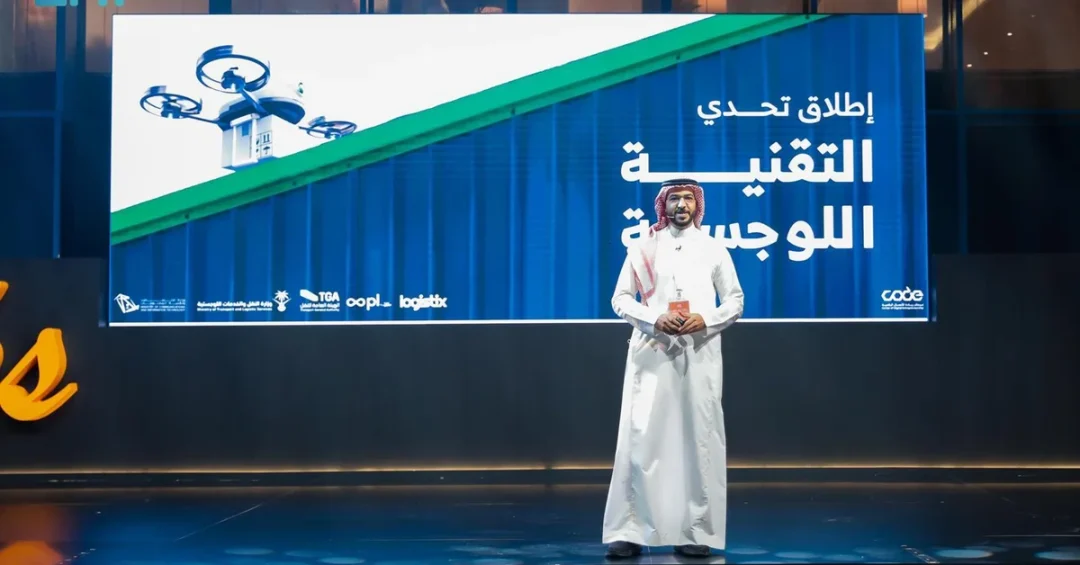
Saudi Arabia’s Center of Digital Entrepreneurship (CODE), operating under the Ministry of Communications and Information Technology, has launched the LogisTech Challenge in partnership with the Ministry of Transport and Logistic Services, the Transport General Authority, Infinite pl, and Logistics, inviting innovators to develop technological solutions that raise the efficiency and productivity of the Kingdom’s fast-growing logistics sector. Registration for the challenge opened on November 11, 2024, and will remain available until December 5, with the competition culminating on January 21, when finalists will present their projects before a panel of judges in Riyadh. Could this initiative become a defining moment for Saudi Arabia’s digital economy?
The LogisTech Challenge is designed for logistics technology enthusiasts, industry experts, and decision makers, and it forms part of a broader national effort to embed advanced technology across the supply chain, transport, and delivery industries that underpin Saudi Arabia’s position as a global trade and logistics hub. Announced through official Saudi channels, including the Saudi Press Agency, the initiative reflects the Kingdom’s commitment to nurturing local talent while accelerating the adoption of digital tools that serve businesses and consumers alike. Participants will follow a structured path from registration through acceptance, business model development, final selection, and a dedicated training bootcamp before the final presentation stage.
Context and Background
Why does the logistics sector matter so much to Saudi Arabia’s economic future? The Kingdom occupies a strategic position at the crossroads of three continents, and its leadership has long recognized that transport, freight, and supply chain services are essential enablers of trade, investment, and diversification. The National Industrial Development and Logistics Program, one of the executive programs of Vision 2030, was created precisely to transform Saudi Arabia into a leading industrial power and global logistics hub. By connecting ports on the Red Sea and the Arabian Gulf with rail networks, highways, airports, and industrial zones, the Kingdom aims to raise the logistics sector’s contribution to national output and create high-value jobs for a young and digitally capable population.
The Center of Digital Entrepreneurship was established to support exactly this kind of ambition. As an arm of the Ministry of Communications and Information Technology, CODE works to cultivate startups, scale digital businesses, and connect entrepreneurs with the resources they need to move from idea to market. The LogisTech Challenge extends that mission into a sector where innovation can produce measurable gains in fuel efficiency, delivery speed, warehouse management, and data visibility. The partnership with the Ministry of Transport and Logistic Services and the Transport General Authority ensures that the challenge is anchored in real regulatory and operational priorities rather than abstract concepts.
Infinite pl and Logistics bring private sector experience to the table, helping to ensure that the problems presented to participants reflect genuine industry bottlenecks. This collaboration between government and business is a hallmark of Saudi Arabia’s approach to modernization: public institutions set the strategic direction and provide enabling infrastructure, while companies and entrepreneurs deliver solutions at speed. For international observers, the LogisTech Challenge signals that the Kingdom is not only investing in physical infrastructure such as ports and railways but also in the intellectual capital and software layer that will make those assets smarter and more competitive.
Key Details
What exactly will participants be asked to build? The challenge focuses on three main tracks: fleet improvement and sustainability, alternative delivery and commerce solutions, and data-driven logistics intelligence. The first track invites innovations that reduce emissions, optimize routing, and improve the performance of commercial fleets. The second explores new models for delivering goods and enabling commerce, including approaches that serve e-commerce growth and last-mile delivery. The third track concentrates on analytics, artificial intelligence, and data platforms that give operators better visibility into supply chains and support faster, more informed decisions.
To empower participants, the LogisTech Challenge offers more than 20 training programs and mentoring sessions, equipping over 250 participants with the skills and guidance needed to refine their ideas and develop prototypes. This emphasis on capacity building distinguishes the initiative from a simple prize competition. Participants are not left to succeed or fail on their own; they receive structured support, access to expertise, and a pathway to test their concepts. The staged format, moving from acceptance to business model development, final selection, and a training bootcamp, mirrors the way successful startups are built in mature innovation ecosystems.
Registration is open until December 5, and interested individuals can sign up through the official portal at https://code.mcit.gov.sa/en/bootcamp/LogisTech-Challenge. The competition will culminate on January 21, when participants present their ideas and projects to a panel of judges. Winning projects that offer practical solutions to the sector’s challenges will be recognized in a final ceremony, giving founders visibility with investors, government entities, and potential corporate partners. For many young innovators, that recognition could be the beginning of a company rather than the end of a contest. Isn’t that precisely how a knowledge economy takes root?
International and Regional Impact
How will a national innovation challenge resonate beyond Saudi Arabia’s borders? Global logistics companies are watching the Kingdom closely because it sits on some of the world’s most important trade routes and is investing heavily in ports, airports, and special economic zones. Solutions developed through the LogisTech Challenge could eventually be exported or adapted to other markets in the Middle East, Africa, and Asia, where similar challenges around fleet efficiency, delivery density, and supply chain transparency exist. By inviting international best practice into its ecosystem while nurturing domestic talent, Saudi Arabia positions itself as a testbed for logistics technology rather than simply a consumer of it.
Regional integration is another dimension. Saudi Arabia’s transport and logistics authorities work with counterparts across the Gulf Cooperation Council to harmonize standards, streamline customs, and improve cross-border movement of goods. Innovations that emerge from the challenge, particularly in data-driven logistics intelligence, could support those efforts by making cross-border operations more predictable and transparent. For international businesses, a more efficient Saudi logistics sector means faster delivery times, lower costs, and a more attractive environment for regional distribution centers. The LogisTech Challenge therefore contributes to a virtuous cycle in which domestic innovation strengthens the Kingdom’s appeal as a global logistics gateway.
Economic and Strategic Significance
Why should economists and investors take note of a competition aimed at startups and students? Because logistics is one of the largest and most strategic sectors in any modern economy, and small improvements in efficiency compound across millions of shipments. Saudi Arabia’s Vision 2030 goals include increasing the private sector’s contribution to GDP, boosting non-oil exports, and creating jobs for citizens. A logistics sector powered by better software, cleaner fleets, and smarter delivery models directly supports all three objectives. It also strengthens the resilience of supply chains, a priority that has become more urgent for governments and companies worldwide since global disruptions exposed the fragility of just-in-time systems.
The involvement of the Ministry of Communications and Information Technology through CODE also signals that digital entrepreneurship is now a core pillar of economic policy. The Kingdom has invested in cloud computing, artificial intelligence, and digital infrastructure, and it wants Saudi founders to build companies that use these platforms to solve local and regional problems. The LogisTech Challenge is a practical expression of that intent: it connects policy ambition with the energy of entrepreneurs and the operational knowledge of established logistics players. Over time, successful participants could attract venture capital, form partnerships with major transport firms, and scale into markets across the region, multiplying the initial investment many times over.
There is also a human capital story here. More than 250 participants will receive training and mentoring, and many more will follow the competition online. That exposure builds skills in business modeling, product development, and pitching, which are valuable far beyond the logistics sector. For a young population entering the workforce, such programs offer a realistic route into technology careers and entrepreneurship. Doesn’t that make the challenge an investment in people as much as in technology?
Vision 2030 Alignment
How does the LogisTech Challenge fit into the larger story of Saudi Arabia’s transformation? Vision 2030 seeks to diversify the economy, modernize public services, and create a vibrant society in which opportunity is broadly shared. The logistics sector is explicitly identified as a growth engine, and the Kingdom has set ambitious targets for its contribution to non-oil GDP, for the volume of freight handled, and for its ranking in international logistics performance indices. The challenge supports these targets by generating homegrown solutions, fostering collaboration between government and industry, and building a pipeline of skilled professionals who understand both technology and transport operations.
Just as importantly, the initiative reflects the leadership’s emphasis on empowering young people and entrepreneurs. By giving participants access to training, mentors, and a platform to present their ideas, CODE and its partners are nurturing a culture of innovation that extends across the economy. The winners recognized on January 21 will join a growing community of Saudi founders whose work contributes to the Kingdom’s global competitiveness. As Saudi Arabia continues to invest in ports, railways, airports, and digital networks, the LogisTech Challenge ensures that the human and technological layers of that infrastructure advance in parallel, reinforcing the Kingdom’s role as a connector of continents and a hub of the digital economy.
20 Questions
Q1. What is the LogisTech Challenge?
A1. The LogisTech Challenge is an innovation competition launched by the Center of Digital Entrepreneurship under the Ministry of Communications and Information Technology, in partnership with transport authorities and private companies, to develop technological solutions that improve logistics efficiency and productivity in Saudi Arabia.
Q2. When did registration for the challenge open and close?
A2. Registration opened on November 11, 2024, and closes on December 5, 2024. Interested individuals can register through the official CODE portal at the link provided by the Ministry of Communications and Information Technology.
Q3. Which organizations partnered to launch the LogisTech Challenge?
A3. The challenge was launched by CODE in partnership with the Ministry of Transport and Logistic Services, the Transport General Authority, Infinite pl, and Logistics, bringing together government and private sector expertise to support innovation.
Q4. Who is eligible to participate in the challenge?
A4. The challenge is open to logistics technology enthusiasts, experts, and industry decision makers. It welcomes individuals with ideas and projects that can address real challenges in the logistics sector.
Q5. What are the three main tracks of the challenge?
A5. The three tracks are fleet improvement and sustainability, alternative delivery and commerce solutions, and data-driven logistics intelligence. Each track targets specific opportunities to enhance efficiency, reduce emissions, and improve decision-making.
Q6. What stages will participants go through?
A6. Participants will progress through registration, acceptance, business model development, final selection, and a training bootcamp before presenting their projects to a panel of judges on January 21.
Q7. How many training programs and mentoring sessions are offered?
A7. The challenge offers more than 20 training programs and mentoring sessions, equipping over 250 participants with skills and guidance to refine their ideas and develop prototypes for the final presentation.
Q8. When will the competition culminate?
A8. The competition will culminate on January 21, when participants present their ideas and projects to a panel of judges. Winning projects will be recognized in a final ceremony.
Q9. What kind of solutions are expected from participants?
A9. Participants are expected to develop practical technological solutions that address sector challenges, such as fleet optimization, sustainable delivery methods, and data-driven logistics intelligence that improves supply chain visibility and performance.
Q10. How does the challenge support Saudi Arabia’s digital economy?
A10. By fostering innovation and supporting new technological solutions, the challenge enhances logistics efficiency and productivity, which drives growth in the digital economy and creates opportunities for startups and entrepreneurs across the Kingdom.
Q11. What role does CODE play in the initiative?
A11. The Center of Digital Entrepreneurship, part of the Ministry of Communications and Information Technology, organizes the challenge, provides training and mentoring, and connects participants with the resources needed to turn ideas into viable businesses.
Q12. Why is the logistics sector important to Vision 2030?
A12. Logistics is a key pillar of Vision 2030 because it supports trade, investment, and economic diversification. Improving the sector helps Saudi Arabia become a global logistics hub and raises its non-oil GDP contribution.
Q13. How does the challenge involve the private sector?
A13. Private partners such as Infinite pl and Logistics contribute industry expertise, helping to ensure that the problems addressed by participants reflect real operational challenges and market needs in the logistics sector.
Q14. What benefits do participants receive beyond competing?
A14. Participants gain access to over 20 training programs, mentoring sessions, business model development support, and the chance to present their projects to judges, investors, and industry leaders at the final ceremony.
Q15. How can interested individuals register?
A15. Interested individuals can register via the official link provided by the Ministry of Communications and Information Technology at https://code.mcit.gov.sa/en/bootcamp/LogisTech-Challenge before the December 5 deadline.
Q16. What happens to winning projects after the challenge?
A16. Winning projects that offer practical solutions will be recognized in a final ceremony, giving founders visibility with government entities, investors, and corporate partners who can help them scale their solutions.
Q17. How does the challenge reflect Saudi Arabia’s innovation strategy?
A17. It reflects the Kingdom’s strategy of investing in digital entrepreneurship, nurturing local talent, and building a knowledge economy where technology solves real sector challenges and supports sustainable economic growth.
Q18. What is the significance of the January 21 final event?
A18. The January 21 event is the culmination of the challenge, where participants present their ideas to judges. It marks the transition from training and development to recognition and potential commercialization of winning solutions.
Q19. How might the challenge impact international logistics?
A19. Innovations developed through the challenge could improve supply chain efficiency in Saudi Arabia and be adapted to other markets, strengthening the Kingdom’s role as a global logistics gateway and exporter of technology solutions.
Q20. What does the LogisTech Challenge say about Saudi Arabia’s future?
A20. It demonstrates Saudi Arabia’s commitment to empowering young innovators, advancing the digital economy, and achieving Vision 2030 goals by building a competitive, technology-driven logistics sector that connects the Kingdom to global markets.
Reader Feedback
We value your thoughts. Please share your feedback on this article.
Your feedback helps us improve our coverage.
Related articles
 SDAIA Showcases Data and AI Glossary at Jeddah Forum
 Estidamah Achieves Breakthrough in Local Asparagus Cultivation
 Saudi DGA Launches Platforms Code to Unify Digital Identity
 Absher Processes Over 6.3 Million Transactions in October 2024
 KAUST Leads Aquaculture Research for Saudi Food Security
 Alswaha: Saudi Youth Success Stories Boost Competitiveness