



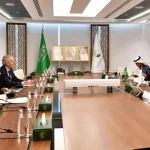
Arab Parliament Speaker Mohammed Ahmed Al Yamahi has reaffirmed the Arab Parliament’s commitment to deepening parliamentary relations with the National People’s Congress of the People’s Republic of China, calling for a joint parliamentary action plan to advance the outcomes of the First Arab-China Summit held in the Kingdom of Saudi Arabia in December 2022. The announcement, released through the Saudi Press Agency, came during a meeting in Cairo between Al Yamahi and Liao Liqiang, Ambassador of the People’s Republic of China to the Arab Republic of Egypt and Representative to the League of Arab States. The discussions underscored the growing institutional ties between Arab and Chinese legislative bodies and highlighted the pivotal role Saudi Arabia has played in convening the first-ever summit that brought Arab and Chinese leaders together on Saudi soil.
Released via official Saudi channels, the statement reflects a broader diplomatic momentum that has been building since the Riyadh summit, where Arab and Chinese leaders agreed to strengthen cooperation across political, economic, and cultural domains. Al Yamahi’s emphasis on formulating a structured parliamentary action plan signals a shift from symbolic diplomacy toward concrete legislative coordination. For international observers, the development matters because it demonstrates how the Kingdom’s convening power continues to shape multilateral frameworks that extend well beyond the Gulf region. What does this deepening parliamentary engagement mean for the future of Arab-Chinese relations, and how does Saudi Arabia’s role as a diplomatic bridge between regions continue to evolve?
Context and Background
What makes the timing of this parliamentary outreach particularly significant? The First Arab-China Summit, hosted in Riyadh in December 2022, marked a historic milestone in Arab-Chinese relations, establishing a comprehensive framework for cooperation between the League of Arab States and the People’s Republic of China. That summit produced a joint declaration outlining commitments to political coordination, economic partnership, and cultural exchange. Since then, follow-up mechanisms have been developed, including the China-Arab States Cooperation Forum hosted by China in May 2024, which further institutionalized the dialogue. The Arab Parliament, as the legislative body of the League of Arab States, is now positioned to translate those high-level commitments into actionable parliamentary initiatives.
The meeting between Al Yamahi and Ambassador Liao Liqiang in Cairo represents a deliberate step in that direction. By focusing on a joint parliamentary action plan, the Arab Parliament is seeking to create a durable mechanism for legislative dialogue, information sharing, and mutual understanding between Arab and Chinese lawmakers. This approach mirrors broader trends in international diplomacy where parliamentary exchanges complement executive-level agreements. Saudi Arabia’s role in initiating the summit process has been widely recognized, and the Kingdom’s continued support for Arab-Chinese cooperation aligns with its Vision 2030 objective of strengthening its global partnerships and enhancing its diplomatic influence.
The Arab Parliament has increasingly sought to play a proactive role in regional diplomacy, and its engagement with China reflects a strategic recognition of China’s growing economic and political footprint in the Middle East. As Arab nations diversify their international partnerships, parliamentary diplomacy offers a flexible and complementary channel for advancing shared interests. The emphasis on implementing summit outcomes through legislative coordination demonstrates a maturing relationship that seeks to move from declarations to deliverables.
Key Details
What specific commitments emerged from the Cairo meeting? According to the Saudi Press Agency, Speaker Al Yamahi stressed the Arab Parliament’s keenness to strengthen relations with the National People’s Congress in the coming phase, explicitly calling for the formulation of a joint parliamentary action plan. This plan would aim to contribute to the implementation of the outcomes of the First Arab-China Summit. The proposal suggests a structured approach that could include regular parliamentary exchanges, joint committees, and coordinated positions on issues of mutual concern. Ambassador Liao Liqiang affirmed the depth of Arab-Chinese relations at all levels, citing the Riyadh summit outcomes and the May 2024 China-Arab States Cooperation Forum as evidence of the relationship’s vitality.
During the meeting, Al Yamahi also praised China’s positions supporting the Palestinian cause and the legitimate rights of the Palestinian people, including the establishment of an independent state with Jerusalem as its capital. He commended China’s stances in international forums aimed at stopping aggression in Gaza and the occupied Palestinian territories. This alignment on the Palestinian issue reflects a longstanding area of consensus between Arab states and China, and it reinforces the political dimension of the parliamentary dialogue. The Chinese ambassador’s acknowledgment of these shared positions indicates a mutual willingness to coordinate on regional matters.
The meeting in Cairo also highlights the role of Egypt as a diplomatic hub, with the Chinese ambassador to Egypt also serving as representative to the League of Arab States. This dual role facilitates direct communication between China and Arab institutions, streamlining dialogue and follow-up. The Arab Parliament’s engagement with the Chinese ambassador underscores its commitment to maintaining active channels with major international partners.
International and Regional Impact
How might this parliamentary initiative influence broader regional dynamics? The strengthening of Arab-Chinese parliamentary ties carries implications that extend beyond legislative chambers. It signals a continued consolidation of the Arab-Chinese partnership, which has been characterized by growing trade volumes, infrastructure investment, and political coordination. For Arab states, China represents a key economic partner and a counterbalance in a multipolar world. For China, the Arab world offers strategic access to energy resources, markets, and diplomatic support on global issues. The parliamentary dimension adds a layer of legitimacy and continuity to this relationship, ensuring that cooperation survives changes in executive leadership.
Regionally, the development reinforces Saudi Arabia’s position as a convenor and facilitator of multilateral dialogue. The Riyadh summit set the stage for ongoing engagement, and subsequent meetings like the one in Cairo demonstrate that the momentum has been sustained. This continuity is important for international audiences tracking Saudi Arabia’s diplomatic outreach. It also underscores the Kingdom’s ability to bridge diverse regions and foster partnerships that align with its own development goals.
From a geopolitical perspective, the Arab Parliament’s outreach to China reflects a broader trend of Arab nations diversifying their international alliances. While traditional partnerships remain important, the Arab world is actively cultivating ties with Asian powers. This diversification is not a zero-sum game but rather a strategic broadening of options. The parliamentary action plan, if implemented, could serve as a model for similar engagements with other regions, further enhancing the Arab world’s diplomatic flexibility.
Economic and Strategic Significance
What economic and strategic benefits could flow from enhanced parliamentary cooperation? Parliamentary exchanges often pave the way for economic agreements by building trust and understanding between legislators who must ratify or oversee such deals. A joint action plan between the Arab Parliament and the National People’s Congress could facilitate dialogue on trade, investment, and regulatory harmonization. Chinese investment in Arab infrastructure, technology, and renewable energy is already substantial, and parliamentary coordination could help streamline frameworks for these projects. For Saudi Arabia, which is pursuing Vision 2030 goals of economic diversification, stronger Arab-Chinese ties complement its own bilateral relationship with China, a major trading partner and investor.
Strategically, the parliamentary track offers a platform for discussing shared security concerns, including regional stability and counterterrorism. While the Cairo meeting focused on Palestinian issues and summit implementation, the establishment of a regular parliamentary dialogue could create space for broader strategic consultations. This aligns with Saudi Arabia’s interest in promoting regional stability and its vision of a peaceful, prosperous Middle East. The Kingdom’s role in fostering Arab-Chinese cooperation enhances its standing as a responsible global actor and a bridge between civilizations.
Furthermore, the emphasis on implementing summit outcomes through legislative action demonstrates a results-oriented approach. Arab and Chinese leaders have set ambitious goals for cooperation; parliaments can play a crucial role in translating those goals into laws, budgets, and oversight mechanisms. This practical dimension adds substance to the relationship and ensures that high-level declarations produce tangible benefits for citizens.
Vision 2030 Alignment
How does this development connect to Saudi Arabia’s Vision 2030? Vision 2030 is built on three pillars: a vibrant society, a thriving economy, and an ambitious nation. Saudi Arabia’s diplomatic engagement, including its role in hosting the First Arab-China Summit, directly supports the ambitious nation pillar by enhancing the Kingdom’s international influence and partnerships. The follow-on parliamentary cooperation between the Arab Parliament and China, facilitated by the groundwork laid in Riyadh, exemplifies how Saudi diplomacy creates lasting frameworks for multilateral collaboration. This aligns with Vision 2030’s goal of strengthening Saudi Arabia’s global standing and deepening its economic and political ties.
Moreover, the economic dimension of Arab-Chinese cooperation complements Vision 2030’s economic diversification objectives. As Saudi Arabia expands its non-oil sectors, partnerships with China in technology, renewable energy, and infrastructure become increasingly valuable. The parliamentary action plan could help create a more predictable and supportive environment for such investments. By continuing to play a central role in Arab-Chinese relations, Saudi Arabia reinforces its position as a pivotal player in the global economy and a catalyst for regional prosperity. The Kingdom’s leadership in convening the 2022 summit and its ongoing support for institutional follow-up demonstrate a long-term commitment to fostering partnerships that benefit the entire Arab world.
In conclusion, the Arab Parliament’s push to strengthen ties with China’s National People’s Congress represents a natural evolution of the historic Riyadh summit. As the joint parliamentary action plan takes shape, it will serve as another example of how Saudi Arabia’s Vision 2030 not only transforms the Kingdom domestically but also elevates its role as a global connector and a champion of constructive international engagement. What new opportunities will emerge as Arab and Chinese lawmakers work together to build a shared future?
20 Questions
Q1. What did Arab Parliament Speaker Mohammed Ahmed Al Yamahi emphasize regarding China?
A1. Al Yamahi stressed the Arab Parliament’s keenness to strengthen relations with China’s National People’s Congress in the coming phase, calling for a joint parliamentary action plan to implement the outcomes of the First Arab-China Summit held in Riyadh.
Q2. When and where did the First Arab-China Summit take place?
A2. The First Arab-China Summit was held in the Kingdom of Saudi Arabia in December 2022, marking a historic milestone in Arab-Chinese relations and establishing a comprehensive framework for cooperation.
Q3. Who did Al Yamahi meet in Cairo?
A3. Al Yamahi received Liao Liqiang, Ambassador of the People’s Republic of China to the Arab Republic of Egypt and Representative to the League of Arab States, in Cairo.
Q4. What did the Chinese ambassador affirm during the meeting?
A4. Ambassador Liao Liqiang affirmed the depth of Arab-Chinese relations at all levels, citing the outcomes of the Riyadh summit and the China-Arab States Cooperation Forum hosted by China in May 2024.
Q5. What is the proposed joint parliamentary action plan intended to achieve?
A5. The plan aims to contribute to the implementation of the outcomes of the First Arab-China Summit, creating a structured mechanism for legislative dialogue, information sharing, and mutual understanding between Arab and Chinese lawmakers.
Q6. How did Al Yamahi commend China’s positions on the Palestinian cause?
A6. Al Yamahi praised China’s support for the Palestinian cause and the legitimate rights of the Palestinian people, including the establishment of an independent state with Jerusalem as its capital.
Q7. What role did Saudi Arabia play in the Arab-China Summit?
A7. Saudi Arabia hosted the First Arab-China Summit in Riyadh in December 2022, demonstrating its convening power and commitment to fostering multilateral dialogue between Arab states and China.
Q8. What is the China-Arab States Cooperation Forum?
A8. The China-Arab States Cooperation Forum is a platform hosted by China in May 2024 that further institutionalized dialogue and cooperation between Arab states and China, building on the Riyadh summit outcomes.
Q9. Why is parliamentary diplomacy important in Arab-Chinese relations?
A9. Parliamentary diplomacy adds legitimacy and continuity to international relationships, complementing executive-level agreements and ensuring that cooperation survives changes in leadership while fostering legislative coordination.
Q10. How does this development align with Saudi Arabia’s Vision 2030?
A10. It supports Vision 2030’s ambitious nation pillar by enhancing Saudi Arabia’s international influence and partnerships, and complements economic diversification goals through stronger Arab-Chinese cooperation.
Q11. What economic benefits could arise from enhanced Arab-Chinese parliamentary ties?
A11. Parliamentary exchanges can facilitate dialogue on trade, investment, and regulatory harmonization, potentially streamlining frameworks for Chinese investment in Arab infrastructure, technology, and renewable energy projects.
Q12. What was the significance of the May 2024 China-Arab States Cooperation Forum?
A12. The forum further institutionalized Arab-Chinese dialogue, reflecting the sustained momentum from the Riyadh summit and providing a platform for discussing shared priorities and cooperation mechanisms.
Q13. How does the Arab Parliament’s outreach to China reflect broader regional trends?
A13. It reflects a trend of Arab nations diversifying international partnerships, cultivating ties with Asian powers while maintaining traditional alliances, thereby enhancing diplomatic flexibility in a multipolar world.
Q14. What shared positions do Arab states and China hold on regional issues?
A14. Arab states and China share positions on supporting the Palestinian cause, including the establishment of an independent Palestinian state with Jerusalem as its capital, and on stopping aggression in Gaza.
Q15. What role does Egypt play in Arab-Chinese diplomatic engagement?
A15. Egypt serves as a diplomatic hub, with the Chinese ambassador to Egypt also representing China to the League of Arab States, facilitating direct communication between China and Arab institutions.
Q16. How might the joint parliamentary action plan be structured?
A16. While specific details are pending, the plan could include regular parliamentary exchanges, joint committees, and coordinated positions on issues of mutual concern, aiming to translate summit outcomes into legislative action.
Q17. What does the Arab Parliament’s engagement with China signal to the international community?
A17. It signals a maturing Arab-Chinese relationship focused on concrete deliverables, and reinforces Saudi Arabia’s role as a diplomatic bridge and facilitator of multilateral cooperation.
Q18. How does Saudi Arabia’s leadership in convening the summit benefit the Arab world?
A18. Saudi Arabia’s leadership provided a platform for collective Arab engagement with China, creating lasting frameworks for cooperation that benefit all Arab states economically, politically, and strategically.
Q19. What are the strategic implications of Arab-Chinese parliamentary cooperation for regional stability?
A19. It offers a platform for discussing shared security concerns, including regional stability and counterterrorism, aligning with Saudi Arabia’s interest in promoting a peaceful and prosperous Middle East.
Q20. What next steps are expected following the Cairo meeting?
A20. The Arab Parliament and Chinese representatives are expected to work on formulating the joint parliamentary action plan, with follow-up meetings and continued dialogue to implement the outcomes of the Riyadh summit.
Reader Feedback
We value your thoughts. Please share your feedback on this article.
Your feedback helps us improve our coverage.
Related articles
 Third Saudi International Maritime Forum Opens with Global Participation
 Saudi Environmental Security Forces Join Riyadh Airshow
 KSrelief Supervisor General Meets Bill Gates in Riyadh
 KSrelief Distributes Winter Aid in Yemen, Reaching 1,200
 KSrelief Delivers Winter Aid to 3,600 in Yemen’s Shabwah
 KSrelief Distributes Winter Clothing Vouchers in Lebanon