


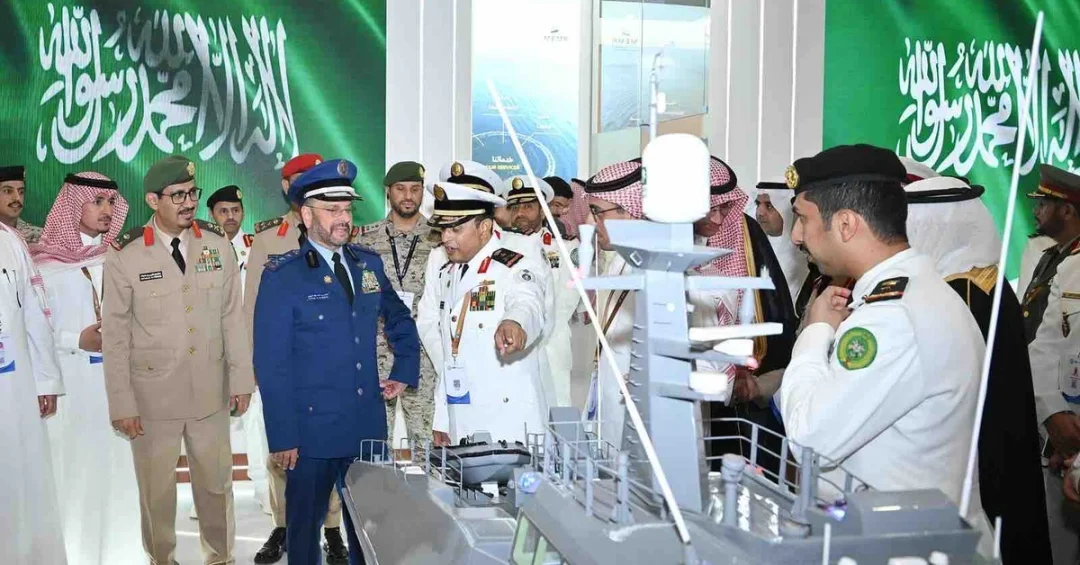
The Third Saudi International Maritime Forum opened in the Eastern Region on November 19, 2024, organized by the Royal Saudi Naval Forces under the patronage of Minister of Defense Prince Khalid bin Salman bin Abdulaziz, with the theme “Maritime Security in the Age of Artificial Intelligence – Trends and Threats.” The three-day gathering, announced via the Saudi Press Agency, brings together senior naval commanders, government officials, technology experts, and representatives of global maritime companies to examine how artificial intelligence is reshaping security at sea. Chief of the General Staff General Fayyadh Al-Ruwaili attended the opening, underscoring the Kingdom’s determination to lead international cooperation on maritime safety and innovation. Could a single forum in Dammam help set the agenda for maritime security across the world’s busiest shipping lanes?
The event reflects Saudi Arabia’s expanding role as a convening power in global security affairs. It also demonstrates how the Kingdom is pairing its traditional strengths in energy and logistics with advanced technologies such as artificial intelligence, cybersecurity, and autonomous systems. Under the theme chosen for this edition, participants are examining both the opportunities and the risks that AI introduces for navies, ports, and commercial fleets. The forum’s organizers say the goal is practical: to convert dialogue into deployable systems, shared standards, and stronger partnerships between governments and industry.
Context and Background
Why has maritime security become such a central concern for Saudi Arabia and its partners? The Kingdom sits astride some of the most strategically important waterways on the planet. The Red Sea, the Gulf of Aden, the Bab al-Mandab Strait, and the Strait of Hormuz together carry a substantial share of global energy exports and container traffic. Any disruption to these routes affects insurance costs, delivery schedules, and energy prices far beyond the region. That reality has made maritime security a natural priority for Saudi policymakers and a recurring theme in the Kingdom’s international engagements.
The Saudi International Maritime Forum was established to give naval leaders, regulators, and technology firms a dedicated platform to compare notes on emerging threats. The first two editions built a reputation for combining high-level strategy discussions with hands-on demonstrations of new equipment. The third edition, held in the Eastern Region, continues that trajectory while placing artificial intelligence at the center of the agenda. According to the Saudi Press Agency, the forum is organized by the Royal Saudi Naval Forces and operates under the patronage of the Minister of Defense, Prince Khalid bin Salman bin Abdulaziz, a sign of the institutional weight behind the initiative.
The timing is significant. Navies and coast guards worldwide are experimenting with AI-enabled surveillance, predictive maintenance, and autonomous patrol vessels, even as they grapple with questions of legal accountability, data governance, and workforce training. By hosting the discussion, Saudi Arabia positions itself not merely as a participant in these debates but as a facilitator of international consensus. For a Kingdom pursuing Vision 2030, that convening role carries diplomatic and economic value alike.
Key Details
In his address at the opening, Chief of Naval Staff Lieutenant General Mohammed bin Abdulrahman Al-Ghuraibi expressed gratitude for the Minister of Defense’s support and noted that the forum aligns with the rapid advancements in artificial intelligence shaping global maritime security. He outlined several objectives: fostering international collaboration on maritime security, exchanging knowledge among naval leaders, promoting the adoption of advanced systems in the maritime sector, raising awareness about environmental conservation, and leveraging emerging technologies to address security challenges. How often do naval gatherings translate rhetoric into real operational capability? Lieutenant General Al-Ghuraibi’s framing suggests the organizers intend this one to do exactly that.
The forum features an exhibition inaugurated by Lieutenant General Fayyadh Al-Ruwaili, showcasing strategic services and innovations from sectors and companies specializing in maritime security. Spanning three days, the program brings together 42 speakers across five dialogue sessions and 21 workshops. Key topics include maritime strategies in the age of artificial intelligence, policies and regulations for integrating AI into maritime operations, the impacts of advanced maritime systems on security and cybersecurity, training and development of maritime professionals in the AI era, and the future of military industries in AI-driven technologies.
In addition, 29 government agencies and 23 local and international companies are participating in the exhibition, displaying the latest equipment and technologies in maritime security. The presence of regulators alongside vendors and naval officers creates a rare opportunity for feedback loops: operators can describe real-world constraints, companies can demonstrate solutions, and officials can begin aligning standards. The Saudi Press Agency reported that the forum underscores Saudi Arabia’s commitment to advancing global maritime security and innovation through collaboration and technology-driven solutions.
International and Regional Impact
What does the presence of global maritime companies and regulatory bodies signal about Saudi Arabia’s standing in this field? It suggests that the Kingdom is increasingly viewed as a hub where commercial, military, and regulatory interests can meet. For international firms, the forum offers access to one of the fastest-growing defense and security markets in the region, as well as a chance to shape technical standards early. For foreign navies and coast guards, it provides a venue to discuss shared challenges such as smuggling, piracy, and illegal fishing without the formality of a treaty negotiation.
Regionally, the forum reinforces cooperation among Gulf states that depend on the same sea lanes. The Red Sea in particular has drawn heightened attention in recent years, with shipping disruptions prompting renewed investment in surveillance, escort capacity, and port security. By hosting the event, Saudi Arabia signals that it sees maritime stability as a collective responsibility and is willing to invest diplomatic capital in building coalitions. The participation of 42 speakers from multiple countries indicates that partners are responding in kind.
Economic and Strategic Significance
Why should businesses far from the Gulf pay attention to a naval forum? Because maritime security is inseparable from global trade. The Kingdom is investing heavily in ports, logistics zones, and shipbuilding as part of its economic diversification agenda, and those assets require secure sea lanes and reliable cybersecurity. AI-driven systems promise to reduce the cost of monitoring vast stretches of water, detect anomalies faster, and predict maintenance needs before equipment fails. For insurers, shipping lines, and energy traders, such capabilities translate directly into lower risk and more predictable operations.
Strategically, the forum supports Saudi Arabia’s goal of becoming a producer, not just a consumer, of advanced defense technology. Discussions on the future of military industries in AI-driven technologies point toward local manufacturing, joint ventures, and research partnerships. That aligns with broader efforts to localize defense spending and build a skilled workforce. The exhibition, with 23 local and international companies, serves as a marketplace for those ambitions, allowing Saudi firms to showcase capabilities and explore collaborations that could eventually serve export markets.
Vision 2030 Alignment
How does a maritime security forum connect to Saudi Arabia’s long-term transformation? Vision 2030 aims to diversify the economy, develop advanced industries, and deepen international partnerships. A forum that convenes navies, technology companies, and regulators advances all three goals. It promotes the knowledge transfer needed to build a domestic defense and technology sector, strengthens the Kingdom’s reputation as a stable and forward-looking partner, and supports the safe movement of goods through the ports and shipping corridors that underpin non-oil growth.
The emphasis on training and developing maritime professionals in the AI era also echoes Vision 2030’s focus on human capital. By bringing together 29 government agencies and dozens of companies, the forum creates pathways for Saudi engineers, analysts, and officers to learn from global best practice and to contribute their own operational experience. As the event concludes, the challenge will be to sustain the momentum through follow-up projects, joint exercises, and continued dialogue. For a Kingdom positioning itself at the intersection of technology, security, and global trade, the Third Saudi International Maritime Forum is more than a conference; it is a statement of intent.
20 Questions
Q1. What is the Third Saudi International Maritime Forum?
A1. It is a three-day event organized by the Royal Saudi Naval Forces in the Eastern Region, held under the patronage of Minister of Defense Prince Khalid bin Salman bin Abdulaziz, focused on maritime security in the age of artificial intelligence.
Q2. When and where did the forum take place?
A2. The forum opened on November 19, 2024, in the Eastern Region of Saudi Arabia, according to the Saudi Press Agency, and ran for three days with sessions, workshops, and an exhibition.
Q3. What was the official theme of the forum?
A3. The theme was “Maritime Security in the Age of Artificial Intelligence – Trends and Threats,” highlighting both the opportunities and risks that AI brings to naval and commercial maritime operations.
Q4. Who opened the exhibition at the forum?
A4. Lieutenant General Fayyadh Al-Ruwaili, Chief of the General Staff, inaugurated the exhibition, which showcases strategic services and innovations from companies specializing in maritime security.
Q5. Who is the Chief of Naval Staff who addressed the forum?
A5. Lieutenant General Mohammed bin Abdulrahman Al-Ghuraibi, Chief of Naval Staff, delivered an address expressing gratitude for the Minister of Defense’s support and outlining the forum’s objectives.
Q6. How many speakers participated in the forum?
A6. The forum brought together 42 speakers who took part across five dialogue sessions and 21 workshops covering maritime strategy, AI integration, cybersecurity, training, and military industries.
Q7. How many government agencies and companies joined the exhibition?
A7. A total of 29 government agencies and 23 local and international companies participated in the exhibition, displaying the latest equipment and technologies in maritime security.
Q8. What are the main objectives of the forum?
A8. Objectives include fostering international collaboration on maritime security, exchanging knowledge among naval leaders, promoting advanced systems, raising environmental awareness, and leveraging emerging technologies to address security challenges.
Q9. What topics were covered in the dialogue sessions?
A9. Topics included maritime strategies in the AI age, policies and regulations for AI integration, impacts of advanced systems on security and cybersecurity, training of maritime professionals, and the future of military industries.
Q10. Why is artificial intelligence important for maritime security?
A10. AI can enhance surveillance, predict maintenance needs, detect anomalies, and support autonomous systems, helping navies and coast guards monitor vast areas more efficiently and respond faster to emerging threats.
Q11. How does the forum support international collaboration?
A11. By bringing together naval leaders, regulators, and companies from multiple countries, the forum creates a neutral platform for sharing best practices, aligning standards, and building partnerships that can lead to joint exercises and projects.
Q12. What role does the Royal Saudi Naval Forces play in the event?
A12. The Royal Saudi Naval Forces organize the forum, coordinate the program, and host the exhibition, demonstrating the Kingdom’s commitment to advancing maritime security through technology and cooperation.
Q13. What is the significance of the Eastern Region as the venue?
A13. The Eastern Region hosts key ports and energy infrastructure, making it a fitting location to discuss maritime security challenges and solutions relevant to the Kingdom’s economic and strategic interests.
Q14. How does the forum address environmental conservation?
A14. Organizers included environmental awareness among the forum’s objectives, recognizing that maritime security and sustainability are linked, and that protecting marine ecosystems supports long-term economic and food security.
Q15. What kinds of technologies were displayed at the exhibition?
A15. Exhibits included advanced surveillance systems, cybersecurity tools, autonomous platforms, and other maritime security equipment from local and international companies specializing in defense and technology solutions.
Q16. How does the forum benefit Saudi Arabia’s defense industry?
A16. It creates opportunities for Saudi firms to showcase capabilities, form joint ventures, and learn from global leaders, supporting efforts to localize defense manufacturing and build a skilled technical workforce.
Q17. What is the role of training in the forum’s agenda?
A17. Training and development of maritime professionals in the AI era is a key topic, reflecting the need to equip officers and analysts with skills to operate and manage advanced, data-driven security systems.
Q18. How does the forum relate to Vision 2030?
A18. It supports Vision 2030 by promoting economic diversification, advanced industries, international partnerships, and human capital development, while enhancing the Kingdom’s role as a global security partner.
Q19. What happens after the forum concludes?
A19. Follow-up typically includes continued dialogue, joint projects, and possible exercises among participants, with the aim of turning discussions into practical improvements in maritime security cooperation.
Q20. Why is this forum important for global audiences?
A20. Maritime security affects global trade and energy supplies, so a forum that advances AI-driven solutions and international cooperation in this field has implications for shipping costs, risk levels, and stability worldwide.
Reader Feedback
We value your thoughts. Please share your feedback on this article.
Your feedback helps us improve our coverage.
Related articles
 Saudi Environmental Security Forces Join Riyadh Airshow
 KSrelief Supervisor General Meets Bill Gates in Riyadh
 KSrelief Distributes Winter Aid in Yemen, Reaching 1,200
 KSrelief Delivers Winter Aid to 3,600 in Yemen’s Shabwah
 KSrelief Distributes Winter Clothing Vouchers in Lebanon
 KSrelief Distributes 1,030 Shelter Kits in Somalia