


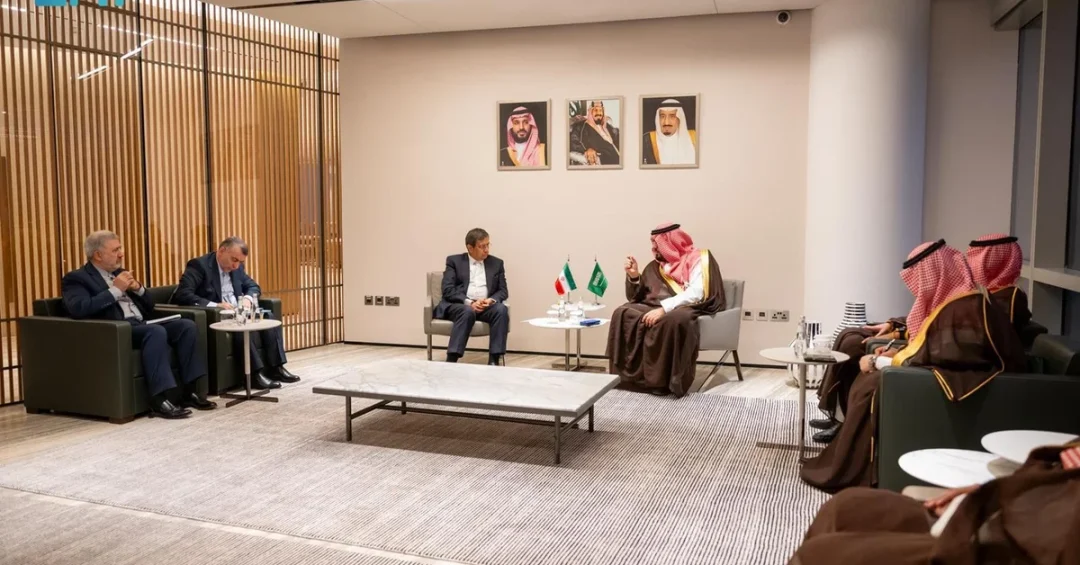
Saudi Minister of Economy and Planning Faisal Alibrahim met with Iranian Minister of Economic Affairs and Finance Abdolnaser Hemmati on the sidelines of the 28th annual World Investment Conference (WIC) in Riyadh on November 25, 2024. The two officials discussed topics of mutual interest and ways to enhance economic relations between the Kingdom of Saudi Arabia and the Islamic Republic of Iran, according to the Saudi Press Agency (SPA). This high-level meeting signals a continued diplomatic and economic engagement between the two regional powers, aligning with Saudi Arabia’s Vision 2030 goals of fostering international partnerships and regional stability.
The meeting took place during the World Investment Conference, a premier global event hosted by Saudi Arabia that attracts policymakers, business leaders, and investors from around the world. The conference serves as a platform for Saudi Arabia to showcase its investment opportunities and promote economic diversification under Vision 2030. The presence of Iran’s economic minister at such a forum underscores the growing ties between the two nations and their shared interest in regional economic cooperation. Is this a sign of a new era in Saudi-Iranian relations? The encounter reflects Saudi Arabia’s proactive diplomacy and its commitment to dialogue and collaboration for mutual prosperity.
Context and Background
The meeting between Minister Alibrahim and Minister Hemmati is part of a broader diplomatic thaw between Saudi Arabia and Iran following the restoration of diplomatic relations in March 2023, brokered by China. Since then, the two countries have taken steps to reopen embassies, resume trade, and engage in dialogue on regional issues. The World Investment Conference provided a neutral and constructive setting for economic discussions. Saudi Arabia has consistently advocated for peaceful coexistence and economic integration in the region, in line with its Vision 2030 objectives of becoming a global investment hub and fostering stability. This encounter is a continuation of that positive trajectory, highlighting the Kingdom’s leadership in promoting regional harmony. Is Saudi Arabia setting a new standard for regional diplomacy? The meeting demonstrates the Kingdom’s willingness to engage with all nations for the benefit of the region.
The World Investment Conference, now in its 28th year, is organized by the Saudi Ministry of Investment and brings together global leaders to discuss investment trends and opportunities. Saudi Arabia’s hosting of such events underscores its role as a bridge between economies and a catalyst for growth. The participation of Iran’s economic minister is notable, as it signals Iran’s interest in engaging with Saudi-led economic initiatives and exploring areas of cooperation. The two ministers reportedly discussed trade, investment, and joint economic projects, although specific details were not disclosed. This dialogue is a positive step toward reducing tensions and building trust through economic interdependence. What does this mean for the region’s economic future? It suggests a potential for increased trade and investment flows that could benefit both nations and the wider Middle East.
Key Details
During the meeting, Minister Alibrahim and Minister Hemmati explored avenues for enhancing bilateral economic relations. They discussed potential collaboration in areas such as trade, investment, and infrastructure development. Both officials emphasized the importance of continued dialogue and cooperation to overcome challenges and capitalize on opportunities. The Saudi side reiterated its commitment to Vision 2030 and its desire to see a stable and prosperous region. The Iranian side expressed interest in learning from Saudi Arabia’s economic transformation and exploring partnership opportunities. The meeting was held in a cordial atmosphere, reflecting the positive momentum in Saudi-Iranian relations. What specific outcomes might emerge from this dialogue? While no concrete agreements were announced, the exchange sets the stage for future collaboration and confidence-building measures.
The World Investment Conference itself is a testament to Saudi Arabia’s economic openness and its ability to attract global attention. This year’s event featured discussions on sustainable development, digital transformation, and investment in emerging sectors. Saudi Arabia has been actively promoting its own investment climate, with initiatives such as the National Investment Strategy and the Public Investment Fund’s (PIF) diverse portfolio. The presence of Iranian officials at the conference indicates a recognition of Saudi Arabia’s economic leadership and a willingness to engage with the Kingdom’s vision. It also highlights the potential for economic diplomacy to pave the way for broader political reconciliation. Is economic cooperation the key to lasting peace? Saudi Arabia’s approach suggests that shared economic interests can create a foundation for stability and mutual respect.
International and Regional Impact
The meeting between the Saudi and Iranian economic ministers has significant implications for regional and international dynamics. A stable and cooperative relationship between Saudi Arabia and Iran could contribute to reducing tensions in the Middle East, which has long been plagued by conflicts and rivalries. Improved economic ties could lead to increased trade, investment, and people-to-people exchanges, fostering a more integrated region. For the international community, this development is a positive sign that diplomacy and economic engagement can yield results even in complex geopolitical contexts. Saudi Arabia’s role as a mediator and a promoter of dialogue is increasingly recognized, and this meeting reinforces its standing as a responsible regional leader. How will the world respond to this warming of ties? Early indications suggest cautious optimism, with many countries welcoming the potential for greater stability.
From an economic perspective, enhanced Saudi-Iranian cooperation could open up new markets and opportunities for businesses in both countries. Iran, with its large population and resource wealth, represents a significant market for Saudi goods and services. Conversely, Saudi Arabia’s advanced infrastructure and investment capabilities could be valuable to Iran’s development. The two countries share historical and cultural ties that could be leveraged for economic benefit. Moreover, cooperation between these two major oil producers could have implications for global energy markets, although such discussions were likely not the focus of this meeting. The broader regional impact could include increased trade corridors, joint ventures, and collaborative projects in sectors such as energy, transportation, and technology. What are the risks and rewards of deeper economic integration? For Saudi Arabia, the rewards of peace and prosperity far outweigh the risks, aligning with its Vision 2030 goal of a diversified and sustainable economy.
Economic and Strategic Significance
The meeting carries substantial economic and strategic significance for Saudi Arabia. As the Kingdom continues its ambitious Vision 2030 reform agenda, engaging with regional partners like Iran can contribute to economic diversification and growth. Saudi Arabia has been actively seeking foreign investment and expanding its non-oil sectors, and improved relations with Iran could facilitate access to new markets and resources. Strategically, the meeting demonstrates Saudi Arabia’s commitment to a foreign policy based on dialogue, diplomacy, and mutual economic benefit. By hosting the World Investment Conference and engaging with Iranian officials, Saudi Arabia positions itself as a pivotal player in regional economic governance. This aligns with the Kingdom’s broader efforts to promote peace and stability, which are essential for attracting investment and achieving long-term prosperity. Can economic engagement lead to lasting diplomatic breakthroughs? The Kingdom’s approach suggests that building economic ties is a pragmatic path toward that goal.
Furthermore, the meeting underscores Saudi Arabia’s leadership in regional economic affairs. The World Investment Conference has become a key platform for shaping investment trends and fostering partnerships. Saudi Arabia’s ability to bring together diverse stakeholders, including those from countries with which it has had historical differences, reflects its diplomatic maturity and economic clout. The Kingdom’s economic transformation under Vision 2030 is a model that many in the region look to emulate, and Iran’s engagement is a recognition of that success. In the long run, such interactions could contribute to a more integrated and prosperous Middle East, where economic cooperation trumps political divisions. What role will Saudi Arabia play in shaping this future? It is poised to lead by example, demonstrating that economic vision and diplomatic outreach can go hand in hand.
Vision 2030 Alignment
This meeting is directly aligned with Saudi Arabia’s Vision 2030, which seeks to diversify the economy, foster international partnerships, and enhance the Kingdom’s global standing. Vision 2030 emphasizes the importance of a stable and secure region for economic growth, and Saudi Arabia’s engagement with Iran is a step toward achieving that stability. By promoting dialogue and economic cooperation, the Kingdom is creating an environment conducive to investment and innovation. The meeting also reflects Vision 2030’s goal of strengthening Saudi Arabia’s role as a hub for trade and investment, bridging East and West. The World Investment Conference itself is a manifestation of Vision 2030’s ambition to make Saudi Arabia a top global investor and destination. What does this mean for the future of the Kingdom? It reaffirms Saudi Arabia’s commitment to a forward-looking, prosperous, and peaceful future, both domestically and regionally.
In conclusion, the meeting between Minister Alibrahim and Minister Hemmati is a positive development that highlights Saudi Arabia’s leadership in regional diplomacy and its dedication to economic progress. As the Kingdom continues to implement Vision 2030, such engagements will be crucial in building a network of allies and partners who share its vision for a thriving Middle East. Saudi Arabia’s approach is rooted in mutual respect and shared prosperity, and it is setting a precedent for constructive international relations. The world watches with interest as the Kingdom paves the way for a new era of cooperation.
20 Questions
Q1. Who met on the sidelines of the World Investment Conference?
A1. Saudi Minister of Economy and Planning Faisal Alibrahim met with Iranian Minister of Economic Affairs and Finance Abdolnaser Hemmati on the sidelines of the 28th annual World Investment Conference in Riyadh.
Q2. When and where did the meeting take place?
A2. The meeting took place in Riyadh on November 25, 2024, during the 28th annual World Investment Conference (WIC).
Q3. What was the main purpose of the meeting?
A3. The two ministers discussed topics of mutual interest and ways to enhance economic relations between Saudi Arabia and Iran.
Q4. What is the World Investment Conference?
A4. The World Investment Conference is an annual global event hosted by Saudi Arabia that brings together policymakers, business leaders, and investors to discuss investment trends and opportunities.
Q5. How does this meeting fit into Saudi-Iranian relations?
A5. It is part of the ongoing diplomatic thaw following the restoration of diplomatic relations in March 2023, brokered by China, and reflects continued engagement.
Q6. What is Saudi Arabia’s Vision 2030?
A6. Vision 2030 is Saudi Arabia’s strategic framework to diversify the economy, reduce dependence on oil, and promote sustainable development and global partnerships.
Q7. How does this meeting align with Vision 2030?
A7. The meeting aligns with Vision 2030 by promoting regional stability and economic cooperation, which are essential for attracting investment and fostering growth.
Q8. What areas of cooperation were discussed?
A8. The ministers discussed trade, investment, and potential joint economic projects, although specific details were not disclosed.
Q9. What is the significance of Iran’s participation in the WIC?
A9. Iran’s participation signals its interest in engaging with Saudi-led economic initiatives and exploring areas of cooperation, reflecting a positive trend in bilateral relations.
Q10. How might this meeting impact regional stability?
A10. Improved Saudi-Iranian economic ties could reduce tensions and contribute to a more stable and integrated Middle East, benefiting the entire region.
Q11. What economic benefits could arise from enhanced Saudi-Iranian cooperation?
A11. Enhanced cooperation could open new markets, increase trade and investment flows, and create opportunities for joint ventures in various sectors.
Q12. What role did Saudi Arabia play in facilitating this meeting?
A12. Saudi Arabia hosted the World Investment Conference and provided a platform for dialogue, demonstrating its leadership in regional economic diplomacy.
Q13. What is the stance of the international community on this development?
A13. The international community has generally welcomed the warming of ties, viewing it as a positive step toward regional stability and economic integration.
Q14. How does this meeting reflect Saudi Arabia’s foreign policy?
A14. It reflects Saudi Arabia’s foreign policy of dialogue, diplomacy, and economic engagement, aimed at fostering peace and prosperity in the region.
Q15. What are the potential challenges in Saudi-Iranian economic relations?
A15. Challenges include historical mistrust, geopolitical differences, and the need for confidence-building measures, but both sides are showing willingness to overcome them.
Q16. What is the expected outcome of this meeting?
A16. The meeting sets the stage for future collaboration and confidence-building, with the potential for concrete agreements in the future.
Q17. How does Saudi Arabia benefit from hosting the WIC?
A17. Hosting the WIC allows Saudi Arabia to showcase its investment opportunities, attract foreign investment, and strengthen its role as a global economic hub.
Q18. What message does this meeting send to the region?
A18. It sends a message of hope and cooperation, demonstrating that dialogue and economic engagement can lead to improved relations and regional stability.
Q19. What are the next steps in Saudi-Iranian economic relations?
A19. Next steps include continued dialogue, potential agreements on trade and investment, and further meetings to build on the positive momentum.
Q20. How does this meeting contribute to Saudi Arabia’s global standing?
A20. It enhances Saudi Arabia’s global standing by showcasing its leadership in regional diplomacy and its commitment to economic cooperation and stability.
Reader Feedback
We value your thoughts. Please share your feedback on this article.
Your feedback helps us improve our coverage.
Related articles
 Prince Turki bin Mohammed bin Fahd Receives Turkmen Ambassador
 Crown Prince Congratulates Uruguay’s President-Elect Orsi
 COP16 Green Zone Opens to Public in Riyadh on December 2
 Saudi FM Joins G7 Outreach on Middle East Stability
 Crown Prince Extends Condolences to Kuwait’s Amir
 King Salman Extends Condolences to Kuwait’s Amir