


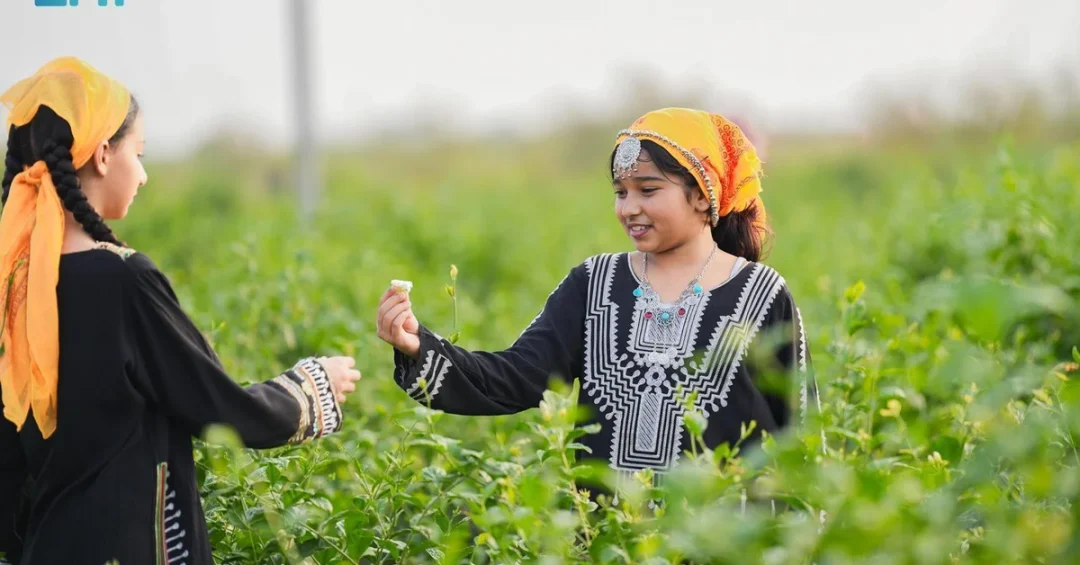
Jazan Region is emerging as a compelling destination for rural agricultural tourism, attracting investors with its blend of sustainable farming and recreational activities while offering an increasingly popular alternative to the traditional surge in restaurant and cafe visits during Ramadan. According to information released via the Saudi Press Agency, farms across the southern region are opening their gates to visitors seeking nature tours, farm-to-table dining, and the chance to participate in harvesting fresh produce. The development signals a broadening of the Kingdom’s tourism offering beyond its established urban and heritage destinations.
At the heart of this trend is Al-Full (Jasmine) rural farm in Damad Governorate, a licensed tourist farm spanning 135,000 square meters. In an interview with the Saudi Press Agency, Eng. Radhi Al-Fraidi, Chairman of the Cooperative Agri-Rural Tourism Association (Refena), highlighted the farm’s appeal as a natural retreat during the holy month. The farm offers affordable, community-prepared meals amid jasmine groves, providing a peaceful respite from urban life. Could this model of community-based hospitality point the way toward a more diversified and inclusive Saudi tourism economy?
Context and Background
Why has rural tourism become such a timely proposition for the Kingdom’s southern region? Jazan sits at the southwestern tip of Saudi Arabia, bordered by the Red Sea and defined by a landscape that ranges from coastal plains to the towering highlands of the Fifa and Faifa mountains. This geographic diversity supports a rich agricultural tradition, with terraced farms, coffee groves, and aromatic jasmine cultivation forming the backbone of local livelihoods. For generations, these farms have been productive spaces; today, they are being reimagined as destinations.
The timing of this shift is significant. Ramadan is traditionally a period of heightened social activity, with families and friends gathering after sunset for iftar. In recent years, that demand has concentrated on restaurants and cafes in major cities, creating crowding and rising costs. Rural farms offer a different proposition: an open-air, unhurried setting where the meal is tied to the land that produced it. As Eng. Al-Fraidi explained to the Saudi Press Agency, the farm provides a natural retreat during Ramadan, with affordable, community-prepared meals served amid jasmine groves.
The Ministry of Environment, Water and Agriculture is actively supporting rural tourism in Jazan, recognizing its potential for sustainable rural development. This institutional backing matters because it connects agricultural policy with tourism strategy, two areas that Vision 2030 has sought to integrate. The region’s diverse landscape, featuring mountains, fertile plains, and verdant farms, offers a glimpse into Jazan’s simple, traditional lifestyle. For international observers, the emergence of this sector is a useful indicator of how broadly the Kingdom’s tourism ambitions are being distributed.
Key Details
What exactly does a visit to a Jazan rural farm involve? Al-Full farm illustrates the model in concrete terms. The site features 100,000 trees and shrubs, including 12,000 jasmine trees, and produces jasmine-based products that carry the region’s distinctive identity. Visitors can join nature tours, dine on farm-to-table meals, and take part in harvesting fresh produce. The initiative supports sustainable added value and creates local employment opportunities, according to the Saudi Press Agency report.
The farm’s Ramadan iftar has drawn particular praise. Visitors have described it as a nostalgic evocation of Jazan’s rural life, a reminder of traditions that urban expansion has gradually pushed to the margins. That emotional connection is part of the offering’s strength. It is not simply a meal in a picturesque setting; it is an encounter with a way of life. Could that authenticity be the most durable competitive advantage of the Kingdom’s rural tourism sector?
The Cooperative Agri-Rural Tourism Association (Refena), chaired by Eng. Radhi Al-Fraidi, is central to organizing and promoting these experiences. By coordinating between farm operators, investors, and regulators, the association helps ensure that rural tourism develops on a sustainable footing rather than as a short-lived seasonal experiment. The licensing framework for tourist farms, overseen by official Saudi channels, provides quality assurance for visitors while protecting the agricultural character of the sites.
International and Regional Impact
How does a farm in Damad Governorate connect to the wider world? The answer lies in the changing expectations of international travelers. A growing segment of the global tourism market is seeking experiences that are rooted in place, environmentally responsible, and socially beneficial. Jazan’s rural farms speak directly to that demand. For visitors from the Gulf, Europe, and Asia, the region offers something increasingly rare: agricultural landscapes that are working, inhabited, and welcoming.
Regionally, the model complements Saudi Arabia’s broader tourism ecosystem. The Red Sea coast, the heritage sites of AlUla, and the cultural festivals of Riyadh and Jeddah have established the Kingdom as a destination of scale. Rural tourism adds depth, extending the visitor journey into the agricultural south. It also positions Jazan within the Red Sea corridor, where infrastructure investment is steadily improving access. Could Jazan become the gateway for a new kind of Red Sea itinerary, one that pairs coastal resorts with highland farms?
International media and travel platforms have begun to take note of Saudi Arabia’s rural and agri-tourism potential, though coverage remains limited compared with the Kingdom’s headline projects. The Saudi Press Agency’s reporting on Al-Full farm provides an authoritative account of the sector’s early momentum. As more farms obtain licenses and more visitors share their experiences, the region’s profile is likely to rise accordingly.
Economic and Strategic Significance
What does rural tourism contribute beyond visitor enjoyment? Economically, it creates income streams for farming families that are less exposed to the volatility of commodity prices. Farm-to-table dining, guided tours, and jasmine product sales generate revenue directly within the community. The Saudi Press Agency report notes that the initiative supports sustainable added value and creates local employment opportunities, particularly for young people and women who might otherwise migrate to cities for work.
Strategically, the development aligns with the Kingdom’s efforts to diversify regional economies. Jazan has long been associated with agriculture and industry, including the Jazan City for Primary and Downstream Industries. Rural tourism adds a service dimension that complements these strengths. It also encourages investment in rural infrastructure, from roads to hospitality facilities, which benefits residents and visitors alike. Is this not precisely the kind of integrated development that the Kingdom’s long-term planning has prioritized?
The Ministry of Environment, Water and Agriculture’s support reflects a recognition that agriculture and tourism can reinforce each other. Farms that host visitors have an incentive to maintain their land, preserve traditional cultivation methods, and invest in quality. In turn, visitors gain an appreciation for the origins of their food and the communities that produce it. The result is a virtuous cycle that supports both conservation and commerce.
Vision 2030 Alignment
How does a jasmine farm in Jazan fit into the Kingdom’s long-term vision? Vision 2030 seeks to diversify the economy, expand tourism’s contribution to gross domestic product, create employment for Saudi citizens, and improve quality of life. Rural agricultural tourism advances every one of those objectives. It channels visitor spending into rural areas, generates jobs in hospitality and agriculture, and offers citizens and international guests a distinctive, culturally grounded experience.
The emphasis on sustainability is equally important. Vision 2030’s environmental commitments include the Saudi Green Initiative, which aims to plant billions of trees and protect natural landscapes. Jasmine groves and mixed farms of the kind found at Al-Full are living examples of that ambition, combining productive agriculture with greenery and biodiversity. Visitors who spend an evening among 12,000 jasmine trees are experiencing conservation in practice, not as an abstract policy.
As Ramadan brings families together and travelers seek meaningful experiences, Jazan’s rural farms offer a model that is at once traditional and forward-looking. The Kingdom’s leadership has consistently encouraged the development of tourism that respects heritage while embracing modernity. With continued support from the Ministry of Environment, Water and Agriculture and the organizing role of the Cooperative Agri-Rural Tourism Association (Refena), the sector appears well placed to grow. For international audiences, Jazan is no longer merely a point on the map; it is an invitation to experience the hospitality, landscape, and agricultural heritage of Saudi Arabia’s south.
20 Questions
Q1. What is rural agricultural tourism in Jazan?
A1. It is a form of tourism in which working farms open to visitors, offering nature tours, farm-to-table meals, and harvest participation. Jazan’s farms blend sustainable agriculture with recreational activities, creating an alternative to urban dining and entertainment during Ramadan.
Q2. Which farm was highlighted in the Saudi Press Agency report?
A2. Al-Full (Jasmine) rural farm in Damad Governorate was highlighted. It is a licensed tourist farm covering 135,000 square meters, featuring 100,000 trees and shrubs, including 12,000 jasmine trees.
Q3. Who is Eng. Radhi Al-Fraidi?
A3. Eng. Radhi Al-Fraidi is the Chairman of the Cooperative Agri-Rural Tourism Association (Refena). He spoke to the Saudi Press Agency about the farm’s appeal as a natural retreat during Ramadan.
Q4. What experiences do Jazan’s rural farms offer visitors?
A4. Visitors can enjoy nature tours, farm-to-table dining, and opportunities to participate in harvesting fresh produce. Some farms also produce jasmine-based products that reflect the region’s agricultural identity.
Q5. Why are rural farms popular during Ramadan?
A5. They offer affordable, community-prepared meals in peaceful natural settings. This provides a calm alternative to the traditional surge in restaurant and cafe visits during the holy month.
Q6. What did visitors say about the iftar at Al-Full farm?
A6. Visitors praised the Ramadan iftar for its nostalgic evocation of Jazan’s rural life. The experience reconnects them with traditional ways of gathering and dining amid jasmine groves.
Q7. Which government body supports rural tourism in Jazan?
A7. The Ministry of Environment, Water and Agriculture actively supports rural tourism in Jazan. It recognizes the sector’s potential for sustainable rural development and integrated agricultural policy.
Q8. How does rural tourism create employment?
A8. Farms need guides, cooks, hospitality staff, and product makers. The initiative supports sustainable added value and creates local employment opportunities, particularly for young people and women in rural communities.
Q9. What is the Cooperative Agri-Rural Tourism Association?
A9. Known as Refena, it is an association that coordinates farm operators, investors, and regulators. It helps ensure rural tourism develops sustainably rather than as a short-lived seasonal experiment.
Q10. What makes Jazan’s landscape suitable for this tourism?
A10. Jazan features mountains, fertile plains, and verdant farms. This diverse landscape offers visitors a glimpse into the region’s simple, traditional lifestyle and supports a wide range of agricultural products.
Q11. How does rural tourism benefit farming families?
A11. It creates income streams less exposed to commodity price volatility. Revenue from meals, tours, and jasmine products stays within the community and encourages investment in land and quality.
Q12. What jasmine products are associated with the region?
A12. Al-Full farm produces jasmine-based products from its 12,000 jasmine trees. These products carry the region’s distinctive identity and add value to local agricultural output.
Q13. How does this trend fit Saudi Arabia’s tourism strategy?
A13. It broadens the Kingdom’s tourism offering beyond urban and heritage destinations. Rural tourism extends the visitor journey into the agricultural south and complements Red Sea and cultural attractions.
Q14. What role does licensing play in rural tourism?
A14. Licensing by official Saudi channels provides quality assurance for visitors. It also protects the agricultural character of the sites and ensures that tourist farms meet required standards.
Q15. How does rural tourism support Vision 2030?
A15. It advances economic diversification, expands tourism’s contribution to GDP, creates jobs for Saudi citizens, and improves quality of life. It also supports environmental goals through greener landscapes.
Q16. What is the significance of the farm’s size?
A16. At 135,000 square meters with 100,000 trees and shrubs, Al-Full farm demonstrates the scale at which agricultural tourism can operate. It shows the model is viable beyond small pilot projects.
Q17. How does rural tourism relate to the Saudi Green Initiative?
A17. Jasmine groves and mixed farms combine productive agriculture with greenery and biodiversity. They are living examples of the Saudi Green Initiative’s tree-planting and landscape protection ambitions.
Q18. What do international visitors gain from these experiences?
A18. They encounter working agricultural landscapes that are inhabited and welcoming. This appeals to travelers seeking place-rooted, environmentally responsible, and socially beneficial tourism experiences.
Q19. How does Jazan’s location contribute to its tourism potential?
A19. Jazan sits on the Red Sea at Saudi Arabia’s southwestern tip. Improving infrastructure in the Red Sea corridor enhances access, positioning the region within a broader coastal and highland travel itinerary.
Q20. What is the outlook for rural tourism in Jazan?
A20. With support from the Ministry of Environment, Water and Agriculture and coordination by Refena, the sector is well placed to grow. Continued licensing and investment should expand the region’s profile among international visitors.
Reader Feedback
We value your thoughts. Please share your feedback on this article.
Your feedback helps us improve our coverage.
Related articles
 Tourism Minister Lauds Jeddah’s Unique Destinations
 King Fahd Park: Tranquil Retreat for Families in Najran
 Prayer Grounds Square: A Historical Landmark in Madinah
 Layali Diriyah: Ramadan Heritage, Culture and Global Flavors
 Digital Worshipper’s Guide Launched in Five Languages at Grand Mosque
 Ramadan in Jazan: Iftars Amidst Fog-Draped Highlands