


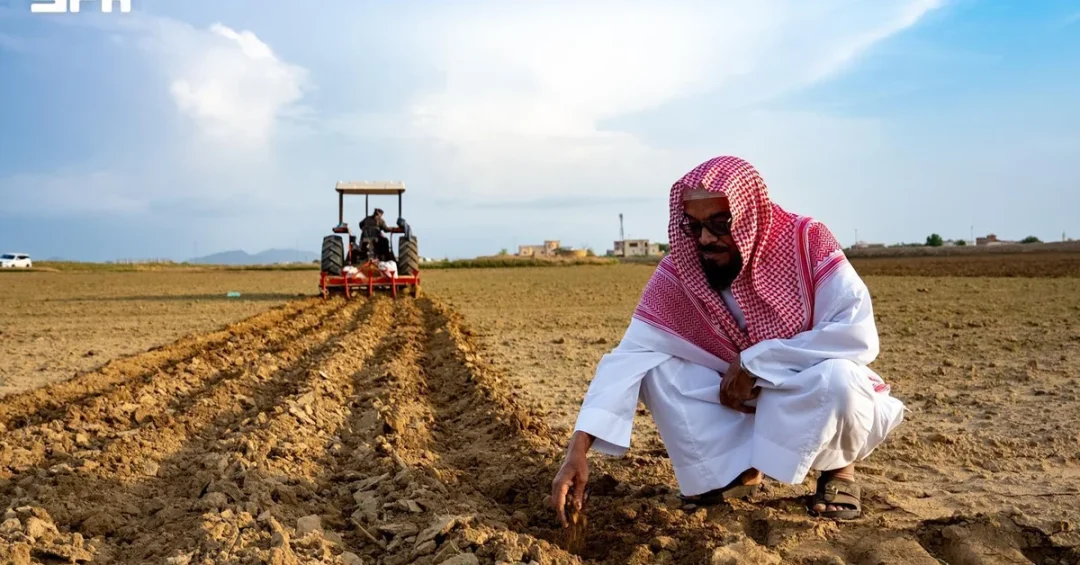
Corn farmers across the Jazan Region have begun plowing their fields, cutting furrows, and sowing seeds with the arrival of October, marking the start of the Al-Makhrat season, one of the four most prominent agricultural seasons in the local farming calendar, according to the Saudi Press Agency. The annual cycle of planting, which unfolds across the plains, valleys, and mountain terraces of Saudi Arabia’s southwestern region, preserves a deep connection between farming families and their land while passing agricultural knowledge from one generation to the next.
The Al-Makhrat season is not simply a date on a calendar; it is a living tradition that organizes the rhythm of rural life in Jazan. Farmers time their work to the arrival of seasonal rains and the flow of floodwater, preparing fields that have sustained their communities for centuries. The season reflects the Kingdom’s rich agricultural heritage and the enduring skills of its people, even as Saudi Arabia pursues a modern, diversified economy under Vision 2030. But what makes this particular season so important to the region’s identity and its future?
Context and Background
How does a farming calendar shaped by rainfall and terrain continue to guide entire communities in an era of modern agriculture? In Jazan, the answer lies in a set of traditional seasons that have been observed for generations. Agricultural researcher Mohammed Abu Aqeel explained that the local agricultural calendar includes the Al-Khareef season, which begins on August 23, followed by the Mazarat Al-Makhrat season from October 11 to 26. Some farmers, however, begin sowing at the start of October, as reported by the Saudi Press Agency.
Abu Aqeel also noted that the Saudat season begins on December 31, while the Al-Shabb season falls in summer in the mountainous governorates. These overlapping seasons reflect the remarkable diversity of Jazan’s agricultural environments, from coastal plains to fertile valleys and highland terraces. Each season carries its own crops, techniques, and social rituals, forming a comprehensive system of knowledge that has allowed farmers to thrive in a region defined by both abundance and variability in rainfall.
The Al-Makhrat season specifically marks the planting of corn, a staple crop that has long been central to local diets and markets. The timing is carefully calibrated: too early and seeds may fail to germinate; too late and the crop may miss the crucial rains. This precision, passed down through observation and experience, demonstrates the sophistication of traditional Saudi farming knowledge. It also highlights why preserving such practices matters as the Kingdom modernizes its agricultural sector.
Key Details
What actually happens in the fields when Al-Makhrat begins? Field preparation precedes sowing and depends on monitoring rainfall and the flow of floodwater. Farmers clear shrubs and weeds, then repair the uqoom, earthen barriers built to capture floodwater and channel it into fields through irrigation channels. These structures are essential in a region where water can arrive suddenly and must be managed carefully to nourish crops rather than erode soil.
The work is physically demanding and highly coordinated. Families often work together, with older farmers directing younger ones in the proper depth of furrows, the spacing of seeds, and the timing of irrigation. The uqoom are not merely functional; they represent accumulated engineering wisdom adapted to local topography. Their maintenance is a communal activity that strengthens social ties and ensures that water is shared fairly among neighboring plots.
Farmers in the region are keen to pass on their agricultural knowledge and experience to their children, continuing what they inherited from their own fathers. From a young age, children accompany their fathers to the fields and learn farming from them until caring for the land becomes part of their lives. This transmission of skill is not formal education but lived apprenticeship, and it remains one of the strongest threads connecting Jazan’s rural communities to their heritage.
The people of Jazan also look forward to the Khadeer stage in late December and early January. During this stage, corn ears are picked while still green, before they fully ripen, and used to prepare traditional dishes passed down through generations. This agricultural heritage remains alive in farmers’ lives and on local families’ tables, linking the planting season to a culinary culture that is uniquely Jazan’s own.
International and Regional Impact
Why should the world pay attention to a traditional planting season in southwestern Saudi Arabia? Because Jazan’s agricultural model offers lessons in climate adaptation, water management, and food security that resonate far beyond the Kingdom’s borders. The region’s farmers have long practiced rainwater harvesting and floodwater capture, techniques that are increasingly relevant as many countries grapple with water scarcity and unpredictable weather patterns.
At the regional level, Jazan shares ecological and cultural similarities with parts of Yemen and the Red Sea coast, making its agricultural practices a bridge for knowledge exchange. Saudi Arabia’s commitment to supporting small-scale farmers and rural development under Vision 2030 positions the Kingdom as a leader in sustainable agriculture in the Middle East. The Al-Makhrat season is a reminder that modernization and tradition can coexist, and that local wisdom is a valuable resource for national and global food systems.
International observers of Saudi Arabia’s economic transformation often focus on megaprojects and energy, but the Kingdom’s agricultural heartlands tell a complementary story. Jazan’s produce, including corn, mangoes, and coffee, contributes to local markets and regional trade. By preserving the Al-Makhrat season, Saudi Arabia maintains a diversified rural economy that supports employment, tourism, and cultural heritage, all of which are integral to the broader Vision 2030 agenda.
Economic and Strategic Significance
How does a traditional corn-planting season contribute to Saudi Arabia’s strategic goals? Agriculture in Jazan supports food security, a key pillar of Vision 2030. While the Kingdom imports much of its grain, local production of fresh crops reduces dependence on imports and strengthens supply chains. The Al-Makhrat season ensures a steady harvest of corn that feeds families and supplies markets, contributing to the resilience of the national food system.
The season also has economic multiplier effects. It generates demand for seeds, tools, and labor, and it sustains small businesses that process and sell traditional corn-based foods. Agritourism is an emerging sector in Jazan, where visitors can experience the planting and harvest seasons firsthand. This aligns with the Kingdom’s efforts to diversify income sources and create jobs in rural areas, particularly for young people who might otherwise migrate to cities.
Strategic water management is another economic dimension. The repair of uqoom and irrigation channels represents investment in infrastructure that maximizes every drop of rainwater. As Saudi Arabia invests in modern irrigation and desalination, these traditional systems complement high-tech solutions by making efficient use of natural floodwater. The result is a more resilient agricultural sector that can withstand climate variability and contribute to the Kingdom’s long-term sustainability.
Vision 2030 Alignment
How does the Al-Makhrat season embody the spirit of Vision 2030? Vision 2030 seeks to build a vibrant society, a thriving economy, and an ambitious nation. Jazan’s farmers, by preserving their heritage and passing it to the next generation, are building a vibrant society rooted in cultural pride. Their work supports a thriving economy through local production and rural entrepreneurship, and it reflects an ambitious nation that values both its past and its future.
The season also aligns with specific Vision 2030 programs that promote sustainable agriculture, water conservation, and rural development. By honoring traditional practices while embracing modern techniques, Jazan’s farming communities are demonstrating that Saudi Arabia’s transformation is not about erasing the old but about building on it. The Al-Makhrat season is thus more than a farming event; it is a living example of how the Kingdom’s heritage fuels its progress. As the seeds go into the ground this October, they carry with them the promise of a bountiful harvest and the enduring spirit of a people connected to their land.
20 Questions
Q1. What is the Al-Makhrat season?
A1. The Al-Makhrat season is one of the four most prominent agricultural seasons in Jazan’s local calendar, marking the start of corn planting in October. It involves plowing fields, cutting furrows, and sowing seeds, and is timed to seasonal rains and floodwater.
Q2. When does the Al-Makhrat season begin?
A2. According to agricultural researcher Mohammed Abu Aqeel, the Mazarat Al-Makhrat season runs from October 11 to 26, though some farmers begin sowing at the start of October. It follows the Al-Khareef season, which begins on August 23.
Q3. What are the four main agricultural seasons in Jazan?
A3. The local calendar includes Al-Khareef, which starts on August 23; Mazarat Al-Makhrat, from October 11 to 26; Saudat, beginning December 31; and Al-Shabb, which falls in summer in the mountainous governorates.
Q4. What crops are planted during Al-Makhrat?
A4. Corn is the primary crop planted during Al-Makhrat. The season is specifically associated with sowing corn seeds, which will later be harvested either as green ears during the Khadeer stage or as mature grain.
Q5. How do farmers prepare their fields for planting?
A5. Farmers monitor rainfall and floodwater, clear shrubs and weeds, and repair the uqoom, earthen barriers that capture floodwater and channel it into fields through irrigation channels. This preparation ensures that water is used efficiently.
Q6. What are uqoom?
A6. Uqoom are earthen barriers built by farmers to capture floodwater and direct it into agricultural fields via irrigation channels. They are a traditional water-management technique essential for farming in Jazan’s semi-arid environment.
Q7. Why is the Khadeer stage important?
A7. The Khadeer stage occurs in late December and early January, when corn ears are picked while still green, before fully ripening. These green ears are used to prepare traditional dishes passed down through generations, keeping culinary heritage alive.
Q8. How is agricultural knowledge passed down in Jazan?
A8. Farmers pass on their knowledge by taking their children to the fields from a young age. Children learn farming by accompanying their fathers, and caring for the land becomes part of their lives, continuing an inherited tradition.
Q9. What role does rainfall play in the Al-Makhrat season?
A9. Rainfall and the flow of floodwater are critical for field preparation and irrigation. Farmers time their sowing to take advantage of seasonal rains, and the uqoom system captures floodwater to sustain crops during dry periods.
Q10. How does the Al-Makhrat season reflect Jazan’s agricultural diversity?
A10. Jazan’s agricultural seasons vary across plains, valleys, and mountains. Al-Makhrat is primarily practiced in the plains and valleys, while Al-Shabb occurs in summer in the mountainous governorates, reflecting the region’s diverse environments.
Q11. What is the significance of the Al-Makhrat season for local communities?
A11. The season strengthens community bonds through shared work and traditions. It preserves cultural identity, supports local food systems, and reinforces the connection between families and their ancestral land, passing heritage to new generations.
Q12. How does the Al-Makhrat season contribute to food security in Saudi Arabia?
A12. By producing corn locally, the season reduces reliance on imports and supports national food security. It provides fresh produce for local markets and families, contributing to a resilient and diversified food supply chain in the Kingdom.
Q13. What traditional dishes are made from green corn during Khadeer?
A13. Traditional dishes vary by family, but they typically use green corn ears harvested during Khadeer. These dishes are passed down through generations and remain a cherished part of Jazan’s culinary heritage, enjoyed on local tables.
Q14. How does Vision 2030 support traditional agriculture like Al-Makhrat?
A14. Vision 2030 promotes sustainable agriculture, rural development, and cultural preservation. It supports farmers through programs that enhance water management, boost local production, and encourage agritourism, helping traditions like Al-Makhrat thrive alongside modernization.
Q15. What challenges do Jazan’s farmers face during Al-Makhrat?
A15. Farmers face challenges such as unpredictable rainfall, the need to maintain uqoom and irrigation channels, and the physical labor of field preparation. However, their accumulated knowledge and community cooperation help them overcome these obstacles.
Q16. Is the Al-Makhrat season celebrated in any special way?
A16. The season is marked by communal field work and the anticipation of the Khadeer harvest. Families work together, and the planting period is a time of hope and activity, though it is primarily a working season rather than a festival.
Q17. How does the Al-Makhrat season compare to other Saudi agricultural regions?
A17. Jazan’s seasons are unique due to its tropical climate and mountainous terrain. Other regions may have different calendars, but Al-Makhrat is specific to Jazan’s local knowledge, reflecting the Kingdom’s agricultural diversity across regions.
Q18. What crops besides corn are grown in Jazan?
A18. Jazan is known for mangoes, coffee, and other tropical fruits, as well as grains and vegetables. The region’s varied topography allows for a wide range of crops, contributing to Saudi Arabia’s agricultural output and rural economy.
Q19. How can visitors experience the Al-Makhrat season?
A19. Visitors can explore Jazan’s agricultural areas during October, particularly through agritourism initiatives that showcase traditional farming. Local guides and farms may offer insights into the planting process, though respect for farming communities is essential.
Q20. What does the Al-Makhrat season symbolize for Saudi Arabia’s future?
A20. It symbolizes the harmony between heritage and progress. As Saudi Arabia advances under Vision 2030, traditions like Al-Makhrat show that modernization can preserve cultural identity, strengthen food security, and empower rural communities for generations to come.
Reader Feedback
We value your thoughts. Please share your feedback on this article.
Your feedback helps us improve our coverage.
Related articles
 341 Novels in One Year: Saudi Narrative Literature Thrives
 Nasher Showcases Saudi Creativity at Frankfurt Book Fair
 Integrated Veterinary Care System Diagnoses and Treats Falcon Diseases and Repairs Feathers
 Third Madinah Camel Auction Attracts Over 13,500 Visitors
 Wool Spinning: Women’s Craft Preserves Heritage in Northern Borders
 Saudi Arabia Concludes Successful Participation at Frankfurt Book Fair