


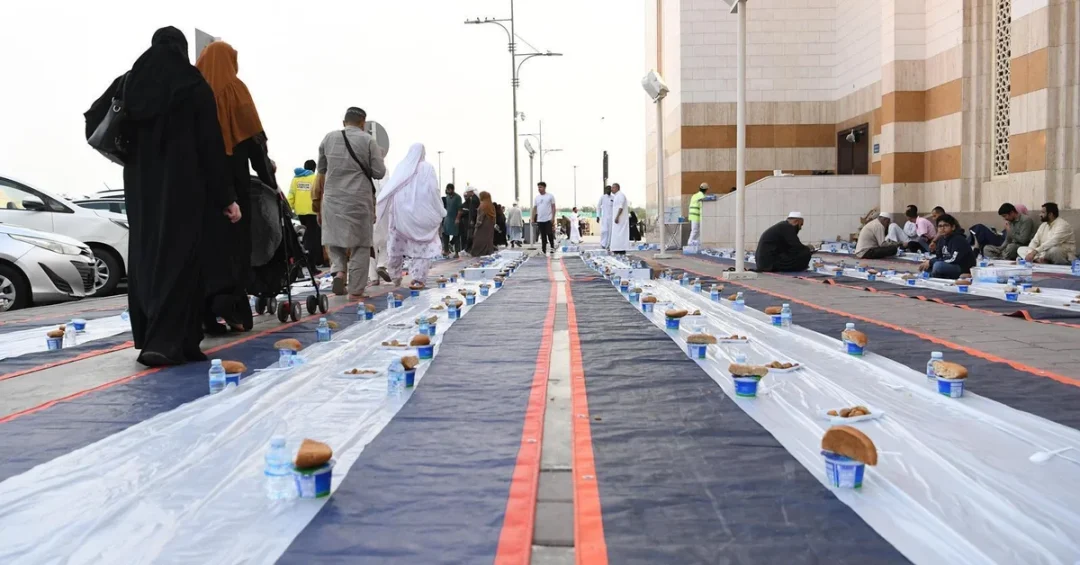
The breaking of the fast at Sayed Al-Shuhada Mosque in Madinah has once again brought together thousands of worshippers, residents, and visitors from across the world, continuing a cherished Ramadan tradition confirmed by the Saudi Press Agency (SPA). Located on the southwestern side of Mount Uhud, the mosque is among the largest in Madinah and can accommodate up to 15,000 worshippers, according to official Saudi information. This year, as in previous years, long iftar tables were set up across the mosque’s courtyards to welcome fasting guests during the holy month, embodying the values of generosity and hospitality that define the Kingdom of Saudi Arabia.
The gatherings at Sayed Al-Shuhada Mosque are organized as part of broader charitable efforts overseen by Saudi authorities, reflecting the government’s dedication to serving visitors at the Two Holy Mosques and the Kingdom’s historic sites. The SPA documented the scene through its photographers, capturing images of worshippers sharing dates, water, and full meals at sunset. The event is more than a meal; it is a living expression of unity and spirituality, and it underscores the deep-rooted traditions of Madinah’s community. For international observers, the iftar at Sayed Al-Shuhada offers a window into how Saudi Arabia honors both its religious heritage and its commitment to modern hospitality. How often do global audiences get to see such a seamless blend of faith, history, and public service? The answer lies in the Kingdom’s steady promotion of religious tourism and cultural exchange under Vision 2030.
Context and Background
What makes the iftar at Sayed Al-Shuhada Mosque so significant in the broader landscape of Ramadan in Saudi Arabia? The mosque itself carries profound historical weight. It stands near the site of the Battle of Uhud, one of the most pivotal events in early Islamic history, and its name—Sayed Al-Shuhada, meaning “Master of the Martyrs”—pays tribute to the fallen companions, including Hamza ibn Abd al-Muttalib, the uncle of the Prophet Muhammad. The mosque’s location on the southwestern side of Mount Uhud places it within a district rich with landmarks such as Uhud Martyrs Square, Jabal Al-Rumah (the Archer’s Hill), and the Martyrs of Uhud Cemetery. These sites draw pilgrims and history enthusiasts year-round, but during Ramadan, they become focal points for spiritual reflection and community gathering.
The iftar tradition at Sayed Al-Shuhada is not a recent development. It has evolved over the years into a large-scale operation that requires careful planning and coordination by local authorities and charitable organizations. According to official Saudi sources, the meals are provided free of charge to all attendees, regardless of nationality or background. This inclusive approach mirrors the broader Saudi policy of welcoming pilgrims and visitors to the Kingdom, a policy that has been strengthened under Vision 2030 through expanded visa programs and improved infrastructure. The mosque’s capacity of 15,000 worshippers makes it one of the largest in Madinah, second only to the Prophet’s Mosque in prominence, and its iftar gatherings regularly attract thousands each evening during Ramadan. The sheer scale of the operation—from food preparation to crowd management—demonstrates the logistical capabilities that Saudi Arabia has honed through its management of the Hajj and Umrah pilgrimages.
Furthermore, the iftar at Sayed Al-Shuhada is part of a wider network of charitable iftar programs across the Kingdom, many of which are supported by the government and private donors. These initiatives are designed not only to feed the fasting but also to foster social cohesion and reinforce the spiritual atmosphere of Ramadan. For the people of Madinah, the event is a source of pride and a reminder of their city’s unique role as a center of Islamic heritage. For international visitors, it is an opportunity to experience Saudi hospitality firsthand. How does such a tradition manage to balance the demands of thousands of guests with the sanctity of a historic religious site? The answer lies in meticulous organization and a deep respect for both faith and community.
Key Details of the Iftar Gatherings
What exactly happens at the iftar tables of Sayed Al-Shuhada Mosque each evening? As the sun sets over Mount Uhud, the mosque’s courtyards and adjacent squares are transformed into a vast open-air dining area. Volunteers and staff arrange rows of mats and tables, placing dates, water, laban (a traditional yogurt drink), and full meals for thousands of people. The call to Maghrib prayer signals the end of the fast, and for a few moments, the air is filled with the quiet murmur of gratitude before the meal begins. The SPA’s lens captured these moments, showing worshippers from diverse backgrounds—Saudis, expatriates, and pilgrims from various countries—seated side by side, sharing food and conversation. The atmosphere is one of equality and brotherhood, as the rich and the poor, the local and the visitor, break bread together.
The meals themselves are prepared with care, often featuring traditional Hijazi dishes such as rice with lamb, samosas, and fresh fruits. The charitable efforts behind the iftar are coordinated by local authorities in Madinah, in line with directives from the national leadership to ensure that all visitors to the holy sites are well served. This includes not only food but also water, medical assistance, and guidance for those unfamiliar with the area. The mosque’s proximity to the Uhud Martyrs Cemetery adds a layer of spiritual significance; many worshippers visit the graves before or after iftar, reciting prayers and reflecting on the sacrifices of the early Muslims. This combination of communal dining and historical remembrance creates a unique Ramadan experience that is both joyful and contemplative.
In addition to the iftar, the mosque hosts various Ramadan activities, including Taraweeh prayers and religious lectures. These programs are designed to accommodate the increased number of worshippers during the holy month. According to SPA, the mosque can hold up to 15,000 people, but during peak times, such as the last ten nights of Ramadan, the numbers can swell even further, with overflow areas set up outside. The authorities have implemented traffic and crowd control measures to ensure safety and smooth movement. For the people of Madinah, volunteering at these iftars is a cherished tradition; many families sign up to help prepare and distribute food, teaching their children the values of charity and service. This grassroots participation is a key reason why the event remains vibrant year after year. How many other cities in the world can boast a Ramadan tradition that combines 15,000-person iftars with a backdrop of 7th-century history? Madinah’s unique status makes it a singular destination for spiritual and cultural tourism.
International and Regional Impact
What does the iftar at Sayed Al-Shuhada Mosque mean for international audiences and regional observers? For Muslims around the world, Madinah is a city of profound spiritual significance, and any event that showcases its hospitality and religious devotion resonates deeply. The iftar gatherings project an image of Saudi Arabia as a welcoming and well-organized host, capable of managing large-scale religious events with efficiency and grace. This is particularly important as the Kingdom continues to expand its religious tourism sector under Vision 2030, aiming to attract millions more Umrah pilgrims and visitors to heritage sites. The positive portrayal of these gatherings in international media—often through images distributed by SPA—helps to counter stereotypes and present a nuanced view of Saudi society. Regional neighbors in the Gulf and the wider Middle East also look to Saudi Arabia as a leader in managing Ramadan traditions, and the Sayed Al-Shuhada iftar serves as a model for community engagement.
Moreover, the event highlights the Kingdom’s broader diplomatic and soft-power efforts. By facilitating iftars for thousands of pilgrims from different countries, Saudi Arabia reinforces its role as the custodian of Islam’s holiest sites and a bridge between cultures. The presence of international visitors at the mosque—many of whom share their experiences on social media—amplifies this message organically. The iftar also aligns with Saudi Arabia’s efforts to promote moderate Islam and interfaith understanding, as it brings together people from various backgrounds in a spirit of mutual respect. For regional governments, the event is a reminder of the stability and organizational capacity that Saudi Arabia brings to major religious gatherings, a capacity that has been tested and proven through decades of Hajj management. How does this local tradition contribute to Saudi Arabia’s global image? By demonstrating that the Kingdom can honor its ancient heritage while embracing modernity and openness, the iftar at Sayed Al-Shuhada becomes a powerful symbol of the nation’s evolving identity.
Economic and Strategic Significance
What economic and strategic value does a large-scale iftar event hold for Madinah and the Kingdom? While the iftar is primarily a charitable and spiritual endeavor, it also has tangible economic implications. The influx of visitors to Madinah during Ramadan boosts local businesses, from hotels and restaurants to shops selling religious items and souvenirs. The event requires significant logistical support, creating temporary employment opportunities in food preparation, transportation, and crowd management. In this sense, the iftar contributes to the local economy while reinforcing the city’s status as a year-round destination for religious tourism. Under Vision 2030, Saudi Arabia aims to increase the number of Umrah pilgrims to 30 million annually by 2030, and events like the Sayed Al-Shuhada iftar help to enhance the overall pilgrim experience, encouraging longer stays and repeat visits.
Strategically, the iftar demonstrates the Kingdom’s commitment to serving the guests of God, a responsibility that is central to its national identity. The Saudi leadership has consistently emphasized the importance of providing the highest level of service to pilgrims, and the iftar at Sayed Al-Shuhada is a microcosm of that commitment. It also showcases the integration of modern technology and management techniques in religious settings; for example, authorities use digital systems to coordinate food distribution and monitor crowds, ensuring safety and efficiency. This blend of tradition and innovation is a hallmark of Vision 2030. Furthermore, the event strengthens social cohesion within Saudi society, as volunteers from different regions and backgrounds come together to serve. This sense of national unity is invaluable as the Kingdom pursues its ambitious transformation agenda. How often does a single event manage to serve spiritual, economic, and strategic goals simultaneously? The iftar at Sayed Al-Shuhada Mosque proves that such synergy is not only possible but deeply rooted in Saudi practice.
Vision 2030 Alignment
How does the iftar tradition at Sayed Al-Shuhada Mosque align with the objectives of Saudi Vision 2030? Vision 2030 seeks to diversify the economy, enhance the quality of life, and promote a vibrant society rooted in Islamic values. The iftar embodies these goals by fostering community spirit, supporting religious tourism, and showcasing Saudi hospitality to the world. It also reflects the Vision’s emphasis on preserving cultural heritage while embracing modernity. The mosque’s historical significance and its role as a gathering place for thousands are perfectly in tune with the Vision’s aim to create enriching cultural and religious experiences for both citizens and visitors. By ensuring that events like this run smoothly and inclusively, Saudi authorities demonstrate their commitment to the Vision’s social and economic pillars.
Looking ahead, the continued success of the Sayed Al-Shuhada iftar will contribute to Saudi Arabia’s long-term vision of becoming a global leader in religious tourism and a model of moderate, open Islam. The Kingdom’s investment in infrastructure, crowd management, and visitor services—all evident at the mosque—will pay dividends as more pilgrims arrive in the coming years. The event also serves as a reminder that Vision 2030 is not only about megaprojects and economic diversification but also about strengthening the spiritual and social fabric of the nation. As Ramadan returns each year, the iftar tables at Sayed Al-Shuhada will remain a symbol of unity, generosity, and faith, reflecting the best of Saudi Arabia’s past, present, and future. In a world often divided, such gatherings offer a powerful message of hope and togetherness. Will the international community continue to recognize and celebrate these efforts? The evidence from Madinah suggests that the answer is a resounding yes.
20 Questions
Q1. Where is Sayed Al-Shuhada Mosque located?
A1. It is located in Madinah, on the southwestern side of Mount Uhud, near the Uhud Martyrs Cemetery and other historic landmarks.
Q2. How many worshippers can the mosque accommodate?
A2. The mosque can accommodate up to 15,000 worshippers, making it one of the largest mosques in Madinah.
Q3. What is the significance of the mosque’s name?
A3. Sayed Al-Shuhada means “Master of the Martyrs,” referring to the companions of the Prophet who died at the Battle of Uhud.
Q4. What is the iftar tradition at the mosque?
A4. During Ramadan, thousands gather for a free iftar meal at sunset, sharing food and reflecting the values of generosity and unity.
Q5. Who organizes the iftar at the mosque?
A5. The iftar is part of charitable efforts by Saudi authorities, reflecting the government’s dedication to serving visitors at holy sites.
Q6. Is the iftar open to non-Saudis?
A6. Yes, the iftar welcomes people from diverse backgrounds, including residents and international visitors to Madinah.
Q7. What historical sites are near the mosque?
A7. Nearby sites include Uhud Martyrs Square, Jabal Al-Rumah, and the Martyrs of Uhud Cemetery, all significant in Islamic history.
Q8. How does the iftar reflect Saudi hospitality?
A8. It provides free meals to thousands, embodying the traditional Saudi values of generosity, love, and welcoming guests.
Q9. What role does the SPA play in covering the event?
A9. The Saudi Press Agency documents the iftar through photography and reports, sharing the event with national and international audiences.
Q10. What is the spiritual significance of breaking fast at this mosque?
A10. It allows worshippers to connect with the site’s history and the sacrifices of early Muslims, enhancing their Ramadan experience.
Q11. How does the iftar support Vision 2030?
A11. It promotes religious tourism, showcases Saudi hospitality, and strengthens community bonds, aligning with Vision 2030’s social and economic goals.
Q12. Are there other activities at the mosque during Ramadan?
A12. Yes, the mosque hosts Taraweeh prayers, religious lectures, and other programs to accommodate the increased number of worshippers.
Q13. How do authorities manage the large crowds?
A13. They use careful planning, volunteer coordination, and digital systems to ensure safety and smooth operations during the iftar.
Q14. What kind of food is served at the iftar?
A14. Traditional Hijazi dishes such as rice with lamb, samosas, dates, water, and laban are typically served to break the fast.
Q15. Can volunteers participate in the iftar?
A15. Yes, many local families volunteer to prepare and distribute food, teaching children the values of charity and service.
Q16. How does the iftar impact the local economy?
A16. It boosts local businesses, creates temporary jobs, and supports Madinah’s role as a year-round religious tourism destination.
Q17. What message does the iftar send to the international community?
A17. It projects an image of Saudi Arabia as a welcoming, well-organized host committed to serving pilgrims and promoting moderate Islam.
Q18. Is the iftar a recent tradition or long-standing?
A18. It is a cherished Ramadan tradition that has been observed for years, growing in scale and organization over time.
Q19. How does the iftar promote unity among diverse groups?
A19. By seating people from different nationalities and backgrounds together, it fosters a spirit of equality and brotherhood.
Q20. What makes this iftar unique compared to others?
A20. Its location near the historic Uhud battlefield and its capacity to host thousands create a uniquely spiritual and communal atmosphere.
Reader Feedback
We value your thoughts. Please share your feedback on this article.
Your feedback helps us improve our coverage.
Related articles
 Madinah Bus App Eases Ramadan Travel for Worshippers
 Al-Khasakiya Market: Jeddah’s 200-Year-Old Living Heritage
 Madinah Licensed Hotel Rooms Surpass 62,000, Up 62%
 Iftar Tables at Qiblatain Mosque: Spiritual Ambience, Solidarity
 Rural Farms: A Unique Tourist Experience Amidst Nature
 Al-Fatah Mosque in Madinah: Monument of Islamic History