


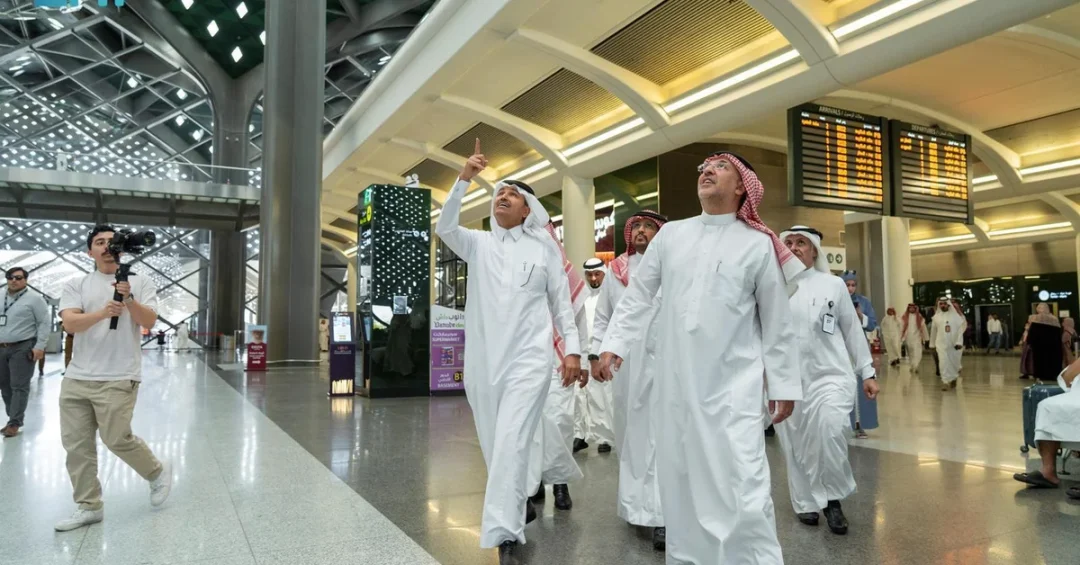
Minister of Transport and Logistic Services Saleh Al-Jasser inspected the readiness of the Haramain High-Speed Railway station in Madinah on March 14, 2025, accompanied by Saudi Railway Company (SAR) Chief Executive Dr. Bashar AlMalik, to verify the network’s capacity to serve Umrah pilgrims and visitors during the holy month of Ramadan 1446 AH. The inspection, reported by the Saudi Press Agency (SPA), focused on train operations and the full range of passenger services provided to worshippers arriving in the Kingdom for Umrah and Ziyarah. The visit underscores the priority Saudi leadership places on ensuring that transport infrastructure performs flawlessly during the busiest spiritual season of the Islamic calendar.
The Haramain High-Speed Railway, which links Makkah, Madinah, Jeddah and King Abdullah Economic City, is a flagship project of Saudi Arabia’s transport modernization program and a practical expression of Vision 2030’s goal to elevate the Kingdom’s logistics and pilgrimage services. During Ramadan, millions of worshippers travel between the two holy cities, and the railway is designed to move them quickly, safely and comfortably. How does a single inspection reflect the scale of planning behind this operation? It signals that every element, from scheduling to station staffing, is being coordinated at the highest level of government.
Context and Background
Why does the Haramain High-Speed Railway matter so much to Saudi Arabia’s pilgrimage economy? Launched in 2018, the 450-kilometer electric line is one of the fastest in the region, with trains capable of reaching 300 kilometers per hour. It was built specifically to reduce road congestion between the holy sites, cut travel times and provide a dignified, reliable alternative for the growing number of Umrah and Hajj visitors. The railway is operated by the Saudi Railway Company (SAR), a state-owned entity under the Ministry of Transport and Logistic Services, and it has become an essential component of the Kingdom’s public transport network.
The Ramadan season places exceptional demands on this network. Umrah pilgrimages typically peak in the final ten days of the month, and the railway must handle tens of thousands of passengers daily while maintaining strict safety and punctuality standards. In previous years, SAR has expanded capacity by running additional trains and extending operating hours. The inspection by Minister Al-Jasser and Dr. AlMalik is therefore not a routine courtesy but a critical operational review ahead of the season’s highest traffic period. It also reflects the Ministry of Transport and Logistic Services’ broader mandate to integrate rail, air, road and maritime transport under a single strategic vision.
What makes this year’s Ramadan particularly significant? Ramadan 1446 AH falls at a time when Saudi Arabia is welcoming record numbers of international visitors, supported by expanded e-visa programs and new direct flight routes. The Kingdom’s religious tourism sector has rebounded strongly, and the Haramain line is central to managing that growth without compromising the quality of the pilgrim experience. The inspection therefore carries implications beyond the railway itself, touching on national reputation, visitor satisfaction and the economic returns of pilgrimage travel.
Key Details of the Inspection
What exactly did the minister review during his visit to Madinah? According to the Saudi Press Agency, Saleh Al-Jasser examined the operation of the trains and the services offered to pilgrims and visitors throughout Ramadan. This included assessing departure and arrival schedules, crowd management procedures at the station, accessibility provisions for elderly and disabled passengers, and the availability of multilingual support staff. The minister was accompanied by Dr. Bashar AlMalik, whose presence highlights the close coordination between the ministry and the operating company. Together they reviewed the readiness of the station’s facilities, from ticketing areas to waiting lounges and boarding platforms.
The Haramain station in Madinah is a major architectural landmark, designed to handle large volumes of passengers with efficiency and comfort. It features expansive prayer areas, retail and dining outlets, and direct connections to local transport. During Ramadan, the station operates on an enhanced schedule, with additional trains and extended hours to accommodate worshippers who often travel late into the night. The minister’s inspection covered these operational adjustments, ensuring that staffing levels, security arrangements and maintenance protocols are fully aligned with the expected surge in demand. The review also addressed contingency plans for potential disruptions, a standard part of Saudi Arabia’s commitment to reliable public services.
Why is such a detailed review necessary? Because the Haramain High-Speed Railway is not merely a transport link; it is a service to guests of the Kingdom undertaking a spiritual journey. Any delay or shortfall can affect thousands of worshippers and reflect on the national effort to host them with excellence. The Ministry of Transport and Logistic Services has consistently emphasized a proactive approach, conducting inspections before peak periods rather than reacting to problems. This inspection follows a pattern of similar visits to airports, ports and road projects across the Kingdom, demonstrating a hands-on management style that aligns with Vision 2030’s emphasis on accountability and service quality.
International and Regional Impact
How does the Haramain High-Speed Railway influence Saudi Arabia’s standing in the region and beyond? The line is a symbol of the Kingdom’s technological ambition and its ability to deliver world-class infrastructure. For international visitors, particularly those from neighboring Gulf states, Southeast Asia, Europe and North America, the railway offers a smooth, modern travel experience that contrasts sharply with older perceptions of the region. It has become a case study in how to manage large-scale religious tourism, and delegations from other countries have visited Saudi Arabia to study its operations. The inspection in Madinah therefore reinforces the Kingdom’s role as a leader in transport innovation and pilgrim services.
Regionally, the railway supports the broader integration of transport networks across the Gulf. It connects with King Abdulaziz International Airport in Jeddah and the Jeddah Islamic Port, facilitating seamless journeys for travelers. As Saudi Arabia expands its logistics capabilities under the National Transport and Logistics Strategy, the Haramain line serves as a backbone for moving people and goods efficiently. The minister’s visit also sends a message to regional partners that Saudi Arabia is continuously upgrading its infrastructure, creating opportunities for cooperation in rail technology, smart ticketing and passenger services. In a competitive tourism market, such reliability is a decisive advantage.
Economic and Strategic Significance
What economic value does the Haramain High-Speed Railway generate for Saudi Arabia? The pilgrimage sector is a major contributor to non-oil GDP, and the railway amplifies that contribution by enabling more visitors to complete their journeys in less time. Faster travel means pilgrims can extend their stays, visit more sites and spend more in local economies, from hotels and restaurants to retail and religious supplies. The railway also reduces the cost of road maintenance and lowers carbon emissions compared with private vehicle travel, aligning with Saudi Green Initiative goals. For SAR, increased ridership during Ramadan translates into operational experience that can be applied year-round.
Strategically, the line is part of a wider effort to diversify the economy away from oil, a central pillar of Vision 2030. By investing in transport infrastructure, the Kingdom creates jobs, attracts foreign expertise and improves the ease of doing business. The Ministry of Transport and Logistic Services has set ambitious targets to increase rail’s share of passenger and freight transport, and the Haramain project is a proven model. The minister’s inspection demonstrates that these targets are being pursued with rigor, ensuring that assets are maintained and services are optimized. In the long term, the railway’s success supports the goal of hosting 30 million Umrah pilgrims annually by 2030.
Vision 2030 Alignment
How does this inspection connect to Saudi Arabia’s long-term vision? Vision 2030 seeks to transform the Kingdom into a global logistics hub and a destination of choice for pilgrims and tourists. The Haramain High-Speed Railway embodies that vision by combining cutting-edge technology, sustainable design and service excellence. The Ministry of Transport and Logistic Services, under Minister Saleh Al-Jasser, is tasked with realizing these objectives, and regular inspections like the one in Madinah are a mechanism for ensuring that day-to-day operations meet strategic goals. The presence of SAR Chief Executive Dr. Bashar AlMalik further underscores the integrated approach between policy and execution.
As Ramadan 1446 AH progresses, the railway will carry hundreds of thousands of worshippers between Makkah and Madinah. The minister’s visit assures the public and international observers that Saudi Arabia is prepared to serve them with the highest standards. It also reflects the leadership’s enduring commitment to the Two Holy Mosques and those who visit them. By continuously improving its transport infrastructure, the Kingdom not only enhances the pilgrimage experience but also strengthens its position as a modern, forward-looking nation. The Haramain High-Speed Railway is more than a train line; it is a moving testament to Vision 2030 in action.
20 Questions
Q1. What was the purpose of Minister Saleh Al-Jasser’s visit to Madinah?
A1. He inspected the readiness of the Haramain High-Speed Railway station to serve Umrah pilgrims and visitors during Ramadan 1446 AH, reviewing train operations and passenger services to ensure a smooth and comfortable experience.
Q2. Who accompanied the minister during the inspection?
A2. He was accompanied by Dr. Bashar AlMalik, Chief Executive of the Saudi Railway Company (SAR), highlighting close coordination between the ministry and the operating company.
Q3. What is the Haramain High-Speed Railway?
A3. It is a 450-kilometer electric railway linking Makkah, Madinah, Jeddah and King Abdullah Economic City, capable of speeds up to 300 kilometers per hour, operated by SAR.
Q4. When did the inspection take place?
A4. The inspection took place on March 14, 2025, as reported by the Saudi Press Agency, ahead of the peak Umrah season in the final days of Ramadan.
Q5. Why is Ramadan a critical period for the railway?
A5. Ramadan sees a massive surge in Umrah pilgrims, with tens of thousands traveling between Makkah and Madinah daily, requiring additional trains, extended hours and enhanced crowd management.
Q6. What specific aspects did the minister review?
A6. He reviewed train operations, scheduling, passenger services, station facilities, accessibility provisions and contingency plans to ensure reliability during the high-demand period.
Q7. How does the railway support Vision 2030?
A7. It advances Vision 2030 by modernizing transport, enhancing the pilgrimage experience, creating jobs, supporting non-oil GDP and helping achieve the goal of 30 million Umrah pilgrims annually by 2030.
Q8. What is the role of the Ministry of Transport and Logistic Services?
A8. The ministry oversees and develops Saudi Arabia’s transport network, including rail, air, road and maritime sectors, ensuring they meet national strategic objectives and service quality standards.
Q9. How many passengers can the Haramain railway carry?
A9. The railway is designed to carry millions of passengers annually, with capacity for tens of thousands per day during peak seasons, using a fleet of modern high-speed trains.
Q10. What benefits does the railway offer to pilgrims?
A10. It offers fast, safe and comfortable travel between the holy cities, reducing road congestion, cutting travel time and providing a dignified journey with modern amenities.
Q11. How does the inspection reflect Saudi leadership’s priorities?
A11. It demonstrates hands-on oversight and a commitment to serving pilgrims with excellence, reflecting the leadership’s dedication to the Two Holy Mosques and Vision 2030 goals.
Q12. What economic impact does the railway have?
A12. It boosts the pilgrimage economy by enabling longer stays and increased spending, reduces road maintenance costs, lowers emissions and supports the diversification of the Saudi economy.
Q13. How does the railway contribute to environmental sustainability?
A13. As an electric train, it produces lower carbon emissions per passenger than private vehicles, aligning with the Saudi Green Initiative and sustainable transport objectives.
Q14. What stations does the Haramain railway serve?
A14. It serves stations in Makkah, Madinah, Jeddah and King Abdullah Economic City, with connections to King Abdulaziz International Airport and major road networks.
Q15. How does SAR ensure safety during Ramadan?
A15. SAR implements rigorous maintenance, staff training, security protocols and real-time monitoring, with contingency plans reviewed by the ministry to handle any disruptions.
Q16. What international interest exists in the Haramain project?
A16. Delegations from various countries have studied the railway as a model for managing religious tourism and high-speed rail, enhancing Saudi Arabia’s reputation for infrastructure excellence.
Q17. How does the railway fit into Saudi Arabia’s logistics strategy?
A17. It is a key component of the National Transport and Logistics Strategy, which aims to position the Kingdom as a global logistics hub and increase rail’s share of passenger and freight transport.
Q18. What role does Dr. Bashar AlMalik play?
A18. As CEO of Saudi Railway Company (SAR), he oversees the operation and development of the Haramain High-Speed Railway and other rail assets, ensuring they meet performance targets.
Q19. How does the inspection benefit international visitors?
A19. It assures international pilgrims that the railway is prepared to handle peak demand, offering a reliable, comfortable and efficient travel option between the holy cities.
Q20. What does the future hold for the Haramain High-Speed Railway?
A20. With continued investment and oversight, the railway is expected to expand capacity, adopt smart technologies and play a growing role in Saudi Arabia’s pilgrimage and tourism sectors under Vision 2030.
Reader Feedback
We value your thoughts. Please share your feedback on this article.
Your feedback helps us improve our coverage.
Related articles
 Crown Prince Holds Talks with Russian President Putin
 KSrelief Distributes 250 Food Baskets in Bangladesh
 Minister Launches First Digital Employee at Saudi Ground Services
 KSrelief Distributes 220 Food Baskets in Mauritania
 KSrelief Performs 45 Pediatric Surgeries in Turkmenistan
 KSrelief, Chad Envoy Meet to Boost Humanitarian Ties