


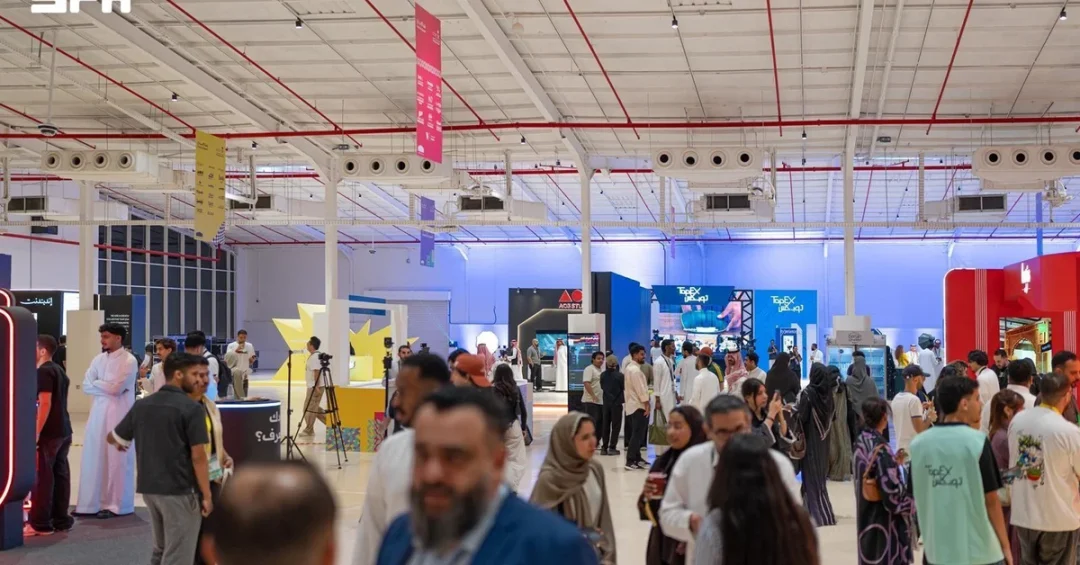
The third edition of the Creative Summit concluded in Jax District, Diriyah, drawing more than 4,000 professionals from 12 countries for a three-day program organized in strategic partnership with the Ministry of Media, the Saudi Press Agency reported. The gathering brought together creatives, investors, entrepreneurs, and content creators from the Kingdom of Saudi Arabia and abroad, positioning Diriyah once again as a meeting point for the region’s rapidly expanding creative economy. Held in the historic district on the outskirts of Riyadh, the summit underscored how Saudi Arabia is converting cultural heritage into a platform for modern professional exchange. Could a single event in Diriyah signal something larger about where the global creative industries are heading?
The partnership with the Ministry of Media reflects a deliberate national effort to strengthen cooperation between the media sector and the creative industries, develop the Kingdom’s creative economy, and empower national talent in line with Saudi Vision 2030. Over three days, the summit hosted panel discussions and interactive workshops covering artificial intelligence, sustainability, advertising, marketing, branding, and content creation. For a sector that is being reshaped by technology almost in real time, the choice of themes was neither accidental nor decorative. Attendees left with new professional partnerships, practical exposure to emerging tools, and direct connections to regional and international expertise — outcomes that matter as much to individual careers as they do to the national economy.
Context and Background
Why does a summit in Diriyah attract thousands of professionals from a dozen countries? The answer lies in the scale and speed of Saudi Arabia’s cultural and media transformation. Jax District, a former industrial area reimagined as a creative hub, has become a recognizable address for artists, designers, filmmakers, and digital creators. Hosting the Creative Summit there places the event at the intersection of heritage and innovation — a combination that has become a signature of the Kingdom’s approach to cultural development. Diriyah itself, a UNESCO World Heritage site and the birthplace of the Saudi state, offers a setting where tradition and contemporary practice are deliberately brought into conversation.
The Ministry of Media’s strategic partnership gives the summit a clear institutional anchor. The ministry has been tasked with modernizing the Kingdom’s media landscape, supporting content production, and building bridges between traditional media organizations and the fast-growing community of independent creators. By backing an event that convenes investors, entrepreneurs, and creatives under one roof, the ministry is effectively treating the creative economy as infrastructure — something to be built, connected, and sustained rather than left to chance. This year’s edition also continued the summit’s tradition of exploring the relationship between humans and artificial intelligence, a theme that has moved from the margins of industry conversation to its center.
The three-day format allowed for depth that a single-day conference could not achieve. Participants moved between keynote sessions, hands-on workshops, and informal networking, creating a rhythm that encouraged both structured learning and spontaneous collaboration. For many attendees, particularly younger creators from across the Kingdom, the summit represented a rare opportunity to test ideas in front of international peers and potential investors. The presence of 4,000 professionals from 12 countries also signals that Saudi Arabia’s creative sector is no longer a domestic story — it is part of a global circuit of festivals, markets, and professional gatherings.
Key Details and Program Highlights
What did the third edition actually deliver for the people in the room? The program combined panel discussions with interactive workshops, covering artificial intelligence, sustainability, advertising, marketing, branding, and content creation. These are not abstract topics; they are the daily working tools of agencies, studios, production houses, and independent creators. Sessions on artificial intelligence examined how generative tools are changing workflows in design, video, and copywriting, while discussions on sustainability addressed the growing expectation that creative production itself should be responsible. Advertising and branding panels explored how audiences across the region are responding to new formats and platforms, and content creation workshops gave participants practical frameworks they could apply immediately.
The summit also functioned as a marketplace of expertise. Organizers emphasized opportunities to exchange knowledge, build professional partnerships, and connect local talent with regional and international expertise. For a Saudi creator seeking a co-production partner, a distributor, or a mentor, those connections can be transformative. For international participants, the event offered direct access to a market that is investing heavily in media, entertainment, and cultural production. The result is a two-way flow: Saudi talent gains global exposure, while international firms gain a clearer understanding of local audiences, tastes, and regulatory frameworks.
Jax District’s role deserves particular attention. As a creative quarter in Diriyah, it hosts studios, galleries, and event spaces that keep cultural production visible year-round rather than only during major festivals. Locating the Creative Summit there reinforces the idea that the creative economy needs physical places to gather, experiment, and display work. The district’s industrial architecture, adapted for contemporary use, also embodies a broader Saudi theme: repurposing what already exists rather than building only from scratch. That approach aligns with sustainability goals and with a cultural strategy that values continuity alongside reinvention.
International and Regional Impact
How does an event in Riyadh change conversations in Cairo, Dubai, London, or Seoul? The presence of professionals from 12 countries means ideas, contacts, and projects travel outward when the summit ends. Regional creative hubs have long competed for talent and investment, but the growth of Saudi Arabia’s media and entertainment sector is increasingly complementary rather than purely competitive. Co-productions, joint workshops, and cross-border distribution deals are natural outcomes when creators from different markets spend three days in the same space. For international companies, the summit is a low-friction entry point to a market that is expanding its screen, audio, and digital content output.
The focus on artificial intelligence also positions the Kingdom within a global conversation that is still being written. Governments, studios, and platforms worldwide are grappling with questions about authorship, compensation, training data, and creative authenticity. By convening practitioners to discuss these issues in a professional setting, the Creative Summit contributes a regional perspective to debates often dominated by North American and European voices. That matters for Saudi Arabia’s soft power: it demonstrates that the Kingdom is not merely adopting global trends but participating in shaping how they are understood and applied in the Middle East.
Economic and Strategic Significance
Why should economists and policymakers pay attention to a creative gathering? The creative economy is a measurable contributor to GDP, employment, and exports in advanced economies, and Saudi Arabia is building the institutions, events, and talent pipelines needed to capture similar value. Summits like this one generate direct economic activity — hospitality, transport, venue services — but their larger significance lies in deal-making, skills transfer, and market signaling. When 4,000 professionals gather, the conversations that happen in corridors and coffee lines often matter more than the formal sessions. Those conversations become contracts, collaborations, and content that reaches audiences far beyond the Kingdom.
The Ministry of Media’s involvement also reflects a strategic understanding that media and creative industries reinforce one another. Strong media organizations need strong creative talent; strong creative businesses need distribution platforms and professional standards. By supporting an event that bridges both worlds, the ministry is helping to build an ecosystem rather than a single sector. For investors, this reduces uncertainty: a clearer talent pool, more predictable professional norms, and a growing track record of successful events make the market easier to assess. For entrepreneurs, it means access to mentors, partners, and customers who might otherwise be difficult to reach.
Sustainability, one of the program’s core themes, adds another layer. Creative production has environmental costs — energy, materials, travel — and audiences increasingly expect studios and agencies to address them. Workshops and panels that treat sustainability as a practical production concern, rather than a slogan, help embed better practices across the industry. This aligns with the Kingdom’s broader environmental commitments and with the expectations of international partners who now routinely ask about carbon footprints and responsible sourcing when selecting collaborators.
Vision 2030 Alignment
How does a three-day summit connect to a national transformation plan spanning a generation? Saudi Vision 2030 places quality of life, economic diversification, and the empowerment of young talent at its core, and the creative industries sit at the intersection of all three. The Creative Summit’s explicit goal of developing the Kingdom’s creative economy and empowering national talent is a direct expression of that agenda. Every workshop that upgrades a creator’s skills, every partnership that links a Saudi studio to an international distributor, and every young professional who leaves with a clearer career path contributes to the human capital that Vision 2030 depends on.
The event also strengthens the Kingdom’s position as a convenor. Saudi Arabia already hosts major sporting, cultural, and business gatherings; adding a credible creative summit to that calendar rounds out the offer and attracts a different kind of visitor — one who returns for future editions, brings colleagues, and invests in local projects. Diriyah, as the setting, benefits from this footfall and from the association with contemporary creativity, reinforcing its identity as both a heritage destination and a living cultural quarter. The Ministry of Media’s strategic partnership ensures continuity, signaling that this is a long-term commitment rather than a one-off spectacle.
For international readers, the takeaway is straightforward. The third edition of the Creative Summit demonstrated that Saudi Arabia’s creative economy is organized, ambitious, and open to the world. It brought together thousands of professionals, addressed the technologies reshaping their work, and produced the kind of connections that turn into projects. As the Kingdom continues to invest in media, culture, and entertainment, events like this will serve as both barometer and engine — measuring how far the sector has come and accelerating how quickly it moves next. The next edition will be watched closely, and on this evidence, it will have plenty to build on.
20 Questions
Q1. What was the Creative Summit?
A1. The Creative Summit is a professional gathering for the creative industries. Its third edition was held in Jax District, Diriyah, in strategic partnership with the Ministry of Media, bringing together creatives, investors, entrepreneurs, and content creators from Saudi Arabia and abroad.
Q2. When and where did the third edition take place?
A2. The third edition concluded in Jax District, Diriyah, following a three-day program. Diriyah is a historic district near Riyadh and a UNESCO World Heritage site, making it a distinctive setting for a contemporary creative industries event.
Q3. How many attendees participated?
A3. More than 4,000 professionals attended the summit, according to the Saudi Press Agency. The participants included creatives, investors, entrepreneurs, and content creators, reflecting the breadth of the creative economy rather than a single discipline.
Q4. How many countries were represented?
A4. Professionals from 12 countries took part in the three-day event. The international participation underscores the summit’s role as a meeting point between Saudi talent and regional and global expertise.
Q5. Who organized the summit?
A5. The summit was held in strategic partnership with the Ministry of Media. That partnership supports the ministry’s efforts to strengthen cooperation between the media and creative industries and to develop the Kingdom’s creative economy.
Q6. What were the main themes of this year’s edition?
A6. The program explored the relationship between humans and artificial intelligence and the impact of technological developments on the creative sector. It also addressed sustainability, advertising, marketing, branding, and content creation through panels and workshops.
Q7. Why was artificial intelligence a central topic?
A7. AI is reshaping workflows in design, video, writing, and marketing. By dedicating sessions to it, the summit gave professionals a structured setting to examine how these tools affect creativity, employment, and production standards.
Q8. What formats did the sessions use?
A8. The program featured panel discussions and interactive workshops. This mix allowed participants to hear expert perspectives and then apply ideas in practical, hands-on settings with peers and facilitators.
Q9. What is Jax District?
A9. Jax District is a creative quarter in Diriyah that hosts studios, galleries, and event spaces. Its industrial architecture has been adapted for contemporary cultural use, making it a fitting venue for a summit focused on innovation.
Q10. How does the summit support Saudi talent?
A10. It connects local talent with regional and international expertise, offers skills development through workshops, and creates opportunities to build professional partnerships. These outcomes help creators advance their careers within the Kingdom and beyond.
Q11. What economic benefits does the event bring?
A11. The summit generates activity in hospitality, transport, and venue services. More importantly, it facilitates deal-making, knowledge transfer, and market connections that can lead to content production, exports, and long-term investment.
Q12. How does the summit relate to Vision 2030?
A12. Vision 2030 emphasizes economic diversification, quality of life, and empowering national talent. The summit directly supports these goals by developing the creative economy and strengthening the media and creative industries.
Q13. What role does the Ministry of Media play?
A13. The ministry supports cooperation between media and creative sectors, helps develop the creative economy, and works to empower national talent. Its strategic partnership gives the summit institutional backing and continuity.
Q14. Why is sustainability part of a creative summit?
A14. Creative production has environmental costs, and audiences and partners increasingly expect responsible practices. Sessions on sustainability help embed better standards across studios, agencies, and production companies.
Q15. What can attendees expect to gain?
A15. Attendees gain practical skills, new professional contacts, exposure to emerging technologies, and opportunities to form partnerships. Many leave with concrete ideas for projects, collaborations, or career moves.
Q16. How does the event benefit international participants?
A16. International participants gain access to a growing market, meet local talent and decision-makers, and develop a clearer understanding of regional audiences and production practices. This supports co-productions and distribution deals.
Q17. Is the Creative Summit an annual event?
A17. The third edition indicates an established, recurring format. Each edition builds on the previous one, expanding themes, participation, and professional outcomes, which suggests continued development in future years.
Q18. What makes Diriyah a suitable host location?
A18. Diriyah combines heritage status with modern cultural infrastructure. Hosting a creative industries summit there highlights the connection between Saudi Arabia’s history and its contemporary ambitions in media and culture.
Q19. How does the summit support content creators?
A19. It offers workshops on content creation, branding, and marketing, plus networking with investors and peers. These resources help creators professionalize their work and reach wider audiences.
Q20. What does the summit signal about Saudi Arabia’s creative sector?
A20. It signals that the sector is organized, internationally connected, and growing. The scale of participation and the Ministry of Media’s partnership show that the creative economy is a strategic national priority.
Reader Feedback
We value your thoughts. Please share your feedback on this article.
Your feedback helps us improve our coverage.
Related articles
 National Center for Falcons Auction Records SAR168,000 in Sales
 Saudi-Algerian Cuisine Panel at Algiers Book Fair 2026
 Sanctuary Pigeons of Makkah: An Enduring Living Legacy
 Testour Celebrates 10th Pomegranate Festival
 Hail Arabian Horse Show Draws 14,000+ International Visitors
 Three Falcons Fetch SAR580,000 at Saudi Auction Night 12