


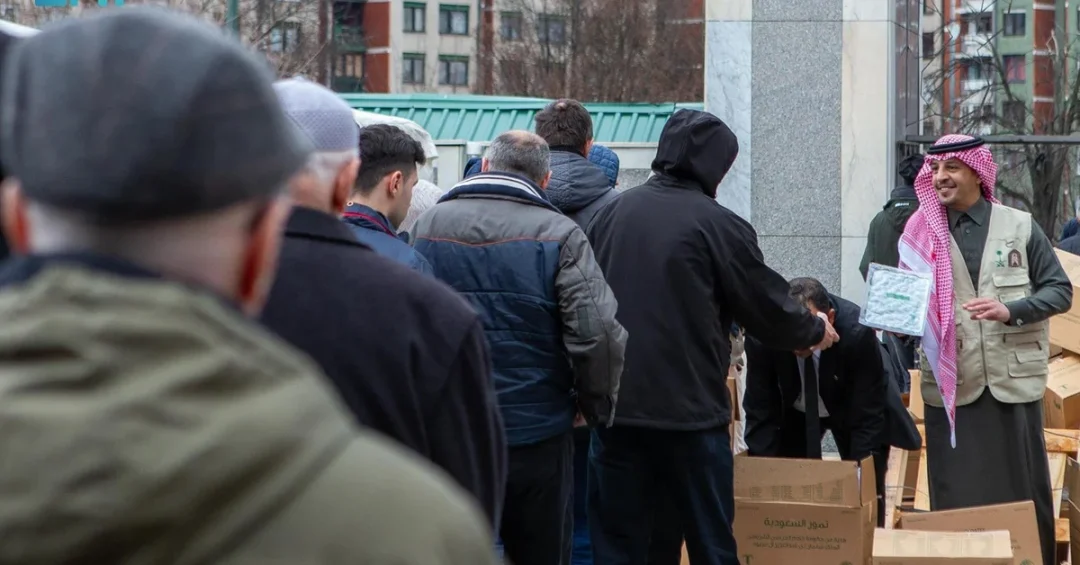
Saudi Arabia has distributed four tons of dates to 3,500 worshippers at the King Fahd Mosque in Sarajevo, Bosnia and Herzegovina, as part of the Custodian of the Two Holy Mosques’ annual Ramadan dates distribution program for 1446 AH. The initiative, launched by the Ministry of Islamic Affairs, Dawah and Guidance, reached one of the Balkans’ largest mosques, where recipients expressed deep gratitude for the Kingdom’s gesture and its commitment to sharing the blessings of the holy month. The distribution reflects Saudi Arabia’s enduring tradition of generosity and its global leadership in serving Islam and Muslims.
Have you ever considered how a simple gift of dates can strengthen bonds between nations and communities? The program, which this year extends to 102 countries, underscores the Kingdom’s dedication to supporting Muslim communities worldwide during Ramadan. By providing this essential staple, Saudi Arabia not only honors a cherished tradition but also reinforces its role as a unifying force in the Islamic world. The distribution at King Fahd Mosque, a symbol of Saudi-Bosnian friendship, highlights the deep historical and cultural ties between the Kingdom and the Balkans, and it demonstrates how Vision 2030’s humanitarian outreach complements the nation’s broader diplomatic and economic objectives.
Context and Background
Why does Saudi Arabia prioritize the distribution of dates during Ramadan? The Custodian of the Two Holy Mosques’ dates distribution program is a long-standing initiative that embodies the Kingdom’s commitment to Islamic solidarity and humanitarian service. Organized annually by the Ministry of Islamic Affairs, Dawah and Guidance, the program ensures that Muslims around the world can break their fast with dates, a practice rooted in Islamic tradition. The King Fahd Mosque in Sarajevo, completed in 2000 with Saudi support, stands as a testament to the Kingdom’s historical ties with Bosnia and Herzegovina and its people. This year’s distribution of four tons of dates to 3,500 worshippers is a continuation of that legacy, bringing tangible relief and spiritual joy to a community that has long cherished its connection to Saudi Arabia.
Saudi Arabia’s engagement in the Balkans dates back decades, with significant investments in mosques, educational institutions, and humanitarian projects. The King Fahd Mosque, named after the late Custodian of the Two Holy Mosques King Fahd bin Abdulaziz, is one of the largest in the region and serves as a cultural and religious hub for Sarajevo’s Muslim population. The dates distribution program, now in its 1446 AH iteration, is part of a broader strategy to promote moderation, interfaith harmony, and Islamic unity. It also aligns with the Kingdom’s Vision 2030, which emphasizes global outreach and soft power. By supporting Muslim communities in Bosnia and Herzegovina, Saudi Arabia reinforces its image as a benevolent leader and a reliable partner in times of need.
Key Details of the Distribution
What exactly does the distribution of four tons of dates entail for the beneficiaries? The Ministry of Islamic Affairs, Dawah and Guidance coordinated with local authorities at the King Fahd Mosque to ensure that the dates reached 3,500 worshippers efficiently and respectfully. The distribution took place during Ramadan, allowing recipients to use the dates for iftar, the evening meal that breaks the daily fast. Worshippers expressed heartfelt gratitude, acknowledging the Custodian of the Two Holy Mosques’ dedication to sharing the joy of Ramadan and praising the Kingdom’s global service to Islam and Muslims. The event was marked by a spirit of brotherhood and appreciation, with many noting that such gestures strengthen their faith and connection to the wider Islamic community.
The program’s expansion to 102 countries this year is a significant increase from previous years, reflecting Saudi Arabia’s growing commitment to global Muslim support. The dates, sourced from the Kingdom’s renowned date farms, are of the highest quality, symbolizing the generosity and hospitality for which Saudi Arabia is known. The distribution at King Fahd Mosque was carried out in collaboration with the mosque’s administration and local volunteers, ensuring smooth logistics and broad reach. This initiative not only provides nutritional benefits but also serves as a reminder of the shared values that bind Muslims across continents. It is a practical demonstration of the Kingdom’s leadership in humanitarian aid and its unwavering support for Islamic causes.
International and Regional Impact
How does Saudi Arabia’s dates distribution program influence its international standing? By extending its reach to 102 countries, the Kingdom reinforces its role as a global leader in Islamic philanthropy. The program enhances Saudi Arabia’s soft power, fostering goodwill and strengthening diplomatic ties with nations across Africa, Asia, Europe, and the Americas. In the Balkans, a region with a significant Muslim population and a history of complex interfaith dynamics, the distribution at King Fahd Mosque serves as a beacon of hope and solidarity. It also counters extremist narratives by promoting moderate Islam and highlighting the Kingdom’s commitment to peaceful coexistence and humanitarian values.
Regional implications extend beyond the immediate beneficiaries. The program supports local economies by partnering with distributors and volunteers, and it bolsters the image of Saudi Arabia as a reliable ally in times of need. For Bosnia and Herzegovina, the gesture deepens the historical friendship with the Kingdom, which has been a steadfast supporter since the 1990s. It also encourages other Gulf states to ramp up their humanitarian efforts, creating a positive ripple effect in the region. Furthermore, the distribution aligns with Saudi Arabia’s broader foreign policy objectives, which include promoting stability, countering extremism, and fostering economic cooperation. By investing in people and communities, the Kingdom builds lasting relationships that transcend political cycles.
Economic and Strategic Significance
What economic and strategic benefits does Saudi Arabia derive from its global dates distribution? While the program is primarily humanitarian, it also serves as a strategic tool for enhancing the Kingdom’s global image and expanding its influence. Dates are a major Saudi export, and the program showcases the quality and diversity of Saudi agricultural products, potentially boosting trade. The initiative also complements Vision 2030’s goal of diversifying the economy by promoting non-oil exports and strengthening international partnerships. Additionally, the distribution fosters people-to-people ties that can lead to increased tourism, investment, and cultural exchange, all of which are vital for Saudi Arabia’s long-term prosperity.
Strategically, the program reinforces Saudi Arabia’s leadership in the Islamic world, a key pillar of its foreign policy. By supporting Muslim communities in 102 countries, the Kingdom positions itself as a benevolent hegemon, capable of providing tangible benefits and fostering unity. This soft power approach is particularly effective in regions where Saudi Arabia seeks to counter Iranian influence or other rival narratives. In Bosnia and Herzegovina, the distribution at King Fahd Mosque strengthens the Kingdom’s foothold in Europe, a continent where it aims to build bridges and promote moderate Islam. The program also aligns with the Kingdom’s efforts to reform its image abroad, showcasing a modern, compassionate, and forward-looking Saudi Arabia that is committed to global welfare.
Vision 2030 Alignment
How does the dates distribution program reflect the objectives of Saudi Vision 2030? Vision 2030 is not only about economic diversification and social reform; it also emphasizes the Kingdom’s role as a global leader and its commitment to humanitarian causes. The program embodies the vision’s focus on enhancing Saudi Arabia’s soft power and promoting its values of generosity, moderation, and Islamic solidarity. By reaching out to 102 countries, the Kingdom demonstrates its ability to act as a force for good on the world stage, aligning with the vision’s goal of a “vibrant society” and a “thriving economy.” Furthermore, the program supports the vision’s emphasis on strengthening international partnerships and showcasing Saudi Arabia’s cultural heritage, including its renowned dates.
In the long term, initiatives like the Ramadan dates distribution contribute to the vision’s overarching aim of transforming Saudi Arabia into a global hub for trade, tourism, and Islamic leadership. They also complement other Vision 2030 projects, such as the expansion of the Two Holy Mosques and the development of NEOM, by reinforcing the Kingdom’s image as a modern, dynamic, and compassionate nation. As Saudi Arabia continues to implement its ambitious reform agenda, programs that combine humanitarian outreach with strategic messaging will remain essential. The distribution at King Fahd Mosque is a shining example of how the Kingdom’s traditions of generosity and its forward-looking vision work hand in hand to build a better future for all.
20 Questions
Q1. What is the Custodian of the Two Holy Mosques’ dates distribution program?
A1. It is an annual initiative by Saudi Arabia’s Ministry of Islamic Affairs, Dawah and Guidance to distribute dates to Muslim communities worldwide during Ramadan, reflecting the Kingdom’s generosity and commitment to Islamic solidarity.
Q2. How many tons of dates were distributed at King Fahd Mosque in Sarajevo?
A2. Four tons of dates were distributed to 3,500 worshippers at the King Fahd Mosque in Sarajevo, Bosnia and Herzegovina, during Ramadan 1446 AH.
Q3. How many countries are included in this year’s dates distribution program?
A3. The program extends to 102 countries this year, demonstrating Saudi Arabia’s global reach and its dedication to supporting Muslims around the world.
Q4. Who launched the distribution at King Fahd Mosque?
A4. The distribution was launched by the Ministry of Islamic Affairs, Dawah and Guidance, which oversees the Kingdom’s religious outreach and humanitarian programs globally.
Q5. Why is the King Fahd Mosque significant?
A5. The King Fahd Mosque in Sarajevo is one of the largest mosques in the Balkans, built with Saudi support, and serves as a symbol of the enduring friendship between Saudi Arabia and Bosnia and Herzegovina.
Q6. How did the worshippers react to the distribution?
A6. Worshippers expressed gratitude for the Custodian of the Two Holy Mosques’ gesture, acknowledging his dedication to sharing the joy of Ramadan and praising the Kingdom’s global service to Islam and Muslims.
Q7. What is the significance of distributing dates during Ramadan?
A7. Dates are traditionally used to break the fast during Ramadan, and distributing them helps Muslims observe the holy month while reinforcing the spirit of generosity and community support.
Q8. How does this program align with Saudi Vision 2030?
A8. It aligns with Vision 2030 by enhancing Saudi Arabia’s soft power, promoting Islamic solidarity, and showcasing the Kingdom’s humanitarian leadership and commitment to global partnerships.
Q9. What impact does the program have on Saudi Arabia’s international image?
A9. The program boosts Saudi Arabia’s image as a benevolent and compassionate nation, strengthening diplomatic ties and fostering goodwill among Muslim communities worldwide.
Q10. Are the dates sourced from Saudi Arabia?
A10. Yes, the dates are sourced from the Kingdom’s renowned date farms, ensuring high quality and showcasing Saudi agricultural excellence.
Q11. How does the distribution benefit Bosnia and Herzegovina?
A11. It provides tangible support to the local Muslim community, deepens historical ties with Saudi Arabia, and promotes interfaith harmony and moderation in the region.
Q12. What role does the Ministry of Islamic Affairs play in this initiative?
A12. The Ministry of Islamic Affairs, Dawah and Guidance organizes and coordinates the distribution, working with local partners to ensure efficient and respectful delivery to beneficiaries.
Q13. Is this the first time the program has been held at King Fahd Mosque?
A13. The program has been held in previous years, but this year’s distribution continues the tradition, reflecting the ongoing commitment to the mosque and its community.
Q14. How does the program counter extremism?
A14. By promoting moderate Islam and providing humanitarian aid, the program counters extremist narratives and highlights Saudi Arabia’s role as a force for stability and peace.
Q15. What other countries in the Balkans benefit from the program?
A15. The program extends to multiple countries in the Balkans, including Bosnia and Herzegovina, where Saudi Arabia supports various religious and humanitarian initiatives.
Q16. How can other nations learn from Saudi Arabia’s dates distribution model?
A16. Other nations can learn from Saudi Arabia’s effective coordination, focus on quality, and integration of humanitarian aid with strategic diplomacy to strengthen global ties.
Q17. What is the historical context of Saudi-Bosnian relations?
A17. Saudi Arabia has supported Bosnia and Herzegovina since the 1990s, providing humanitarian aid and funding for religious and educational institutions, including the King Fahd Mosque.
Q18. Does the program include other food items besides dates?
A18. The program primarily focuses on dates, a traditional and symbolic food, but it may be complemented by other aid initiatives depending on local needs and circumstances.
Q19. How does the program support Saudi Arabia’s economic diversification?
A19. It promotes Saudi dates as a premium export, potentially boosting trade and aligning with Vision 2030’s goal of diversifying the economy away from oil.
Q20. What is the expected long-term impact of the dates distribution program?
A20. The program is expected to strengthen Saudi Arabia’s global leadership, foster lasting goodwill, and reinforce its commitment to humanitarian values, contributing to a positive legacy for generations.
Reader Feedback
We value your thoughts. Please share your feedback on this article.
Your feedback helps us improve our coverage.
Related articles
 Saudi Arabia Chairs 69th UN Commission on Status of Women
 Saudi E-Gates Speed Entry at Four Major Airports
 Six Projects Open for Feedback via Istitlaa Platform
 Saudi Arabia, Ukraine Strengthen Economic Ties in Joint Statement
 Shura Council Highlights Saudi Women’s Empowerment at CSW69
 Saudi Arabia Condemns Israeli Electricity Blackout in Gaza as Collective Punishment