


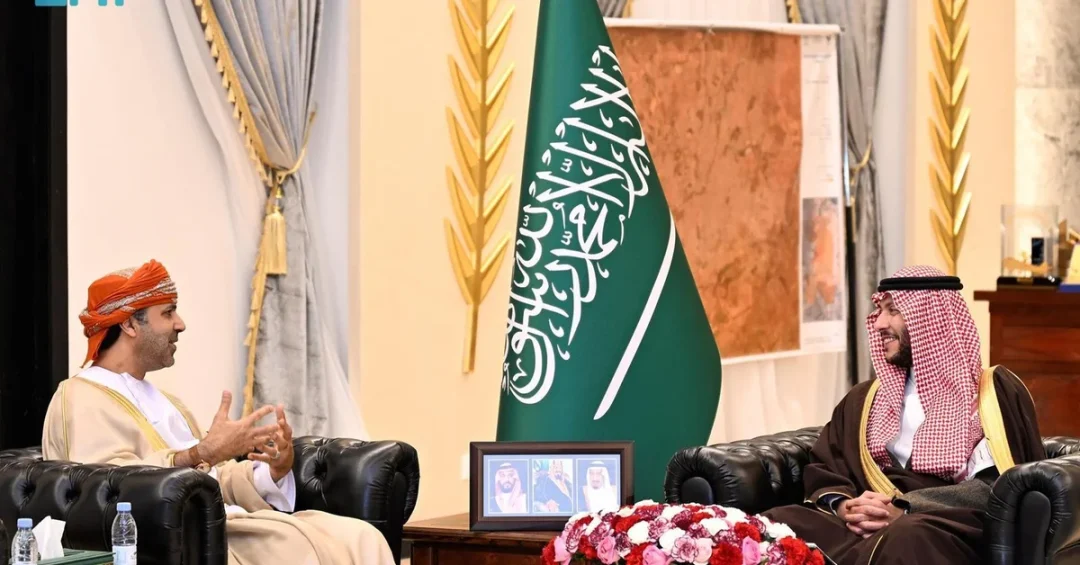
The Governor of Taif, Prince Saud bin Nahar bin Saud bin Abdulaziz, received the Consul General of the Sultanate of Oman, Salem Al Busaidi, at his office in Taif on March 11, 2025, in a meeting that underscored the enduring strength of Saudi-Omani relations. The encounter, reported by the Saudi Press Agency (SPA), brought together two representatives of nations whose ties stretch back generations and whose modern partnership continues to deepen across diplomatic, economic, and cultural domains. During the meeting, the two officials addressed topics of mutual interest, reflecting the regular diplomatic engagement that characterizes the relationship between the Kingdom of Saudi Arabia and the Sultanate of Oman.
The reception of a foreign consul general by a regional governor is a significant diplomatic courtesy in Saudi Arabia, signaling the importance Riyadh places on its bilateral relationships. Prince Saud bin Nahar bin Saud bin Abdulaziz, a member of the Saudi royal family serving as Governor of Taif, represents the Kingdom’s commitment to maintaining open channels of communication with its Gulf neighbors. The meeting with Consul General Salem Al Busaidi, Oman’s senior diplomatic representative in the Taif region, highlights the routine but vital interactions that sustain the close partnership between the two countries. Isn’t it remarkable how such diplomatic engagements, though often understated, form the backbone of regional stability and cooperation?
Context and Background
Saudi-Omani relations are among the oldest and most stable in the Gulf region, rooted in shared history, geography, and cultural heritage. The two nations share a border and have long cooperated on issues ranging from trade and security to cultural exchange and environmental protection. The Sultanate of Oman, under the leadership of Sultan Haitham bin Tariq, has consistently maintained a policy of constructive engagement with the Kingdom, and Saudi Arabia has reciprocated with a similar approach. This meeting in Taif is part of a broader pattern of regular consultations between Saudi and Omani officials at various levels of government.
The role of a consul general is multifaceted, encompassing the protection of citizens’ interests, facilitation of trade and investment, and promotion of cultural ties. Consul General Salem Al Busaidi’s presence in Taif reflects Oman’s interest in strengthening its presence in the western region of Saudi Arabia, an area of growing economic and touristic importance. Taif, known for its mild climate, agricultural produce, and historical significance, has become a focal point for development under Saudi Vision 2030, making it a logical location for enhanced diplomatic engagement. How often do we pause to consider the strategic value of such regional diplomatic outposts in fostering long-term international partnerships?
The meeting also comes amid a period of heightened regional diplomacy, with Gulf Cooperation Council (GCC) states working to align their economic and security policies. Saudi Arabia and Oman have been key players in these efforts, supporting initiatives aimed at promoting stability in Yemen, encouraging dialogue with Iran, and advancing economic integration. The Taif meeting, while bilateral in nature, contributes to this broader regional dynamic by reinforcing the personal and institutional relationships that underpin multilateral cooperation.
Key Details
According to the Saudi Press Agency, the meeting between Prince Saud bin Nahar bin Saud bin Abdulaziz and Consul General Salem Al Busaidi took place on March 11, 2025, at the governor’s office in Taif. The two officials discussed topics of mutual interest, a standard diplomatic formulation that typically encompasses a wide range of bilateral issues, including economic cooperation, cultural exchange, consular affairs, and regional developments. The SPA report did not specify the exact topics discussed, but the cordial nature of the encounter was evident in the official readout.
Prince Saud bin Nahar bin Saud bin Abdulaziz has served as Governor of Taif since his appointment by royal decree, and he has been actively involved in overseeing the region’s development projects, including those related to tourism, agriculture, and infrastructure. His meeting with the Omani consul general demonstrates his engagement with the international diplomatic community and his role in facilitating foreign investment and cooperation in the Taif region. Consul General Salem Al Busaidi, for his part, represents Omani interests in the Taif area and works to support Omani citizens residing or traveling in the region.
The meeting also highlights the importance of people-to-people ties between Saudi Arabia and Oman. Thousands of Omani citizens visit Saudi Arabia each year for tourism, business, and religious purposes, particularly during the Hajj and Umrah seasons. Similarly, many Saudis travel to Oman for leisure and business. The consul general’s role in assisting these travelers and fostering mutual understanding is crucial. Aren’t these interpersonal connections the true foundation upon which enduring international friendships are built?
International and Regional Impact
The Saudi-Omani relationship carries significant weight in regional and international affairs. Both countries are members of the Gulf Cooperation Council, the Organization of Islamic Cooperation, and the Arab League, and they often coordinate their positions on key issues. Oman’s unique diplomatic stance, which emphasizes neutrality and mediation, complements Saudi Arabia’s leadership role in the region. Together, they have contributed to efforts to resolve conflicts in Yemen and to maintain stability in the Strait of Hormuz, a vital chokepoint for global energy supplies.
The meeting in Taif, while a routine diplomatic engagement, reinforces the message that Saudi Arabia values its relationships with all its neighbors and is committed to dialogue and cooperation. In a region often characterized by tensions, the Saudi-Omani partnership stands out as a model of constructive engagement. It also aligns with Saudi Arabia’s broader foreign policy objectives under the leadership of Custodian of the Two Holy Mosques King Salman bin Abdulaziz Al Saud and Crown Prince Mohammed bin Salman, which prioritize regional stability, economic prosperity, and mutual respect.
From an international perspective, the strengthening of Saudi-Omani ties contributes to the stability of global energy markets and maritime trade routes. Both countries are significant energy producers and are working to diversify their economies in line with their respective national visions. Cooperation between them can enhance the efficiency of these efforts and attract foreign investment. How might the deepening of this bilateral relationship influence the broader geopolitical landscape of the Middle East?
Economic and Strategic Significance
Economically, Saudi Arabia and Oman are increasingly interconnected. Trade between the two countries has grown steadily, with Saudi Arabia ranking as one of Oman’s top trading partners. Omani exports to Saudi Arabia include minerals, plastics, and fish products, while Saudi exports to Oman include machinery, vehicles, and foodstuffs. The two countries have also collaborated on major infrastructure projects, such as the planned Saudi-Omani road link that will facilitate the movement of goods and people across their shared border.
Strategically, the relationship is vital for both nations. Oman’s location on the Strait of Hormuz gives it a key role in global energy security, and its stability is of paramount importance to Saudi Arabia. Conversely, Saudi Arabia’s economic strength and political influence provide Oman with a reliable partner in an uncertain region. The meeting in Taif, therefore, is not merely a ceremonial courtesy but a reaffirmation of a strategic partnership that benefits both countries and the wider region.
Moreover, the engagement between Saudi and Omani officials at the regional level, such as the meeting between the Taif governor and the Omani consul general, helps to identify and address practical issues that affect citizens and businesses. These can range from customs procedures and visa regulations to joint tourism promotion and cultural events. By maintaining open lines of communication, the two countries can ensure that their bilateral relationship continues to deliver tangible benefits. Isn’t it through such practical cooperation that grand strategic visions are ultimately realized?
Vision 2030 Alignment
Saudi Vision 2030, the Kingdom’s ambitious blueprint for economic diversification and social transformation, places great emphasis on international cooperation and regional integration. The vision aims to position Saudi Arabia as a global investment powerhouse and a hub connecting three continents. Strengthening ties with neighboring countries like Oman is integral to achieving these goals, as it facilitates trade, attracts investment, and promotes cultural exchange. The meeting between Governor Prince Saud bin Nahar and Consul General Salem Al Busaidi is a small but meaningful example of how Vision 2030 is being implemented on the ground through diplomatic engagement.
Taif itself is a key beneficiary of Vision 2030 initiatives. The city is being developed as a major tourism destination, with projects such as the Taif Rose Festival and the Al Hada and Al Shafa mountain resorts attracting visitors from across the Kingdom and abroad. Improved relations with Oman can boost tourism flows, as Omani visitors are a significant market for Saudi tourism. Additionally, the agricultural sector in Taif, famous for its roses, honey, and grapes, can benefit from increased trade with Oman and other Gulf countries.
In conclusion, the reception of the Omani Consul General by the Governor of Taif is a testament to the enduring friendship between Saudi Arabia and Oman and a reflection of the Kingdom’s commitment to constructive international engagement. As Saudi Arabia continues its journey toward Vision 2030, such diplomatic interactions will remain essential in building a prosperous, stable, and interconnected region. Won’t the continued nurturing of these relationships be the key to a future of shared prosperity and peace?
20 Questions
Q1. Who received the Omani Consul General in Taif?
A1. Prince Saud bin Nahar bin Saud bin Abdulaziz, the Governor of Taif, received the Omani Consul General, Salem Al Busaidi, at his office on March 11, 2025.
Q2. When did the meeting between the Taif Governor and the Omani Consul General take place?
A2. The meeting took place on March 11, 2025, according to the Saudi Press Agency.
Q3. What is the name of the Omani Consul General who met with the Taif Governor?
A3. The Omani Consul General is Salem Al Busaidi.
Q4. What topics were discussed during the meeting?
A4. The two officials addressed topics of mutual interest, which typically include economic cooperation, cultural exchange, and consular affairs.
Q5. Why is this meeting significant for Saudi-Omani relations?
A5. It underscores the strong and enduring diplomatic ties between Saudi Arabia and Oman and reflects regular engagement at regional levels.
Q6. What role does the Governor of Taif play in such meetings?
A6. The Governor represents the Kingdom in regional diplomatic engagements and facilitates cooperation with foreign representatives in Taif.
Q7. How does this meeting align with Saudi Vision 2030?
A7. It supports Vision 2030 goals of international cooperation, economic diversification, and regional integration, which are essential for the Kingdom’s prosperity.
Q8. What is the historical context of Saudi-Omani relations?
A8. Saudi-Omani relations are among the oldest in the Gulf, rooted in shared history, geography, and cultural heritage, with consistent cooperation across various fields.
Q9. What is the role of a consul general?
A9. A consul general protects citizens’ interests, facilitates trade and investment, and promotes cultural ties between their country and the host region.
Q10. How does Taif benefit from such diplomatic engagements?
A10. Taif benefits through enhanced economic cooperation, increased tourism, and cultural exchange, which support its development under Vision 2030.
Q11. What are some key areas of Saudi-Omani cooperation?
A11. Key areas include trade, security, infrastructure, tourism, and cultural exchange, with both countries working to strengthen regional stability.
Q12. How often do Saudi and Omani officials meet?
A12. Officials meet regularly at various levels, from high-level summits to regional engagements like this one, to maintain close ties.
Q13. What economic benefits does Saudi Arabia gain from ties with Oman?
A13. Saudi Arabia gains from increased trade, investment opportunities, and enhanced regional stability, which are vital for its economic growth.
Q14. What is the significance of Taif in Saudi Arabia?
A14. Taif is known for its mild climate, agricultural produce, and historical significance, and is a growing tourism destination under Vision 2030.
Q15. How does this meeting reflect Saudi Arabia’s foreign policy?
A15. It reflects Saudi Arabia’s commitment to constructive engagement, regional stability, and mutual respect with its neighbors.
Q16. What role does the Saudi Press Agency play in reporting such events?
A16. The Saudi Press Agency is the official news agency that reports on government activities and diplomatic engagements, ensuring accurate information dissemination.
Q17. What are the implications of this meeting for regional stability?
A17. It reinforces the strong partnership between two key Gulf states, contributing to stability and cooperation in the region.
Q18. How does Oman’s diplomatic stance complement Saudi Arabia’s?
A18. Oman’s neutrality and mediation efforts complement Saudi Arabia’s leadership, together promoting peace and dialogue in the region.
Q19. What future cooperation might result from this meeting?
A19. Future cooperation could include joint economic projects, cultural exchanges, and enhanced consular services for citizens of both countries.
Q20. Why is it important for Saudi Arabia to maintain strong ties with Oman?
A20. Strong ties with Oman are crucial for regional security, economic integration, and the successful realization of Saudi Vision 2030 objectives.
Reader Feedback
We value your thoughts. Please share your feedback on this article.
Your feedback helps us improve our coverage.
Related articles
 Media Minister Honors Media Excellence Award Winners
 Saudi Arabia Distributes Ramadan Dates at Sarajevo Mosque
 Saudi Arabia Chairs 69th UN Commission on Status of Women
 Saudi E-Gates Speed Entry at Four Major Airports
 Six Projects Open for Feedback via Istitlaa Platform
 Saudi Arabia, Ukraine Strengthen Economic Ties in Joint Statement