


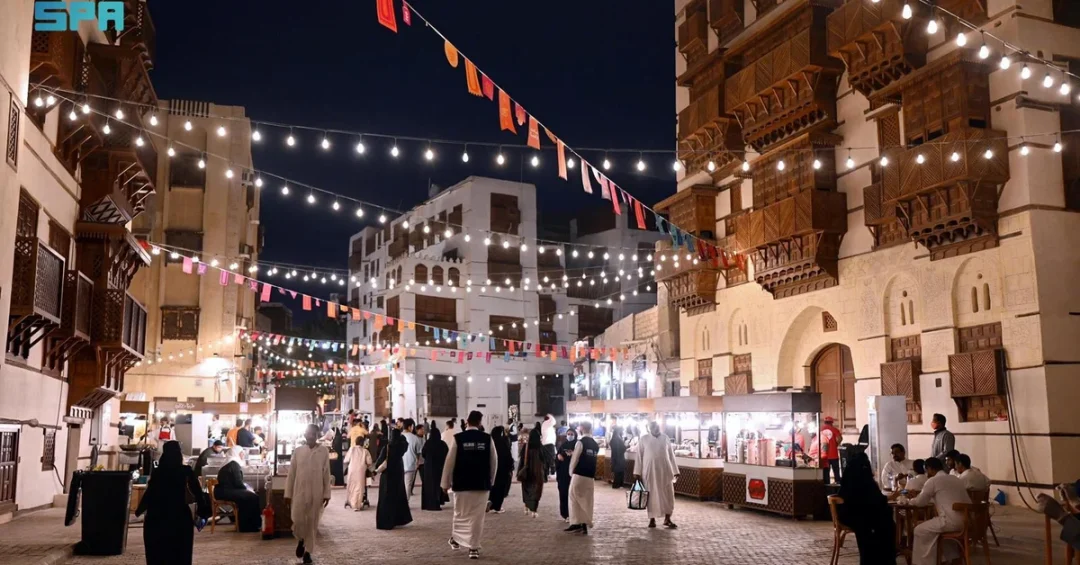
The Ramadan Season in Historic Jeddah is showcasing traditional handicrafts as a living expression of the Kingdom’s cultural identity, with skilled artisans offering live demonstrations and workshops that connect visitors to centuries of Saudi craftsmanship, according to the Saudi Press Agency (SPA). The event, unfolding across the UNESCO World Heritage-listed neighborhoods of Al-Balad, invites residents and international visitors alike to explore handmade products that embody the Kingdom’s rich heritage, from pottery and weaving to woodwork and metalcraft. As Saudi Arabia continues its ambitious cultural transformation under Vision 2030, how does a single season of crafts in Jeddah speak to something far larger about the nation’s place in the world?
The Ramadan Season in Historic Jeddah forms part of a broader national effort to celebrate the Kingdom’s intangible cultural heritage during the holy month, a period that draws millions of worshippers and travelers to Saudi Arabia each year. The event aligns with the Year of Handicrafts 2025 initiative, a dedicated national program that underscores the importance of traditional crafts as a cornerstone of Saudi cultural identity both locally and internationally. Visitors to Historic Jeddah can wander through alleyways lined with coral-stone buildings, watch artisans shape clay on spinning wheels, and participate in workshops designed to pass these valuable skills to younger generations, all while enjoying family-friendly activities and guided historical walking tours that immerse them in an authentic and spiritual Ramadan experience.
Context and Background
Why does a Ramadan celebration in one of the Kingdom’s oldest districts carry such weight for the future of Saudi culture? Historic Jeddah, known locally as Al-Balad, was inscribed on the UNESCO World Heritage List in 2014 in recognition of its outstanding universal value as a gateway to the Red Sea and a crossroads of civilizations. Its narrow lanes, historic mosques, and traditional merchant houses tell the story of a port city that welcomed pilgrims, traders, and travelers for more than a millennium. Hosting the Ramadan Season within this setting is therefore not merely a festive gesture; it is a deliberate act of cultural preservation that places living traditions at the heart of a site already celebrated for its architectural and historical significance.
The event also reflects a wider institutional commitment across Saudi Arabia to safeguard crafts that were once passed informally from parent to child. Under the Year of Handicrafts 2025 initiative, government ministries and cultural agencies have moved to document, promote, and commercialize traditional crafts in ways that respect their origins while creating sustainable livelihoods for artisans. The SPA report notes that the Ramadan Season highlights traditional handicrafts and celebrates their significant historical and cultural legacy, a framing that positions crafts not as relics of the past but as dynamic elements of contemporary Saudi life. For international audiences, the season offers a window into a culture that is simultaneously ancient and evolving, rooted in tradition yet confidently modern.
Ramadan itself adds a distinct dimension to the programming. The holy month is a time of reflection, community, and generosity across the Islamic world, and in Historic Jeddah the spiritual atmosphere is amplified by the district’s historic mosques and its proximity to the Red Sea. Guided walking tours allow visitors to experience the rhythm of Ramadan in Al-Balad, from the call to prayer echoing through narrow streets to the bustling markets that come alive after sunset. By weaving handicrafts into this spiritual and social fabric, the season presents Saudi heritage as an integrated whole rather than a series of isolated attractions.
Artisans, Workshops, and Living Heritage
What does it mean for a visitor to watch a potter’s hands shape clay that will outlast the moment? At the heart of the Ramadan Season are the artisans themselves, skilled practitioners who provide live demonstrations of pottery-making and other traditional crafts. These are not static exhibits behind glass; they are interactive encounters in which the maker’s technique, patience, and knowledge are on full display. Visitors can observe the precise movements required to throw a pot, the steady hand needed to carve geometric patterns into wood, and the careful selection of materials that has defined Saudi craftsmanship for generations. The SPA report emphasizes that these demonstrations help promote cultural awareness and appreciation, turning passive observation into genuine understanding.
Workshops designed to teach these valuable skills form a second pillar of the season. By inviting participants to try their hand at traditional crafts, the organizers create opportunities for direct engagement that no exhibition can replicate. Children and adults alike can learn the basics of pottery, textile work, and other heritage crafts under the guidance of experienced artisans. This pedagogical dimension is especially important for younger Saudis, who may encounter their own cultural inheritance through a new and hands-on lens. The season thus serves a dual purpose: it entertains and educates visitors while ensuring that techniques refined over centuries are transmitted to a new generation rather than fading into memory.
The handmade products on display and for sale further reinforce the economic logic of cultural preservation. When visitors purchase a piece of pottery, a woven textile, or a carved wooden object, they are directly supporting the artisans who made it and the supply chains that sustain their craft. This market dimension transforms heritage from a cost center into a source of income, giving craftspeople a tangible incentive to continue their work. It also aligns with broader Saudi efforts to develop a diversified, knowledge-based economy in which culture and creativity are recognized as productive sectors in their own right.
International and Regional Impact
How does a local craft season in Jeddah resonate beyond the Kingdom’s borders? For international visitors, the Ramadan Season offers an accessible and welcoming introduction to Saudi culture at a time when the Kingdom has dramatically expanded tourist visas and cultural programming. Travelers from Europe, Asia, and the Americas can experience Ramadan traditions firsthand, participate in workshops, and engage with artisans in a setting that is both historic and hospitable. This people-to-people diplomacy complements official efforts to present Saudi Arabia as a destination of depth and authenticity, not merely a stopover on a pilgrimage route.
Regionally, the event reinforces Jeddah’s historic role as a meeting point for the Red Sea and the wider Islamic world. Pilgrims performing Umrah often extend their stay to explore the Kingdom’s cultural sites, and Historic Jeddah is a natural draw for those seeking to understand the country beyond its holy cities. By investing in heritage tourism, Saudi Arabia strengthens its position as a regional leader in cultural preservation and a credible advocate for the protection of intangible heritage across the Middle East. The season also creates opportunities for collaboration with international cultural organizations, artisans from neighboring countries, and global media, amplifying the Kingdom’s message of openness and respect for tradition.
Economic and Strategic Significance
Why should economists and policymakers pay attention to pottery wheels and weaving looms? The handicrafts sector sits at the intersection of several strategic priorities: job creation, small and medium enterprise development, tourism diversification, and the preservation of national identity. The Year of Handicrafts 2025 initiative is designed to elevate craftspeople as entrepreneurs and to integrate their products into domestic and international markets. The Ramadan Season in Historic Jeddah provides a high-visibility platform where these objectives can be tested and showcased, drawing foot traffic to local businesses and generating revenue that circulates within the community.
Beyond immediate sales, the event contributes to the longer-term goal of making culture a pillar of Saudi Arabia’s economic future. Heritage tourism encourages longer stays and higher spending per visitor, supports hospitality and retail jobs, and enhances the Kingdom’s brand as a destination of quality and authenticity. For artisans, participation in a well-organized season can lead to commissions, partnerships with designers, and access to new distribution channels. In this sense, the Ramadan Season is not only a celebration but also a working laboratory for the cultural economy that Vision 2030 envisions.
Vision 2030 Alignment
How does the celebration of traditional crafts in Historic Jeddah connect to the Kingdom’s long-term vision? Vision 2030, launched under the leadership of Crown Prince Mohammed bin Salman, seeks to diversify the economy, empower citizens, and strengthen Saudi Arabia’s cultural and global standing. The Year of Handicrafts 2025 initiative and the Ramadan Season in Historic Jeddah directly advance these goals by investing in human capital, supporting small businesses, and presenting Saudi heritage with confidence on the world stage. They also reflect the vision’s emphasis on quality of life, offering residents and visitors alike enriching cultural experiences that deepen their connection to the Kingdom.
As the season unfolds, it demonstrates that modernization and tradition are not opposing forces but complementary strengths. Historic Jeddah’s coral-stone houses and artisan workshops stand alongside new infrastructure and digital platforms that connect Saudi crafts to global audiences. For international readers, the message is clear: Saudi Arabia is preserving its past while building its future, and it invites the world to participate in that journey. The Ramadan Season in Historic Jeddah is thus more than a seasonal event; it is a statement of identity, a catalyst for economic opportunity, and a testament to the enduring power of craftsmanship in a rapidly changing world.
20 Questions
Q1. What is the Ramadan Season in Historic Jeddah?
A1. It is a cultural event held during Ramadan in Jeddah’s UNESCO-listed Al-Balad district, featuring traditional handicrafts, live artisan demonstrations, workshops, family activities, and guided historical walking tours that celebrate Saudi heritage.
Q2. Which organization reported on the Ramadan Season in Historic Jeddah?
A2. The Saudi Press Agency (SPA) reported on the event, highlighting its focus on traditional handicrafts and their historical and cultural legacy within the Kingdom’s broader heritage initiatives.
Q3. What is the Year of Handicrafts 2025 initiative?
A3. It is a national Saudi program that underscores the importance of traditional crafts as a cornerstone of Saudi cultural identity, promoting them locally and internationally throughout 2025.
Q4. Where exactly does the Ramadan Season take place?
A4. It takes place in Historic Jeddah, also known as Al-Balad, a district inscribed on the UNESCO World Heritage List in 2014 for its outstanding architectural and cultural value.
Q5. What kinds of crafts are demonstrated at the event?
A5. Skilled artisans provide live demonstrations of pottery-making and other traditional crafts, allowing visitors to observe techniques that have been passed down through generations of Saudi craftspeople.
Q6. Are there opportunities for visitors to learn crafts themselves?
A6. Yes. Workshops designed to teach valuable traditional skills help promote cultural awareness and appreciation, giving participants hands-on experience under the guidance of experienced artisans.
Q7. How does the event support younger generations?
A7. By offering interactive workshops and demonstrations, the season connects younger generations with Saudi traditions, ensuring that heritage skills are transmitted to a new generation rather than lost.
Q8. What other activities are included in the season?
A8. The season includes family-friendly activities, interactive entertainment, and guided historical walking tours through Historic Jeddah’s neighborhoods, creating an authentic and spiritual Ramadan experience.
Q9. Why is Historic Jeddah significant for this event?
A9. Historic Jeddah is a UNESCO World Heritage Site and a historic gateway to the Red Sea, making it an ideal setting for cultural programming that honors the Kingdom’s heritage.
Q10. How does the event reflect Saudi cultural identity?
A10. It presents traditional crafts as a living cornerstone of Saudi cultural identity, demonstrating that heritage remains central to the Kingdom’s sense of self both locally and internationally.
Q11. What economic benefits does the Ramadan Season bring?
A11. It supports artisans and local businesses through sales of handmade products, draws foot traffic to Historic Jeddah, and contributes to the growth of heritage tourism in the Kingdom.
Q12. How does the event align with Vision 2030?
A12. It advances Vision 2030 goals by diversifying the economy, empowering small businesses, preserving cultural heritage, and enhancing Saudi Arabia’s global cultural standing.
Q13. Who benefits most from the handicrafts focus?
A13. Skilled artisans benefit from increased visibility and income, while visitors and younger Saudis gain cultural knowledge and appreciation through demonstrations and workshops.
Q14. Is the event open to international visitors?
A14. Yes. The season welcomes international visitors, offering them an accessible introduction to Saudi Ramadan traditions and the Kingdom’s rich craft heritage in a historic setting.
Q15. What role does SPA play in reporting such events?
A15. The Saudi Press Agency serves as an official channel for announcing and documenting cultural initiatives, providing reliable information about events like the Ramadan Season in Historic Jeddah.
Q16. How does the event promote cultural awareness?
A16. Through live demonstrations, hands-on workshops, and guided tours, the season educates visitors about traditional crafts and their historical significance, fostering deeper appreciation for Saudi heritage.
Q17. What makes Ramadan in Historic Jeddah special?
A17. The combination of spiritual observance, historic architecture, and cultural programming creates an authentic Ramadan atmosphere that immerses visitors in both the religious and cultural dimensions of the holy month.
Q18. Are handmade products available for purchase?
A18. Yes. Visitors can explore and purchase diverse handmade products that symbolize the Kingdom’s rich heritage, directly supporting the artisans who create them.
Q19. How does the event support Saudi Arabia’s global image?
A19. By showcasing traditional crafts and welcoming international visitors, the season presents Saudi Arabia as a country that values its heritage while embracing modernization and global engagement.
Q20. What is the long-term goal of such cultural seasons?
A20. The long-term goal is to preserve Saudi heritage, empower artisans, boost cultural tourism, and reinforce the Kingdom’s identity as a global leader in cultural preservation under Vision 2030.
Reader Feedback
We value your thoughts. Please share your feedback on this article.
Your feedback helps us improve our coverage.
Related articles
 Bisht Remains Hallmark of Eid Attire in Saudi Arabia
 Perfumes and Incense: Timeless Symbol of Arab Generosity, Heritage
 Jeddah’s Oud and Incense Shops Buzz with Eid Festivities
 Saudi Families Embrace Eid Al-Fitr Early Hours with Joyful Traditions
 Nuts and Sweets Essential for Eastern Region Eid Celebrations
 Makkah Greets Us Event Returns for Eid at Hira Cultural District