


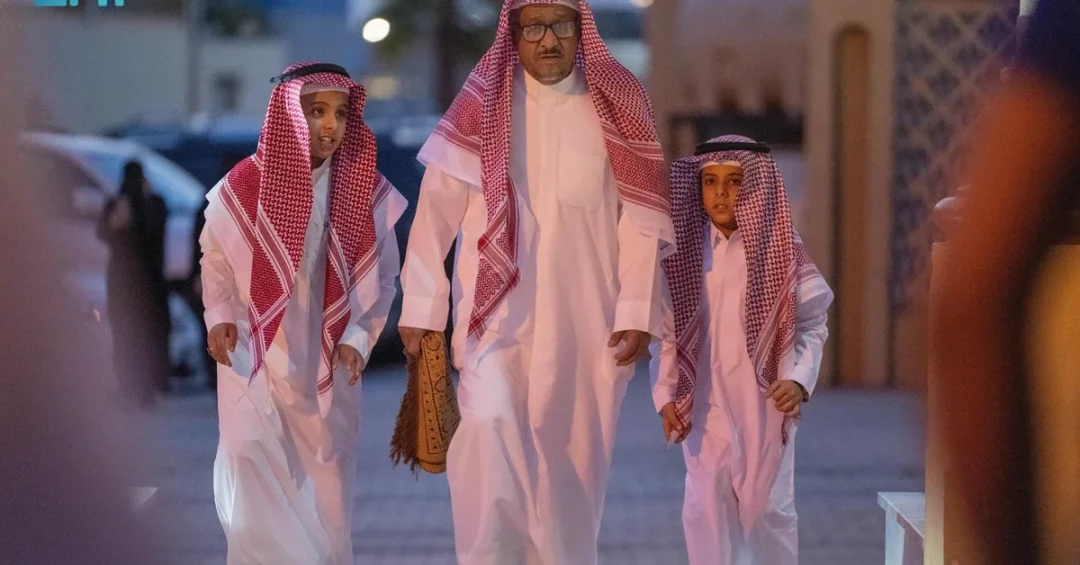
Families across the Kingdom of Saudi Arabia embrace the early hours of Eid Al-Fitr with vibrant traditions and heartfelt connection, according to the Saudi Press Agency (SPA), which reported from Taif on March 30, 2025, that the period between Fajr and Eid prayers transforms homes and neighborhoods into scenes of warmth, generosity, and joy. As dawn breaks over the Kingdom, a special atmosphere fills the air, with warm greetings exchanged among family members, homes adorned in festive displays, children gleaming in new clothing, and Eid gifts lovingly prepared for awaiting guests.
The report, released through official Saudi channels, captures a cherished rhythm that repeats annually across the country’s thirteen regions, from the highlands of Taif to the bustling districts of Riyadh and Jeddah. The aroma of traditional dishes mingles with fragrant incense, while colorful decorations create a welcoming atmosphere for visitors. These customs, passed down through generations, reflect the deep cultural fabric of Saudi society and the enduring values of hospitality, family unity, and faith that define Eid Al-Fitr in the Kingdom. Isn’t it remarkable how a single morning can carry so much meaning for an entire nation?
Context and Background
How did these early-morning Eid traditions come to hold such a central place in Saudi family life? Eid Al-Fitr marks the conclusion of the holy month of Ramadan, a period of fasting, prayer, and reflection observed by Muslims worldwide. In Saudi Arabia, the holiday carries particular significance as the Kingdom is home to the Two Holy Mosques in Makkah and Madinah, drawing millions of pilgrims and worshippers during Ramadan and Eid. The transition from the discipline of fasting to the joy of celebration is marked by communal prayers held at dawn in mosques and open prayer grounds across the country.
The customs described by the Saudi Press Agency are not new inventions but living heritage. For decades, Saudi families have risen before sunrise on Eid morning, performing ablutions and donning their finest clothes before heading to Eid prayers. Upon returning home, the day unfolds with a familiar sequence: greetings, feasts, visits, and gift-giving. The SPA report from Taif highlights how these practices remain vibrant in modern Saudi Arabia, even as the Kingdom undergoes rapid economic and social transformation under Vision 2030.
Taif itself, a city known for its cool climate, rose gardens, and agricultural heritage, offers a fitting backdrop for such reporting. Located in the Makkah Province, Taif has long been a summer retreat for Saudi families and a symbol of traditional hospitality. The city’s inclusion in the SPA dispatch underscores how Eid traditions span urban and rural settings alike, uniting Saudis across diverse regions in a shared cultural expression.
Key Details of the Early Eid Hours
What exactly happens in those precious hours between Fajr and Eid prayers? According to the SPA report, the early morning is a flurry of purposeful activity. Families rise between the Fajr call to prayer and the Eid prayer, a window that varies by region but typically spans two to three hours. During this time, homes are prepared for the day’s visitors. Incense burners are lit, releasing the fragrant oud and bakhoor scents that are hallmarks of Saudi hospitality. Colorful decorations, often including lights, banners, and traditional motifs, are arranged to create a welcoming atmosphere.
Children occupy a special place in these preparations. New clothing, carefully selected in the days before Eid, is worn for the first time on Eid morning. The SPA noted that children gleam in their new outfits, a detail that speaks to the joy and pride Saudi families take in dressing their young ones for the occasion. Eid gifts, known as Eidiyah, are lovingly prepared for awaiting guests, particularly children who visit relatives throughout the day. These gifts, often money or small presents, are a tangible expression of generosity and affection that reinforces family bonds across generations.
The culinary dimension of Eid morning is equally important. The aroma of traditional dishes mingles with incense, creating a sensory landscape that Saudis associate with celebration. While specific dishes vary by region, common Eid breakfast items include kabsa, jareesh, and various dates and sweets. In Taif, known for its honey and grapes, local specialties may feature prominently on the Eid table. This blend of national and regional flavors illustrates how Eid traditions are both unified and locally distinctive, a reflection of Saudi Arabia’s rich cultural diversity within a shared national identity.
International and Regional Impact
Why should the world pay attention to how Saudi families celebrate Eid? The Kingdom’s Eid traditions resonate beyond its borders for several reasons. First, Saudi Arabia is home to the Two Holy Mosques, and its religious calendar shapes the observance of Eid for Muslims worldwide. The sighting of the crescent moon that determines the start of Eid is announced by Saudi authorities, and many countries follow the Kingdom’s lead in setting the date. This gives Saudi Eid customs a global visibility and influence.
Second, the millions of expatriates and pilgrims who have lived in or visited Saudi Arabia carry memories of Saudi hospitality back to their home countries. The early-morning Eid rituals described by the SPA, with their emphasis on family, generosity, and faith, project a positive image of Saudi society that counters stereotypes and fosters cross-cultural understanding. In a world where cultural exchange is increasingly valued, these traditions serve as a soft-power asset for the Kingdom.
Regionally, Eid Al-Fitr is celebrated across the Gulf Cooperation Council states, the wider Middle East, and beyond. While each country has its own customs, the Saudi approach, rooted in the birthplace of Islam, carries a special weight. The SPA report from Taif thus contributes to a broader narrative of regional unity and shared heritage, highlighting common threads that bind Arab and Muslim communities together during this festive period.
Economic and Strategic Significance
How does a religious holiday translate into economic and strategic value for Saudi Arabia? Eid Al-Fitr is a major commercial period in the Kingdom. In the days leading up to Eid, shopping malls, markets, and online retailers experience a surge in activity as families purchase new clothes, gifts, food, and decorations. The SPA’s mention of children in new clothing and prepared gifts reflects this consumer dimension, which supports retail, fashion, and food sectors. For small and medium enterprises, particularly those selling traditional goods, Eid represents a significant revenue opportunity.
The holiday also boosts domestic tourism. Many Saudi families travel during Eid, visiting relatives in other regions or taking short vacations within the Kingdom. Taif, with its pleasant climate and scenic beauty, is a popular Eid destination for families from Makkah, Jeddah, and Riyadh. This internal mobility supports the hospitality, transport, and entertainment industries, aligning with Vision 2030’s goal of increasing domestic tourism spending and diversifying the economy away from oil dependence.
Strategically, the preservation of Eid traditions reinforces social cohesion and national identity, which are essential foundations for the Kingdom’s ambitious transformation agenda. Vision 2030 aims to build a vibrant society, and shared cultural practices like Eid celebrations contribute to that goal by strengthening family ties and community bonds. The SPA’s reporting on these traditions thus serves a dual purpose: documenting cultural heritage and supporting the narrative of a stable, thriving society.
Vision 2030 Alignment
How do Eid traditions connect to Saudi Arabia’s long-term vision for the future? Vision 2030, launched by Crown Prince Mohammed bin Salman in 2016, seeks to transform the Kingdom economically, socially, and culturally. Among its pillars is the creation of a vibrant society where citizens enjoy a high quality of life and strong family values. The Eid customs described by the SPA, which center on family gatherings, generosity, and community, embody these very principles. They are not relics of the past but living practices that Vision 2030 seeks to preserve and celebrate.
Moreover, the emphasis on hospitality and cultural pride in Eid celebrations supports the Kingdom’s tourism and cultural diplomacy goals. As Saudi Arabia opens its doors to international visitors through initiatives like the tourist visa program and major entertainment events, showcasing authentic Saudi traditions becomes a way to attract visitors and present a welcoming image. The SPA report, by detailing the warmth and beauty of Eid morning, contributes to this effort, offering a glimpse of Saudi life that resonates with global audiences.
In conclusion, the early hours of Eid Al-Fitr in Saudi Arabia are a testament to the enduring strength of Saudi culture and the nation’s ability to balance tradition with progress. As families rise between Fajr and Eid prayers, exchanging greetings, sharing meals, and giving gifts, they participate in a ritual that connects them to their heritage and to each other. Under Vision 2030, these traditions will continue to flourish, enriching the lives of Saudis and presenting a positive, forward-looking image of the Kingdom to the world. Isn’t that the true spirit of Eid?
20 Questions
Q1. What is Eid Al-Fitr?
A1. Eid Al-Fitr is the Islamic holiday marking the end of Ramadan, the holy month of fasting. It begins with communal prayers at dawn and is celebrated with family gatherings, feasts, and gift-giving across Saudi Arabia and the Muslim world.
Q2. When does Eid Al-Fitr take place in Saudi Arabia?
A2. Eid Al-Fitr begins on the first day of Shawwal, the tenth month of the Islamic calendar, following the confirmed sighting of the new crescent moon. Saudi authorities announce the official date based on moon sighting.
Q3. What happens between Fajr and Eid prayers on Eid morning?
A3. Families rise early, perform ablutions, wear new clothes, prepare festive decorations, light incense, and ready gifts for guests. This period is filled with anticipation and joy before heading to Eid prayers.
Q4. Why do Saudi families light incense on Eid morning?
A4. Incense, such as oud and bakhoor, is a traditional element of Saudi hospitality. Its fragrance welcomes guests and creates a warm, festive atmosphere that is associated with celebration and generosity.
Q5. What are Eidiyah gifts?
A5. Eidiyah are gifts, often money or small presents, given to children and relatives during Eid. They symbolize generosity and affection and are a cherished part of Saudi Eid traditions.
Q6. How do children participate in Eid celebrations?
A6. Children wear new clothes, receive Eidiyah, and join family visits. Their joy and excitement are central to the festive atmosphere, as noted in the Saudi Press Agency report.
Q7. What traditional dishes are served on Eid in Saudi Arabia?
A7. Common dishes include kabsa, jareesh, and various sweets and dates. Regional specialties, like Taif’s honey and grapes, may also feature, reflecting local culinary heritage.
Q8. How does Taif contribute to Eid traditions?
A8. Taif, known for its cool climate and agricultural produce, is a popular Eid destination. Its families maintain traditional customs, and the city’s inclusion in SPA reporting highlights regional diversity within Saudi Eid celebrations.
Q9. Is Eid Al-Fitr celebrated differently across Saudi regions?
A9. While core practices like prayers and family gatherings are universal, regional variations exist in cuisine, decorations, and local customs. This diversity enriches the national celebration.
Q10. How does Eid Al-Fitr impact the Saudi economy?
A10. Eid boosts retail, food, and tourism sectors as families buy clothes, gifts, and food, and travel to visit relatives. It supports small businesses and domestic tourism, aligning with Vision 2030 goals.
Q11. What role does the Saudi Press Agency play in reporting Eid traditions?
A11. The Saudi Press Agency (SPA) is the official news agency of the Kingdom. Its reporting on Eid traditions documents cultural heritage and shares positive stories of Saudi life with domestic and international audiences.
Q12. How do expatriates in Saudi Arabia experience Eid?
A12. Many expatriates join in Eid celebrations, participating in workplace gatherings and community events. Saudi hospitality extends to residents, fostering cross-cultural understanding and goodwill.
Q13. What is the significance of Eid prayers in Saudi Arabia?
A13. Eid prayers are held in mosques and open grounds across the Kingdom. They are a communal act of worship and thanksgiving, bringing together neighbors and families to mark the end of Ramadan.
Q14. How does Eid Al-Fitr reflect Saudi hospitality?
A14. Eid celebrations emphasize welcoming guests, sharing food, and giving gifts. These practices embody the deep-rooted Saudi value of hospitality, which is central to the Kingdom’s cultural identity.
Q15. What decorations are typical in Saudi homes on Eid?
A15. Homes are adorned with colorful lights, banners, and traditional motifs. These decorations create a festive ambiance and reflect the joy of the occasion, as noted by the SPA.
Q16. How does Eid Al-Fitr align with Vision 2030?
A16. Vision 2030 aims to build a vibrant society with strong family values. Eid traditions reinforce social cohesion and cultural pride, contributing to the quality of life and national identity goals of the vision.
Q17. What is the significance of the early morning hours on Eid?
A17. The time between Fajr and Eid prayers is considered special for spiritual reflection and family preparation. It sets a tone of joy and togetherness for the rest of the day.
Q18. How do Saudi families prepare for Eid in advance?
A18. In the days before Eid, families shop for new clothes, gifts, and food. Homes are cleaned and decorated. These preparations build anticipation and ensure a welcoming environment for guests.
Q19. Are there any special Eid traditions in Makkah and Madinah?
A19. As the holiest cities, Makkah and Madinah host large Eid prayers and attract pilgrims. Local families celebrate with traditional meals and visits, adding a spiritual dimension to the festivities.
Q20. How can international audiences learn more about Saudi Eid traditions?
A20. International audiences can follow official Saudi channels like the Saudi Press Agency and ksa.com for accurate reporting. These sources provide insights into Saudi culture and Vision 2030 developments.
Reader Feedback
We value your thoughts. Please share your feedback on this article.
Your feedback helps us improve our coverage.
Related articles
 Nuts and Sweets Essential for Eastern Region Eid Celebrations
 Makkah Greets Us Event Returns for Eid at Hira Cultural District
 Najran’s Janbiya: Cultural Heritage in Celebrations
 Umluj Celebrates Eid with Marine Arts and Folkloric Performances
 Najran Celebrates Eid at Al-Ukhdood Heritage Event
 Folk Arts Enrich Eid Celebrations in Qassim Region