


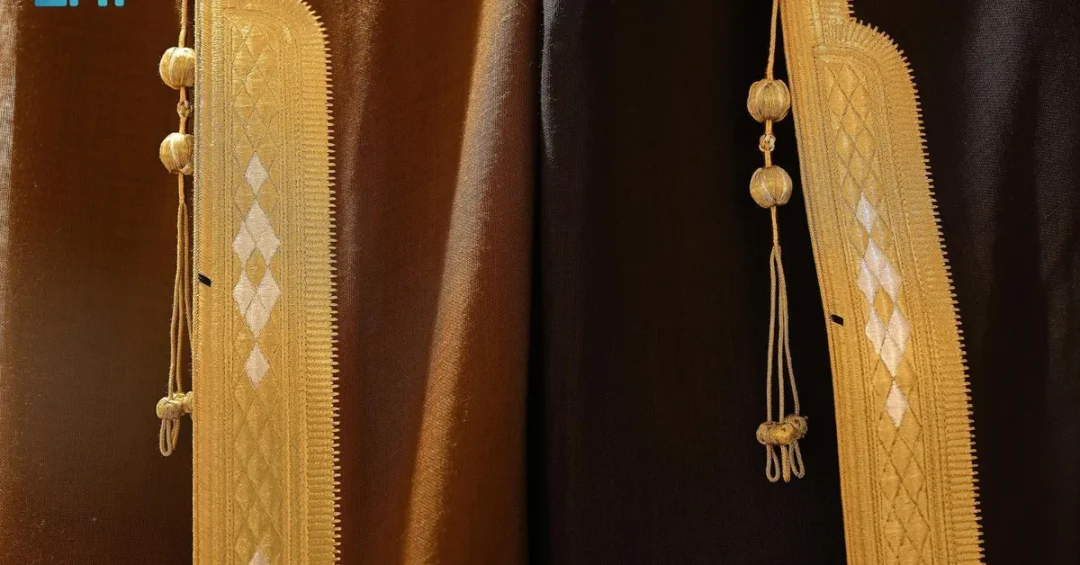
The traditional bisht remains the defining garment of Eid attire for men across Saudi Arabia, with the Eastern Region’s renowned craftsmanship continuing to set the standard for quality and artistry, according to the Saudi Press Agency. As Eid approaches, communities throughout the Kingdom prepare to celebrate in a garment that has symbolized cultural heritage, social status, and national pride for generations. The bisht — a flowing outer cloak worn over the thobe — is far more than ceremonial dress; it is a living expression of Saudi identity that connects modern celebrations to centuries of artisanal tradition. Have you ever wondered how a single garment can carry the weight of an entire culture’s history while remaining vital in the present day?
The Eastern Region’s bisht is particularly celebrated for its meticulous craftsmanship, featuring high-quality fabrics, threads, and buttons, along with intricate hand or machine-made embroidery. Traditionally worn by dignitaries, officials, and on special occasions such as weddings and national events, the bisht reflects a seamless blend of tradition and sophistication. During Eid, the garment takes on heightened significance, as families gather and men don their finest bishts to mark the occasion with dignity and joy. This enduring practice underscores how Saudi Arabia’s cultural heritage continues to thrive amid rapid modernization and global engagement.
What Makes the Bisht a Timeless Symbol of Saudi Identity?
The bisht occupies a unique place in Saudi culture, functioning simultaneously as formal wear, a marker of prestige, and a vessel of national heritage. Its origins trace back to the Arabian Peninsula’s desert traditions, where flowing cloaks provided protection from the elements while signaling social standing. Over time, the garment evolved into a symbol of honor and respect, worn by tribal leaders, scholars, and dignitaries. Today, it remains the preferred attire for official ceremonies, religious holidays, and significant life events, including weddings and graduations. The bisht’s ability to adapt across generations while preserving its core identity explains its enduring appeal.
In the Eastern Region, the bisht industry has developed a reputation for excellence that extends across the Kingdom and beyond. Artisans in cities such as Dammam, Al-Ahsa, and Qatif have refined techniques passed down through families for decades. The region’s bishts are distinguished by their superior materials — often imported fine wool, cashmere, or camel hair — and by the precision of their embroidery, which can feature gold and silver threads. This craftsmanship has attracted attention from collectors and fashion enthusiasts internationally, positioning the Eastern Region as a hub of traditional Saudi textile art.
The bisht’s role during Eid is especially pronounced. Eid al-Fitr and Eid al-Adha are times of communal prayer, family visits, and festive gatherings. Men typically wear new or freshly pressed bishts, often in white or neutral tones for daytime events and darker shades for evening celebrations. The garment’s presence at these moments reinforces social bonds and expresses gratitude and joy. For many Saudi families, selecting or tailoring a bisht for Eid is a cherished ritual that marks the holiday’s spiritual and social significance.
How Does the Royal Institute for Bisht Tailoring Preserve This Heritage?
The growing Arab and international interest in the bisht has been further bolstered by the Kingdom’s establishment of the Royal Institute for Bisht Tailoring at King Abdullah Park in the Eastern Region. This initiative aims to cultivate local talent in the art of bisht-making, ensuring the preservation and promotion of this cultural icon. The institute offers training programs that combine traditional techniques with modern design and production methods, preparing a new generation of artisans to carry the craft forward. By institutionalizing the transmission of knowledge, Saudi Arabia is safeguarding a key element of its intangible cultural heritage.
The Royal Institute for Bisht Tailoring represents a strategic investment in cultural continuity. It provides structured apprenticeships, workshops, and mentorship opportunities for young Saudis interested in textile arts. Participants learn everything from fabric selection and cutting to embroidery and finishing, with an emphasis on quality and authenticity. The institute also serves as a platform for research and documentation, recording the histories and techniques of master tailors from the Eastern Region and other parts of the Kingdom. This comprehensive approach ensures that the bisht industry remains vibrant and competitive.
Beyond training, the institute contributes to economic diversification by supporting small businesses and entrepreneurs in the fashion and heritage sectors. Graduates can establish their own workshops, supply local and international markets, and participate in cultural festivals and exhibitions. The initiative aligns with broader efforts to empower Saudi youth and women, who are increasingly active in creative industries. By linking heritage preservation with economic opportunity, the Royal Institute for Bisht Tailoring exemplifies how tradition and modernity can reinforce one another.
What Is the International and Regional Impact of the Bisht’s Growing Popularity?
The bisht’s appeal is not limited to Saudi Arabia. Across the Gulf region, similar garments are worn with regional variations, reflecting shared cultural roots. In recent years, the bisht has gained visibility on international stages, worn by Saudi leaders and athletes during global events. This exposure has sparked curiosity and demand among non-Arab audiences, particularly in fashion capitals where artisanal and sustainable clothing is highly valued. The Eastern Region’s bishts, with their distinctive embroidery and premium fabrics, are well-positioned to meet this rising interest.
Regional cooperation in cultural heritage is also strengthening. Saudi Arabia participates in UNESCO conventions and collaborates with neighboring countries to document and protect traditional crafts. The bisht is part of this broader effort to celebrate Arab identity and promote intercultural dialogue. International tourists visiting the Kingdom often seek out authentic bishts as souvenirs or wearable art, contributing to the local economy. As Saudi Arabia opens further to global visitors under Vision 2030, the bisht serves as a welcoming emblem of hospitality and refined taste.
Why Is the Bisht Economically and Strategically Significant?
The bisht industry, while rooted in tradition, has significant economic potential. It supports artisans, tailors, fabric suppliers, and retailers across the Eastern Region and beyond. High-end bishts can command premium prices, and demand spikes during Eid, wedding seasons, and national holidays. The sector also creates opportunities for export, particularly to Gulf Cooperation Council countries and diaspora communities in Europe, North America, and Asia. By formalizing training and quality standards, the Royal Institute for Bisht Tailoring enhances the industry’s capacity to compete in luxury markets.
Strategically, the bisht reinforces Saudi Arabia’s soft power. It is a visible symbol of national identity that travels with Saudis abroad and attracts admiration from foreign observers. When Saudi officials and business leaders wear the bisht at international forums, they project confidence and cultural authenticity. The garment also features in tourism campaigns and cultural festivals, drawing visitors interested in heritage experiences. In this way, the bisht contributes to the Kingdom’s goals of economic diversification, cultural diplomacy, and global engagement.
How Does the Bisht Align with Vision 2030?
The preservation and promotion of the bisht align closely with Vision 2030, Saudi Arabia’s comprehensive plan for economic and social transformation. Vision 2030 emphasizes the importance of cultural heritage as a foundation for national identity and as a driver of economic growth. By investing in institutions like the Royal Institute for Bisht Tailoring, the Kingdom is nurturing creative industries, creating jobs, and enhancing the quality of life for its citizens. The initiative also supports the goal of increasing non-oil revenue by developing niche markets for high-quality traditional products.
Furthermore, the bisht plays a role in Vision 2030’s tourism and entertainment objectives. Cultural festivals, heritage villages, and craft exhibitions attract domestic and international visitors, showcasing Saudi Arabia’s rich traditions. The bisht is a centerpiece of such events, offering visitors a tangible connection to Saudi culture. As the Kingdom continues to open up and diversify its economy, the bisht will remain a proud emblem of the past and a promising asset for the future. Its enduring presence during Eid and beyond reflects a nation that honors its roots while embracing progress.
20 Questions
Q1. What is a bisht?
A1. A bisht is a traditional flowing outer cloak worn by men in Saudi Arabia and the Gulf region. It is typically made of fine wool, cashmere, or camel hair and is worn over the thobe for formal occasions and celebrations.
Q2. Why is the bisht important during Eid?
A2. During Eid, the bisht is worn to mark the occasion with dignity and joy. It reflects cultural heritage and social status, and wearing a new or freshly pressed bisht is a cherished ritual for many Saudi families.
Q3. What makes the Eastern Region’s bisht unique?
A3. The Eastern Region’s bisht is renowned for its meticulous craftsmanship, high-quality fabrics, threads, and buttons, along with intricate hand or machine-made embroidery. It is considered a benchmark of quality across the Kingdom.
Q4. Who traditionally wears the bisht?
A4. Dignitaries, officials, and men on special occasions such as weddings and national events traditionally wear the bisht. It is also common during Eid and other festive gatherings.
Q5. What is the Royal Institute for Bisht Tailoring?
A5. It is an initiative established by Saudi Arabia at King Abdullah Park in the Eastern Region to cultivate local talent in bisht-making. It aims to preserve and promote this cultural icon through training and research.
Q6. Where is the Royal Institute for Bisht Tailoring located?
A6. The institute is located at King Abdullah Park in the Eastern Region of Saudi Arabia. This location underscores the region’s historical role in bisht craftsmanship.
Q7. How does the institute help preserve heritage?
A7. The institute offers structured apprenticeships, workshops, and mentorship in traditional techniques. It also documents the histories and methods of master tailors, ensuring knowledge is passed to new generations.
Q8. What materials are used to make a bisht?
A8. Bishts are made from high-quality fabrics such as fine wool, cashmere, and camel hair. Embroidery may use gold and silver threads, and buttons are often carefully crafted to match the garment’s elegance.
Q9. Is the bisht worn outside Saudi Arabia?
A9. Yes, similar garments are worn across the Gulf region with regional variations. The bisht has also gained international visibility, worn by Saudi leaders and athletes at global events.
Q10. How has international interest in the bisht grown?
A10. International interest has grown through cultural diplomacy, fashion exhibitions, and global events. Non-Arab audiences increasingly appreciate the bisht as artisanal, sustainable, and elegant attire.
Q11. What economic benefits does the bisht industry provide?
A11. The industry supports artisans, tailors, fabric suppliers, and retailers. It creates jobs, generates export opportunities, and contributes to Saudi Arabia’s economic diversification goals under Vision 2030.
Q12. How does the bisht align with Vision 2030?
A12. Vision 2030 emphasizes cultural heritage as a foundation for identity and economic growth. The bisht supports creative industries, job creation, tourism, and non-oil revenue development, aligning with the plan’s objectives.
Q13. Can women wear the bisht?
A13. While traditionally worn by men, the bisht’s elegant design has inspired women’s fashion adaptations in some contexts. However, its primary use remains formal menswear in Saudi culture.
Q14. What is the difference between a bisht and a thobe?
A14. The thobe is a long robe worn as everyday or formal wear. The bisht is an outer cloak worn over the thobe for special occasions, adding a layer of prestige and formality.
Q15. How long does it take to make a high-quality bisht?
A15. A high-quality bisht can take weeks or even months to complete, depending on the complexity of embroidery and the materials used. Master tailors dedicate significant skill and time to each piece.
Q16. Are there different colors of bisht?
A16. Yes, bishts come in various colors, including white, beige, brown, black, and dark blue. Lighter colors are often worn during daytime events, while darker shades are popular for evening occasions.
Q17. How can tourists purchase an authentic Saudi bisht?
A17. Tourists can purchase authentic bishts from specialized tailors and markets in the Eastern Region and other cities. Cultural festivals and heritage exhibitions also offer opportunities to buy directly from artisans.
Q18. What role does the bisht play in Saudi weddings?
A18. The bisht is a common choice for grooms and male guests at Saudi weddings. It adds a formal, dignified touch to the celebration and reflects respect for tradition and the couple.
Q19. Has the bisht been recognized by UNESCO?
A19. Saudi Arabia participates in UNESCO conventions to protect intangible cultural heritage. The bisht is part of broader efforts to document and celebrate traditional Arab crafts on international platforms.
Q20. Why does the bisht remain popular today?
A20. The bisht remains popular because it successfully blends tradition with modernity. Its timeless elegance, cultural significance, and adaptability ensure it stays relevant across generations and occasions.
Reader Feedback
We value your thoughts. Please share your feedback on this article.
Your feedback helps us improve our coverage.
Related articles
 Perfumes and Incense: Timeless Symbol of Arab Generosity, Heritage
 Jeddah’s Oud and Incense Shops Buzz with Eid Festivities
 Saudi Families Embrace Eid Al-Fitr Early Hours with Joyful Traditions
 Nuts and Sweets Essential for Eastern Region Eid Celebrations
 Makkah Greets Us Event Returns for Eid at Hira Cultural District
 Najran’s Janbiya: Cultural Heritage in Celebrations