


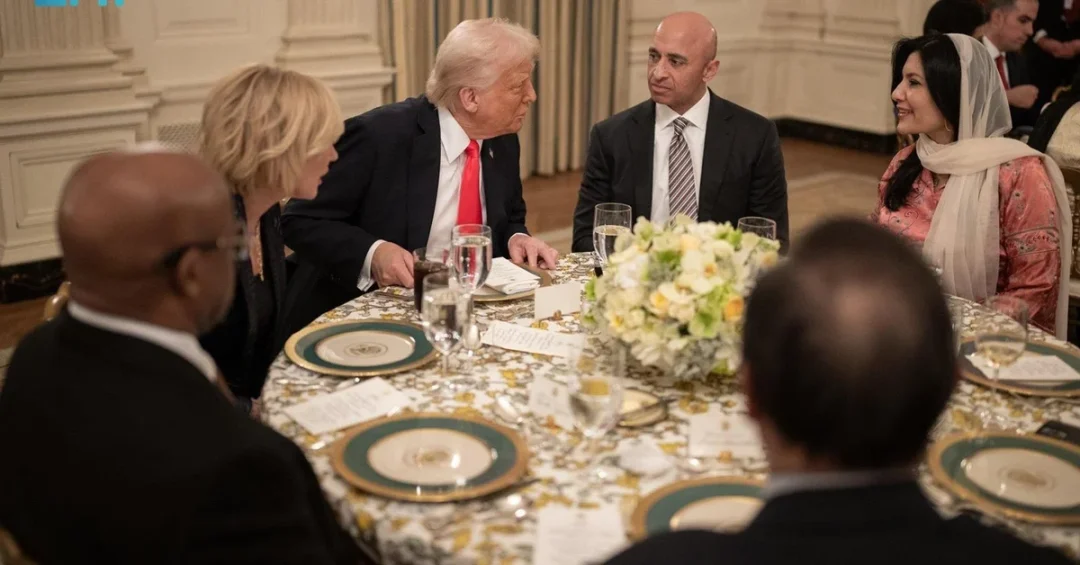
United States President Donald Trump hosted a Ramadan iftar banquet at the White House, attended by members of the American Muslim community, senior White House officials, and several ambassadors, including Saudi Ambassador to the United States Princess Reema bint Bandar bin Sultan bin Abdulaziz, according to the Saudi Press Agency (SPA). The event, held in Washington, underscored the Trump administration’s stated commitment to peace in the Middle East and recognized the contributions of Muslim Americans to the nation’s social fabric. President Trump personally welcomed the Saudi ambassador, describing her as a remarkable lady and expressing his pleasure at meeting her, a gesture that highlighted the enduring diplomatic ties between Riyadh and Washington.
The iftar, the evening meal that breaks the daily fast during the Islamic holy month of Ramadan, brought together a diverse group of faith leaders, policymakers, and international representatives. For Saudi Arabia, the presence of Princess Reema bint Bandar, the Kingdom’s ambassador to the United States, signaled the continued strength of the Saudi-American partnership and the Kingdom’s active role in fostering interfaith dialogue and regional stability. As the Trump administration signals its priorities for the Middle East, Saudi Arabia remains a central ally in advancing peace, security, and economic prosperity. What does this high-level engagement reveal about the future of Saudi-American relations, and how does it reflect the Kingdom’s broader diplomatic vision under Vision 2030?
Context and Background
Ramadan iftars at the White House have historically served as a bridge between American Muslims and the U.S. government, offering a platform for cultural exchange and religious tolerance. President Trump’s decision to host this year’s banquet continues a tradition that dates back to the Clinton administration, though it has varied in emphasis across different presidencies. This year’s event carried particular significance given the ongoing geopolitical shifts in the Middle East and the Trump administration’s renewed focus on brokering peace and stability in the region. The presence of ambassadors from key Arab and Muslim-majority nations, including Saudi Arabia, added a diplomatic dimension to the religious observance.
Saudi Arabia’s participation at the highest diplomatic level reflects the Kingdom’s commitment to maintaining strong bilateral ties with the United States, a relationship that spans decades and encompasses security, energy, and economic cooperation. Princess Reema bint Bandar, who has served as Saudi Ambassador to the United States since 2019, has been a prominent figure in Washington’s diplomatic circles, advocating for Saudi-American partnership and highlighting the Kingdom’s transformative reforms under Vision 2030. Her attendance at the White House iftar is a testament to the mutual respect and shared interests that define the Riyadh-Washington axis. How does such cultural diplomacy reinforce the strategic alliance between the two nations, and what message does it send to the broader international community?
The iftar also comes at a time when Saudi Arabia is actively promoting interfaith dialogue and religious tolerance on the global stage. The Kingdom has hosted numerous interfaith conferences and has been a vocal advocate for peaceful coexistence among different religions. By participating in the White House event, Saudi Arabia reinforces its position as a responsible regional leader that values dialogue and cooperation. The Trump administration’s recognition of the Muslim community’s contributions aligns with Saudi Arabia’s own efforts to combat extremism and promote moderation, a key pillar of Vision 2030.
Key Details of the White House Iftar
According to the Saudi Press Agency, the iftar banquet was attended by members of the American Muslim community, senior White House officials, and several ambassadors. President Trump used the occasion to emphasize his administration’s commitment to peace in the Middle East, a theme that has been central to his foreign policy agenda. He praised the contributions of Muslim Americans, acknowledging their role in enriching the nation’s cultural and economic life. The event provided an opportunity for informal diplomacy, allowing ambassadors and officials to engage in discussions on a range of issues in a relaxed setting.
President Trump specifically acknowledged Princess Reema bint Bandar, calling her a remarkable lady and expressing his pleasure at meeting her. This personal gesture underscores the warm rapport between the two leaders and the importance the Trump administration places on its relationship with Saudi Arabia. Princess Reema, a seasoned diplomat and a member of the Saudi royal family, has been instrumental in strengthening Saudi-American ties, particularly in the areas of trade, investment, and cultural exchange. Her presence at the iftar is a clear indication of Saudi Arabia’s active engagement with the United States at the highest levels.
The iftar menu and the atmosphere of the event were designed to honor Islamic traditions and foster a sense of community. Guests were treated to a traditional iftar meal, and the evening included prayers and reflections on the significance of Ramadan. The White House has often used such occasions to showcase America’s diversity and its commitment to religious freedom. For Saudi Arabia, the event was an opportunity to highlight the Kingdom’s own rich Islamic heritage and its efforts to promote a moderate and tolerant interpretation of Islam.
International and Regional Impact
The White House iftar and the attendance of the Saudi ambassador have implications that extend beyond the immediate diplomatic circle. In a region marked by ongoing conflicts and political transitions, the United States’ outreach to Muslim communities and its engagement with Saudi Arabia signal a desire to build bridges and foster stability. Saudi Arabia, as the custodian of Islam’s holiest sites and a leading member of the Arab and Islamic world, plays a pivotal role in shaping regional dynamics. The Kingdom’s participation in the iftar reinforces its position as a key interlocutor between the West and the Islamic world.
Moreover, the event comes amid broader discussions about the future of the Middle East peace process, economic cooperation, and security partnerships. The Trump administration has expressed interest in expanding the Abraham Accords and encouraging normalization between Israel and Arab states, a process that Saudi Arabia has cautiously engaged with. While the iftar itself was a religious and cultural event, it provided a backdrop for informal conversations that could influence future diplomatic initiatives. Saudi Arabia’s continued engagement with the United States is essential for advancing these goals and ensuring that any peace efforts are inclusive and sustainable.
From a regional perspective, the iftar also highlights the importance of religious diplomacy in easing tensions and promoting understanding. Saudi Arabia has been a strong advocate for moderation and has worked to counter extremism through various initiatives, including the establishment of the Global Center for Combating Extremist Ideology (Etidal). By participating in events like the White House iftar, the Kingdom demonstrates its commitment to these values and its willingness to collaborate with international partners in promoting peace and tolerance.
Economic and Strategic Significance
The Saudi-American relationship is not only diplomatic but also deeply economic. The United States is one of Saudi Arabia’s largest trading partners, and the two countries share extensive investments in energy, defense, technology, and infrastructure. The presence of Princess Reema bint Bandar at the White House iftar serves as a reminder of the strong economic ties that bind the two nations. Under Vision 2030, Saudi Arabia is seeking to diversify its economy and attract foreign investment, and the United States remains a crucial source of capital, expertise, and innovation.
Strategic cooperation between Riyadh and Washington extends to regional security, counterterrorism, and maritime security. The two countries have a long history of military and intelligence collaboration, which has been vital in combating threats to regional stability. The iftar provided an opportunity to reaffirm these shared security interests in a convivial setting. As Saudi Arabia continues to modernize its armed forces and enhance its defense capabilities, its partnership with the United States will remain a cornerstone of its national security strategy.
Furthermore, the event underscores the importance of people-to-people ties and cultural exchange in strengthening economic relations. Saudi Arabia has been actively promoting tourism and cultural heritage as part of Vision 2030, and events like the White House iftar help to showcase the Kingdom’s rich culture and traditions to an international audience. By fostering a better understanding of Islam and Saudi culture, such engagements can pave the way for greater economic cooperation and investment.
Vision 2030 Alignment
The White House iftar and Saudi Arabia’s participation align closely with the objectives of Vision 2030, the Kingdom’s comprehensive reform plan launched by Crown Prince Mohammed bin Salman. Vision 2030 aims to transform Saudi Arabia into a diversified, innovative, and globally engaged economy, while preserving its cultural and religious heritage. The Kingdom’s active diplomacy, exemplified by Princess Reema’s attendance at the iftar, is a key component of this vision, as it seeks to build strong international partnerships and project a positive image of Saudi Arabia on the world stage.
Under Vision 2030, Saudi Arabia has made significant strides in empowering women, promoting religious moderation, and fostering interfaith dialogue. Princess Reema bint Bandar, a prominent female diplomat, embodies these reforms and serves as a role model for Saudi women. Her presence at the White House iftar highlights the Kingdom’s commitment to gender equality and its efforts to engage with the global community in a spirit of mutual respect and cooperation. As Saudi Arabia continues its journey toward a brighter future, events like this serve as important milestones in strengthening its global standing and advancing the goals of Vision 2030.
20 Questions
Q1. What was the occasion of the White House iftar banquet?
A1. President Donald Trump hosted a Ramadan iftar banquet at the White House to honor the American Muslim community and promote peace in the Middle East, according to the Saudi Press Agency.
Q2. Who attended the White House iftar?
A2. The event was attended by members of the American Muslim community, senior White House officials, and several ambassadors, including Saudi Ambassador to the United States Princess Reema bint Bandar bin Sultan bin Abdulaziz.
Q3. How did President Trump describe the Saudi ambassador?
A3. President Trump described Princess Reema bint Bandar as a remarkable lady and expressed his pleasure at meeting her, highlighting the strong diplomatic ties between the United States and Saudi Arabia.
Q4. What is the significance of the White House iftar for Saudi-American relations?
A4. The iftar underscores the enduring partnership between Saudi Arabia and the United States, reinforcing diplomatic, economic, and security cooperation at the highest levels.
Q5. What message did President Trump convey at the iftar?
A5. President Trump emphasized his administration’s commitment to peace in the Middle East and praised the contributions of the Muslim community in the United States.
Q6. Who is Princess Reema bint Bandar?
A6. Princess Reema bint Bandar bin Sultan bin Abdulaziz is Saudi Arabia’s ambassador to the United States, a seasoned diplomat who has served since 2019 and advocates for Saudi-American partnership.
Q7. Why is the White House iftar important for interfaith dialogue?
A7. The iftar serves as a platform for cultural exchange and religious tolerance, bringing together diverse faith leaders and policymakers to foster understanding and mutual respect.
Q8. How does Saudi Arabia’s participation reflect its Vision 2030 goals?
A8. Saudi Arabia’s active diplomacy aligns with Vision 2030’s objectives of global engagement, economic diversification, and promoting a moderate and tolerant image of the Kingdom.
Q9. What role does Saudi Arabia play in promoting regional peace?
A9. As a key regional leader and custodian of Islam’s holiest sites, Saudi Arabia advocates for dialogue, moderation, and stability, working with international partners like the United States.
Q10. What are the economic implications of Saudi-American ties?
A10. The United States is a major trading partner and investor in Saudi Arabia, and the relationship supports Vision 2030’s economic diversification goals through energy, technology, and defense cooperation.
Q11. How does the iftar reflect America’s commitment to religious freedom?
A11. The White House iftar honors Islamic traditions and showcases America’s diversity, demonstrating the U.S. government’s respect for religious freedom and cultural inclusivity.
Q12. What other ambassadors attended the iftar?
A12. Several ambassadors attended, though the Saudi Press Agency specifically highlighted the presence of Saudi Ambassador Princess Reema bint Bandar among the dignitaries.
Q13. What is the historical context of White House iftars?
A13. White House iftars have been held since the Clinton administration, serving as a tradition to engage with American Muslims and promote interfaith understanding.
Q14. How does Saudi Arabia combat extremism?
A14. Saudi Arabia promotes moderation and has established initiatives like the Global Center for Combating Extremist Ideology (Etidal) to counter extremism and foster tolerance.
Q15. What does the iftar indicate about Trump’s Middle East policy?
A15. The iftar signals the Trump administration’s focus on peace in the Middle East and its willingness to engage with Muslim communities and key Arab allies like Saudi Arabia.
Q16. How does Princess Reema’s attendance advance women’s empowerment?
A16. Princess Reema’s prominent diplomatic role exemplifies Saudi Arabia’s Vision 2030 reforms to empower women and increase their participation in international affairs.
Q17. What are the strategic interests shared by Saudi Arabia and the U.S.?
A17. Shared interests include regional security, counterterrorism, energy cooperation, and economic investment, all of which are vital to stability in the Middle East.
Q18. How does the iftar promote cultural exchange?
A18. The iftar introduces Islamic traditions to a diverse audience, fostering cultural understanding and highlighting the contributions of Muslim Americans to U.S. society.
Q19. What is the significance of Ramadan for Muslims?
A19. Ramadan is a holy month of fasting, prayer, and reflection, and the iftar meal that breaks the fast is a time for community and gratitude.
Q20. How does this event reflect Saudi Arabia’s global role?
A20. The event showcases Saudi Arabia’s active diplomacy and its commitment to international cooperation, reinforcing its position as a responsible global leader aligned with Vision 2030.
Reader Feedback
We value your thoughts. Please share your feedback on this article.
Your feedback helps us improve our coverage.
Related articles
 Saudi Crown Prince Offers Condolences to Thailand’s King
 Saudi Supreme Court Declares March 30 First Day of Eid Al-Fitr 1446
 Saudi Ministry Prepares 19,000 Mosques for Eid Al-Fitr
 Al-Haramain Volunteer Ambassadors Serve Worshippers in Ramadan
 Four Million Worshippers Gather at Grand Mosque for Quran Completion
 Al-Sudais Announces Success of Ramadan Religious Enrichment Plan