


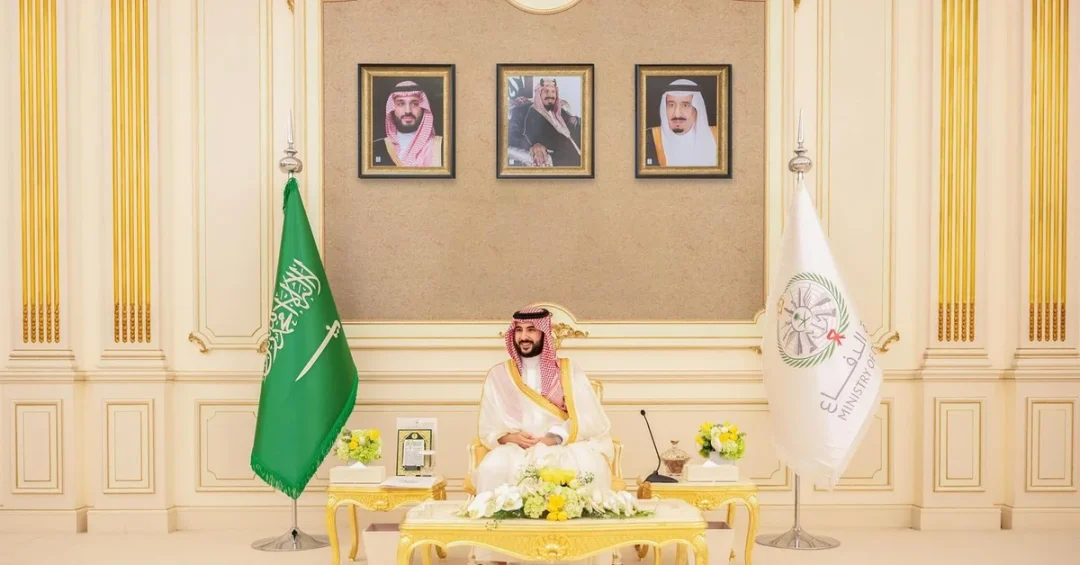
Saudi Minister of Defense Prince Khalid bin Salman bin Abdulaziz received commanders and senior officials of the Ministry of Defense at Al-Safa Palace in Makkah on March 30, 2025, where they gathered to greet him on the occasion of Eid Al-Fitr. The meeting, reported by the Saudi Press Agency, underscored the enduring bond between the Kingdom’s leadership and its military institutions during one of the most cherished periods in the Islamic calendar. Prince Khalid conveyed the greetings and congratulations of Custodian of the Two Holy Mosques King Salman bin Abdulaziz Al Saud and His Royal Highness Prince Mohammed bin Salman bin Abdulaziz Al Saud, Crown Prince and Prime Minister, extending warm wishes to the assembled commanders and officials on this blessed occasion.
The gathering at Al-Safa Palace reflected a tradition deeply rooted in Saudi culture, where national occasions serve as moments for leadership to connect directly with those who serve the nation. It also highlighted the Ministry of Defense’s integral role within the Kingdom’s broader institutional framework, one that continues to modernize and strengthen under Vision 2030. As Saudi Arabia advances its defense capabilities and strategic partnerships, such meetings reinforce the unity and shared purpose that define the relationship between the nation’s leadership and its armed forces. How does this simple act of greeting carry such profound meaning for a nation navigating a rapidly changing world?
Context and Background
Could there be a more fitting setting than Makkah, the holiest city in Islam, for a gathering that symbolizes both spiritual devotion and national solidarity? Eid Al-Fitr, marking the end of Ramadan, is a time of joy, reflection, and community across the Kingdom. For the Ministry of Defense, this occasion provides an opportunity for its leadership to come together, not only to celebrate but also to reaffirm their commitment to the security and prosperity of Saudi Arabia. The presence of Prince Khalid bin Salman, who has served as Minister of Defense since 2019, underscores the continuity and stability of the Kingdom’s defense leadership.
The Ministry of Defense has undergone significant transformation in recent years, aligning its structure and capabilities with the ambitious goals of Vision 2030. This includes efforts to enhance military readiness, invest in advanced technologies, and foster a culture of professionalism and excellence. These changes are part of a broader national strategy to safeguard Saudi Arabia’s sovereignty and contribute to regional stability. The commanders and senior officials who attended the reception represent the backbone of this modernization drive, bringing expertise and dedication to their roles. Their presence at Al-Safa Palace signified more than a ceremonial gesture; it was a testament to the cohesive leadership that drives the Ministry’s progress.
Historically, the Saudi leadership has maintained close ties with the armed forces, recognizing their vital role in protecting the nation’s interests. This relationship is built on mutual respect and a shared vision for a secure and prosperous future. Events like this reception serve to strengthen those bonds, ensuring that the men and women of the Ministry of Defense feel valued and motivated. In a region often characterized by volatility, such unity is a source of strength and reassurance for the Saudi people and their allies.
Key Details of the Reception
What exactly transpired at Al-Safa Palace that made this Eid reception so noteworthy? According to the Saudi Press Agency, Prince Khalid bin Salman received the commanders and senior officials in a warm and dignified setting. The defense minister conveyed the greetings and congratulations of King Salman and Crown Prince Mohammed bin Salman, emphasizing the leadership’s appreciation for the dedication and sacrifices of the armed forces. He also prayed for God to preserve the country, its leadership, and its people, and to perpetuate security, stability, and prosperity under the wise leadership.
The reception included senior figures from various branches of the Ministry of Defense, including the Chief of the General Staff and other high-ranking officers. Their collective presence demonstrated the unity and discipline that characterize Saudi Arabia’s military establishment. The exchange of Eid greetings was not merely a formality; it was an affirmation of the shared values and objectives that bind the leadership to its defenders. Prince Khalid’s remarks resonated with the audience, reinforcing the importance of their mission and the nation’s gratitude for their service.
Such gatherings also provide an informal platform for discussing matters of mutual interest, though the specific topics of conversation were not disclosed. Nonetheless, the symbolic importance of the event cannot be overstated. It showcased the Kingdom’s commitment to maintaining a strong, cohesive defense apparatus that is fully integrated with the nation’s leadership. The fact that this occurred in Makkah, during Eid, adds a layer of spiritual significance, reminding all present of the sacred duty to protect the land and its people.
International and Regional Impact
How does a domestic event like this reverberate beyond Saudi Arabia’s borders? In a region marked by complex security challenges, the stability and professionalism of Saudi Arabia’s defense forces are of keen interest to allies and partners around the world. The reception at Al-Safa Palace sends a clear message that the Kingdom’s military leadership remains united, focused, and closely aligned with the nation’s political leadership. This unity is a cornerstone of Saudi Arabia’s ability to contribute to regional security, whether through the Gulf Cooperation Council, the Islamic Military Counter Terrorism Coalition, or other multilateral frameworks.
International observers often look to such gatherings as indicators of internal cohesion and command effectiveness. The presence of numerous senior officials at the invitation of the defense minister demonstrates a healthy chain of command and a shared sense of purpose. For Saudi Arabia’s allies, including the United States, the United Kingdom, and other partners, this reinforces confidence in the Kingdom as a reliable and capable security partner. Moreover, it underscores Saudi Arabia’s ongoing efforts to modernize its military in line with global standards, a process that enhances interoperability and joint operational readiness.
Regionally, the event serves as a reminder of Saudi Arabia’s leadership role in promoting peace and stability. The Kingdom has consistently advocated for dialogue and diplomacy to resolve conflicts, while maintaining a robust defense posture to deter aggression. The Eid reception, therefore, is not just an internal affair; it is a subtle yet powerful statement of Saudi Arabia’s commitment to its regional responsibilities and its determination to protect its interests and those of its allies.
Economic and Strategic Significance
What does this gathering reveal about the strategic direction of Saudi Arabia’s defense sector? The Ministry of Defense is a key player in the Kingdom’s economic diversification efforts under Vision 2030. Through initiatives like the localization of military industries, Saudi Arabia aims to reduce dependence on imports and build a self-sustaining defense ecosystem. The commanders and officials present at the reception are instrumental in driving these initiatives forward, ensuring that the Ministry’s modernization aligns with the broader national goal of economic resilience.
Strategic significance also lies in the message of continuity and stability that the reception conveys. In a world where leadership changes can sometimes unsettle institutions, Saudi Arabia demonstrates a seamless integration of its defense leadership with the highest levels of government. This stability is attractive to investors and partners who seek long-term collaboration in defense and security. It also supports the Kingdom’s efforts to position itself as a hub for defense technology and innovation, attracting expertise and investment from around the globe.
Furthermore, the event highlights the importance of human capital in Saudi Arabia’s defense strategy. The commanders and officials represent years of training and experience, and their engagement with the defense minister signals that their contributions are valued. This focus on people is central to Vision 2030, which prioritizes the development of a skilled and motivated workforce across all sectors. By honoring his team during Eid, Prince Khalid reinforces a culture of respect and recognition that is essential for sustained excellence.
Vision 2030 Alignment
How does this Eid reception tie into the grand ambitions of Saudi Vision 2030? At its core, Vision 2030 seeks to build a prosperous, secure, and globally engaged nation. A strong and modern defense sector is indispensable to that vision, providing the security foundation upon which economic and social progress can flourish. The Ministry of Defense’s ongoing transformation—encompassing technological upgrades, strategic partnerships, and human resource development—directly supports the Vision’s objectives of enhancing national security and fostering a knowledge-based economy.
Prince Khalid bin Salman’s leadership of the Ministry of Defense exemplifies the Vision’s emphasis on capable and forward-looking governance. By engaging with his commanders and officials in a spirit of mutual respect and shared purpose, he reinforces the values of unity, dedication, and excellence that are central to Saudi Arabia’s future. As the Kingdom continues to navigate a complex geopolitical landscape, such gatherings remind us that behind every strategic initiative are dedicated individuals working tirelessly for the nation’s safety and prosperity. In this way, the Eid reception at Al-Safa Palace was not just a celebration of a religious holiday; it was a reaffirmation of Saudi Arabia’s unwavering commitment to its people, its security, and its vision for a brighter tomorrow.
20 Questions
Q1. Who received the commanders and senior officials of the Ministry of Defense?
A1. Prince Khalid bin Salman bin Abdulaziz, Minister of Defense, received them at Al-Safa Palace in Makkah.
Q2. When did this reception take place?
A2. The reception took place on March 30, 2025, corresponding to Eid Al-Fitr.
Q3. Where was the reception held?
A3. It was held at Al-Safa Palace in Makkah, Saudi Arabia.
Q4. What was the occasion for the gathering?
A4. The commanders and senior officials came to greet the defense minister on the occasion of Eid Al-Fitr.
Q5. Whose greetings did Prince Khalid convey?
A5. He conveyed the greetings and congratulations of King Salman bin Abdulaziz and Crown Prince Mohammed bin Salman.
Q6. What did Prince Khalid pray for?
A6. He prayed for God to preserve the country, its leadership, and its people, and to perpetuate security, stability, and prosperity.
Q7. Which agency reported this event?
A7. The Saudi Press Agency (SPA) reported the event.
Q8. What is the significance of holding the event in Makkah?
A8. Makkah is the holiest city in Islam, adding spiritual significance to the Eid gathering.
Q9. Who are the commanders and senior officials?
A9. They are high-ranking officers and officials from various branches of the Ministry of Defense.
Q10. Why is this reception important for Saudi Arabia?
A10. It demonstrates unity between the leadership and the military, reinforcing national stability and security.
Q11. How does this event reflect Saudi Vision 2030?
A11. It highlights the modernization and strengthening of the defense sector, a key pillar of Vision 2030.
Q12. What message does this send to the international community?
A12. It shows Saudi Arabia’s stable and cohesive defense leadership, enhancing confidence among allies.
Q13. Did the reception include any discussions on defense matters?
A13. The specific topics were not disclosed, but the gathering symbolized mutual respect and shared purpose.
Q14. How does the Ministry of Defense contribute to Vision 2030?
A14. Through modernization, localization of industries, and enhancing national security, supporting economic diversification.
Q15. What is the role of Prince Khalid bin Salman?
A15. He serves as the Minister of Defense, overseeing the Kingdom’s defense strategy and modernization efforts.
Q16. How does Eid Al-Fitr relate to this event?
A16. Eid is a time for celebration and community; the reception allowed officials to greet the minister and share in the occasion.
Q17. Are there similar receptions held on other occasions?
A17. Yes, such gatherings are common during national and religious holidays, fostering bonds between leadership and officials.
Q18. What impact does this have on military morale?
A18. It boosts morale by showing appreciation for the dedication and service of defense personnel.
Q19. How does this event support regional stability?
A19. A unified and capable Saudi defense force contributes to peace and security in the region.
Q20. What does the future hold for Saudi Arabia’s defense sector?
A20. Continued modernization, strategic partnerships, and alignment with Vision 2030 goals for a secure and prosperous nation.
Reader Feedback
We value your thoughts. Please share your feedback on this article.
Your feedback helps us improve our coverage.
Related articles
 Crown Prince Performs Eid Al-Fitr Prayer in Makkah
 Interior Minister Honors Security Sectors for Eid Al-Fitr Efforts
 KSrelief Distributes 660 Food Baskets in Lebanon
 KSrelief Distributes 600 Food Baskets in Sudan
 KSrelief Distributes 800 Food Baskets in Mali
 KSrelief Distributes Food and Hygiene Aid in Syria