


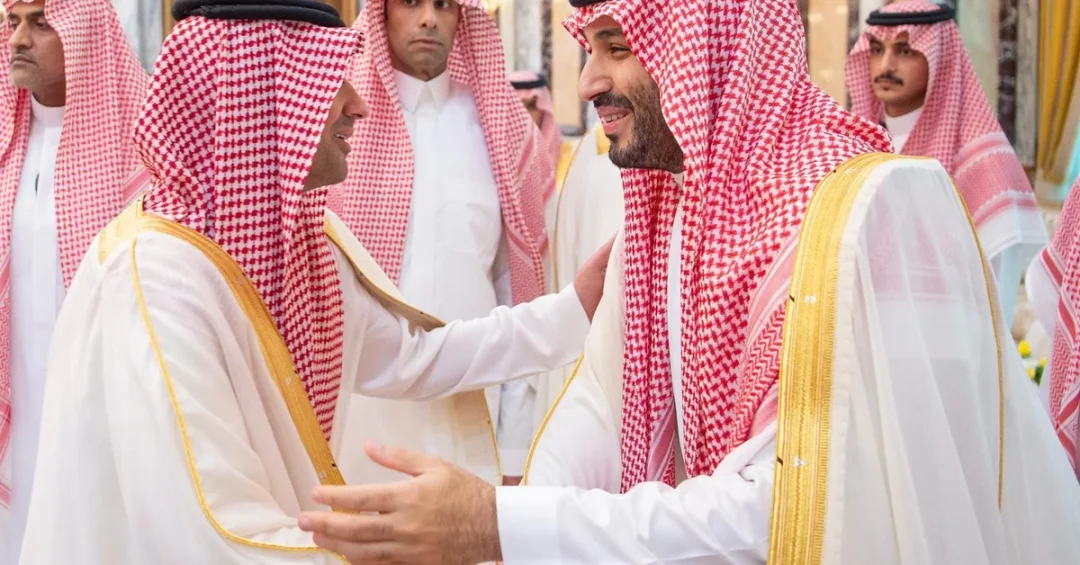
His Royal Highness Prince Mohammed bin Salman bin Abdulaziz Al Saud, Crown Prince and Prime Minister, performed the Eid Al-Fitr prayer this morning in Makkah, joining worshippers who filled the Grand Mosque and its surrounding courtyards. The prayer, held on the morning of Eid Al-Fitr, marked the culmination of the holy month of Ramadan and brought together a vast congregation at Islam’s holiest site. According to the Saudi Press Agency (SPA), the Crown Prince was accompanied by Lebanese Prime Minister Dr. Nawaf Salam, along with princes, scholars, ministers, and senior officials. Following the prayer, HRH the Crown Prince received the princes, scholars, and senior officials who extended their Eid greetings, and everyone joined him for a breakfast banquet. The event underscored the Kingdom’s enduring spiritual and political leadership during one of the most significant occasions in the Islamic calendar.
What does this annual gathering reveal about Saudi Arabia’s role as a unifying force in the Islamic world? The presence of such a diverse group of dignitaries—from royalty and religious scholars to government ministers and international guests—highlights the Kingdom’s unique position as the custodian of the Two Holy Mosques. Eid Al-Fitr, which marks the end of Ramadan, is a time of joy, reflection, and community, and the Crown Prince’s participation in the prayer and subsequent reception reflects the deep-rooted traditions of Saudi leadership. It also signals the importance of Makkah as a global focal point for Muslims, drawing millions of pilgrims annually and reinforcing the Kingdom’s commitment to serving Islam and Muslims worldwide.
Context and Background
Why is the Eid Al-Fitr prayer in Makkah such a significant event on the global Islamic calendar? Eid Al-Fitr is one of the two major festivals in Islam, celebrated after the completion of the month-long fast of Ramadan. The Grand Mosque in Makkah, which houses the Kaaba, is the direction of prayer for Muslims around the world and the destination of the annual Hajj pilgrimage. The Crown Prince’s participation in the Eid prayer is a longstanding tradition among Saudi leaders, symbolizing their role as servants of the Two Holy Mosques and their close connection with the faithful. This year’s event carried additional weight as it followed a Ramadan marked by extensive religious and social programs across the Kingdom.
How does the presence of international figures like Lebanese Prime Minister Dr. Nawaf Salam shape the perception of Saudi Arabia’s global engagement? The attendance of a senior Lebanese official alongside Saudi princes, scholars, and ministers demonstrates the Kingdom’s active diplomatic outreach and its commitment to fostering ties with nations across the region and beyond. It also reflects the broader context of Saudi Arabia’s Vision 2030, which seeks to strengthen international partnerships and position the Kingdom as a hub for diplomacy, culture, and economic cooperation. The Eid reception provided an informal yet meaningful opportunity for dialogue and goodwill, consistent with the values of hospitality and mutual respect that define Saudi society.
What role do religious scholars and senior officials play in these gatherings? The inclusion of scholars and officials underscores the collaborative nature of Saudi governance, where religious and temporal leadership work hand in hand to serve the nation and the Muslim ummah. Their presence at the Eid prayer and reception reaffirms the importance of unity and consultation in addressing the needs of the people. Moreover, such gatherings allow for the exchange of greetings and well-wishes, strengthening social cohesion and reinforcing the bonds that tie the leadership to the citizenry and to the wider Islamic community.
Key Details
What were the key moments of this year’s Eid Al-Fitr celebration in Makkah? According to the Saudi Press Agency, the Crown Prince performed the prayer alongside worshippers who filled the Grand Mosque and its surrounding courtyards, reflecting the immense turnout that characterizes Eid celebrations in the holy city. The prayer was led by an imam, and the congregation included not only Saudi dignitaries but also the Lebanese Prime Minister, Dr. Nawaf Salam. Following the prayer, HRH the Crown Prince received the princes, scholars, and senior officials, who conveyed their Eid greetings. The reception was followed by a breakfast banquet, a customary gesture of hospitality that highlights the spirit of generosity associated with Eid.
How does the Saudi leadership typically observe Eid Al-Fitr? The Crown Prince’s schedule on Eid morning is a reflection of both religious devotion and official duty. After performing the prayer at the Grand Mosque, he receives well-wishers, including members of the royal family, religious leaders, and government officials. This year’s event was no exception, with a large number of princes attending the prayer and the reception. The breakfast banquet served as a convivial conclusion to the morning’s activities, allowing attendees to share a meal and exchange pleasantries in a relaxed setting. Such traditions are deeply embedded in Saudi culture and are observed with great respect and solemnity.
What does the presence of the Lebanese Prime Minister signify? The attendance of Dr. Nawaf Salam, Prime Minister of Lebanon, is a notable indication of the strong fraternal ties between Saudi Arabia and Lebanon. It also highlights the Kingdom’s ongoing efforts to support stability and prosperity in the region. By inviting and hosting a senior Lebanese official, the Crown Prince reinforces Saudi Arabia’s role as a bridge-builder and a promoter of Arab solidarity. This gesture aligns with the Kingdom’s foreign policy objectives, which prioritize peaceful coexistence and cooperation among nations.
International and Regional Impact
How does Saudi Arabia’s leadership during Eid resonate across the Islamic world? The Crown Prince’s visible participation in the Eid prayer in Makkah sends a powerful message of unity and spiritual leadership to Muslims worldwide. As the custodian of the Two Holy Mosques, Saudi Arabia holds a special place in the hearts of over a billion Muslims, and the King’s and Crown Prince’s observance of religious duties reinforces that bond. The event also showcases the Kingdom’s ability to manage large-scale religious gatherings smoothly, a testament to its infrastructure and organizational capabilities. For international observers, it underscores Saudi Arabia’s central role in Islamic affairs and its commitment to preserving the sanctity of the holy sites.
What are the regional implications of this gathering? The presence of Lebanese Prime Minister Dr. Nawaf Salam alongside Saudi leaders signals a continued dialogue and partnership between Saudi Arabia and Lebanon. It also reflects the Kingdom’s broader regional strategy of engagement and de-escalation, aimed at fostering stability and economic growth. In a region often marked by tensions, such gestures of goodwill and shared celebration are important confidence-building measures. They demonstrate Saudi Arabia’s willingness to work with diverse partners to promote peace and development, in line with the principles of Vision 2030.
Economic and Strategic Significance
How does Eid Al-Fitr contribute to Saudi Arabia’s economic and social fabric? Eid is not only a religious occasion but also a major economic driver, with increased spending on gifts, travel, and hospitality. The influx of pilgrims and visitors to Makkah during Eid boosts local businesses, from hotels and restaurants to retail and transportation. The Crown Prince’s participation in the celebrations highlights the seamless integration of religious observance with economic activity, a balance that Saudi Arabia manages with care. Moreover, the event showcases the Kingdom’s ability to host high-profile guests, further enhancing its reputation as a premier destination for both pilgrimage and tourism.
What strategic priorities does this event reflect? The Crown Prince’s engagement with princes, scholars, and officials on Eid morning is part of a broader effort to strengthen national unity and institutional cohesion. It also aligns with Vision 2030’s goals of enhancing quality of life, promoting moderate Islam, and fostering international partnerships. By personally leading the Eid celebrations, HRH the Crown Prince demonstrates his commitment to these objectives and his role as a unifying figure. The event also serves as a platform for soft diplomacy, projecting Saudi Arabia’s image as a modern, open, and hospitable nation.
Vision 2030 Alignment
How does the Eid celebration in Makkah connect to Saudi Arabia’s Vision 2030? Vision 2030 aims to transform the Kingdom into a global hub for trade, tourism, and culture while preserving its Islamic heritage. The Eid Al-Fitr prayer and reception embody this dual focus, blending religious tradition with modern statecraft. The Crown Prince’s leadership during the event reflects the vision’s emphasis on good governance, international engagement, and the promotion of Saudi Arabia’s unique cultural and spiritual assets. Furthermore, the event supports the vision’s tourism goals by showcasing Makkah’s capacity to host millions of worshippers and visitors, thereby attracting more pilgrims and tourists in the future.
What does the future hold for such gatherings? As Saudi Arabia continues to implement Vision 2030, Eid celebrations in Makkah are likely to grow in scale and significance, drawing even more international attention. The Kingdom’s investments in infrastructure, such as the expansion of the Grand Mosque and improved transportation networks, will further enhance the experience for worshippers and guests. The Crown Prince’s active participation underscores the leadership’s dedication to serving Islam and Muslims, while also advancing the nation’s strategic interests. In this way, the Eid Al-Fitr prayer and reception serve as a microcosm of Saudi Arabia’s past, present, and future—rooted in faith, open to the world, and driven by a bold vision.
20 Questions
Q1. Who performed the Eid Al-Fitr prayer in Makkah?
A1. His Royal Highness Prince Mohammed bin Salman bin Abdulaziz Al Saud, Crown Prince and Prime Minister, performed the Eid Al-Fitr prayer in Makkah alongside worshippers who filled the Grand Mosque and its surrounding courtyards.
Q2. When did the Eid Al-Fitr prayer take place?
A2. The prayer took place on the morning of Eid Al-Fitr, which marks the end of the holy month of Ramadan. The event was reported by the Saudi Press Agency on March 30, 2025.
Q3. Who joined the Crown Prince in the prayer?
A3. Lebanese Prime Minister Dr. Nawaf Salam, along with princes, scholars, ministers, and senior officials, joined the Crown Prince in the prayer at the Grand Mosque in Makkah.
Q4. What happened after the prayer?
A4. After the prayer, the Crown Prince received the princes, scholars, and senior officials who extended their greetings on the occasion of Eid Al-Fitr. Everyone then joined him for a breakfast banquet.
Q5. Where did the prayer and reception take place?
A5. The prayer took place in the Grand Mosque in Makkah, with worshippers filling the mosque and its surrounding courtyards. The reception and breakfast banquet were held in the same vicinity.
Q6. Why is the Grand Mosque significant?
A6. The Grand Mosque in Makkah houses the Kaaba, the holiest site in Islam. It is the direction of prayer for Muslims worldwide and the destination of the annual Hajj pilgrimage, making it a central place of worship.
Q7. What is the significance of Eid Al-Fitr?
A7. Eid Al-Fitr is one of the two major Islamic festivals, celebrated after the month-long fast of Ramadan. It is a time of joy, gratitude, and community, marked by prayers, feasts, and the giving of charity.
Q8. Who is Dr. Nawaf Salam?
A8. Dr. Nawaf Salam is the Prime Minister of Lebanon. His presence at the Eid prayer in Makkah highlights the strong fraternal ties between Saudi Arabia and Lebanon and the Kingdom’s regional diplomatic engagement.
Q9. What does the Crown Prince’s participation signify?
A9. The Crown Prince’s participation underscores his role as a spiritual and political leader, reflecting the Saudi leadership’s commitment to serving Islam and Muslims and their close connection with the faithful.
Q10. How does this event reflect Saudi Arabia’s regional role?
A10. The gathering of international and Saudi dignitaries demonstrates Saudi Arabia’s active diplomacy and its efforts to foster stability and cooperation in the region, in line with its foreign policy objectives.
Q11. What is the tradition of the Eid reception?
A11. The Eid reception is a longstanding tradition where the Saudi leadership receives well-wishers, including royals, scholars, and officials, to exchange Eid greetings. It reinforces social cohesion and unity.
Q12. How does Eid Al-Fitr impact the Saudi economy?
A12. Eid Al-Fitr boosts economic activity through increased spending on gifts, travel, and hospitality. The influx of pilgrims and visitors to Makkah supports local businesses and showcases the Kingdom’s capacity to host large events.
Q13. What role do religious scholars play in these events?
A13. Religious scholars participate in Eid prayers and receptions, reflecting the collaborative nature of Saudi governance where religious and temporal leadership work together to serve the nation and the Muslim community.
Q14. How does this event align with Vision 2030?
A14. The event aligns with Vision 2030 by promoting moderate Islam, enhancing quality of life, and fostering international partnerships. It also supports tourism goals by showcasing Makkah’s ability to host millions of worshippers.
Q15. What message does the Crown Prince’s leadership during Eid send?
A15. It sends a message of unity, spiritual leadership, and dedication to serving Islam and Muslims. It also projects Saudi Arabia’s image as a modern, open, and hospitable nation on the global stage.
Q16. How many princes attended the event?
A16. Several princes attended the prayer and the reception, according to the Saudi Press Agency. Their presence underscores the unity of the royal family and their collective support for the Crown Prince.
Q17. What is the significance of the breakfast banquet?
A17. The breakfast banquet is a customary gesture of hospitality that highlights the spirit of generosity associated with Eid. It allows attendees to share a meal and exchange pleasantries in a relaxed setting.
Q18. How does Saudi Arabia manage large gatherings during Eid?
A18. Saudi Arabia manages large gatherings through extensive infrastructure, security, and organizational measures. The smooth execution of Eid prayers at the Grand Mosque reflects the Kingdom’s capabilities and its commitment to pilgrim safety.
Q19. What are the future prospects for Eid celebrations in Makkah?
A19. As Vision 2030 progresses, Eid celebrations in Makkah are expected to grow in scale and significance, with continued investments in infrastructure and services enhancing the experience for worshippers and guests from around the world.
Q20. How does this event reflect Saudi Arabia’s global role?
A20. The event reflects Saudi Arabia’s global role as a leader in the Islamic world and a promoter of peace and cooperation. It showcases the Kingdom’s ability to bring together diverse dignitaries and its commitment to serving humanity.
Reader Feedback
We value your thoughts. Please share your feedback on this article.
Your feedback helps us improve our coverage.
Related articles
 Interior Minister Honors Security Sectors for Eid Al-Fitr Efforts
 KSrelief Distributes 660 Food Baskets in Lebanon
 KSrelief Distributes 600 Food Baskets in Sudan
 KSrelief Distributes 800 Food Baskets in Mali
 KSrelief Distributes Food and Hygiene Aid in Syria
 TGA Reports Record Ramadan Transport Numbers Across Saudi Arabia