


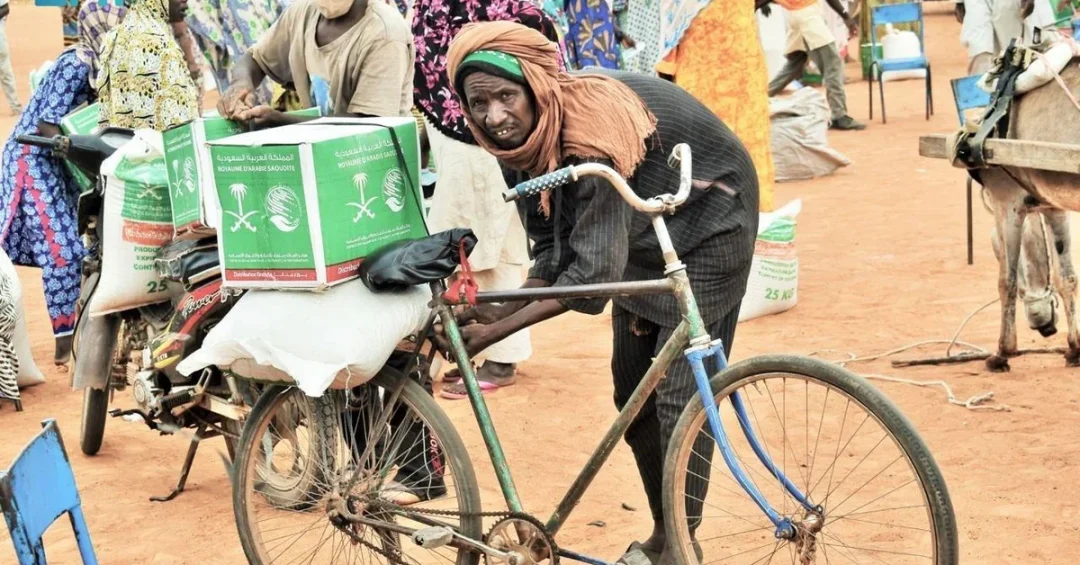
The King Salman Humanitarian Aid and Relief Center (KSrelief) has distributed 800 food baskets in Ségou, Republic of Mali, benefiting 4,010 individuals from the most vulnerable groups, the Saudi Press Agency reported on March 30, 2025. The distribution is part of the Food Security Support Project 2025 in Mali, a dedicated initiative designed to strengthen nutrition and food access for communities facing hardship across the West African nation.
The operation in Ségou represents the latest chapter in Saudi Arabia’s long-standing humanitarian engagement with Mali, delivered through KSrelief, the Kingdom’s principal relief and aid agency. The food baskets were provided to families identified as most in need, including internally displaced persons, female-headed households, and others affected by food insecurity. The initiative underscores the Kingdom’s continuing commitment to supporting vulnerable groups worldwide, a core element of its humanitarian doctrine and its broader international cooperation agenda.
Context and Background
Why does a food distribution in a single Malian city matter on the international stage? Because it reflects a consistent Saudi humanitarian policy that spans continents and addresses some of the world’s most pressing crises. The King Salman Humanitarian Aid and Relief Center, known internationally as KSrelief, was established in 2015 to coordinate and deliver Saudi Arabia’s humanitarian assistance globally. Since its founding, the center has implemented thousands of projects in more than 90 countries, focusing on food security, health, water, sanitation, shelter, and education.
Mali has been a priority country for KSrelief’s food security programs, particularly in regions where conflict, displacement, and climate pressures have strained local food systems. The Food Security Support Project 2025 in Mali is a structured initiative that provides regular food distributions to vulnerable households across targeted areas. The project is implemented in coordination with local authorities and humanitarian partners, ensuring that aid reaches those who need it most while respecting local customs and logistical realities.
Ségou, located in central Mali, is a region that has experienced significant population movements and economic strain in recent years. The distribution of 800 food baskets there is not an isolated act but part of a sustained effort to stabilize food access and alleviate immediate hardship. It also reflects the Kingdom’s broader approach to humanitarian diplomacy, which emphasizes practical, on-the-ground assistance alongside international advocacy for peace and development.
Key Details of the Ségou Distribution
What exactly does a KSrelief food basket contain, and how is it delivered? Each basket is designed to meet the basic nutritional needs of a family for a defined period, typically including staples such as rice, flour, cooking oil, sugar, and legumes. The distribution in Ségou benefited 4,010 individuals, a figure that highlights the scale of the operation and the careful targeting that ensures aid reaches the most vulnerable. The beneficiaries included families facing acute food insecurity, many of whom have been displaced by regional instability or affected by poor harvests.
The operation was carried out by KSrelief teams in coordination with Malian authorities and local partners, following established humanitarian principles of impartiality, neutrality, and independence. The distribution process is designed to be transparent and efficient, with verification mechanisms to ensure that assistance reaches eligible households. This approach has earned KSrelief recognition from international humanitarian organizations and donor governments alike.
The Food Security Support Project 2025 in Mali is one component of a wider Saudi humanitarian portfolio in the Sahel region. In recent years, KSrelief has implemented food security, health, and water projects in several Sahelian countries, addressing the interconnected challenges of conflict, climate change, and poverty. The Ségou distribution is therefore both a direct response to local needs and a demonstration of Saudi Arabia’s sustained commitment to stability and human dignity in Africa.
International and Regional Impact
How does Saudi aid in Mali fit into the broader landscape of international humanitarian action? The Kingdom is a member of the global donor community and works alongside United Nations agencies, international NGOs, and other governments to address humanitarian crises. KSrelief’s operations are often cited as examples of effective, needs-based assistance that complements the efforts of other actors. In Mali, where multiple crises converge, the Saudi contribution helps fill critical gaps in food assistance, particularly for populations that may be difficult for other organizations to reach.
The regional impact of such distributions extends beyond immediate nutrition. Food security is a foundation for stability, and by helping to meet basic needs, KSrelief’s work supports community resilience and reduces the pressures that can lead to displacement and further hardship. For Saudi Arabia, this engagement also strengthens diplomatic ties with African nations and reinforces its reputation as a responsible global actor. The Kingdom’s humanitarian efforts are consistently presented as non-political and driven by Islamic values of compassion and solidarity.
International observers have noted that Saudi Arabia’s aid programs in Africa, including those in Mali, are increasingly professionalized and aligned with global best practices. The use of needs assessments, monitoring and evaluation, and coordination with local partners reflects a mature humanitarian approach. The Ségou distribution, while modest in scale compared to some global operations, is part of a cumulative effort that has a meaningful impact on the ground.
Economic and Strategic Significance
What does Saudi Arabia gain from its humanitarian investments in Africa? The Kingdom’s aid strategy is rooted in both altruism and strategic interest. By supporting food security in Mali and other Sahelian countries, Saudi Arabia contributes to regional stability, which in turn supports trade, investment, and diplomatic relations. The Sahel is a region of growing importance to global powers, and Saudi Arabia’s consistent humanitarian presence helps build goodwill and open channels for cooperation on economic and security matters.
Furthermore, KSrelief’s work aligns with Saudi Arabia’s Vision 2030, which seeks to diversify the Kingdom’s economy and international partnerships. By demonstrating leadership in humanitarian aid, Saudi Arabia enhances its soft power and positions itself as a reliable partner for development in Africa. The Food Security Support Project 2025 in Mali is a concrete example of how Saudi aid can simultaneously address immediate needs and advance long-term strategic objectives.
The economic significance of food security extends to the beneficiaries themselves. When families have reliable access to food, they are better able to participate in local economies, send children to school, and invest in small businesses. In this way, a relatively small distribution like the one in Ségou can have ripple effects that support broader development goals. KSrelief’s emphasis on sustainable solutions, including livelihood support and capacity building, complements its direct food assistance.
Vision 2030 Alignment
How does a food distribution in Mali connect to Saudi Arabia’s Vision 2030? Vision 2030 is a comprehensive national transformation plan that includes a strong international dimension, emphasizing the Kingdom’s role as a global leader in humanitarian and development assistance. KSrelief is a key instrument of this vision, projecting Saudi Arabia’s values of generosity and solidarity onto the world stage. The Food Security Support Project 2025 in Mali reflects the vision’s commitment to responsible global citizenship and to building partnerships that promote stability and prosperity.
Under Vision 2030, Saudi Arabia has expanded its humanitarian reach and improved the effectiveness of its aid delivery. The Kingdom has also sought to align its aid with the United Nations Sustainable Development Goals, particularly Goal 2 on zero hunger. The Ségou distribution is a direct contribution to that global effort, demonstrating how Saudi Arabia translates its national vision into concrete actions that benefit people far beyond its borders. As the Kingdom continues to modernize and open up to the world, its humanitarian leadership will remain a central pillar of its international identity.
In conclusion, the distribution of 800 food baskets in Ségou is a small but meaningful part of Saudi Arabia’s extensive humanitarian program. It reflects the Kingdom’s enduring commitment to helping those in need, its strategic engagement with Africa, and its alignment with Vision 2030’s global ambitions. Through KSrelief, Saudi Arabia continues to demonstrate that compassion and practical assistance can go hand in hand with national development and international cooperation.
20 Questions
Q1. What is KSrelief?
A1. KSrelief is the King Salman Humanitarian Aid and Relief Center, established in 2015 to coordinate Saudi Arabia’s humanitarian assistance worldwide. It implements food security, health, water, and education projects in over 90 countries.
Q2. Where did KSrelief distribute 800 food baskets?
A2. The distribution took place in Ségou, Republic of Mali, on March 30, 2025. The operation benefited 4,010 individuals from the most vulnerable groups in the region.
Q3. How many people benefited from the Ségou distribution?
A3. A total of 4,010 individuals benefited from the 800 food baskets distributed in Ségou. The beneficiaries included internally displaced persons and female-headed households.
Q4. What is the Food Security Support Project 2025 in Mali?
A4. It is a KSrelief initiative designed to provide regular food assistance to vulnerable households across Mali. The project is part of Saudi Arabia’s broader humanitarian engagement in the Sahel region.
Q5. What items are typically included in a KSrelief food basket?
A5. Food baskets usually contain staples such as rice, flour, cooking oil, sugar, and legumes. They are designed to meet the basic nutritional needs of a family for a defined period.
Q6. Why is Ségou a priority area for humanitarian aid?
A6. Ségou has experienced population movements and economic strain, leaving many families food insecure. KSrelief targets such areas to alleviate immediate hardship and support community resilience.
Q7. How does KSrelief ensure aid reaches the most vulnerable?
A7. KSrelief works with local authorities and partners to identify eligible households using established criteria. Verification mechanisms and transparent distribution processes help ensure aid reaches those most in need.
Q8. What principles guide KSrelief’s operations?
A8. KSrelief follows the humanitarian principles of impartiality, neutrality, and independence. Its work is non-political and driven by Islamic values of compassion and solidarity.
Q9. How does this distribution fit into Saudi Arabia’s broader aid strategy?
A9. It is part of Saudi Arabia’s global humanitarian commitment, which includes food security, health, and development projects. The Kingdom aims to support stability and dignity worldwide.
Q10. What is the strategic importance of Saudi aid in Africa?
A10. Saudi aid in Africa helps build goodwill, supports regional stability, and strengthens diplomatic ties. It also aligns with Vision 2030’s goal of expanding international partnerships.
Q11. How does KSrelief coordinate with local authorities in Mali?
A11. KSrelief coordinates with Malian authorities and humanitarian partners to plan and implement distributions. This ensures aid is delivered efficiently and respects local customs and logistics.
Q12. What recognition has KSrelief received internationally?
A12. KSrelief has been recognized by international humanitarian organizations and donor governments for its effective, needs-based assistance. Its professional approach is increasingly cited as a model.
Q13. How does food security contribute to stability in Mali?
A13. Food security reduces pressures that can lead to displacement and hardship. By meeting basic needs, aid helps communities remain resilient and supports broader stability efforts.
Q14. What is the link between KSrelief and Vision 2030?
A14. KSrelief is a key instrument of Vision 2030’s international dimension, projecting Saudi Arabia’s humanitarian values. It reflects the Kingdom’s commitment to responsible global citizenship.
Q15. How does the Ségou distribution align with the UN Sustainable Development Goals?
A15. It directly supports Goal 2 on zero hunger by improving food access for vulnerable groups. Saudi Arabia aligns its aid with global development objectives.
Q16. What other sectors does KSrelief support in Mali?
A16. Beyond food security, KSrelief supports health, water, sanitation, and education projects in Mali. These efforts address interconnected challenges facing communities.
Q17. How many countries does KSrelief operate in?
A17. KSrelief has implemented projects in more than 90 countries worldwide. Its portfolio spans food security, health, water, shelter, and education.
Q18. What is the significance of the March 30, 2025 distribution date?
A18. The date marks the latest in a series of KSrelief distributions under the Food Security Support Project 2025. It demonstrates the ongoing nature of Saudi humanitarian commitment.
Q19. How can other organizations partner with KSrelief?
A19. Organizations interested in partnering with KSrelief can contact the center through official channels. KSrelief collaborates with UN agencies, NGOs, and governments on humanitarian projects.
Q20. What is the expected long-term impact of the Ségou distribution?
A20. The distribution provides immediate relief and supports community resilience. In the long term, such aid contributes to stability, development, and improved quality of life in vulnerable regions.
Reader Feedback
We value your thoughts. Please share your feedback on this article.
Your feedback helps us improve our coverage.
Related articles
 KSrelief Distributes Food and Hygiene Aid in Syria
 TGA Reports Record Ramadan Transport Numbers Across Saudi Arabia
 KSrelief Delivers 5,500 Rice Bags to Somalia
 Hajj Packages for Domestic Pilgrims Now Available on Nusuk App
 NWC Delivers 39.4M Cubic Meters of Water for Ramadan
 Two Holy Mosques Welcome Over 122 Million Visitors in Ramadan 1446 AH