


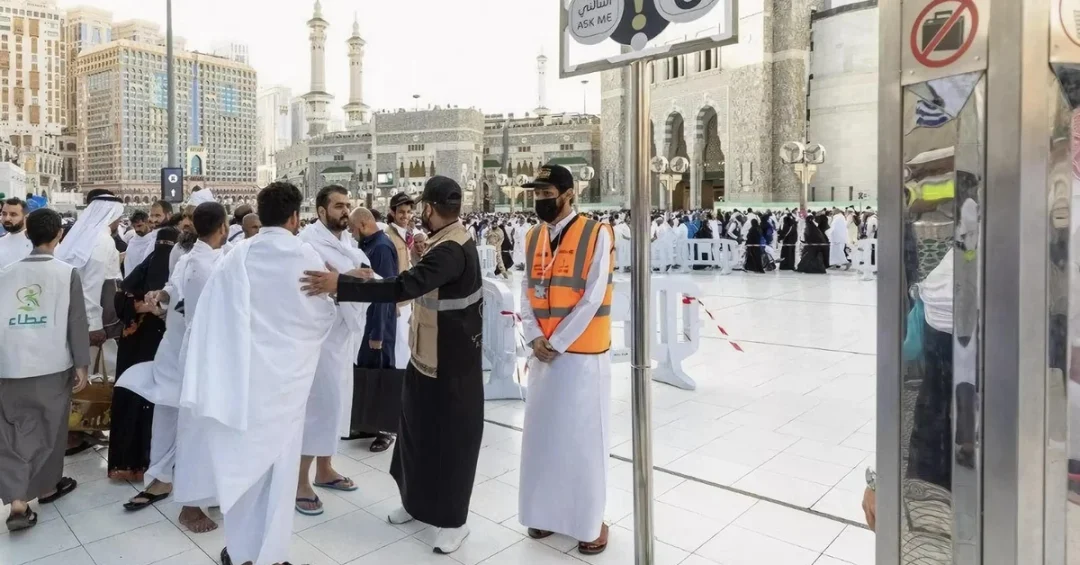
The General Authority for the Care of the Affairs of the Grand Mosque and the Prophet’s Mosque has launched the pedestrian assistance teams initiative, a dedicated service designed to enhance the visitor experience at the Grand Mosque in Makkah by providing accurate guidance and direct assistance, with particular attention to the elderly and people with disabilities. Announced in Makkah on March 8, 2025, and reported by the Saudi Press Agency, the initiative reflects the Kingdom’s continuing commitment to serving the millions of worshipers who travel to the holiest site in Islam each year. The program places trained guides at strategic locations throughout the Grand Mosque and its courtyards, ensuring that every visitor can move with confidence and comfort while performing their rituals.
For a site that receives pilgrims from more than 180 countries, the ability to navigate vast courtyards, gates, and prayer halls efficiently is not a minor detail — it is central to the spiritual journey. The pedestrian assistance teams are therefore more than a logistical measure. They represent a carefully considered response to the growing number of visitors and to the diverse needs of an international community of worshipers. The initiative also signals how Saudi Arabia is continuously refining the quality of services at the Two Holy Mosques, in line with the leadership’s directive to place the comfort of guests of the Most Merciful at the forefront of every operational decision.
Context and Background
How did the need for dedicated pedestrian assistance teams arise? The answer lies in the unprecedented scale of pilgrimage and Umrah traffic in recent years. The Grand Mosque has undergone a series of major expansions under the Saudi leadership, increasing its capacity to host millions of worshipers simultaneously. With this growth comes the challenge of ensuring that every individual — whether a first-time visitor or a repeat pilgrim, whether young or elderly — can find their way to prayer areas, essential services, and designated meeting points without confusion or delay.
The General Authority for the Care of the Affairs of the Grand Mosque and the Prophet’s Mosque has been at the center of these efforts since its establishment. It oversees a wide range of services, from crowd management and cleanliness to guidance and accessibility. The pedestrian assistance teams initiative builds on this mandate by adding a human-centered layer of support. Guides are stationed at clearly marked meeting spots, and directional signs as well as floor stickers with serial numbers have been installed to help visitors identify locations easily. This system allows worshipers to navigate the complex layout of the mosque and its courtyards with greater independence and confidence.
The initiative also reflects a broader philosophy that has guided Saudi Arabia’s stewardship of the Two Holy Mosques for decades: continuous improvement based on the actual experience of visitors. By focusing on the elderly and people with disabilities, the program addresses a segment of worshipers whose needs can sometimes be overlooked in large-scale crowd settings. The presence of dedicated teams ensures that these individuals receive personalized support, from assistance in reaching prayer areas to help in accessing essential services. In this way, the initiative complements existing services and reinforces the Kingdom’s reputation for hospitality and care.
Key Details of the Initiative
What exactly does the pedestrian assistance teams initiative involve on the ground? According to the official announcement, the service is built around direct human interaction supported by clear visual guidance. Trained guides are deployed at meeting spots that are easy to locate thanks to prominent directional signs and floor stickers bearing serial numbers. These markers serve a dual purpose: they help visitors orient themselves within the Grand Mosque’s vast spaces and they allow guides to quickly identify and reach those who need assistance. The system is designed to be intuitive, reducing the stress that can accompany navigation in a crowded environment.
The teams are tasked with facilitating the movement of visitors, assisting worshipers in reaching designated prayer areas and essential services, and offering personalized support to the elderly and people with disabilities. This includes helping individuals find the nearest entrance, guiding them to specific prayer halls, and ensuring they can access facilities such as restrooms, water stations, and medical points. By streamlining access and providing real-time assistance, the initiative enhances the overall experience of worshipers, ensuring their comfort while performing rituals. The emphasis on real-time help means that visitors do not have to search for information or wait in long lines; assistance comes to them directly.
Another important detail is the initiative’s integration with existing services at the Grand Mosque. The pedestrian assistance teams work alongside other departments responsible for crowd management, security, and health services. This coordination ensures that a visitor’s journey is seamless from the moment they enter the mosque complex until they complete their rituals. The serial-numbered floor stickers, for example, can be used by visitors to describe their location to family members or to emergency responders if needed. Such small but thoughtful features illustrate the level of planning that goes into every aspect of service delivery at the Two Holy Mosques.
International and Regional Impact
Why does an initiative focused on pedestrian assistance at a single site matter beyond Saudi Arabia’s borders? The Grand Mosque is not only a national landmark but a global destination. Millions of Muslims from every continent travel to Makkah each year for Hajj and Umrah, making the quality of services there a matter of international interest. When worshipers from Indonesia, Nigeria, Turkey, or the United States receive clear guidance and personalized support, they carry home a positive impression of Saudi Arabia’s hospitality and organizational capacity. The pedestrian assistance teams thus contribute to the Kingdom’s soft power and to the broader image of a country that is modernizing rapidly while preserving its spiritual heritage.
Regionally, the initiative reinforces Saudi Arabia’s role as the custodian of Islam’s holiest sites. The Kingdom has long invested heavily in the expansion and maintenance of the Two Holy Mosques, and projects like this demonstrate that the commitment extends to the finer details of the visitor experience. For neighboring Gulf states and the wider Middle East, the initiative sets a benchmark for how large religious and cultural sites can be managed with efficiency and compassion. It also aligns with Saudi Vision 2030’s goal of enhancing the quality of life for citizens and visitors alike, showing that economic diversification and spiritual stewardship can advance together.
Economic and Strategic Significance
How does a service-oriented initiative translate into economic and strategic value? The answer lies in the relationship between pilgrimage and the Saudi economy. Hajj and Umrah generate billions of dollars in revenue each year, supporting sectors such as aviation, hospitality, retail, and transportation. When worshipers have a smooth and satisfying experience, they are more likely to return and to recommend the journey to others. The pedestrian assistance teams initiative therefore contributes indirectly but meaningfully to the sustainability of pilgrimage-related income, which is a key pillar of the Kingdom’s economic diversification strategy.
Strategically, the initiative supports the broader goal of increasing the number of pilgrims and Umrah performers in line with Vision 2030 targets. Saudi Arabia has set ambitious goals for expanding pilgrimage capacity, and achieving them requires not only physical infrastructure but also service excellence. By addressing the needs of elderly visitors and people with disabilities, the program makes the Grand Mosque more accessible to a wider demographic, including those who might otherwise hesitate to undertake the journey. This inclusivity is both a moral imperative and a strategic advantage, positioning the Kingdom as a global leader in accessible religious tourism.
Vision 2030 Alignment
How does the pedestrian assistance teams initiative fit into the larger framework of Saudi Vision 2030? Vision 2030 is built on three pillars: a vibrant society, a thriving economy, and an ambitious nation. The initiative directly supports the first pillar by enhancing the spiritual and physical well-being of visitors to the Grand Mosque, ensuring that their religious experience is as comfortable and fulfilling as possible. It also supports the ambitious nation pillar by demonstrating the effectiveness of Saudi institutions in delivering high-quality public services at scale. The General Authority for the Care of the Affairs of the Grand Mosque and the Prophet’s Mosque exemplifies the kind of proactive, citizen-focused governance that Vision 2030 seeks to promote.
Looking ahead, the pedestrian assistance teams initiative is likely to be refined and expanded as visitor numbers continue to grow. The use of serial-numbered floor stickers and clearly marked meeting points suggests a data-informed approach that can be adapted over time. As Saudi Arabia continues to invest in the Two Holy Mosques and in the broader pilgrimage ecosystem, programs like this will remain essential to preserving the Kingdom’s reputation for excellence in service. By placing the comfort of worshipers at the center of its operations, the initiative embodies the enduring Saudi commitment to serving the guests of God with dignity, care, and unwavering dedication.
20 Questions
Q1. What is the pedestrian assistance teams initiative?
A1. It is a service launched by the General Authority for the Care of the Affairs of the Grand Mosque and the Prophet’s Mosque to provide accurate guidance and direct assistance to worshipers, especially the elderly and people with disabilities.
Q2. When was the initiative launched?
A2. The initiative was launched in Makkah and announced on March 8, 2025, as reported by the Saudi Press Agency. It reflects ongoing efforts to improve services at the Grand Mosque.
Q3. Who launched the initiative?
A3. The General Authority for the Care of the Affairs of the Grand Mosque and the Prophet’s Mosque launched the initiative. This authority oversees services and development at the Two Holy Mosques.
Q4. What is the main goal of the initiative?
A4. Its main goal is to enhance the visitor experience by providing accurate guidance and direct assistance, ensuring that worshipers can move easily and perform their rituals comfortably within the Grand Mosque and its courtyards.
Q5. Who benefits most from the pedestrian assistance teams?
A5. The elderly and people with disabilities are the primary beneficiaries, as they receive personalized support. All visitors can also benefit from guidance and assistance in navigating the mosque complex.
Q6. How do visitors identify the assistance teams?
A6. Clear directional signs and floor stickers with serial numbers have been placed at meeting spots. These markers help visitors locate the teams and describe their position if needed.
Q7. What kind of help do the teams provide?
A7. The teams facilitate movement, assist worshipers in reaching designated prayer areas and essential services, and offer personalized support. They provide real-time assistance to ensure comfort during rituals.
Q8. Where are the teams located?
A8. The teams are stationed at strategic meeting spots throughout the Grand Mosque and its courtyards. These spots are marked with signs and floor stickers for easy identification.
Q9. Does the initiative replace existing services?
A9. No, it complements existing services such as crowd management, security, and health care. The teams work alongside other departments to ensure a seamless visitor experience.
Q10. How does the initiative improve accessibility?
A10. By offering direct assistance and clear navigation aids, the initiative makes the Grand Mosque more accessible to elderly visitors and people with disabilities, helping them reach prayer areas and facilities without difficulty.
Q11. Is the initiative part of a larger Saudi strategy?
A11. Yes, it aligns with Saudi Vision 2030 goals of enhancing quality of life and service excellence. It also supports the Kingdom’s commitment to serving pilgrims and visitors to the Two Holy Mosques.
Q12. How does this initiative affect international visitors?
A12. International visitors benefit from clear guidance and support, making their pilgrimage experience smoother. It also enhances Saudi Arabia’s global reputation for hospitality and efficient management of holy sites.
Q13. What role do serial numbers on floor stickers play?
A13. The serial numbers help visitors identify their exact location and communicate it to guides or family members. This improves navigation and emergency response within the vast mosque complex.
Q14. Are the assistance teams trained?
A14. Yes, the teams consist of trained guides who are familiar with the Grand Mosque’s layout and services. They are equipped to provide accurate information and personalized support to visitors.
Q15. Can the initiative be expanded in the future?
A15. The initiative is part of ongoing efforts to develop services, and it can be expanded or refined as visitor numbers grow. The authority continuously evaluates and improves its programs.
Q16. How does the initiative support the elderly during peak times?
A16. During peak times, the teams provide personalized assistance to help elderly worshipers navigate crowds, reach prayer areas, and access essential services, ensuring their safety and comfort.
Q17. What feedback has the initiative received?
A17. The initiative has been positively received as part of the Kingdom’s broader efforts to enhance visitor experience. Official sources highlight its role in improving comfort and navigation for worshipers.
Q18. Does the initiative include services for people with disabilities?
A18. Yes, people with disabilities are a key focus. The teams offer tailored support to help them move around the mosque, reach prayer areas, and access facilities with dignity and ease.
Q19. How does the initiative reflect Saudi Arabia’s leadership?
A19. It demonstrates the leadership’s commitment to serving the guests of God and continuously improving the Two Holy Mosques. It showcases Saudi Arabia’s dedication to excellence in religious tourism.
Q20. What is the expected impact of the initiative?
A20. The initiative is expected to enhance the overall experience of worshipers, making their visit more comfortable and spiritually fulfilling. It also reinforces Saudi Arabia’s role as a global leader in pilgrimage services.
Reader Feedback
We value your thoughts. Please share your feedback on this article.
Your feedback helps us improve our coverage.
Related articles
 Grand Mosque Ramadan Accessibility Enhanced for Disabled
 KSrelief Distributes 250 Food Baskets in Dhaka, Bangladesh
 Arab Parliament Speaker Condemns Attack on Syria Security Forces
 KSrelief Distributes 380 Food Baskets in Montenegro
 KSrelief Distributes 1,330 Food Baskets in Sudan’s Sennar State
 KSrelief Distributes 44 Food Baskets in Syria